Efficient workflows for high‑volume fermentation

Reliability for upstream bioprocessing workflows requiring robust freeze-thaw, storage, and fluid transfer solutions supporting microbial, bacterial, and mammalian fermentation at large scale.

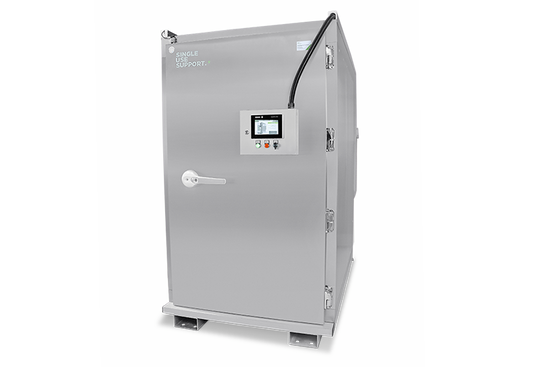
Image of a 50l RoSS Shell in front of a RoSS.pFTU XL pharmaceutical freezer.

Why Single Use Support for fermentation processes?

Losing product with spray drying?

The process of spray drying often causes product losses of bulk intermediates during fermentation that exceed 30%.

Green icon of a thermometer on a transparent background demonstrating temperature control

Increased productivity with bulk freezing

Controlled bulk freezing platforms minimize the rate of product loss due to maximized product quality, purity and potency after cold chain processing.

Batch sizes escalate quickly?

Yeast, bacteria, and fungi grow quickly. Therefore, manufacturers require solutions that facilitate fast handling of large volumes.

Green icon of two single-use bags on a transparent background demonstrating the availability of different sizes

Scalable process solutions

Thanks to their modular design and recipe-driven filling and freezing capabilities, Single Use Support's platforms and consumables enable handling batches of hundreds of liters while maintaining product quality.

Fast enough for batch handling?

Fast growth rates require increased speed in high-volume logistics to keep up with the pace.

Green icon of a clock on a transparent background demonstrating fast lead times

Fast filling & freezing

Filling and freezing of large volumes can be performed in short turnaround times thanks to automated aseptic aliquoting and integrated bulk freezing.

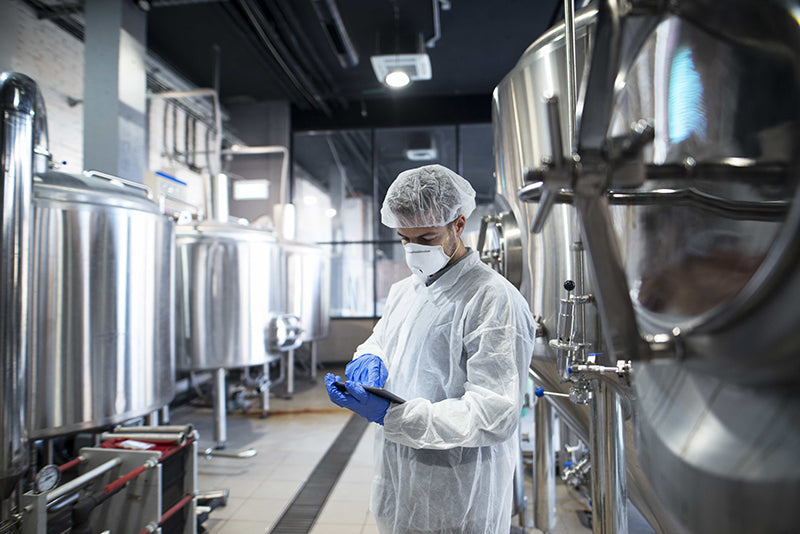
Scientist in cleanroom suit inspecting bioprocessing equipment in a GMP-compliant pharmaceutical manufacturing facility.

Cold chain handling for microbial & bacterial fermentation

Microbial, bacterial and mammalian cell fermentation are processes performed during media and drug development for the production of biologics, especially vaccines. Smaller biologics, such as antibody-drug conjugates and small antibody and peptide fragements are mostly manufactured with microbial and bacterial fermentation. Product quality, process control and safety are key criteria in current good manufacturing practices (cGMP) of upstream bioprocessing. Ultimately, the fermentation aspires to support cultivation of microorganism to achieve high-cell density and high productivity in final culture generation.

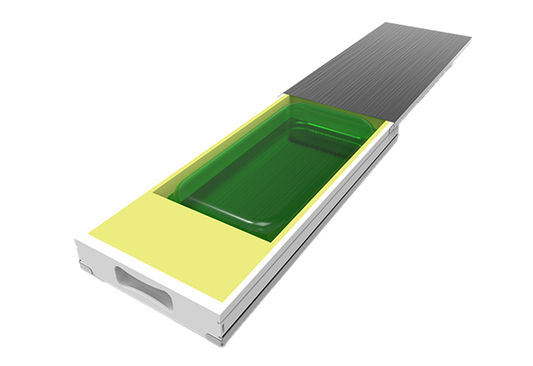
Stack of RoSS shells holding single-use bags inside. Shells are placed inside plate freezer RoSS.pFTU XL in preparation of freezing.

"With product losses during spray drying often exceeding 30%, controlled freezing is a significant opportunity to increase yield, protect product integrity, and transform the handling of bulk intermediates across the supply chain."

Claus Exenberger, Freeze & Thaw Expert, Single Use Support

Preview of Single Use Support's guide about fermentation

Download Guide

Challenges in biopharmaceutical fermentation - Guide

Guide about microbial or mammalian fermentation with regards to fluid and cold chain management challenges. In detail:

  • Advanced Bulk Plate Freezing replacing Spray Drying
  • Protection of Bags Reduce Product Loss
  • Scalability in Yeast, Bacterial or Fungal Fermentation
  • Speed of Large Volume Filling and Freezing
  • Integrated End-to-End Logistics in Continuous Production

Learn more to navigate 5 of these most overlooked challenges in this Fermentation Guide.

Preview of Single Use Support's case study about the ROI of bulk freezing

Download Case Study

The ROI of Bulk Freezing with Plate Freezers - Case Study

A CDMO aspires to achieve improved freezing control, uniformity, and scalability when freezing BDS. New technologies are meant to reduce the need for manual handling as well as increase process efficiency and throughput. The goal was to evaluate and determine the return on investment (ROI) of cryovessels and plate freezers with RoSS.pFTU XL when freezing bulk.

  • Fermentation in the pharmaceutical industry: A complete guide

    While the original definition of fermentation is ‘the anaerobic conversion of sugar to carbon dioxide and alcohol by yeast”, fermentation in the pharmaceutical industry is used to cultivate microorganisms for antibiotics, therapeutic proteins, enzymes and insulin. It typically involves temperature-controlled tanks, also known as fermenters and the correct concentration of nutrients to cultivate the desired organism. Microbial and bacterial fermentation technology and the associated processes open new possibilities and are important building blocks for gene-editing, conjugates and DNA plasmids used in modern vaccine production. Whether in fermentation or other areas of upstream processing, single-use technologies are playing an increasing role. As a pioneer in single-use bioprocessing, Single Use Support offers flexible end-to-end process solutions for advanced fluid management and freeze-thaw logistics for pharmaceutical fermentation. [[ToC]] Microbial fermentation for the production of pharmaceuticals Microbial fermentation is a promising manufacturing method in the production of pharmaceutical products, ranging from drug products based on recombinant proteins to vaccines and antibiotics for pretty much any medical indication. The process of fermentation of products involves the growth of microorganisms by means of bacteria, yeast, and fungi. This happens in a controlled environment, typically in large bioreactors, to produce the desired product. One of the best-known and most studied microorganisms are Escherichia coli - or E. coli - bacteria, which are a kind of work horse for the biotechnology industry thanks to their simple and rapid strain development, short fermentation times and high cell densities. Processing solutions for Fermentation Growth prospects for the fermentation market For a long time, mammalian cell culture sytems were the most popular choice for the production of recombinant pharmaceuticals. In the last years, microbial fermentation has experienced a veritable rice. Especially, the production of small biologics or bioconjugates is much more efficient with microbial fermentation. This is also reflected in numbers on the market. According to a BCC research study on Global Markets and Manufacturing Technologies for Protein Drugs, the markets for peptide hormones and vaccines increased from $18 to $28 billion and from $10 to $19 billion.  The renewed interest in microbial fermentation for biopharmaceutical manufacturing can be attributed to several factors: For one, there is the development of next-generation therapies based on smaller biologic drug substances and increased yields for biopharmaceutical production thanks to advances in genetic engineering. On the other hand, the renewed interest is driven by progress in molecular biology and synthetic biology, and this consequently leads to an increased rate of outsourcing of fermentation processes to CDMOs. Summary - factors that lead to the rice of microbial fermentation: Improved production of smaller biologics advances in genetic engineering increased yield and quality better scaleability lower production costs faster production Advantages of microbial fermentation As the organisms have faster and more stable growth patterns and lower intrinsic metabolic load, microbial fermentation usually involves fewer complications and also offers the possibility of easier scale-up. This allows the production of large quantities of specific compounds in a relatively short time, making it a cost-effective method for the production of specific drugs. Meanwhile, mammalian cell fermentation often requires additional downstream processing steps to purify the final product. In addition, microorganisms are capable of producing complex molecules that are difficult to produce using traditional synthetic organic chemistry, making fermentation an efficient method for the production of various pharmaceutical products. cGMP microbial production - Good Manufacturing Practices in microbial fermentation CDMOs offer solutions for a cGMP compliant production of fermentation products, including cell banking services from cell line production to cryogenic storage and fed-batch and perfusion using a range of microbial expression systems. By outsourcing to cGMP-compliant microbial manufacturing, pharmaceutical production companies can be assured of receiving high-quality fermentation products that have been manufactured in accordance with established standards and guidelines. The implementation of single use-systems will help CDMOs to build a cGMP compliant infrastructure. In addition, single-use solutions offer the necessary flexibility to react quickly to changes in production requirements, and they offer high yields that are scalable and of high quality. CMOs provide pilot-to-commercial microbial fermentation capabilities, offering full support throughout the product’s life cycle, from preclinical to clinical trial to commercial stages, from process development, to the entire manufacturing process  for the final drug product. Challenges in microbial fermentation for pharmaceuticals While microbial fermentation brings many benefits, it also presents certain challenges. It is a delicate process that requires a sterile environment to prevent contamination by other microorganisms that could compromise the quality and purity of the final product, reduce product yield, alter the quality, or even produce toxic by-products. Another challenge can be scalability, as scale-up from laboratory or clinical trial phase to large scale may be required, and the conditions and equipment in the process may need to be modified. In addition, pharmaceutical production is highly regulated, and regulatory compliance can be complex and time-consuming. This is where solutions based on single-use technology can be helpful: Single Use Support offers flexible end-to-end process solutions that can be easily adapted for different or changing requirements while complying with FDA and other regulatory guidelines and standards. Read more about the challenges in microbial fermentation manufacturing.  [[download-1-email-detailed]] How single-use systems can help with microbial fermentation Let us take a closer look at Single Use Support’s end-to-end solutions and how exactly such single-use systems can advance microbial fermentation manufacturing. First, they provide a sterile and controlled environment for the growth of microorganisms. While single-use bags and tubing assemblies can reduce the risk of contamination, single-use bioreactors require less time and effort for cleaning and sterilization, as they come pre-sterilized, resulting in greater efficiency at lower costs. In addition, fully-automated single-use systems can be customized for specific fermentation processes, allowing greater flexibility and scalability while preventing human errors. Thanks to their modular nature, they can be designed to accommodate different volumes and configurations, making it easier to optimize fermentation conditions and increase production yields.  Biopharma­ceutical end-to-end solutions References Global Markets and Manufacturing Technologies for Protein Drugs, https://www.bccresearch.com/market-research/biotechnology/manufacturing-tech-protein-drugs-markets-report.html, Published 17.02.2023

    READ MORE
  • Dry to Die: How Spray Drying can be Replaced by Freezing in the Production of Bulk Intermediates

    Valuable bulk biopharmaceutical intermediates, such as bacterial or yeast cells in microbial fermentation or other intermediates produced during the manufacturing process of biopharmaceutical drugs, are often transported between different manufacturing sites. Here, it is of utmost importance to maintain their quality while minimizing any degradation in their desired properties. This requires carefully controlled and reliable cold-chain logistics, which in turn relies upon the equally carefully controlled process steps of freezing and thawing. [[ToC]] Spray drying in bioprocessing Spray drying is a widely used method in the biopharmaceutical industry for drying bacterial or yeast cells. However, industry insiders point out that product losses through the process of spray drying of monoclonal antibodies or vaccines often exceed 30%. The alternative to the industry-accepted spray drying is to freeze the liquids. Until now, freezing such large volumes has been largely avoided with current freezing technologies. Established equipment, such as static freezers, have the disadvantage of long freezing times, resulting in inefficient process solutions and a high loss of product quality due to the effect of cryoconcentration.[[1]] Novel end-to-end technologies for the freezing, transport, and thawing of biopharmaceuticals are here to advance the handling of pharmaceutical liquids. Plate-based freezing based on single-use systems comes along with improved product quality, lower contamination risk and reduced costs. This optimized ent-to-end cold chain management facilitates biomanufacturers to significantly reduce product losses compared to spray drying and conventional freezing technologies. Filling & Freezing large volumes for fermentation Spray Drying Challenges With spray drying, the mixture containing the compound of interest is atomized and then very hot air is used to rapidly evaporate the water, resulting in a dehydrated powder that can be stored or transported [[2]]. Spray drying is commonly used to produce solid, particulate proteins for pharmaceutical applications [[3]], such as inhalable formulations for drug delivery [[4]], and to produce vaccines that are more stable than those produced using other methods ][5]]. Bacterial or yeast cells are also commonly spray-dried as an intermediate step in microbial fermentation. Spray drying of bacterial or yeast cells is an attractive option as it is a relatively fast and scalable process that can produce a fine powder with consistent particle size and good flowability. Spray-dried bacterial or yeast cells can then be stored, transported, and further processed. However, spray drying is associated with a high loss of product quality. The high temperatures and pressures that occur during spray drying cause large shear forces [[6]] can lead to considerable process losses due to denaturation or aggregation of the product [[5]]. Product loss is estimated to be up to 20-30%. Product losses occur with spray drying mainly due to particle deposition on the inner walls of the drying chamber [[6]]. The limited solubility makes it difficult to reconstitute and use the spray-dried products which are overall more prone to degradation over time. It also remains challenging to apply spray drying to complex, high-value products such as biopharmaceutical intermediates or antibodies [[5]]. Furthermore, spray drying generally involves an open system, so it is difficult to maintain the aseptic conditions that are crucial during the production of biopharmaceuticals, and the bioburden of the final product can be considerable [[6]]. In addition, it requires a large footprint and an extensive GMP-compliant facility to implement spray drying into manufacturing capacities. Overall costs of installation of spray dryer and ongoing manufacturing requirements, consisting of maintenance, documentation, validation and manpower, are very high. Plate-based freezer technology When freezing large quantities of protein, i.e., purified protein solutions, the rate of freezing has a major impact on the protein’s stability [[7]]. However, it is difficult to control the rate of freezing when using the conventional, static freezers employed for this purpose. Biopharmaceutical companies are therefore increasingly turning to alternative, more controllable methods of freezing. Plate-based freezing and thawing system is one such approach that provides a more controllable method of freezing biopharmaceutical products in single-use bags. Plate-freezers, such as Single Use Support’s RoSS.pFTU system, ensure controlled and uniform freezing, helping to prevent valuable products from degrading during the freezing process. Plate-freezing has proven effective in the controlled freezing of all types of biopharmaceuticals on a laboratory scale but also for larger volumes of up to 1,000L per batch.  Plate-based freezers can cool all available single-use bags types and sizes when used in conjunction with Single Use Support’s RoSS® secondary packaging range to safely store and transport a frozen product in all available single-use bags. In general, single-use bioprocess containers allow safe liquid transfer in a closed system. Unlike spray drying, the risk of biological contamination is therefore significantly lower. Controlled freezing refers to controlling the ice front growth speed [[1]] and controlling the freeze rate [[1]]. Single Use Support’s plate-based freezing system allows precise control of both these crucial factors, enabling the completely homogenous freezing of samples – an essential requirement when freezing cell suspensions, for example [[8]]. Controlling the ice front growth speed minimizes the risk of cryoconcentration – the phenomenon that can result in damage to the valuable product being frozen [[1]]. With some products, a specific freezing rate is required to maximize the preservation of their activity. With plate-freezing, it is possible to control the freezing of 100L of product to freeze at a rate of up to 3°C/minute. Technically, a freezing rate of 5°C/minute is possible when using small bags, but in the case of most biological products such a rate of freezing is too fast. When freezing cells, for example, it is recommended to use a freezing rate of 1°C/minute, so it would take less than two hours to go from +20°C to -80°C. More about Plate-Based Freezing Technologies Advanced plate freezers are universally applicable. They have proven effective when freezing a variety of biopharmaceutical products, including cell-based applications, mRNA, plasmid DNA, and bulk intermediates, such as bacterial cells in microbial fermentation. As another important consideration, plate freezing also facilitates scalability to commercial scales of hundreds of liters per batch. Advanced single-use technologies facilitate the highly effective filling, freezing, and shipping of large volumes of bulk, embedded within a complete end-to-end infrastructure. Depending on their compliance with US Food and Drug Administration (FDA) 21 CFR part 11, the report and run data are all electronically collected and stored. Uniquely, modular plate-based freeze-thaw platforms allow faster freezing of bulk intermediates or biopharmaceuticals – reducing the time needed even when handling large volumes – and a better-quality product is the result. Improving manufacturing efficiency It is increasingly clear that spray drying is not an optimal method for preparing high-value and high-quality biopharmaceutical intermediates for preservation and transport. Product losses associated with spray drying of up to 30% are just unacceptable. Nevertheless, spray drying is widely used in the biopharmaceutical industry. Mainly because there were no suitable alternatives to freezing and thawing. Single Use Support’s novel end-to-end process solution for filling, freezing, storing, transporting, thawing and draining large volumes eliminates the need for spray drying during the processing of biopharmaceutical intermediates. RoSS.pFTU XL is game changing the industry since it is the first plate-based freezer designed for controlled freezing of large volumes of biopharmaceuticals in a vendor-independent, modular and scalable fluid and cold chain management process.  More about RoSS.pFTU XL References 1. Jenewein, R. and M. Breitrainer, How Controlled Freezing becomes Reality Impact of Ice Front Growth Speed on Scalability of Freezing Protein Solutions (RoSS.pFTU white paper). 2022, Single Use Support.  2. Bakry, A., et al., Microencapsulation of Oils: A Comprehensive Review of Benefits, Techniques, and Applications. Comprehensive Reviews in Food Science and Food Safety, 2015. 15: p. 143-182. 3. Emami, F., et al., Drying Technologies for the Stability and Bioavailability of Biopharmaceuticals. Pharmaceutics, 2018. 10(3 4. Li, H.Y., X. Song, and P.C. Seville, The use of sodium carboxymethylcellulose in the preparation of spray-dried proteins for pulmonary drug delivery. Eur J Pharm Sci, 2010. 40(1): p. 56-61. 5. Ziaee, A., et al., Spray drying of pharmaceuticals and biopharmaceuticals: Critical parameters and experimental process optimization approaches. Eur J Pharm Sci, 2019. 127: p. 300-318 6. Pinto, J.T., et al., Progress in spray-drying of protein pharmaceuticals: Literature analysis of trends in formulation and process attributes. Drying Technology, 2021. 39(11): p. 1415-1446. 7. Minatovicz, B., et al., Freeze-concentration of solutes during bulk freezing and its impact on protein stability. Journal of Drug Delivery Science and Technology, 2020. 58: p. 101703. 8. Single Use Support, "Bestcellers": Controlled Filling & Freezing of Cells. nd, Single Use Support.

    Read more
  • Differences between microbial fermentation & mammalian cell culture

    Microbial and mammalian cell fermentation are important processes in the development of media and drug development for the production of biologics, most importantly vaccines. However, there are certain characteristics that differentiate them from another in their use in bioengineering. In this article, both methods of pharmaceutical fermentation and their differences will be explained. Moreover, it will be established for which production method in biomanufacturing they are more or less suited and why. [[ToC]] What is mammalian cell culture? Mammalian cell culture describes the process of growing cells in-vitro, meaning outside their natural environment. For this cell culture process the animal cell is added to cell culture media inside a bioreactor or flask. Necessary instrumentation for the fermentation process is a bioreactor design that allows for controlled conditions to enhance cell growth like perfusion and monitoring of dissolved oxygen. During the growth process mammalian cells, which are eukaryotic cells, use fermentation as a pathway to break down glucose. Glycolysis, as well as fermentation, both occur in the cytoplasm in eukaryotic cells. Mammalian cell lines like Human Embryonic Kidney cells (HEK cells) or Chinese Hamster Ovary cells (CHO cells) are used for biotechnology in antibody production, the production of hormones or enzymes and have led to the development of numerous biotherapeutics and biopharmaceuticals. Moreover, they are an important research tool in biology, cytotechnology, physiology and medicine. What is microbial fermentation? Microbial fermentation has its origin in food production. Thus, the production of alcoholic beverages like beer relying on alcoholic fermentation using yeast strain is one example of microbial metabolite production as well as the cultivation of sour dough bread. In contrast to mammalian cell culture, microbial fermentation is based on prokaryotic cells like lactate bacteria or yeast fungi.  However, other industries were able to benefit from microbial fermentation as well. It underwent a process development and is now used in medicine, microbiology and biotechnology for the production of biologicals like microbial enzymes, biomass, amino acids or recombinant protein. E. coli microbes have shown themselves to be very valuable in the production of biologic drug substances, while 1 Saccharomyces cerevisiae and Pichia pastoris are two kinds of yeast most commonly used for pharmaceutical manufacturing. [[1]] Differences between the fermentation of a mammalian cell and a microbial cell As we have already established, fermentation can occur in mammalian cells as well as microbial cells. While mammalian and microbial cell cultures are both methods to grow cells under controlled laboratory conditions and both rely on growth enhancing nutrients as impellers and the screening of aeration and oxygen transfer for quality assurance, there are key differences between the two.  As the name already suggests, one relies on the growth of mammalian cells, while the goal of the other is to grow and multiply microbes, microbial cells do not require a matrix to adhere. They are less complicated and expensive to work with than mammalian cells and are generally preferred in the manufacturing process of smaller biologics due to high production yields and shorter process times than those associated to mammalian cell culture. Moreover, they make it possible to produce smaller biologics on large-scale. [[2]] [[download-1-email-detailed]] Mammalian cell culture for the production of biologics Mammalian cell culture is the most popular method for the production of biologics. For the expression of antibodies and other large proteins that require post-translational modifications, the pharmaceutical industry leans strongly towards the use of mammalian cell culture.  Only in 2018, almost 70 % of biologics were produced using mammalian cell culture, for the most part monoclonal antibodies, or mAbs, produced with the help of CHO cells which have a high functionality and good scale-up prospects as a host cell line. Microbial fermentation in biomanufacturing While mammalian cell culture is the preferred method for the production of antibodies and large proteins with post-translational modifications, their high-cost and long process-times caused interest in microbial fermentation to rise.  Microbial fermentation in bacteria, yeast or fungi is, due to its benefits, preferred in the production of smaller biologics. These include peptides, proteins, cytokines, growth factors, plasmid DNA, single-domain antibodies, peptibodies and non-glycosylated antibody fragments. [[3]] Single-use bioprocessing - learn more   Microbial fermentation vs mammalian cell fermentation: What's the better choice? While mammalian cell culture has been the leading method in the production of antibodies and large proteins in recent years, their high production costs and long process-time characterization make microbial fermentation the method of choice in the production of smaller biologics.  Microbial fermentation is the better option in the production of complex drug substances like single-domain-antibodies, peptibodies, as well as antibody-fragments. The development times are shorter, production yields are higher, filtration is easier to achieve and quality variation between fed batches tends to be lower compared to mammalian cell culture. [[4]] Fermentation in the pharmaceutical industry   Fermentation manufacturing solutions Current good manufacturing practices, short cGMP, of upstream bioprocessing rely on the assurance of product quality, controlled processes and safety. As the main goal in microbial fermentation is the optimization of microorganism cultivation while achieving high-cell density and promoting growth rate in the final culture generation, there are methods and precautions to be taken. Especially if large quantities of process intermediates have to be transported for completion and final conjugation or manufacturing, quick freezing and thawing are most important. For this reason, Single Use Support offers flexible end-to-end process solutions for advanced fluid management and freeze-thaw logistics involving single-use technologies. These include fast aseptic and fully automated aliquotation into single-use containers, as well as controlled freezing methods up to - 80°C in less than eight hours. End-to-end solutions for pharmaceutical fermentation References Microbes of traditional fermentation processes as synthetic biology chassis to tackle future food challenges, http://dx.doi.org/10.3389/fbioe.2022.982975, Published 2022-09-16 A Review of the Microbial Production of Bioactive Natural Products and Biologics, http://dx.doi.org/10.3389/fmicb.2019.01404, Published 2019-06-20 F. Mirasol. “Weighing the Benefits of Fermentation for New Biotherapies,” BioPharm International 35 (10) ., https://, Published 18–22 (2022) Solid-state fermentation: a promising microbial technology for secondary metabolite production, http://dx.doi.org/10.1007/s002530000565, Published 2003-02-13

    READ MORE

Talk to an expert