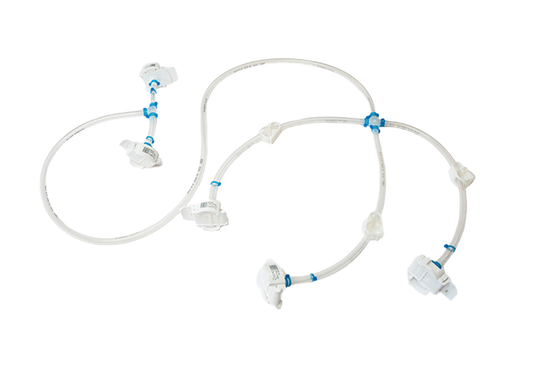
As an expert in single-use solutions, we have made it our goal to deliver vendor agnostic single-use assemblies manufactured at highest quality standards in ISO 7 cleanrooms and sterilized within shortest lead times. Prevent downtime and ensure an...
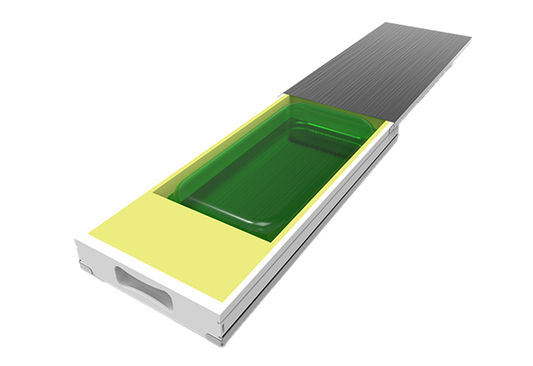
The safest transport solution for all available single-use bioprocess containers. Protect your single-use bag and reduce product loss. RoSS®: Robust Storage & Shipping
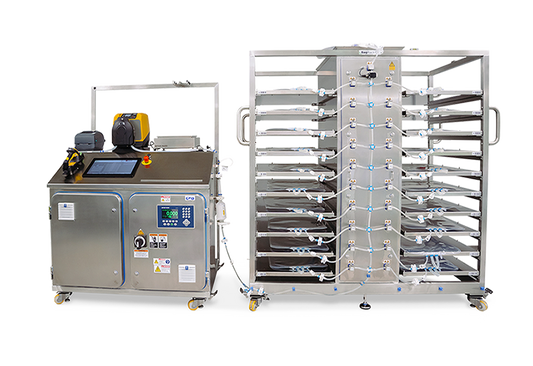
RoSS.FILL Bag is a flexible automated aseptic filling machine for the aliquotation and dispensing of bulk drug substance (BDS) into single-use bags. The system for aseptic filling and sterile filtration is highly precise, making RoSS.FILL Bag an e...
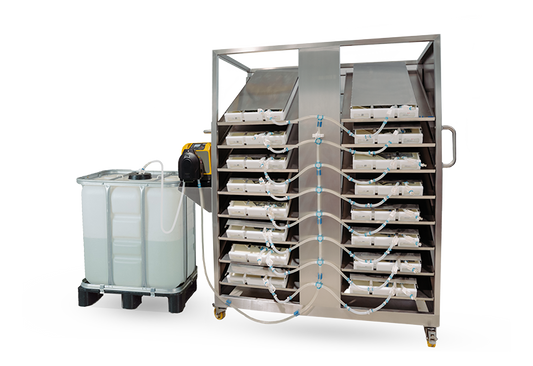
This standalone single-use bag draining system improves emptying single-use bags on site. Connected peristaltic pumps enable controlled fluid flow and the lowest possible retention volume. Multiple racks can be connected, allowing several single-u...
One could read a lot about single-use bags in biopharmaceutical industry as a primary packaging in bioprocessing in the previous last years. The rise of bags has become more relevant, since they largely replaced single-use bottles. Nevertheless, sterile bottles still hold a significant share in the industry as primary packaging for biopharmaceutical manufacturing. Will they continue to do so?
Khalil Essani, Technical Product Owner of Sterile Consumables at Single Use Support, has discussed the role of sterile bottles and their bottled potential in an interview.
Do you have any insights about the share of sterile bottles in the biopharmaceutical industry as primary packaging in manufacturing compared to single-use bags or others?
Khalil Essani: Bottles still hold a significant share in the biopharmaceutical industry. Without having a reference by hand I’d say that there are currently more single-use bottles than single-use bags in use. The fact that there are still so many bottles being used in bioprocessing has different reasons. One is that it is historically influenced. Another one is that the ecosystem and processes involved for bottles are optimized for various applications. And for some areas of application, bottles can be and will remain a legit choice. So, despite the rise of bags, bottles continue to be a preferred choice for many processes.
What are these areas of application where bioprocessing bottles are used?
Khalil Essani: Bottles are generally used for more robust products, such as media, buffer and DNA in small volumes. On the other hand single-use bags are to be preferred for more sensitive freezing applications, for example cell-based applications. So, bottles are largely used when adding buffer solutions or media to API. But there are also more robust biopharmaceutical products, such as monoclonal antibodies and ADCs, where it's conceivable that manufacturers still use bottles – even if single-use bags might be a better choice. As mentioned, the usage of primary packaging is often due to historical reasons. You don’t necessarily change a regulatory manifested process when the system still works satisfactory.
Do you think that bottles would remain a popular choice or even be revived, if bottle processes were closed systems during fluid and cold chain management?
Khalil Essani: If the integrity of the closed system is ensured, I believe bottles could maintain their popularity and possibly even see a revival. EU regulations have addressed this pain point of manufacturers in Annex 1 to go towards aseptically closed systems. Therefore, the recommendation is to always prefer closed systems, and this could give bottles a boost, when they’re filled in automated closed process. However, there are several other factors to consider. For example, there have always been challenges with the sealing of bottles, which is a very critical point. Ensuring the integrity of the closure system is essential to prevent contamination and maintain product quality.
Why manual bottle filling puts biomanufacturers at risk
What are other trends and innovations you observe with regards to bottles?
Khalil Essani: There is a lot happening in this area. Sustainable bottle materials are becoming more important. There is a lot of research and development on making single-use packaging more eco-friendly. At Single Use Support, we are committed to improving fluid and cold chain management with bottles, in order to enhance product quality and process efficiency. We provide manufacturers and CDMOs with high-precision, modular filling processes and control over the freezing process for bottles. These efforts have culminated in an end-to-end process for biopharmaceutical products in bottles, ranging from automated filling, freezing, storing, and shipping, where bottles are protected safely throughout fluid and cold chain management. Overall, it’s encouraging to see bottles regaining relevance in bioprocessing: With the right technologies in place, there’s great potential to create new value. Perhaps it’s time to let the genie back out of the bottle.
[[download-1-email-detailed]]
With climate change having become a reality, there is an increasing need for sustainability in everything we do. Major industries like biopharma or the life sciences in general need to rethink their production processes in order to become carbon neutral, meaning that the CO2 emissions are to be set net zero: Only by utilizing renewable energy and reducing overall energy consumption as well as by introducing initiatives to decrease greenhouse gas and other emissions can they make sure to have an environmental impact.
With the improvement of production processes and the optimization of supply chains, biopharma and pharma companies can improve environmental sustainability but also enhance value. Furthermore, by providing access to affordable drugs and medical devices to developing countries with poor and underfunded healthcare systems, pharmaceutical companies are contributing to social, and not only environmental sustainability.
Single-use technology - learn more
[[ToC]]
Negative impact of the pharmaceutical industry on our environment
If we want to change the current speed of climate change and levels of impact on our ecosystem, we all need to do our part. And while major players in the pharmaceutical industry have been implementing initiatives for decades, controlling emissions of air and water pollutants in order to minimize damage to our ecosystem is not enough:
According to data provided by analytics provider IQVIA, around 500 companies (the ones selling 80 percent of the global volume of pharmaceutical products) need to come together and drive lasting and sustainable initiatives in order to achieve lasting change and reduce the industry’s carbon footprint.
Health systems and life sciences as a whole should be front-runners in limiting the impact of climate change, as they are not only randomly concerned with the human health and well-being, but at the heart of public health.[[1]]
Solutions to advance sustainability
However, achieving sustainability in any manufacturing industry can be a challenging task due to the need to balance what is good for the environment with what is good for the business. This is why in 2005, a number of pharma stakeholders came together to develop strategies against the industry’s negative impact on our ecosystem.
Since then, they have been working on promoting environmental protection by driving the use of greener chemistry to realize their formulations as well as using renewable resources and engineering approaches in the production of pharmaceutical products and therapies.
Sustainability strategies that have or should be implemented by pharmaceutical manufacturers include, but are not limited to,
the introduction of circular economy to reduce waste as well as greenhouse gas emissions and design greener products
the redesign of the supply chain to introduce greater transparency and track emissions
the implementation of standardized metrics and increase of environmental regulations
One approach to achieve one if not several of the above mentioned sustainable development goals is the utilization of single-use technology. As illogical as it may seem, single-use technology is generally more environmentally friendly than traditional solutions. With only 0.002% of total plastic waste worldwide generated annually, single-use technologies used in biomanufacturing generate comparatively low levels of plastic waste overall.[[2]]
[[download-1]]
Single-use vs. Stainless Steel: Sustainability Check
Different life cycle assessment studies have shown that by switching from stainless steel to single-use systems the biopharma and pharma industry can significantly reduce their carbon emissions as well as energy and water consumption.
This is due not least to reduced cleaning requirements - meaning less solvents, streamlined procurement resulting in a smaller carbon footprint and less capital investment, along with more flexibility, and reduced risk of cross-contamination.
Nonetheless, throughout their decision-making processes, manufacturers of single-use technologies are aware of the fact that their increasing deployment in the industry requires strategies to ensure long-term sustainability. The implementation of sustainable pharmaceutical solutions into their value chain, however, requires the contribution of all parties involved in the product life cycle: manufacturers of raw materials, components, and single-use systems as well as carriers, users and waste treatment companies.[[3]]
Environmental impact of single-use technologies
The impact of plastic waste on our environment and our planet is not disputable. However, it needs to be pointed out that this waste does not come from the biopharma industry as it is subject to strict regulatory guidelines that are governing the collection, decontamination, and disposal of materials used in drug development and production.
Furthermore, in line with sustainability strategy guidelines, manufacturers of single-use technologies are obliged to facilitate the separation of the product into its base materials after use. Therefore, most single-use products are very easy to disassemble and recycle.[[4]]
How RoSS® is to be recycled – read more
Waste management in Biopharma single-use industry
In general, there are more factors that influence sustainability than only plastic waste. It is the holistic view on all environmental aspects including the required resources of water, chemicals, material processing etc., the impact on agricultural or urban land occupation, on ozone depletion or on ecotoxicity that help to evaluate the total impact on sustainability. When comparing different solutions in biotechnology, single-use technology is more environmentally friendly than traditional multi-use stainless-steel solutions. The reason behind this observation is mainly the need to elaborately clean multi-use technologies, such as stainless-steel technologies. Process freeze tanks, for example, must be cleaned with high water pressure, chemicals and other treatments before re-use which leads to extensive environmental harm.
The comparison between the lifecycle-assessment of single-use and conventional (durable) facilities are shown in Fig.2 in detail.[[5]]
The industry is about to acknowledge that sustainability is a mutual long-term goal where many parties are involved. All contributions and initiatives to make the industry even more environmentally friendly are a good step to make both the industry and our environment sustainable whilst maintaining the quality and sterility of biopharmaceutical products.
EcoVadis Sustainability Silver Rating
The EcoVadis Sustainability Rating involves regularly monitoring sustainable aspects in global supply chains, using innovative technology and sustainable processes. In 2025, Single Use Support achieved a Silver rating, placing the process solution provider among the top 15% of all companies assessed globally.
Sustainability at Single Use Support
References
Environmental Sustainability in Pharma, https://www.iqvia.com/-/media/iqvia/pdfs/library/articles/environmental-sustainability-in-pharma-iqvia.pdf?_=1651155700295, Published
BPSA: Single-Use Technologies (SUTs) improve healthcare outcomes and reduce environmental impacts. 2025. Infographic: Product: BPSA SUTs Sustainability Infographic: BPSA
Gladd, T.: Is Sustainability Possible With Single-Use Technology?, https://www.bioprocessonline.com/doc/is-sustainability-possible-with-single-use-technology-0001, Published August 12, 2015
What About the Environmental Impact of Single-Use Technology on Sustainability?, https://ispe.org/pharmaceutical-engineering/ispeak/what-about-environmental-impact-single-use-technology, Published 15, October 2020
GE HealthcareLife SciencesAn environmental life cycle assessment comparison of single-use and conventional bioprocessing technology, https://docplayer.net/20413850-Ge-healthcare-life-sciences-an-environmental-life-cycle-assessment-comparison-of-single-use-and-conventional-bioprocessing-technology.html, Published
[[ToC]]
Manufacturers of aseptic single-use connectors: Their advantages in an overview
Aseptic connectors link important medical applications with one another. Preferrably easy and quick to use and it must grant sterility, even if the environment around them is not sterile. The smooth and absolutely loss-free exchange of these valuable fluids in medicine has top priority. The precious medical substances are transferred using couplings from devices e.g. filtering, freezing, thawing and transferring to other instruments. Connectors and single-use assemblies are used to establish a fluid path between single-use equipment or devices and single-use bags or bottles. Thanks to numerous test procedures medical connectors can withstand extreme temperatures, guarantee the flow properties and tightness even at high pressure, and guarantee the sterility and durability.
Connectors play a key success factor. The connection to different applications is advised to be simple and straightforward, but above all, it must be reliable and safe. Its industry-wide well-known manufacturers offer the best products for the biopharmaceutical sector:
Sartorius / OPTA®SFT
CPC / AseptiQuik®
Cytiva / Kleenpak® Presto
Merck Millipore / Lynx®
Single Use Support / Single-Use Assemblies IRIS
Sartorius
The Sartorius Group can look back on 150 years of company history. 150 years of development from a precision-engineering workshop to a leading international life science group that has made its business to support biotech scientists and engineers all over the world in the development and manufacturing of drugs – from the first idea to the production. Today the company’s focus lies on the supply of life science products for development and manufacture of drugs, their storage, transport and the optimization of the drug flow. This is achieved by continuous training, improvement of processes, and adaptation to current conditions.
OPTA® SFT sterile connectors
Sterile plug connectors include products such as the OPTA® SFT sterile connectors. The connectors are just as different as the requirements in hospitals and laboratories. There is a separate sterile connector for each type of connection. This is the only way to guarantee a smooth fluid transfer which is sterile, fast and reliable. The OPTA® SFT-I connectors are available as individual components, but can also be optimally combined with other assemblies in the Sartorius series.
CPC - Colder Products Company
Global CPC was founded in 1978 in St. Paul, Minnesota. Colder Products Company, abbreviated CPC, is now a Dover company. As specialist for connection, coupling and fittings solutions, Colder offers a complete range of aseptic connectors in top quality and purity for cleanrooms.CPC connection solutions include precise hose barbs for superior grip, built-in shutoff valves to prevent product spills, and an easy-to-use, push-button thumb latch for quick connecting and disconnecting. Clean, fast, safe and intelligent assemblies can thus be made.
AseptiQuik®- Connectors from CPC
CPC offers a range of different types of connectors. Depending on the area of application, they have to meet different requirements with regards to properties such as flow rate or pressure-resistance (high and low pressure).
AseptiQuik® has a robust construction and provides reliable performance, without mounting or tubing welding machines. They enable an absolutely sterile transfer between tubing and bag systems, also in non-sterile environments. An easy-to-use push button thumb latch enables swift connecting and aseptic filling of liquids. Their ease of use is topped off with genderless connections.
PALL Corporation
The company PALL Corporation, known in many fields of activity under the umbrella of the Danaher Corporation, was founded in 1946 in Port Washington, New York. Now the area of activity in the field of filtration systems range from biotech, to food and beverages, laboratories, medical technology, aerospace, chemicals and polymers, industrial manufacturing, microelectronics, oil and gas to power generation. Complex challenges in separation, cleaning, and filtration throughout the biomanufacturing of drugs are solved at PALL.
Kleenpak® Presto sterile connectors
The sterile genderless connectors by PALL called Kleenpak® Presto represent intuitive, reliable and safe medical connectors. They are available in different sizes and offer intuitive and easy handling. Absolute sterility in non-sterile rooms is also guaranteed by the simple removing of a latch after successful connection. Kleenpak® Presto sterile connectors are of impeccable quality. Made from Bisphenol-A (BPA)-free polyethersulfone (PES), they are compatible with a wide variety of medical fluids and solvents.
Merck Millipore
Founded in 1668 in Darmstadt, Germany, the company Merck KGaA started out as a family-run pharmacy. Over 353 years it has grown into a global pharmaceutical and chemical company committed to promoting discoveries that improve the lives of people around the world.
Millipore, a former company for filtration in biotechnology, was acquired by Merck in 2010 and is now part of the life science division of the pharmaceutical and chemical company Merck KGaA from Darmstadt. Headquartered in Billerica, MA, the company is expert in developing and manufacturing products in life science, for example membrane filter devices for separating the molecular components of liquid samples. This is also where the company's name comes from, “Millipore”: it refers to the numerous tiny openings in their microporous membrane product.
Today, Merck Millipore provides scientists and engineers with industry-leading laboratory materials, technologies and services.
Merck Millipore Lynx® CDR Sterile Connections
The Lynx® CDR by Merck Millipore series promises ergonomic, fast and simple connections and multiple usage. Absolute sterile connections, disconnections and separating of single-use assemblies is possible with Lynx® CDR unlike with other aseptic standard single-use connections. The sterile connector is available in a wide range of sizes, from a 3/8- inch hose barb to a 1 ½ inch TC, and offers great flexibility for connecting different-sized tubing. The Lynx® CDR connectors are made of high temperature resistant polysulfone (PSU) and silicone seals. The sterile connectors remain absolutely sterile with liquids as well as with high pressures.
Integrate Single-Use Connectors to your Single-Use Assembly
Company
Sartorius
CPC Colder
PALL Corporation
Merck Millipore
Name of the product
OPTA® SFT-I Serie
AseptiQuik®
Kleenpak® Presto
Lynx® CDR
Type of connector
Sterile connectors
Aseptic connectors
Sterile connectors
Sterile connectors
Material
Polycarbonate (PC), Santoprene seal, hydrophobicPolyethersulfone membrane
Polycarbonate (PC), silicone seals,Polyethylene membrane
Bisphenol-A (BPA) free polyethersulfone (PES)
Polysulfone (PSU) and silicone seals
Resume
Can be used for low temperatures and autoclaving
Easy-to-use
Can be used for low temperatures and autoclaving
Huge selection of types and sizes of connectors
Easy-to-use
Genderless
Can be used for low temperatures and autoclaving
Easy-to-use
Genderless
Can be used for low temperatures and autoclaving
Easy-to-use
Genderless
Multi-Use optional (ST)
Single Use Support and Sterile Connectors
All high-quality sterile connectors including OPTA® SFT (Sartorius), AseptiQuik® (CPC), Kleenpak® Presto (PALL), and Lynx® CDR (Merck Millipore) are being assembled by Single Use Support. The company headquartered in Kufstein, Austria, offers a seamless transition from hose to single-use bag. By purchasing the supply system and single-use tubing assembly from the same source a seamless, loss-free and optimal flow is guaranteed. As vendor-agnostic company Single Use Support enables compatible fluid paths even when using different single-use components. If there are supply shortages for speficic products, Single Use Support helps to find equivalent alternatives.
This scale-up company focuses on maximum flexibility and scalability with full control and adherence to strict quality standards through gamma irradiation or e-beam and compliance requirements. Thanks to lean project management and ready-to-use components on stock, the Austrian supplier for single-use systems can shorten delivery times down to 14 days.
[[download-1]]
Not only for the use of the Single Use Support platform systems, such as RoSS.FILL, the independent single-use assemblies enable absolutely every customer request to be individually mapped and implemented in the shortest possible lead time. Customers appreciate Single Use Support's focus on offering flexible process solutions for individual processes, whilst maintaining top quality and quick delivery.
Your connections are manufactured individually according to your specifications and include the following:
Y, T and cross connections - also called: fittings
Filters
Clamps and plugs
Closures for (sample) bags and bottles
Custom-made products including special items
At Single Use Support fittings and connectors are double-fixed with cable ties to avoid leaks. All products are strictly controlled and are traceable as they go through the highest quality tests. Performed analytical tests examine endotoxins, sterility, particulates, biocompatibility and more. The inner surface is irradiated with gamma rays or electron beams and thus offer sterile, smooth and loss-free fluid transfer.
Time is valuable to our customers, which is why Single Use Support have shortened assembly times, reduced downtimes and optimized process steps with our platform systems.
Protect your valuable active pharmaceutical ingredient and rely on the highest quality with a system that is perfectly coordinated. Contact us and request a quote for single-use assemblies.
Contact us now