

RoSS.ULTF

Ultra-low temperature storage freezer

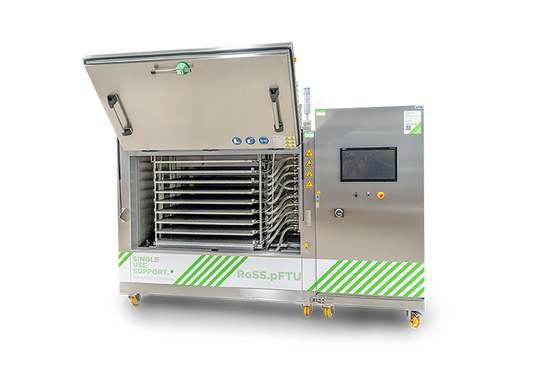
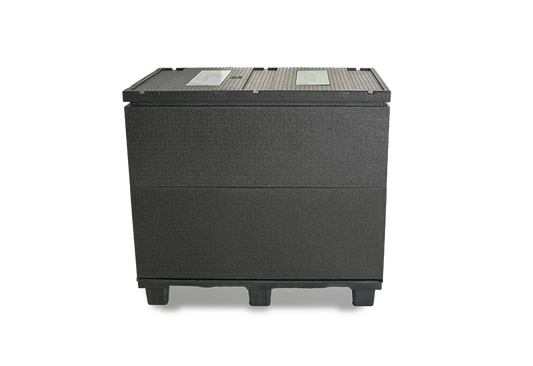
RoSS.ULTF is an upright ultra-low temperature storage freezer for frozen drug substances in different sizes.

Image of RoSS.ULTF, a ultra-low temperature storage freezer for frozen drug substances in different sizes, on a transparent background.

Key features

Down to -80°C

Long-term storage of drug substances at ultra-low temperatures

Up to 300 L

High capacity for large volumes of drug substance

High storage density

Saving ultra-cold room storage space per footprint

Modular interior

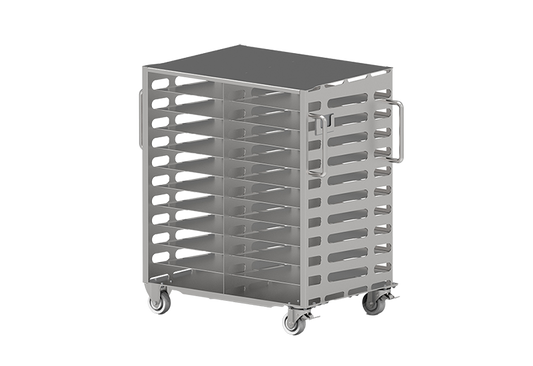
Internal rack system or drawer solution

Ease of use for loading

Place loaded trolleys, dollies, or racks as a whole inside

Seamless transitions in cold chain

Integrated end-to-end process between controlled-rate-freezing and shipping or thawing

Reduced fulfillment times

For time-critical projects, selected configurations are available

Highest storage density for ULT freezing

As a modular and efficient Ultra-Low Temperature (ULT) storage freezer, RoSS.ULTF is the perfect solution for all requirements. It outperforms both, conventional upright laboratory freezers and walk-in freezers and cold rooms thanks to its advantages for all biomanufacturing companies; full temperature control thanks to reliable air temperature conformity and a highly modular interior that can be equipped with shelving systems to store all available single-use bags and bottles.

Advantages of RoSS.ULTF to other solutions in the industry

Conventional Lab Freezer

RoSS.ULTF Ultra-Low Temperature Storage Freezer

Walk in Freezer & Cold Room

Comments

Temperature Control

×

Reliable air temperature uniformity and wide-ranging setpoints with RoSS.ULTF

Storage Density

Pallets, racks and other packaging to be stored efficiently

Modularity

Customized shelving systems for sizes of primary packaging

Cost-Effectiveness

Simple installation and maintenance of ULT storage freezers

Backup plan

Digital alarm infrastructure and long preservation of temperature in case of failure

Our customers trust in us:

Downloads

Preview of datasheet for RoSS.BLST blast freezer by Single Use Support

Datasheet

RoSS.ULTF - Datasheet

RoSS.ULTF - Datasheet
 
Preview of a whitepaper about ultra-cold storage of drug substances with RoSS.ULTF

Whitepaper

RoSS.ULTF - Maintaining cold chain at ultra-low temperatures - Whitepaper

RoSS.ULTF - Maintaining cold chain at ultra-low temperatures - Whitepaper
 
Preview of a whitepaper about ultra-cold storage of drug substances with RoSS.ULTF

Case Study

RoSS.ULTF - Universal ultra-low temperature storage freezer - Case Study

RoSS.ULTF - Universal ultra-low temperature storage freezer - Case Study
 

Send a request

  • Pharmaceutical cold storage – overview of all freezing ranges

    With the emergence of many innovative approaches in the biopharmaceutical industry in recent years, life sciences companies have needed to put increasing efforts into pharmaceutical cold chain management. Many newly developed, highly sensitive biopharmaceuticals and active pharmaceutical ingredients involved in groundbreaking, life-saving medicine have individual requirements that must take into consideration their safe handling, including storage and transportation. All relevant stakeholders – from pharma manufacturers to service providers to healthcare providers – demand care in cold chain management, and must therefore pay attention to strict requirements. Here, you will discover why temperature plays an essential role in the entire supply chain of cutting-edge cold chain products. We also guide you through an overview of the most frequently used temperature ranges in freezing drug substances and the long term storage of modern therapeutics.  Freeze & Thaw Solutions [[ToC]] Pharmaceutical cold chain logistics are a major challenge in the supply chain The complexity of pharmaceutical supply chains has increased immensely over recent decades, and with temperature-sensitive products leaving pharmaceutical companies to be shipped worldwide to fill-finish sites or warehouses, distributors depend on reliable solutions for cold chain logistics – from packaging solutions to highly advanced refrigeration devices. Equipment reliability and regulatory compliance are key. In addition, there is a high demand to manage the cold chain of vaccines with the highest efficiency, lowest cost and lowest environmental impact. Regulators such as the Food and Drug Administration (FDA) and the European Medicines Agency (EMA) have reacted to the increased complexity that comes with the supply chain of biologics, for example by implementing Good Distribution Practice (GDP) as a regulatory framework for distributors of medicines, to ensure their viability and safety. [[download-1]] Main temperature ranges in cold chain of vaccines Apart from the ultra-cold environment predominant in a fridge for lab for example (usually -40°C to -80°C ), there are two other important temperature ranges that are used to frame storage conditions for temperature-sensitive pharmaceuticals and active pharmaceutical ingredients under temperature-control, as outlined below. Ambient temperature Controlled room-temperature refers to a temperature range between 20°C and 25°C. This, though, does not  at all mean that products stored under these temperatures are indifferent to temperature excursions and that temperature control is not necessary. Refrigerator temperature A chilled environment, for example in a refrigerator, is characterized by temperatures between 2°C and 8°C and is appropriate for products that must be kept cool but prevented from being completely frozen. Cryogenic temperature Products to be stored at cryogenic temperatures require an environment with low to ultra-low sub-zero temperatures. In the process of cryogenic freezing, for example, temperatures can be lower than -150°C, which requires dedicated cooling and storage solutions that go far beyond the capabilities of a household freezer. As for the importance of the pharma cold chain in the distribution of many medicines and biosimilars, the numbers speak for themselves: In 2015, more than half of the temperature-sensitive products shipped were stored at room temperature, while 31% were refrigerated and 17% were frozen. Additionally, the use of mRNA vaccines as a means to fight the COVID-19 pandemic has further underlined the need for professional cold chain solutions. Our Cryogenic Freezer RoSS.LN2F Cold chain management of pharmaceutical products: Temperature requirements Considering the required temperatures for the storage and transport of various biological products, selecting the exact temperature to be used is in no way an arbitrary choice, but depends on a product’s characteristics. Although the ideal storage temperature may vary within product groups, certain temperature ranges can be clearly given for each of them. Monoclonal antibodies and mRNA: stored at -80°C Gene therapies: stored at -80°C Cell therapies: stored at -130°C and below Gene-modified cell therapies: stored at temperatures lower than -150°C Ultra-cold freezing - read more Monoclonal antibodies and mRNA: stored at -80°C Particularly with the development of COVID-19 vaccines, public awareness of mRNA has grown immensely, along with knowledge of its need for dedicated storage solutions. As it is vital to prevent RNA from degrading, and because some of its components have been shown to still be active at temperatures down to -70°C, a storage environment with temperatures between -20°C and -80°C is considered ideal. Antibodies have similar requirements for their storage temperature, although the specifics may vary depending on the type of antibody. Generally, however, monoclonal antibodies are stored under liquid nitrogen with temperatures between -20°C and -80°C. In addition to requiring storage at a specific set of temperatures, monoclonal antibodies – immunoglobulins that are made by cloning white blood cells – require fast freezing techniques to prevent cryoconcentration, denaturation, and the formation of aggregates. This is usually achieved using a technique known as plate freezing. Freezing and thawing of antibodies - learn more Gene therapies: stored at -80°C Gene therapies are aimed at either modifying or substituting existing DNA in a cell to fulfill a therapeutic function or to substitute damaged or harmful segments of DNA; this offers new possibilities in the attempt to cure genetic diseases. Vectors are an important tool in the application of gene therapies and are vehicles that are designed to insert DNA into a cell’s nucleus, where the DNA is then read and further processed. To provide maximum product viability and safety for components used in gene therapy – adeno-associated viruses (AAVs), for instance – storage under ultra-low temperatures is necessary, usually at around -80°C.  Cell therapies: stored at -130°C and below Cell therapies have enabled huge advances in the fight against a variety of diseases that were previously considered difficult to cure. Cell therapy uses the injection of viable cells – such as stem cells or B cells – harvested either from the patient themself (i.e. autologous cell therapy) or from a donor (i.e. allogeneic cell therapy). As its name suggests, cell therapy relies on viable cells. These cell therapies are usually derived from a manufacturing process that often involves a long period of time between the harvesting of cells and the actual application of the product. Therefore, appropriate storage is essential and much will depend on how long the product must be stored before it is to be applied. The long-term storage of cell products, for instance, requires cryopreservation at temperatures lower than -130°C if the cell structure is to remain intact. [[1]] Gene-modified cell therapies: stored at temperatures lower than -150°C Another application for ultra-cold freezing and storage is gene-modified cell therapy. This therapeutic approach involves cells being harvested and genetically modified in vitro prior to their administration to a patient for the treatment of a variety of diseases, including various types of cancer. There are several types of gene modification used to create cells for therapeutic purposes. For instance, gene modification is indispensable for chimeric antigen receptor T-cell therapy (CAR T-cell therapy) and the production of T-cell receptor therapies (TCR therapies). Given that gene-modified cell therapies are based on genetic modification performed outside of a patient’s body, the corresponding cells must be kept stable in an ex vivo environment for a certain period. Cryopreservation techniques are frequently used for the long-term storage of these cells at temperatures that are usually lower than -150°C. Secure pharmaceutical cold chain management with Single Use Support No matter what the specific needs of biologics are in terms of storage conditions, it is vital to guarantee process safety, efficiency, and product quality along the entire supply chain, and to minimize biopharma supply chain risks as best as possible. Therefore, the biopharma industry relies on smart and dedicated freezing and storage solutions. This is why Single Use Support guides the way with a product portfolio including RoSS.pFTU as a scalable freeze/thaw platform, as well as RoSS.ULTF – an ultra-low temperature freezer that achieves a high level of temperature stability for long-term storage. In terms of packaging, Single Use Support can yet again be of help, providing secure single-use packaging solutions, such as IRIS single-use bags, as well as RoSS shells, designed to protect your single-use bioprocess containers. Pharma cold chain logistics – meeting requirements To meet the requirements of cold chain shipping of biologics, great focus must be put on the appropriate cold chain equipment, e.g. on dedicated transport boxes: Single Use Support has therefore developed RoSS.SHIP – a smart shipping container that can keep temperatures below -60 °C for at least six days. Packing any pharmaceutical materials and drug substances into these highly dense transportation devices help bridge cold chain from manufacturers to pharmaceutical warehouses with ease. Freeze & Thaw Platform Details References Cryopreservation as a Key Element in the Successful Delivery of Cell-Based Therapies—A Review, http://dx.doi.org/10.3389/fmed.2020.592242, Published 2020-11-26

    READ MORE
  • The best choice for a cold storage freezer for biopharmaceuticals - A comparison

    The number of cold storage freezers for the biopharmaceutical market is countless. Some neither fulfill requirements of Big Pharma nor preferences for small biotechs. If you seek for a comparison in the myriad of options and promises with regards to ultra-low temperature cold storage freezers, the following will be interesting for you. [[ToC]] What are the biggest constraints with conventional cold storage technologies? Conventional technologies in Biopharma for cold storage of any drug substance are either cold storage rooms and upright or chest freezers. The latter have more similarities with common refrigerators holding sub-zero temperatures with optional setpoint temperatures. Both technologies are well-established for a reason as they offer options to store biopharmaceuticals either in a very inexpensive way or they have simple and hands-on solutions for quick installation and fixes. However, there are some constraints at manufacturing sites, such as: Inefficient storage of drug substance whilst having limited storage capacities Incompatibilites of primary packagings Being dependent on manual loading due to inflexibility of systems Lack of holding ultra-low temperatures down to -80°C Long lead times RoSS.ULTF: Merging the best of ultra-low temperature storage technologies Single Use Support’s innovation RoSS.ULTF offers superior attributes for long-term cold storage of biopharmaceuticals. It is embedded into an end-to-end process solution for bulk drug substance. Yet it can be applied universally to increase efficiency for storing all primary packagings. Highest storage density: In case of limited storage room on-site the most convenient way out of scarcity of storage room is to increase storage density. With RoSS.ULTF, multiple single use bags protected in RoSS can be stacked or inserted into different shelving system. Also, one pallet can be placed inside RoSS.ULTF. Upon request, RoSS.ULTF could be stacked itself one over another giving the option to double storage density. Modular shelving system: Single-use bags and rigid bottle container or carboys can be loaded into RoSS.ULTF either in adjustable shelves. Alternatively, fully loaded Trolleys or Racks may be loaded into the cold storage device in order to avoid manual loading which in turn decreases staff work force, risk of breakages and relieving health of staff. Read the article Primary and Secondary Packaging of drug substances to learn more about safe packaging solutions. Controlled Temperature: Long-term freezers for cold storage are not constructed to freeze drug substance from ambient temperature to ultra cold temperatures at approx. -80°C. Fast freezing, such as with RoSS.pFTU is proven to be best to grant product stability of drug substances. Long-term freezers are built to hold the cold temperature. With smallest air temperature uniformity, smart insulation technology and a wide range of setpoint temperature RoSS.ULTF convinces with its performance - ultra cold storage is the solution. Qualification and validation of freezing units grant for reproducibility and fostered reliability. Lower TOC: The price tag itself does not reveal the total cost of ownership. Especially when it comes to long-term cold storage, the operational expenses, process efficiency and required infrastructures outweigh the initial costs. When looking at a time of usage over few years, the costs are comparable among all technologies. Compatibility: Especially when using multiple primary packagings it is difficult to find one solution that fits to them all. High storage density paired with a modular shelving system gives room for all primary packagings, such as single use bags, carboys or cryovault. Part of end-to-end solution: RoSS.ULTF is one part of end-to-end process solutions from Single Use Support. It therefore grants seamless transitions among technologies for freezing, thawing and shipping. However, it is a platform completely independent on vendors and sizes of single use bags and bottles. Favorable features: RoSS.ULTF can be installed nearly everywhere - provided that there a network connection for power supply. With its safety features as door ajar alarm, lockable front cover and optional temperatur mapping it supports both staff and the frozen products. More details about RoSS.ULTF Superior attributes for long-term cold storage with RoSS.ULTF Merging the best of cold storage technologies, RoSS.ULTF outperforms - as illustrated in the comparison table below.   Conventional upright freezer Walk-in freezer / Cold room RoSS.ULTF Ultra-cold storage freezer Comments Temperature control ~ ❌ ✅ Reliable air temp uniformity of 1.5° C and wide-ranging setpoints with RoSS.ULTF Storage density ❌ ✅ ✅ Pallets, racks, and other primary packaging to be stored effectively Modularity ~ ✅ ✅ Shelving systems adapted for sizes of primary packaging used Cost-effectiveness ~ ~ ✅ Seamless integration and maintenance of ultra-cold freezers Back-up plan ✅ ~ ✅ Digital alarming infrastructure and long holding of temperature in case of failure [[download-1-email-detailed]]

    Read more
  • Start Pharma 4.0: Examples to Advance Ultra-Cold Storage of Drug Substances

    Pharma 4.0 is no longer a thing of the future. Industry 4.0 for biopharmaceutical manufacturing is here now.  Innovative manufacturers are striving for operational excellence in as many areas of bioprocessing as possible. In return, they will benefit from standardized and fully automated processes that reduce the number of unpredictable events, product loss, cross-contamination, and resource consumption. Successful adoption of Industry 4.0 will therefore contribute to cost efficiency, patient safety, and sustainability in pharmaceutical manufacturing.  This paradigm shift isn't just about automation; it's about orchestrating a symphony of smart devices and systems to create seamless, efficient operations across the biopharmaceutical landscape. A prime example of this shift is the integration of cold drug storage into the Pharma 4.0 framework. Interest in advancing this process step is already high among pharmaceutical companies. What does a smart ultra-cold storage process look like according to Pharma 4.0 principles?  Let’s take a closer look at ways to automate ultra-cold storage through Single Use Support.   [[ToC]] Opening Doors for Pharma 4.0 Traditionally, freezers and cold chain drug storage facilities are managed manually, requiring human intervention for tasks as simple as opening doors. Imagine a storekeeper leaving a door open for too long, disrupting the delicate ecosystem inside and allowing ice crystals to grow on the door, which can ultimately reduce the freezer’s insulation. Autonomous forklifts navigate the facility to load and retrieve materials to and from ultra-low temperature (ULT) freezers. But the real magic lies in the interplay between technology and precision. The freezer doors need to open at just the right time – not too long to avoid temperature loss and ice formation. This choreography of control is achieved through robust software integration that links the storage freezer to the process control system.  But that's not all. Communication between the robot and the ultra-cold storage freezer is critical for flawless material handling. The robot must position itself precisely for loading and unloading operations. This is where the power of Pharma 4.0 comes in – ensuring that this dance is executed to perfection. Every step, every access is documented by comprehensive audit trails that are securely stored in the central process control system.  The interconnection of Freeze-Thaw Units (FTUs) and ULT storage freezers with autonomous forklifts is a vivid example of Pharma 4.0 perfection. The ability to implement automated door systems triggered by the process control system and to store substances at a chilling -75°C while maintaining stringent alarm systems ensures that drug substances are preserved at their best. The result? A seamless, controlled environment for drug substance storage.  Robotics Takes Over Cold Chain Management Integrating robotics into ultra-low temperature (ULT) storage isn’t just an evolution; it's a leap toward greater efficiency, safety, and precision in cold chain management and storage of drug substances. It can help improve cohesive process steps.  Automated loading & unloading: Automation eliminates the variability associated with human intervention, ensuring consistent and safe operations. Transportation: The movement of drug substances from a Grade C clean room to freezing and storage platforms can be orchestrated by transport robots. Autonomous forklifts can also safely pass through airlocks. They help navigate the facility and ensure materials reach their destination without compromising sterility and integrity. Loading into plate-based freezers: One robot can load two plate-based freeze-thaw platforms, such as the RoSS.pFTU Large Scale, with a total of up to 800L in single-use bags, protected by secondary packaging shells. The smart layout of robotic systems minimizes congestion and optimizes drug placement and retrieval.  Transit of frozen liquids to ultra-cold storage: The conveyor becomes a gateway for transporting frozen bioprocess containers in RoSS® shells toward the ULT freezers. Loading into ultra-low temperature freezers: Robotic loaders place RoSS® shells into ultra-cold storage freezers, such as RoSS.ULTF – and retrieve them for cold chain shipping. The concept of an intelligent, integrated end-to-end cold chain process solution is becoming more than just a notion. By harnessing automated technologies, biopharmaceutical manufacturers can achieve precision, efficiency, and safety.   Introducing Single-Use Bag Handling to Pharma 4.0   Reasons to Start Now Embracing Pharma 4.0 is about more than just adopting technology; it's about reimagining processes. The marriage of cold storage and Pharma 4.0 isn't merely about opening doors; it's about opening doors to a future where biopharmaceutical manufacturing reaches new heights of efficiency, reliability, and precision.   Start Pharma 4.0 with RoSS.ULTF today   "The marriage of cold storage and Pharma 4.0 isn't merely about opening doors; it's about opening doors to a future where biopharmaceutical manufacturing reaches new heights of efficiency, reliability, and precision."Alexander Fuchs Predictive maintenance is another emerging area that can be part of integrated fluid and cold chain manufacturing solutions. By continuously monitoring any changes, caused by pressure, temperature or else, technologies can report and flag deviations. Picture a stepper and sealer valve used in aseptic aliquoting with RoSS.FILL alerting the process control system when action needs to be taken, such as integrity testing or replacement.   With predictive maintenance as part of Pharma 4.0, the orchestrated operations eliminate the risk of temperature fluctuations, ensuring that drug substances remain intact and viable. In addition, automation saves time and minimizes human error, allowing researchers to focus on tasks that truly require their expertise.  As we stand on the brink of this transformation, it's clear that integrating robotics into ULT storage is not just about machines; it's about advancing standards, pushing boundaries, and creating a future where the cold chain management continues to evolve. [[download-1]]

    READ MORE

FAQ about ultra-low temperature storage

When is RoSS.ULTF the best solution?

+

If you are searching for a ultra-low temperature storage freezer that maintains temperature consistently for drug substances in any bioprocess containers, RoSS.ULTF is a good choice. Particularly for multi product CDMO facilities, that face incompatibilities and space constraints when batch volumes and bioprocess container formats change, this storage freezer is useful.

What characterizes an ultra-cold temperature freezer?

+

Typically, ultra-cold temperature freezers can achieve temperatures as low as -80 °C, which sets them apart from mini fridges, upright freezers /deep freezers that are used for food storage like ice cream in households or ice makers for a large family. While interior light via LED light, door alarm, the size of the single storage baskets, free delivery and warranty may be the decisive factors when buying a household device, ultra-cold storage freezers need to provide not only extremely low temperatures, but also the highest accuracy and cost-effectiveness. Storage density (how many cu ft / cubic feet of cold storage) is also a key factor in the considerations on which ultra-cold storage freezer to choose.

What products can be stored and shipped with a laboratory freezer?

+

There is a wide range of products that can be stored and shipped in single-use bags within a laboratory fridge or freezer. The RoSS.ULTF is compatible with RoSS® shells, made to protect these very bags and to facilitate a seamless transition between the freezing/thawing and storage processes. Products stored and shipped this way include drug substances, monoclonal antibodies, mRNA and gene therapies, temperatures as low as -80°C. Some cell-based applications are stored at cryogenic temperatures down to -180°C.