

Freeze & Thaw Platforms

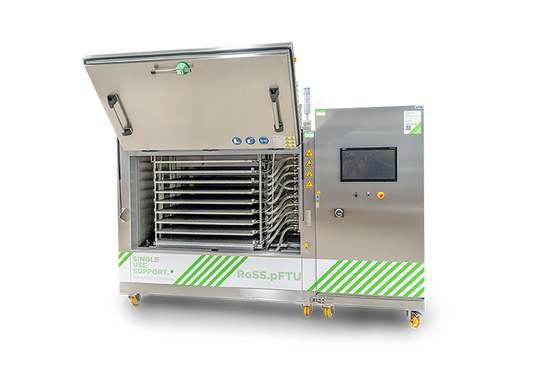
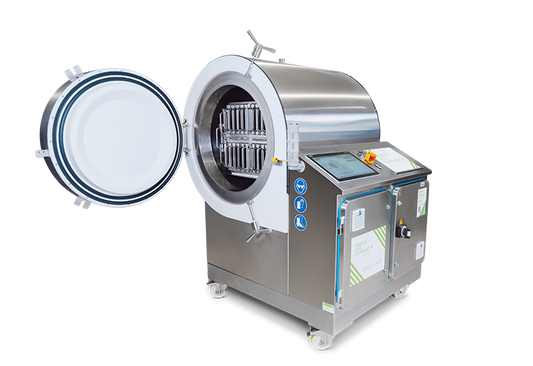
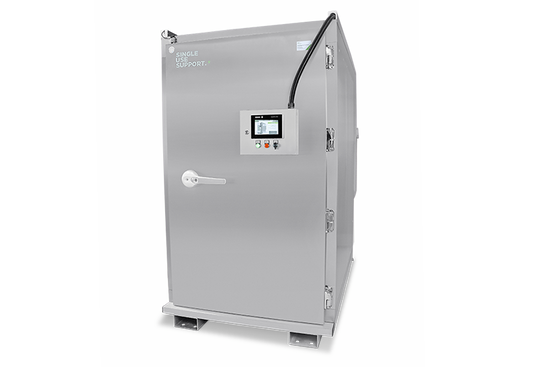
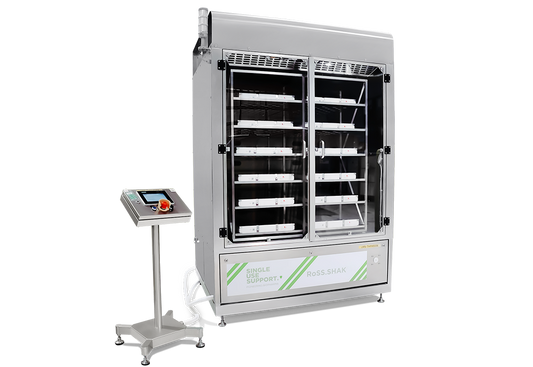
The Single Use Support freeze-thaw platforms provide reliable end-to-end solutions, such as plate freezers for the controlled freeze/thaw processes of any drug substance - either for clinical phases or commercialized bulk production. Our new freeze-thaw units are fully scalable and compatible with all batch sizes and bags from all established manufacturers – you will only require one single system from the lab to blockbuster production.

Image of a controlled plate freezer loaded with RoSS shells.

Our customers trust in us:

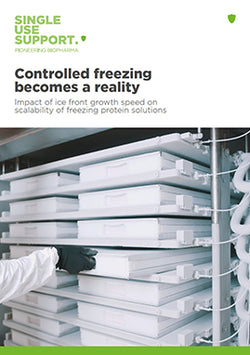
Preview of Single Use Support's whitepaper about controlled freezing with RoSS.pFTU

RoSS.pFTU - Controlled scalable freezing - Whitepaper

As one of the most essential parameters in terms of achieving control over freezing & thawing bulk, the freezing rate has been considered and evaluated in different tests. Using the ice front growth speed as a leverage had a significant impact on controllability and, as a result, on protein quality.

Downloads

Preview of datasheet for RoSS.pFTU scale overview by Single Use Support

Guide

Scale overview RoSS.pFTU - Guide

Scale overview RoSS.pFTU - Guide
 
Preview of Single Use Support's whitepaper about controlled freezing with RoSS.pFTU

Whitepaper

RoSS.pFTU - Controlled scalable freezing - Whitepaper

RoSS.pFTU - Controlled scalable freezing - Whitepaper
 
Preview of Single Use Support's case study about the ROI of bulk freezing

Case Study

The ROI of Bulk Freezing with Plate Freezers - Case Study

The ROI of Bulk Freezing with Plate Freezers - Case Study
 
  • Plate freezing: best approach for freezing biopharmaceuticals in single-use bags

    Plate freezing is a process where a product’s temperature is reduced by the means of contact with cold surfaces. Thus, a defining step in the freeze-thaw process for conservation in flat primary packaging, such as single-use bags. Things to know about plate freezing techniques Although plate freezing is very commonly known in food production, this freezing process has proven equally indispensable for the biopharma industry. After all, it is to fullfill the same purpose in both fields of application: to freeze products for storage and transport in order to ensure maximum product quality – be it frozen food like fish fillets or highly delicate biologics like mRNA vaccines. How freezing techniques emerged Like many scientific discoveries, the advantages of freezing (then) food for shipment were found by chance: In general, cold environments have been used for ages in order to cool food with the aim to impede the growth of microorganisms. After all, it was in 1890 when, by accident, refrigerated meat that was being transported overseas from Australia to Britain got frozen. This had such remarkable results on the quality of the delivered food that the procedure of freezing has soon been widely adopted in food transport and storage. Later on, in the 20th century, quick freezing has shown to be advantageous for various kinds of food. Since its beginnings, refrigeration systems have undergone many steps of evolution and improvements – from the combination of salt brine and ice that products were induced in (a patent on this dates back to 1848’s Britain) up to high-performance automatic plate freezers. Alongside, freezing time has been optimized, freezing capacities expanded and new fields of application discovered. What freezing techniques are most counted on? The most frequently used freezing techniques are: brine freezing: A product is submerged in a brine that is additionally cooled by refrigerants. cryogenic freezing: Liquid nitrogen is applied on a product in order to instantly freeze it; this is a quick yet costly freezing procedure. A cryogenic freezer freezes down to -180°C/-292°F.  blast freezing: Products are put into an environment which is cooled by the means of cold air – a very common practice for bulk packaging, i.e. for ultra cold storage in laboratories. contact freezing (plate freezing): A product is frozen via direct contact with cooled surfaces like those of a contact plate freezer. Considering the different approaches in refrigeration with multiple challenges and benefits, a focus on the plate freezing process shall illustrate the huge potential and its key role in pharmaceutical production.   More about our Pharmaceutical Plate Freezer Plate freezer vs. blast freezer – the main differences for biopharma During the process of blast freezing, air is blasted in a cooling chamber on a product in order to set or keep it at low temperature; it is frequently chosen to create a cold storage for frozen items, conserving them over a longer time. Drug substances in bulky primary packaging, such as bottles or 3D bags are more mostly frozen in blast freezers. Plate freezing, on the other hand, relies on cooled surfaces themselves rather than a cooling air blast: Via direct contact with these freezing plates, heat transfer is induced between them and the yet to be frozen products, allowing quick freezing of drug substance between the two metal plates. In that a plate freezer requires the product to be touched by both surrounding surfaces, the shape of its containers is to be taken into account as well which is why this is the more suitable freezing technique for single-use bags. Advantages of plate freezing for biopharma As for biopharma, the use of a pharmaceutical freezer can be substantial e.g. on the attempt to exactly control the freezing time according to the requirements of the processed substance. Recipe-driven setpoints for product-tailored freezing allows standardization and reproducibility of freezing kinetics that meet GMP relevant quality standards. Plate freezers facilitate fast and controlled freezing of bulk drug substance in bags which has proven to significantly reduce the occurrence of cryoconcentration: Caused by the different solubilities of a product’s components, the ongoing emergence of crystals leads to the separation of certain ingredients. With fast plate freezing it is hence possible to minimize reduction of product quality by achieving high homogeneity in the liquids. Homogeneous freezing is a result from quicker heat exchange.   Freezing results in x-ray view As a result of a slow freezing process through conventional freezing techniques, such as a laboratory static freezer, larger crystals with proteins coagulate in the center of primary packaging which causes tensions that lead to diminishing product quality.  [[download-1-email-detailed]] Freezing solutions for biologics – from lab- to bulk-scale Acknowledging the many benefits of plate freezing in the production of high quality biologics, Single Use Support has developed an elaborate product lineup of freeze-thaw-platforms to address a wide array of applications with RoSS.pFTU (plate-based freeze-thaw unit) for single-use bags  and RoSS.BLST (controlled blast freezer) for single-use bottles and other bulky packaging. Having the choice between different sizes (from 100 mL up to more than 200L), customers are provided with the appropriate freezing solution for their very needs. From the use in studies conducted in labs with the small lab freezer for pharma up to bulk production of biopharmaceuticals, a fully scalable freezing option has been developed to ensure maximum product quality. Compatibility with single use bags of all sizes and manufacturers is given both in lab-scale and in large-scale freezing systems thanks to the secondary packaging with RoSS shells. These robust shells are a valuable complement to the reliable end-to-end solution provided by Single Use Support. More about the Freeze-Thaw Platform

    READ MORE
  • Blast freezer in biopharma: What, when and why?

    Blast freezers have emerged as a reliable solution in the biopharmaceutical industry. However, pharmaceutical bulk freezing is not just about turning liquids into solids; it is also about preserving the integrity and quality of life-saving drug substances during manufacturing processes. Not all biopharmaceutical products can be frozen the same way, however. There are different types of bulk pharmaceutical freezers on the market for good reasons. When and why are blast freezers used? This article provides an overview of the types of bulk pharmaceutical freezers used in biopharma, the principles of blast freezing, and its suitability for different drug substances and container formats. 5 critical considerations when freezing bottles The blast freezing technology What is a blast freezer? Blast freezing relies on forced air convection inside a freezing chamber to rapidly reduce the temperature of drug substances. Cold air is circulated at high speed around the containers, ensuring uniform heat transfer and minimizing the risk of thermal gradients. Unlike static freezers, blast freezers are engineered for pharmaceutical applications to freeze drug substances by maintaining consistent airflow. Controlled rate freezing is essential for preserving the integrity and quality of sensitive biologics. This process helps prevent cryoconcentration and ice crystal formation, which can compromise product quality. What drug substances are frozen with air blast freezers? When to use blast freezers? They are particularly effective for freezing high-value drug substances that are stored in rigid containers. Common examples include: Live attenuated vaccines: These biologics require rapid and uniform freezing to maintain potency and prevent degradation. Bulk biologics: Enzymes, recombinant proteins, and other biologically active substances benefit from controlled freezing to preserve activity and stability. [[1]] Monoclonal antibodies (mAbs): When filled into bottles, mAbs are often frozen using blast freezers to ensure consistent product quality across batches. However, the suitability of blast freezing depends not only on the drug substance but more on the container format and the required freezing profile. What single-use containers work best with pharmaceutical blast freezers Why use blast freezers? Container compatibility plays a crucial role in the effectiveness of the freezing process. Plate freezing is the preferred way to freeze biopharmaceutical products in single-use bags, which is mainly due to their flexible structure. However, bags may experience uneven freezing in blast freezers, which can affect product quality. Therefore the following bulky container formats are preferred for blast freezers: Bottles: Rigid and uniform in shape, bottles allow for optimal airflow and consistent freezing. Bulky containers: Larger containers, such as 3D single-use bags, drums and CryoVault®, can be accommodated with customized airflow systems to ensure uniform temperature distribution. Key challenges in drug substance freezing Freezing drug substances is a crucial step in biopharmaceutical manufacturing, but it comes with several hurdles. One of the main issues is matching the freezing method to the container type – what works for single-use bags may not suit bottles or stainless-steel vessels. Inconsistent freezing profiles across batches can also affect product quality, making precise process control essential. As production scales up, freezing systems must keep pace while meeting GMP-relevant quality standards. And throughout the process, protecting the integrity of the biologic is critical. Ice crystal formation and thermal stress can compromise stability, so careful control of freezing conditions is a must to maintain product integrity. What we learnt from tests about cryoconcentration in bottle freezing   Choosing the right freezing technology for bottles Selecting the appropriate freezing method for drug substances in biopharma is not a one-size-fits-all decision. It depends on several factors, including the type of drug substance, container format, required freezing rate, and process scalability. Blast freezing, with its air convection technology, is well-suited for rigid containers such as sterile bottles. It offers uniform temperature distribution and controlled freezing profiles, which are essential for maintaining the stability of sensitive biologics. In contrast, plate freezing is preferred for flexible containers like single-use bags, where direct contact with cold surfaces ensures rapid and even freezing. Static freezing, often used in legacy systems, lacks the precision and consistency required for modern biopharmaceutical processes to cool liquids and is more appropriate for storage of already frozen drug substances. It cannot control temperature gradients and results in longer freezing times, increasing the risk of cryoconcentration and product degradation.[[2]] Freezing solutions from Single Use Support Single Use Support offers a comprehensive portfolio of freezing technologies tailored to the needs of biopharma, including plate-based freezers, cryogenic liquid-nitrogen freezers and blast freezers. The latter is best for controlled freezing of bulk-packaged drug substances, such as biopharma bottles. These integrated systems that support scalable workflows and are ready for GMP use. They are designed to ensure consistent product quality, operational efficiency, and flexibility across various container formats and drug substance types. Controlled blast freezing with RoSS.BLST References Singh S. et al.: Large-Scale Freezing of Biologics, 2009. Available at: Large-Scale Freezing of Biologics Brandmayr P.: Optimization of the freezing process with a liquid nitrogen freezer to increase cell viability of a mammalian cell line. 2023

    Read more
  • Sustainable freezing in biopharma: Emerging trends & the role of natural gas

    There will continue to be an ongoing need for cryopreservation and cold chain management of drug substances. However, these processes will no longer depend on F-Gases.  The utilization of F-gases, also known as fluorinated greenhouse gases, is steadily declining in the biopharmaceutical sector and is expected to be banned in the near future. Regulatory frameworks, such as EU Regulation 573/2024, are setting the standards as they support the overarching goal of curbing emissions linked to F-gases used for freezing drug substances in single-use containers. To enable more environmentally friendly freezing of drug substances, the industry must develop and implement more sustainable technologies. One notable trend is the growing adoption of natural gases for refrigeration. This transition is already evident at Single Use Support, where all freezing platforms and ultra-low temperature storage platforms are now available with natural gas technology. But is sustainable freezing truly possible? What challenges accompany the shift to natural gas-powered refrigeration platforms in pharmaceutical manufacturing? And which emerging trends further advance the principles of green engineering (even more) to go toward Global Warming Potential of zero?  Alexander Fuchs, Director Product Innovation at Single Use Support, sheds light on these aspects. What natural gases are used and what role do they play in Biopharma freezers? Alexander Fuchs: We equip our plate-based freezers, blast freezers and ULT storage freezers with natural gas refrigeration technology. R170 ethane, R1150 ethylene, R290 propane and R1270 propylene are natural gases that are not exclusively used by Single Use Support but increasingly adopted by other solution providers as well. The EU regulation 573/2024 mandates a gradual 70% reduction in F-gas emissions by 2030 to mitigate global warming potential (GWP). This directive has prompted manufacturers and solution providers to transition to sustainable alternatives. Non-compliance with the F-gas Regulation beyond 2030 entails penalties, underscoring the urgency of meeting sustainability targets. Even though solutions with F-gas cannot be placed on the market after 2030, they can still be used with the requirement of shortened maintenance intervals the greater the amount of F-gas used. While freezing equipment performing below -50° C is exempt from these regulations until 2030, Single Use Support and its customers already now embrace the trend toward eco-friendly solutions. Even as we offer solutions like the RoSS.pFTU plate freezer for controlled freezing of single-use bags, the RoSS.BLST blast freezer for controlled freezing of bulk packaging including bottles to -80° C, and the RoSS.ULTF for ultra-cold storage down to -80° C, all powered by natural gases. What are the big advantages of using natural gases? Alexander Fuchs: First and foremost, natural gases are not scarce and more readily available than fossil fuels. The incorporation of natural gases into a manufacturing suite does not require a complete overhaul, as these processes can be smoothly assimilated into the biopharmaceutical cold chain storage. Moreover, natural gases are more efficient than F-gases. This energy efficiency translates into a significantly reduced charge requirement, about 1/6th of what was previously needed with F-gases for our RoSS.ULTF, while achieving equivalent performance outcomes.   So why hasn't natural gas always been the obvious choice? Alexander Fuchs: Natural gas is more flammable. The combustibility of natural gas poses a safety concern in biomanufacturing environments. Exceeding a threshold of 500 g per platform triggers a cascade of measures, including infrastructure upgrades. As long as the natural gas charge remains below 500 g per platform, safety protocols are unaffected. This is why we design our RoSS.BLST and RoSS.ULTF to stay below this threshold and as technically permanently sealed systems in accordance with EN378 and ISO 60335-2-89. Importantly, the freezing performance remains uncompromised. So, switching to R170 (ethane) or R290 (propane), for example, does not impact cooling efficiency or reliability. Once safety requirements are met, users experience no noticeable difference. How do natural gases pave the way to Green Engineering and sustainable biopharma practices? Alexander Fuchs: Driven by the F-gases regulation, manufacturers and solution providers are compelled to pursue sustainability. Having such initiatives and guidelines in place is essential to collaboratively reduce emissions and lower GWP. The growing emphasis on natural gas usage supports Green Engineering by integrating life cycle thinking into all engineering processes. This entails minimizing resource depletion, reducing waste generation, and optimizing energy inputs and outputs for maximum safety and eco-friendliness. "The use of natural gases is, after all, a step towards a more sustainable biomanufacturing environment." Alexander Fuchs | Single Use Support However, it's imperative to view this as just one step toward a fully sustainable biomanufacturing landscape. It lays the foundation for future engineering innovations and solutions aimed at refining current technologies and achieving holistic sustainability. For example, CO2 could be a very promising refrigerant for the future - even though it cannot be used for ultra-cold conditions to -80° C. As an environmentally compatible temperature control solution carbon dioxide does not have ozone depletion potential and offers a very low GWP. Are natural gases the end of the line for sustainable freezing? Switching to natural gas and natural refrigerants marks an important step toward sustainable freezing, as it significantly reduces emissions and Global Warming Potential. However, further alternatives stemming from the great commitment of life science solution providers to ongoing development will soon enter the market. One promising approach is the use of pressurized air as a refrigerant. We are currently testing and evaluating temperature control units designed to achieve a Global Warming Potential of zero. These units will be integrated into our freezing devices, representing another major step toward making the freezing of drug substances even more sustainable. "Starting in 2026, customers will be able to access advanced cooling technologies with a GWP of zero in Single Use Support’s freezers."Alexander Fuchs | Single Use Support Overall, there is still room for improvement. The entire industry must commit to a green path; one that goes beyond natural gas. Like other innovators, Single Use Support will continue collaborating with customers to develop eco-friendly solutions. After all, innovation will shape the future of sustainability. Key takeaways Natural refrigerants are replacing F-gases in biopharma freezing due to regulatory pressure such as EU Regulation 573/2024 mandating a 70% reduction in F-gas emissions by 2030. Natural gases in biopharma freezers, including R170, R1150, R290 and R1270, deliver reliable, low-temperature performance while significantly reducing global warming potential (GWP) Freezers operating with natural refrigerants support the principle of green engineering by enabling more energy-efficient cooling cycles, reduced emissions and more environmentally responsible cold chain infrastructures. Airflow-based cooling technology offer an additional option to achieve a GWP of zero in biopharma freezing applications Explore Single Use Support's sustainable freezers

    READ MORE

Send a request

FAQ about controlled freeze-thaw platforms

What is the difference between a blast freezer and a plate freezer?

+

While blast freezers use cold air that is blasted on products that are yet to be frozen, plate freezers work via direct contact between the cooled plates and the products.