

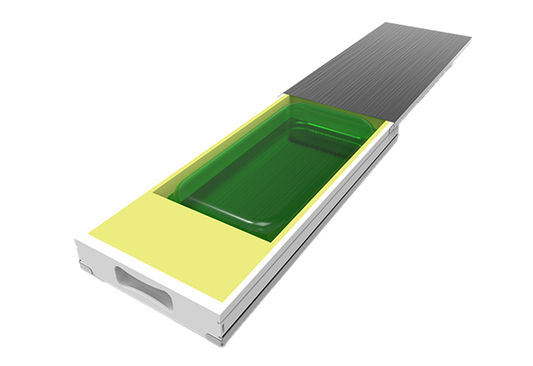
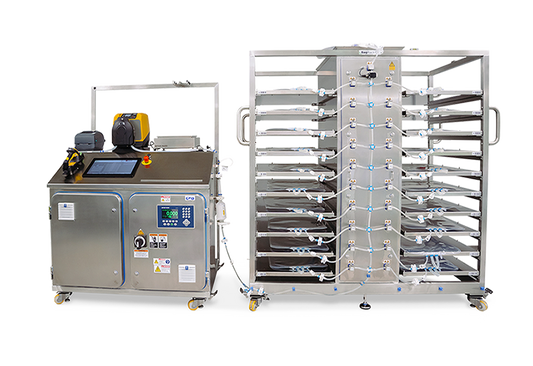
RoSS.LODR

Assisted loading device

Semi-automated loader for single-use bags & bottles

assisted loading device

Key features

Improved productivity

Faster & easier loading with the RoSS.LODR

Improved ergonomics

Handling single-use bags up to 20 L according to EHS regulations (environment, health, safety)

Compatible with bags & bottles

Customized shovel compatible with various secondary packaging options, including the RoSS® shell and bottles

Versatile handling

Rotatable and lockable shovel with 6 positions

Secure operation

Soft-start functionality for smooth and secure handling

Precise user management

Hold-to-run control mechanism

Integrated safety clutch

Added protection when operating with loading and unloading

Ergonomic work thought differently

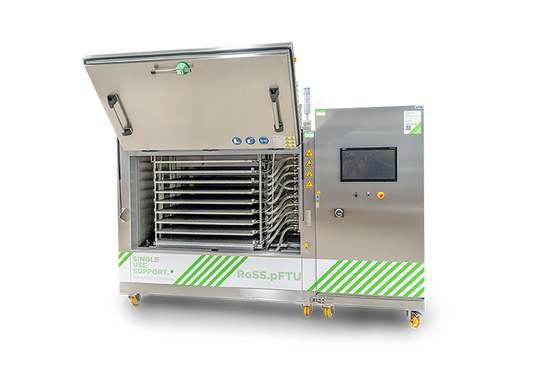
RoSS.LODR ensures ergonomic handling of the RoSS® shell for any loading or unloading activity, whether it be from the RoSS.FILL to the RoSS.RACK or the RoSS.RACK to RoSS.pFTU. The innovative supporting device for enhanced transportation of heavy loads facilitates a safe working environment for the operator and can significantly reduce work related repetitive strain injuries.

Our customers trust in us:

Downloads

Preview of RoSS.LODR datasheet

Datasheet

RoSS.LODR - Datasheet

RoSS.LODR - Datasheet
 

Send a Request

  • Ultra-cold freezing and storing – considerations & solutions

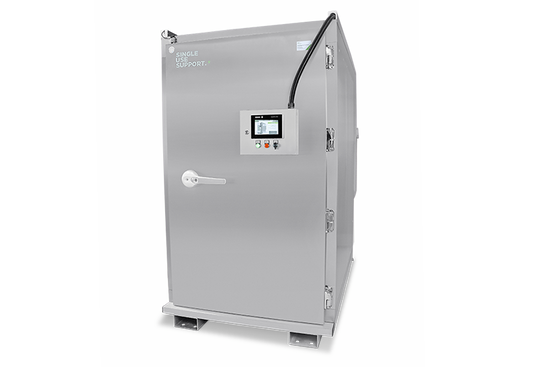
    When dealing with the proper handling of some of the most innovative biologics – whether they are already on the market or still in the stage of clinical trials –, ultra-cold freezing and storing is a necessity.  Since many pharmaceutical substances come with specific storage requirements that a standard refrigerator simply cannot cope with, the biopharma industry depends on dedicated solutions to guarantee maximum stability with regards to storage temperatures.  And since a considerable amount of biologics require ultra-cold storage in order not to lose efficiency or even become damaged when administered, ultra-cold freezing represents a crucial component in their supply chain. Discover our Ultra-cold Storage Freezer [[ToC]] What is ultra-cold freezing? Ultra-cold freezing is a procedure where pharmaceuticals and other products are extremely cooled down. It is characterized by especially low temperatures, usually with a temperature range between -40 and -80 °C (or between -40 and -112 ° Fahrenheit) that samples are stored at – depending on their specific characteristics and demands. Ultra-low temperature freezers (also known as ULT freezers) come in different sizes and capacities, allowing them to be used both in scientific research within laboratories and in the bulk production of biologics. What is ultra-cold storage? Ultra-cold storage is a way to store temperature-sensitive goods at very low sub-zero temperatures, corresponding to those achieved in the ultra-cold freezing process.This is because the two procedures are strictly aligned to each other, in that products need to be prepared for ultra-cold storage by the means of an ultra-cold freezer. In order for pharmaceuticals to reach the cold temperatures they are due to be stored at, plate freezing is a common practice: It delivers fast freezing times in a secure and stable process, reducing the risk for cryoconcentration and resulting in higher product quality. When to speak of ultra-cold freezing The requirements on cold chain transportation and storage of different products vary, depending on the very product. This is why the first level of cool chain temperature is called after the victual it is most frequently used for: the banana. Banana temperature lies between 12 and 14 °C and is a common transport temperature for tropical fruits. Ultra-cold storage, on the other hand, is characterized by temperatures as low as -80 °C, requiring powerful freezers to provide the highest possible stability in temperature. In between are different levels of transport and storage temperatures, each best achievable by dedicated cooling solutions. Fridge as cold storage: When it comes to the fridge as a cooling device, refrigerator temperatures are usually between 2 and 8 °C. A considerable amount of liquids is stored under these conditions. Cold freezers: One step below lies the area of cold freezers: With temperatures as low as -40 °C, this frames the storage conditions of many heat-sensitive substances. Ultra-low temperature freezers in biopharma industry: Some biologics require to be stored at even lower temperatures; for instance, already in the stage of being vaccine candidates for an immunization against the coronavirus, mRNA vaccines have shown their need of ultra-cold freezing to ensure their effectiveness and safety. Ultra-cold storage: RoSS.ULTF Ultra-cold freezing and storing: fields of application When it comes to cell and gene therapies, cryopreservation plays a significant role in the manufacturing process of respective products. Stem cells, for example, are kept at ultra-low temperatures to ensure their viability, thus making ultra-cold freezing a door opener in regenerative medicine. Another – growing – field of application of ultra-low temperatures is the Covid-19 vaccine storage or, to be precise, the storage of mRNA vaccines. Since their formulation is based on RNA as a very sensitive biological component, the U.S. Food and Drug Administration (FDA) furnished a fact sheet for healthcare providers on how to adequately handle the BioNtech-Pfizer vaccine against Covid-19, specifying a temperature between -90 and -60 °C as the required transport temperature. If you want to learn more about single-use systems for safe and efficient storage and shipping of drug substances, read our article about shipping and storing frozen drug substances.  Cold chain requirements and how to meet them As already stated previously, stability in temperature is key within the supply chain of various products, since many of them react with quality loss when being confronted with variations in temperature. Additionally, the growing field of application of ultra-cold freezing – due to innovative therapies, not to mention the move to bulk production of mRNA vaccines – demands for serious considerations on the effectiveness of such devices in terms of scalability and capacity.  Single Use Support has been working on addressing these very needs in biopharma industry and provides dedicated platform solutions to ensure a seamless transition along every single step in the ultra-low temperature freezing, storing and cold chain shipping process. High density ultra-cold storage – RoSS.ULTF Designed to provide ultra-cold storage capacities for frozen substances in different sizes, RoSS.ULTF is an ultra-cold freezer equipped with a precise temperature control and allows holding temperatures down to -80 °C. Also, given its space efficiency, this ultra-cold storage freezer is versatile in terms of usability, yet constant when it comes to ensure maximum product quality. [[download-1-email-detailed]] Fast freezing down to -80°C with laboratory plate freezers – RoSS.pFTU Lab Scale The requirement of smaller capacities in order to ensure maximum (cost) efficiency does not at all diminish the need for highest effectivity and process stability – neither for maintaining ultra-low temperatures nor for achieving them. On the contrary: Clinical studies demand extreme consistency across their conduction, including the freezing process of delicate substances. This is where the pharma lab freezer RoSS.pFTU Lab Scale comes into action: This plate-based freeze and thaw unit is designed to deliver a controlled and scalable freezing process down to -80 °C, suitable for smaller batches and bags with a drug substance volume from 1 mL up to 5 L. Read more about freezing of high volumes in the article: Freezing drug substance Pharmaceutical freezer for bulk production The RoSS.pFTU line-up of pharmaceutical freezers offers more than one product with an unalterable capacity. Instead, different sizes are available, according to the users’ specific needs. When, for instance, a scale-up in the production of pharmaceuticals is to be achieved, the pharma freezer RoSS.pFTU is the ideal plate-based freeze and thaw unit to combine both process stability and a high capacity, suitable even for bulk production. It is compatible with single-use bags of any manufacturer and size and offers a capacity of up to 200 L and more – depending on the bag type. That way, it embodies the top end of the freeze and thaw platforms by Single Use Support, adding to our wide offer of high-quality end-to-end solutions for the biopharma industry.

    READ MORE
  • Efficient solutions supporting freezing and storage operations in bulk drug manufacturing

    How is your frozen drug substance moving through the facility?  While freezing performance and storage temperature often receive the most attention, day-to-day efficiency depends on what happens between those steps. Every loading, transfer, and storage activity requires operator involvement, consumes resources, and can introduce process variability or EHS-related challenges. Every transfer also introduces handling-related product loss risk for frozen bags and bottles containing high-value drug substances. Each additional touchpoint increases the likelihood of accidental drops, container damage and product loss. Moving frozen drug substances through the cold chain becomes increasingly complex. Small inefficiencies between freezing and storage can accumulate over time, affecting workflows, capacity utilization, and operator workload.  How can freeze-to-store workflows be optimized without expanding facility infrastructure? Or how can manufacturers reduce handling steps while maintaining flexibility for different batch sizes and container formats? This article explores practical solutions for simplifying bulk production freeze and storage operations. [[ToC]] Supporting efficient bulk drug substance freezing and storage operations  The efficiency of cold chain operations is strongly influenced by how easily frozen batches can be transported, stored, and accessed throughout the process. In bulk drug substance manufacturing, additional handling steps increase operator workload, consume resources, and can introduce variability.  The goal is simple: to move drug substance batches through freezing and storage operations with minimal manual intervention and a reduced risk of errors.   The complexity of cold chain operations depends on several factors, including whether batches can be processed as complete units or whether individual single-use bioprocess containers must be handled separately. The latter often requires splitting a batch into multiple containers, creating additional steps for loading, unloading, transportation, and redistribution between freezing and storage operations.    Full-batch operations: keeping freezing and storage aligned  Problems often start when freezing capacity and storage capacity are not aligned.  A batch may fit into a blast freezer, but then needs to be split. It is either distributed across multiple storage freezers or placed differently into walk-in freezers, where space utilization can be even more challenging. This means that operators must unload, redistribute, and transport containers before the product reaches long-term storage. These additional process steps add complexity without contributing value to the overall operation.    One approach to streamlining full-batch processing is to design both freezing and storage capacity around the same size. When the process steps of freezing and storage follow the same batch concept, complete batches can move directly from freezing to storage without redistribution or division.  The combination of RoSS.BLST and RoSS.ULTF is based on this principle by supporting the same handling logic across both operations. Mobile transport dollies can remain loaded throughout the process, helping simplify transfers, reduce manual intervention, and improve workflow continuity.  The result is a simpler workflow with fewer handling steps, reduced risk of deviations, and more efficient use of existing infrastructure. The systems are integrated into a streamlined process and optimized for their intended purpose:   RoSS.BLST: maximizing freezing capacity within limited space  For facilities where space is limited, a compact freezing solution can help increase throughput without requiring facility expansion.  RoSS.BLST was designed for high-capacity controlled freezing of bulk drug substance and supports a wide range of container formats, including single-use bags, protected by RoSS® shells, bottles, trollies, and transport dollies. Its modular loading concept allows manufacturers to adapt  configurations and throughput to changing process requirements.  A key advantage is its ability to accomodate 30% more batch volumes than comparable blast freezers while maintaining a relatively small footprint. This enables manufacturers to increase freezing capacity without investing in additional freezing infrastructure or valuable cleanroom space. By maximizing the amount of products that can be frozen within a given area, manufacturers can make more efficient use of existing facilities while maintaining operational flexibility as production demands change. Discover RoSS.BLST    RoSS.ULTF: storage designed for bulk operations  Many ultra-low temperature storage freezers were originally developed for laboratory samples or small-volume inventory. While highly effective for those applications, they are not always optimized for storing large bulk drug substance batches. Bulk freezing and storage operations place different demands on equipment and facility design.  RoSS.ULTF is designed for high-density storage and flexible loading configurations that accomodate large batches or multiple container formats. Because it follows the same handling philosophy as RoSS.BLST, manufacturers can maintain a consistent workflow from freezing through storage of bulk drug substance batches.   Discover RoSS.ULTF    EHS-friendly handling of heavy single-use bioprocess containers  Efficiency is important, but so is safe handling. As container volumes increase, manually handling frozen drug substances becomes more challenging for operators and more prone to error. Taking single-use bags larger than 10 L as an example, their weight can become a limiting factor from an EHS (environment, health, safety) perspective.  Fortunately, solutions are available that improve the handling of bioprocess containers while complementing batch-oriented cold chain operations.  Assisted loading of single-use containers with RoSS.LODR  RoSS.LODR supports operators during the loading and unloading of freezers, for example when frozen bioprocess containers are transferred to storage shelves or moved between process steps. The mobile gripper arm enables ergonomic handling of heavy frozen containers, reducing physical strain on operators and supporting a more controlled and repeatable handling process.   Discover RoSS.LODR    Forklift-compatible trolley handling For larger operations, mobile trolleys carrying single-use bags and bottles can be moved throughout the facility on wheels. Because RoSS.BLST and RoSS.ULTF are designed to accomodate fully loaded trolleys, they can be transferred into and out of freezers using forklifts.  Instead of moving individual containers one by one, complete rack assemblies can be relocated in a single step. This reduces handling time, simplifies internal logistics, and supports more efficient material movement throughout the facility.  Small improvements between freezing and storage can have a big impact When freezing, transport, and storage are designed as one connected process, manufacturers can simplify batch handling, reduce operator dependency, and make better use of available infrastructure. Even small improvements between freezing and storage can translate into meaningful gains in efficiency, scalability, and operational consistency. Reducing unnecessary product movement throughout freezing and storage operations therefore supports both operational efficiency and loss prevention. By reducing unnecessary handling steps and maintaining full-batch movement wherever possible, facilities can streamline cold chain operations and make more effective use of existing assets. The result is a process that is easier to scale, easier to manage, and better aligned with the demands of modern biopharmaceutical manufacturing.  Efficient bulk drug substance freezing & storage   

    Read more
  • Bulk drug substance management

    With the rising need for novel therapies - and, based on the changes in the disease landscape as most currently highlighted by COVID - the global biopharmaceutical industry is evolving, and market needs are shifting. We are seeing an increasing number of drug products and APIs produced by an equally growing number of pharmaceutical and biopharmaceutical companies, as well as third-party CMOs. The following article aims to take a closer look at the term “bulk drug substance” and its meaning, as well as to investigate smart solutions to shorten the phase between development and blockbuster production. It furthermore aims to give a concise definition alongside an extended view on the daily challenges in biopharmaceutical processing.   [[ToC]]   Bulk drug substance definition (FDA) According to FDA’s (Food and Drug Administration) definition, bulk drug substance describes substances in various suitable forms used as an active ingredient in the compounding, manufacturing, processing, or packaging of a drug. Suitable forms can be liquid solutions as well as fine powder or crystals. The scientific definition of the term “bulk drug substance” does not include intermediates used in the synthesis of a medical drug. Bulk drug substances or APIs (active pharmaceutical ingredients) - as they are also known - are used in the production of compounded medical drugs. As such, they must meet certain statutory requirements in order to be available for clinical use.  Additionally, the FDA issued an interim policy, giving advice to manufacturers of compound using bulk drug substances, for instance on the additional information on the labels of dosage forms. [[1]]   Drug substance vs. drug product – the differences The use of bulk drug substances can serve an important role for patients for whom an FDA-approved drug product is not appropriate, such as patients who, for example, have an allergy and need a medication to be made without a certain dye or a different kind of inactive ingredient. In such cases, certain physicians and pharmacists (in accordance with section 503A) or outsourcing facilities may be able to provide compound drug products, having to meet several regulatory demands. Outsourcing facilities as nominators, for instance, need to be registered under section 503B of the Federal Food, Drug, and Cosmetic Act (to be found in the Federal register). Additionally, only compound drugs may be produced that are included in the FDA drug shortage list. Otherwise, an appearance of the nominated bulk drug substance in FDA’s 503B bulks list (a list of bulk drug substances with clinical need) is required. Pharmacists and physicians, as well, need to comply with various regulations in the production of bulk drug substances – an applicable United States Pharmacopeia (USP) and National Formulary monographs, for instance, need to be taken into account. In order to be approved, any bulk drug substance must be manufactured by an establishment that is registered under section 510 of the FD&C Act (Federal Food, Drug and Cosmetic Act), and additionally it must be accompanied by a valid certificate of analysis. [[2]] Micro to macro - from lab to commercial scale Once a newly developed product has been approved for the market, manufacturers are faced with having to scale up, so they can move from preclinical to commercial scale manufacture. This is a complex process concerning the entire supply chain that needs to be well managed, as it is not without its challenges. Furthermore, no two production sites are the same and the chemistry processes differ from manufacturer to manufacturer. The obstacles and challenges are manifold, and they apply to scientific as well as to technical aspects, while legal regulations and standards have to be adhered to and complied with. Additionally, moving from micro to macro might lead to the the Food and Drug Administration having to newly approve the entire process. And if this was not complicated enough, the different departments involved in research, development and production may be spread out across various sites. Even if they all operate within the same organization, they may be geographically removed from each other. These are all factors that influence the outcome of any project, and so they should beconsidered early on, with clear steps determined for the scale-up process and clearly assigned responsibilities for all individuals involved While during research, medicinal chemists are focused on whether a certain idea is feasible, once they move ahead, they are more concerned with the scale-up of procedures and logistics. Good Manufacturing Practice (GMP) is key, and strict regulations mandate extensive documentation to safeguard both quality and traceability. Single-use technology - the modern, agile choice for drug substance logistics While the challenges of scaling up the production process for bulk drug substances are obvious, all parties concerned are constantly working on improving existing technologies or coming up with new approaches to make life easier. One such development is the use of single-use components, which was first employed in lab environments. Single-use technology has become an accepted standard in small-scale environments such as the lab and when administering the drug to the patient. However, their modular design allows for great flexibility and as well as scalability, which is why is becoming increasingly common as an agile solution in all areas - all the way to large-scale commercial production. The utilization of disposable equipment allows manufacturers to transfer the entire process - ranging from early-stage development to final product and logistics - relatively easily and without any major risks. The system, which involves both technology and equipment (including bags, connectors, tubings and assemblies) can be scaled up and adapted relatively easily thanks to the nature of the single-use components employed. [[download-1]]   [[download-2]] Thawing drug substance: best practices Thawing of drug substances has to be carried out with as much diligence as there has to be in every other step in the supply chain of bulk drug substances. After all, there need to be seamless transitions from one step to another, achievable by dedicated end-to-end solutions. In general, one can distinguish between an uncontrolled and a controlled thawing process. While uncontrolled thawing leaves little to no control over thawing rates, controlled thawing processes allow to adapt the heat supply to a high degree. However, there is a lot more to consider in order to achieve optimal thawing results.   Avoiding product loss of bulk drug substance Loss of drug substance (product loss) is a risk that generally exists within every step within the supply chain of bulk drug substances. Contamination of bulk drug substances can cause enormous trouble in the production of drug products, leading to considerable costs. But the risk of product loss persists during filling and freezing processes, the latter of which have to be carried out in accordance with the product’s requirements. Further protection is required during storing and shipping, and the thawing process can also pose the risk to damage highly sensitive substances. However, there are measures to ensure that the loss of these valuable substances is avoided. Seamless transitions from one step to another, provided by end-to-end solutions for bulk drug substances, are therefore key to a lossless product management. Risk management for a safe handling of bulk drug substances In safe handling of bulk drug substances, risk management is an important aspect to be considered – be it human drugs or compounded animal drugs, since staff must be prevented from being exposed to potentially hazardous substances. This is why, in pharmacy compounding, several regulations are installed, e. g. the Drug Quality and Security Act. Critical steps in the production of bulk drug substances include filling and freezing, but also transport/storage as well as thawing and draining – all of which have to be executed with high regards to the respective risks for product and stuff. In order to minimize safety risks for staff when handling bulk drug substances as well as to ensure product quality and to meet regulatory standards with no exemption, according measures must be applied all along their supply chain. Trend: decentralized manufacturing means growing complexity The biopharmaceutical industry has always been a fast-paced and challenging field but with an increased rate of new developments and growing decentralization, the already existing complexity is only bound to increase. Teams spread out over geographically removed sites have to collaborate and work together, which has been made possible or easier thanks to a growing degree of digitization. Digitization can be seen as one of the reasons for ever-increasing levels of decentralization, as well as outsourcing to third-party CMOs or CDMOs.  These developments bring with them a growing need for standardized processes that are flexible and reliable in equal terms. They need to be compatible so as to ensure uniform processes across all sites and phases. Thanks to its modular nature, single-use technology is ideal when it comes to finding innovative solutions for the design of bioreactors and decentralized biopharma manufacturing processes.  While in the past disposable production methods have generally been used for lower volume manufacturing and processing for clinical and commercial requirements, they are on the rise for large-scale production purposes and are set to become an established industry standard. Conclusion Where innovation and technology are working hand in hand, they can come up with revolutionary solutions that in turn allow to improve the time to market. However, this is only possible with a comprehensive and sustainable approach and by considering long-term prospects.  A newly developed medical drug is only as good as the entire process surrounding it. In other words, the initial work in the lab can be negligible if the required basic conditions have not been thought through and set up well in advance. Single-use bioprocessing offers ideal premises for the development and production of bulk drug substance: Single-use systems are modular, thus allowing for the highest possible degree of agility. Flexible and scalable solutions are the future, and single-use is the way forward. Biopharma­ceutical end-to-end solutions References Interim Policy on Compounding Using Bulk Drug Substances Under Section 503B of the Federal Food, Drug, and Cosmetic Act, http://www.ncbop.org/PDF/FDAUseofBulkDrugProductCompOutsFacilities503BJan2017.pdf, Published 01/2017 Bulk Drug Substances Used in Compounding, https://www.fda.gov/drugs/human-drug-compounding/bulk-drug-substances-used-compounding, Published 12/2022

    READ MORE