Scalable gene therapy manufacturing

Controlled workflows for plasmids, vectors, and intermediates to maintain quality from gene therapy production to frozen storage.

Close-up of an operator handling small-volume drug substances on a RoSS.FILL CGT aseptic filling system.

Why Single Use Support for gene therapies?

Product loss during filling and freezing?

Manual filling increases the risk of non-compliance with GMP Annex 1 and of product loss through contamination. Freezing single-use bioprocess containers without protecting the container closure integrity makes them more likely to break during cold chain handling.

Green icon of a checkmark symbol inside a shield demonstrating safe and efficient handling.

Reduced risks of product loss and contamination

Using automated aliquoting in closed systems minimizes the risk of contamination. Protecting single-use bioprocess containers from external influences is essential to safeguard staff and minimize product losses and costs.

Scalability limitations?

When gene therapy programs scale, manual fluid handling soon becomes a bottleneck for efficiency and reproducibility.

Green icon of two single-use bags on a transparent background demonstrating the availability of different sizes

Scalable by design

Modular and scalable platforms provide the flexibility to adjust automated fluid processes according to the required scale. Manufacturers can therefore increase their throughput and standardize their operations from the laboratory to the commercial scale.

Bag-to-bag variabilities?

Can you be certain whether every aliquoted bag contains the intended dose and fill volume? Inconsistent filling can lead to batch variability, product loss, and potential risks to patient safety.

Green icon of a checkmark symbol inside a target on a transparent background demonstrating highest accuracy

High filling accuracy

Automated homogenizing and filling systems ensure a consistent process for dispensing gene therapies. They standardize bag-to-bag distribution with the highest level of accuracy, down to a few mL, into bioprocess containers.

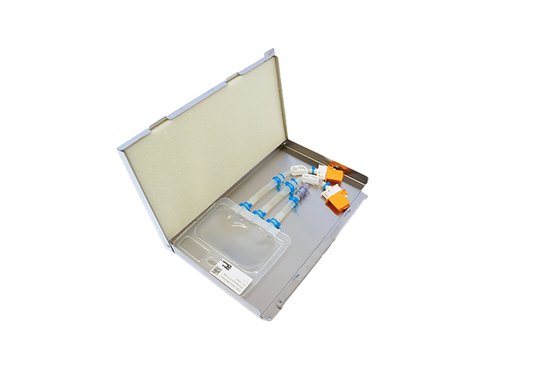
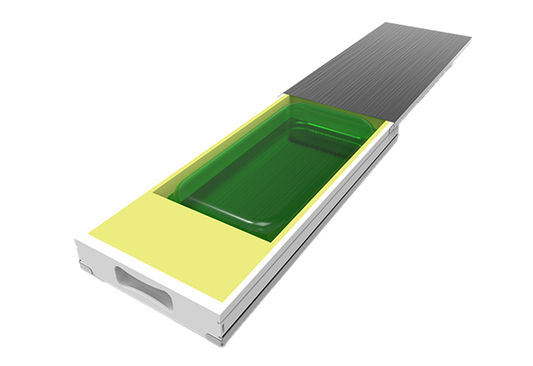
Image of a RoSS.KSET - protection of a bioprocess container for cell and gene therapy.

Gene therapy manufacturing solutions

Gene therapies are reshaping the treatment of genetic and acquired diseases by modifying genetic material within a patient's cells. With a growing number of approved therapies and a robust clinical pipeline, the field continues to advance rapidly. As manufacturing scales and regulatory requirements evolve, ensuring product quality, process consistency, and patient safety remains critical.

Single Use Support provides specialized single-use technologies for gene therapy manufacturing, enabling biotechnology companies to optimize the production of advanced therapy medicinal products (ATMPs). From sterile single-use systems and modular fluid management solutions to controlled-rate freezing and ultra-low-temperature storage technologies, Single Use Support's portfolio supports efficient, scalable, GMP-compatible manufacturing processes.

Primary packaging for gene therapies

After gene therapy products such as viral vectors have undergone a gene editing process and have been cultured, they are not usually administered immediately. Instead, they must be safely stored before they can perform the genetic modification for which they were designed, such as the replacement of a mutated gene or gene transfer.

To ensure the quality and safety of gene therapy products until they are transported to readministration, Single Use Support has developed single-use solutions in different sizes: For instance, RoSS.KSET is designed for the protection of smaller bioprocess containers, such as those needed for gene therapy, where smaller volumes need to be handled.

Aseptic filling of gene therapy products

To make sure that gene therapy works safely and effectively, the products that patients are provided with must be handled in a secure and sterile manner. This also applies to the filling and draining process, where the risk of cross-contamination and exposure to the environment must be avoided at all costs. Therefore, it is advisable to automate fluid management in gene therapies.

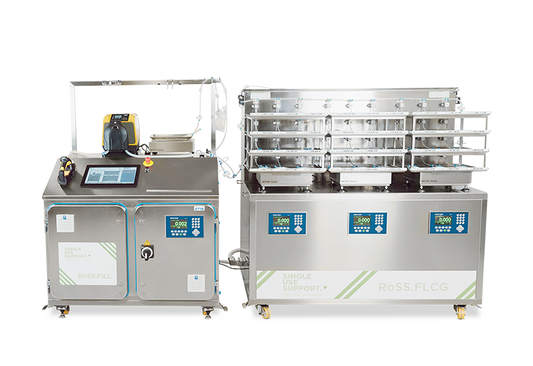
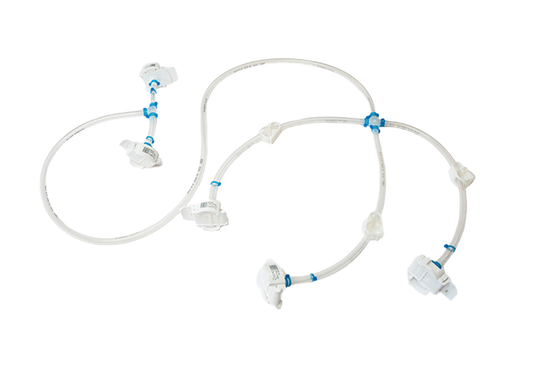
Single Use Support has developed dedicated gene therapy liquid solutions for safe and efficient filling and draining processes – the RoSS.FILL platform is the result of these efforts. The devices are available in different sizes, allow for high flexibility while speeding up turnaround time in gene therapy production.

Controlled freeze and thaw processes for genetic therapies

Gene therapy products have very specific requirements for their freeze/thaw conditions, and an uncontrolled freezing process might cause irreparable damage to the product. Viral vectors, for example, are not only best stored at ultra-cold temperatures around -80 °C, but also need to be brought to this temperature at controlled cooling rates as they, too, are crucial to their quality.

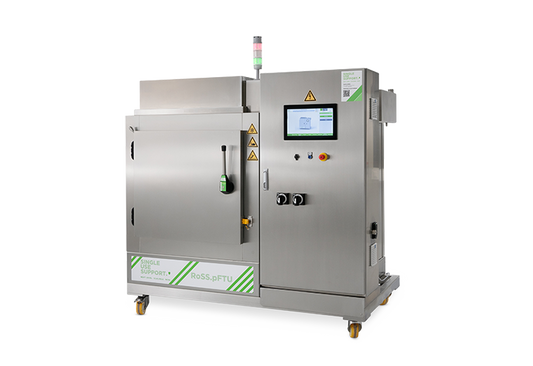
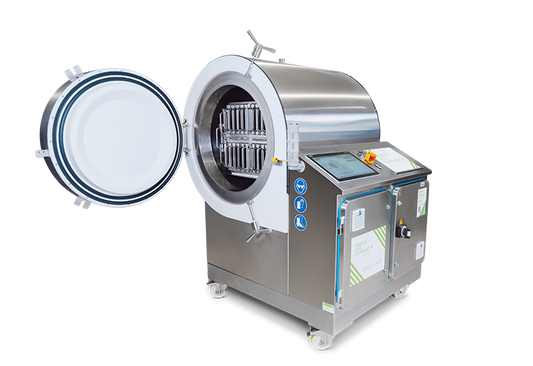
Single Use Support has been innovating in this field and developed the RoSS.pFTU platform for optimized freezing and thawing of drug products. Based on plate freezing techniques, our freezers are available in different sizes, therefore suitable for various fields of application – be it the freezing of small volumes with RoSS.pFTU Lab Scale or the handling of larger volumes with the RoSS.pFTU Large Scale plate freezer, achieving temperatures as low as -80 °C. If even lower temperatures are required, the cryogenic freezer RoSS.LN2F can freeze products down to -170 °C.

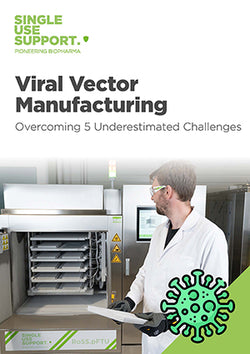
Preview of a guide about viral vector manufacturing

Challenges in viral vector manufacturing - Guide

Guide about viral vector manufacturing with regards to fluid management challenges. In detail:

  • Scalability in cell line development 
  • Accuracy in bag aliquoting
  • Viscosity and homogeneity in liquid transfer
  • Product viability after freezing & thawing
  • Bag breakages in viral vector storage and shipping

Learn more to navigate 5 these overlooked challenge in the Viral Vector Guide.

  • Gene therapy manufacturing - 5 requirements to scale up

    Gene therapy manufacturing continues to cause a stir in the biopharma industry. Gene therapies have become a highly promising field of groundbreaking next generation treatment approaches that use personalized therapies for rare diseases and allow innovative procedures such as in vivo therapies based on viral vectors (e.g. adeno-associated viruses, AAV). Despite the outstanding potential demonstrated by hundreds of clinical trials and an increasing number of FDA approvals, gene therapy manufacturing comes with unprecedented challenges. The underlying science was established during therapy development, but the manufacturing technology is highly complex, and in autologous gene therapy every batch is individually tailored for each patient.  The logistics of the supply chain and distribution networks for individualized medicines is breaking the traditional paradigm for biologics of multi-kilogram to multi-ton batch manufacture of therapeutics and subsequent inventory keeping. This article will highlight five key factors that will be crucial in overcoming the challenges of upscaling gene therapy manufacturing with single-use technology. Our Applications for Gene Therapy [[ToC]]   1. Cooperation and partnership Cooperation and partnerships are key in gene therapy products manufacturing. In recent years, unprecedented supply chain challenges pertaining to CGT (cell and gene therapy) manufacturing became clear and outsourcing of distinct steps and processes has been a worthwhile tactic to ensure an efficient, high quality manufacturing process.  Most companies are not in the position to encompass research, development, regulatory affairs, administration, and at the same time performing process development and scaling up novel production processes, including single use technology.  Partnerships with reliable contract development and manufacturing organizations (CDMOs) keep operations streamlined and increase profitability. CDMOs provide biotech companies with available commercial manufacturing infrastructure, skilled and experienced workers and the necessary focus on key competences.  They can often rely on dependable raw material suppliers. Continuous open and clear communication between the partners is of utmost importance to overcome the hurdles of CGT manufacturing lifecycles. Efficient communication channels facilitate the characterization of attainable common objectives, definition of milestones, and meeting realistic timelines. 2. Automation and closed systems Gene therapy is a sensitive technique that involves altering genes in human cells that consist of sensitive protein structures with large surfaces. They are often administered intravenously or applied directly to the affected organ. Moreover, cell and gene therapies are prime examples of personalized medicine, since each batch is produced solely for one individual patient. Therefore, any confusion during production, packaging or transport has serious consequences. Gene and cell therapy manufacturing companies strive to eliminate these process risks by removing manual steps that are prone to human error and contamination.  Automated process workflows during downstream and upstream are preferred to protect products from contaminants as much as possible by using closed systems and sterile fluid transfer technologies to and from bioreactors. These methods minimize exposure to the environment and avoid the need to manually move containers between staff. Having a closed system in place helps to make gene therapy manufacturing more efficient and increases safety for the patients. In addition, heavy use of automation and closed systems in manufacturing facilities of course facilitates adherence to GMP and cGMP (good manufacturing practice) requirements. How Pharma 4.0 eliminates human errors in pharmaceutical industry   3. Efficient packaging systems Due to the sensitivity of the products towards e.g. temperature and critical time constraints (“vein-to-vein time”, fast progressing diseases), several requirements must be met by the packaging systems used in gene therapy manufacturing. In general, CGTs must be stored and shipped under cryogenic conditions. Therefore, bags and containers are required to withstand freezing cycles and keep their physical properties across large temperature ranges (between room temperature and down to -150 °C).  For instance, containers should not lose their mechanical properties at cryogenic temperatures in order to minimize the risk of container failure and subsequent loss of product. Single-use bags made of high quality plastics have a proven track record to meet these requirements. The tight schedules for manufacture and delivery of CGTs mandates the use of air freight for parts of the supply chain and involves meeting several regulatory requirements (e.g. by the International Air Transport Association). For instance, containers and closures must withstand pressure differences to prevent leakage during flights. Air-free single use bags in specialized secondary and tertiary containers are efficient solutions. 4. Controlled filling, freezing and thawing Gene therapy manufacturing workflows involve time-consuming processes, and production intermediates have to be stored between individual steps at low temperatures to maintain the viability of the genetic material and/or cells. It is well known that slow freezing of biopharmaceutical solutions and suspensions (e.g. plasmid DNA, RNA, proteins, vaccines and cell lines) decreases the quality of the drug product. One reason is the accumulation of drug substance in the liquid phase during freezing and subsequent irreversible aggregation of the drug material.. Rapid freezing and thawing reduce the propensity for quality loss during storage. The use of dedicated freeze-thaw platforms for single use bags is a flexible and efficient way to achieve controlled freezing with minimal loss of active product. Freeze-thaw platform   5. End-to-end track & trace Because autologous CGTs are individualized biopharmaceuticals, every single batch is designed for one specific patient. Any confusion may lead to at best an ineffective treatment or at worst very serious toxic side effects. Therefore, it is of crucial importance for biotech companies to have systems in order that eliminate the possibility of such incidents. End-to-end monitoring of each batch and real-time tracking of manufacture and shipping process is an effective way to overcome this challenge.  Single Use Support’s integrated process system of automated data collection allows for easier cGMP process documentation and optimization and a CGT bag protection system, facilitating GMP-readiness and providing transparency throughout the entire manufacturing process. Gene Therapy - Our Applications [[download-1-email-detailed]]

    READ MORE
  • Single Use Support providing solutions for gene therapies

    Biopharma solution provider Single Use Support announces an order from Genezen, a cell and gene therapy Contract Development and Manufacturing Organization (CDMO). The Indianapolis-based CDMO has ordered RoSS.FILL CGT to fill lentiviral vectors into small single-use bags. Specially designed for cell and gene therapies, RoSS.FILL CGT is an automated filling and filtration platform ready for GMP use to dispense small to medium sized volumes of highly valuable drug substances into multiple small single use bags. The technology will be supplied to Genezen’s facility by the end of 2021. Growing together The CEOs of the Austrian-based process solution provider Single Use Support, Thomas Wurm and Johannes Kirchmair, are delighted to secure the deal with Genezen. “We are proud to be supporting Genezen with their automated filling manufacturing process and to be part of their ongoing major growth”, said Wurm referring to the current expansion of the CDMO in Indianapolis. “We are both fast-paced companies with a high degree of innovation – it will be a great match”, Kirchmair adds. Commenting on the announcement, newly appointed Genezen CEO, Ray Kaczmarek added: “It’s an exciting time to announce this agreement with SUSupport as Genezen makes significant strides towards the completion of our new multiphase 75,000+ square foot cGMP lentiviral and retroviral vector production facility in early 2022. Our facility will deliver cGMP-compliant viral vector production and a full suite of complementary process development capabilities to support commercial readiness.” Kaczmarek is certain of a great partnership: “Having partners such as Single Use Support in place will be one of many essential components as we scale our operations to deliver high-quality programs and vector production services to our clients.” Growing expertise in cell and gene therapies End-to-end process solutions from Single Use Support have proven to be successful at laboratory but also commercial scale in the production of bulk drug substance. Its involvement in the production of COVID-19 vaccines and mAbs demonstrated that the industry relies on its portfolio ranging from protection of single-use bags, filling & draining, freezing & thawing, cold storage, and shipping. Specially designed single-use manifolds for fluid management of respective applications top off the full service of Single Use Support. The purchase from Genezen demonstrates once again the technologies’ flexibility and its applicability to different areas in Biopharma. Cell & gene therapies and upstream seed train intensification are such fields where customers can use solutions for different batch sizes and volumes while remaining independent from any single use bag or bottle. Single Use Support - The Company What began with a vision in a garage quickly developed into a global technology company. Single Use Support GmbH was founded in 2016 by Johannes Kirchmair and Thomas Wurm. The company specializes in the development and production of mechatronic systems for the pharmaceutical industry and develops solutions for a 100% safe liquid logistics process. Single Use Support offers innovative product solutions that enable high-quality, essential medicines to be transported safely, sterile, and frozen around the globe in so-called single-use bags. Customers of the innovative Tyrolean company with headquarters in Kufstein are well-known pharmaceutical companies in Europe, Asia and America. Single Use Support has over 100 employees and will exceed an annual turnover of EUR 100 million in 2021 Genezen - The Company Founded in Indianapolis in 2014, Genezen is focused on supporting the demands of the current and future gene and cell therapy manufacturing market worldwide — making viral vector production accessible to both early-stage, growth-oriented companies and established industry leaders. Genezen offers early-phase process development, GMP lentiviral vector production, GMP retroviral vector production, and analytical testing services, building on the company's expansive knowledge and experience in the industry and working with the nation's leading institutions. For more information, or to learn more about services offered in Genezen's new cGMP facility, please visit www.genezen.com Image: RoSS.FILL CGT Photos may be used free of charge if the copyright ©Single Use Support is given.

    Read more
  • Lentiviral vector manufacturing: Old but gold gene therapy viruses?

    Despite the fact that lentiviral vectors have been around some decades, the demand for scalable and effective manufacturing methods now rises in tandem with the need for innovative medicines. Due to their special advantages, lentiviral vectors have emerged as crucial instruments in gene therapy, and their advancement and application are still being encouraged. Let's examine lentiviral vectors and how they are produced, highlighting current developments and difficulties in this ever-evolving field. [[ToC]] A lentiviral vector: what is it? Human immunodeficiency virus (HIV)-derived gene delivery techniques are known as lentiviral vectors. In order to promote long-term gene expression, these altered viruses are designed to safely transfer genetic material into target cells. Lentivral vectors, in contrast to the original virus, are made to be incapable of replicating, which guarantees that they do not spread infection or illness. Types of Viral Vectors: Lentiviral Vector vs. AAV Both lentiviral vectors (LV) and adeno-associated viruses (AAVs)  are viral vectors that are widely used in gene therapy, but they possess distinct characteristics [1,2]:   Lentiviral Vector AAV Cargo Capacity Larger packaging capacity (up to 9 kilobases)  Limited packaging capacity (around 4.7 kilobases) Integration efficiency High integration efficiency Non-integrating, resulting in transient expression Transgene expression Long-term transgene expression Long-term transgene expression, if low cell turnover Profile range Effective for both dividing and non-dividing cells   Tissue-specific tropism   The selection between these vectors is influenced by the specific therapeutic application and target tissue.   All types of viral vectors   Lentiviral vectors in Gene Therapy Due in large part to issues that remained unresolved for late-stage therapeutics, lentiviral vectors in gene therapy were first employed as research instruments in molecular and cell biology. In recent years, nevertheless, they have seen a comeback, especially in the gene therapy sector. They are essential for treating a variety of genetic illnesses and tumors because of their capacity to efficiently transfer genes to different cell types, such as neurons and stem cells. There are a number of significant reasons for this increasing interest in lentiviral vectors: Better vector designs lead to improved safety profiles Effective clinical trials that show their efficacy Ex vivo patient cell modification for customized treatments The possibility of using in vivo gene editing applications These advancements have positioned LVs as essential elements in the progress of innovative cell and gene therapies. Manufacturing of Lentiviral Vectors Plasmids' function in lentiviral vector production The production of lentiviral vectors requires plasmids. They serve as the cornerstone for the therapeutic gene, regulatory elements, and viral structural proteins that make up the vector. To manufacture functional viral particles, multiple plasmids are often co-transfected into producer cells, such as HEK293T. Cell line growth & transfection Under strictly regulated circumstances, producer cells are grown in bioreactors. Transfection reagents are used to transfect the cells with a mixture of plasmids when the desired cell density has been reached. In order to produce high-titer vectors, this step is essential. [[download-1-email-detailed]] Harvest & purification After transfection, the viral particles are collected from the cell culture supernatant. The initial harvest goes through clarification and purification processes, including chromatography and filtration, to eliminate cellular debris and concentrate the vector product. Aseptic filling of viral vectors Maintaining an aseptically closed system is crucial in the manufacturing of lentiviral vectors. Automation is key to ensuring safety and efficiency while minimizing operator involvement in the aseptic filling processes. Modular systems, like the RoSS.FILL CGT platform, provide scalability and flexibility, enabling manufacturers to adjust to evolving production requirements. These systems can easily shift from clinical to commercial-scale production, effectively tackling the challenges associated with scale-up or scale-out strategies. Controlled freezing to prevent lentiviral vector aggregation The processes of freezing and thawing lentiviral vectors come with distinct challenges, with aggregation being a significant issue. Controlled freezing is vital for preserving the integrity and functionality of the vectors. Automated platform systems for controlled freezing & thawing, such as the RoSS.pFTU Mid Scale, are specifically engineered for viral vector production, offering precise control over cooling rates to enhance product quality post-freezing. These systems are fully scalable, capable of accommodating various batch sizes from clinical to commercial production and can freeze anywhere from a few to multiple of single-use bags. Lentiviral vectors remain amidst gene therapy advancements In summary, the manufacturing of lentiviral vectors is progressing, fueled by the increasing demand for gene therapies and other advanced treatments. As the field develops, innovations in production processes – from plasmid design to aseptic filling and controlled freezing – are addressing critical challenges and enhancing overall efficiency. With continuous research and development, lentiviral vectors are positioned at the leading edge of gene therapy, offering new opportunities for treating a wide array of diseases. Solutions for Viral Vector Manufacturing References Aldevron: Supporting AAV and Lentiviral Vector Development and Commercialization, 2020. Available at: https://www.aldevron.com/blog/supporting-aav-and-lentiviral-vector-development-and-commercialization Single Use Support: Adeno-associated viruses for gene therapy. 2023. Available at: Adeno-Associated Virus (AAV) for gene therapy (susupport.com)

    READ MORE

Talk to an expert