

RoSS.BLST

Blast freezer for pharmaceuticals

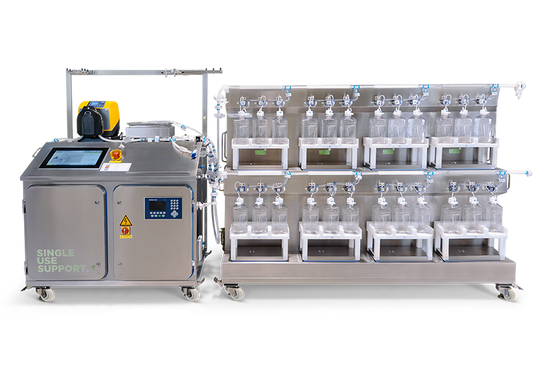
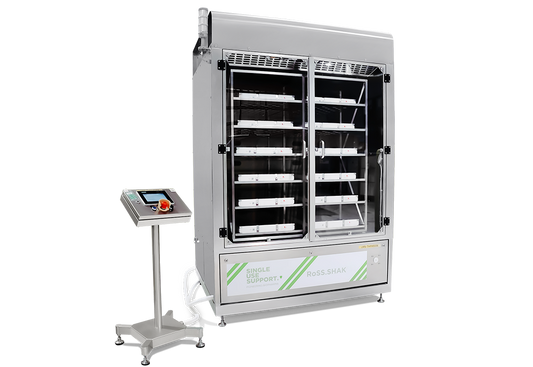
RoSS.BLST is a GMP-compatible system for blast freezing & thawing of drug substances.

Image of RoSS.BLST, a blast freezer for pharmaceuticals on a transparent background.

Key features

Controlled freezing down to -80°C

Blast freezing down to -80°C and thawing up to +40°C

Bioprocess container independent

Suitable for any primary packaging from all manufacturers

Modular design

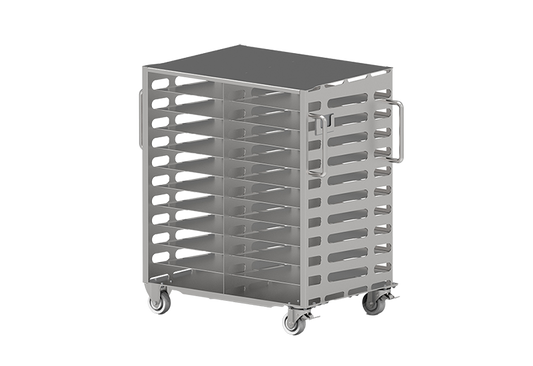
Mobile and customizable internal rack system or drawer solution

Automated and GMP-compatible

Highest possible speed and accuracy, aligned with FDA and GMP guidelines

Optional shaking function

Enabling optimized thawing

Integrated cold chain handling

Seamless transition from freezing to ultra-cold storage

Reduced lead times

Selected configurations are offered as pre-defined, process-ready designs

Blast freezing and thawing for any primary packaging

The RoSS.BLST platform is suitable for any primary packaging from all manufacturers and allows freezing and thawing within a temperature range of -80°C to +40°C. The modular and mobile internal rack system offers maximal flexibility and enables a simple transfer from blast freezing to ultra-cold storage.

Biomanufacturing operator handling frozen bioprocess containers, wearing protective gear in front of controlled blast freezer.

What are the main benefits of controlled blast freezing?

Controlled freezing is essential for sensitive biologics to ensure uniform temperature distribution. Even minor variations in temperature can affect protein stability, potency, and overall product quality.

Controlled blast freezers offer the advantage of applying defined and optimized freezing rates, which reduce the risk of cryoconcentration and preserve molecular integrity. Additionally, they enable reproducible and scalable processes, ensuring consistent results across batches and supporting GMP readiness.

Next-generation blast freezers, such as the RoSS.BLST, further improve upon this technology with advanced airflow control and flexible, adjustable cooling profiles.

Our customers trust in us:

Downloads

Preview of RoSS.BLST datasheet

Datasheet

RoSS.BLST - Datasheet

RoSS.BLST - Datasheet
 
Preview whitepaper controlled blast freezing of bulk-packaged DS - Single Use Support

Whitepaper

Controlled blast freezing for bulk-packaged drug substance - Whitepaper

Controlled blast freezing for bulk-packaged drug substance - Whitepaper
 

Send a request

  • How blast freezing affects the quality of bottled drug substance: Test results and insights

    For some time now, scientists have been discussing the challenges associated with freezing biopharmaceuticals in sterile bottles – especially the risk of cryoconcentration and how it might affect product quality. So, we decided to take a closer look and set out to conduct in-depth studies to gain a deeper understanding and address this critical challenge in bottle freezing. What did we find? Find out in this article. [[ToC]] Understanding cryoconcentration in freezing bottled drug substances  What did we want to look at and why? To increase product stability and shelf life, biopharmaceutical substances are frozen to different ranges of sub-zero temperatures. This helps decrease microbial growth, and slow down undesirable chemical reactions like oxidation. However, this seemingly simple method to maintain product quality also carries risks: macromolecules can denature due to cold, or pH-shifts can occur, caused by what is known as freeze or cryoconcentration. Cryoconcentration mostly occurs as bulk-scale freezing concentration. It leads to the formation of an ice front that grows from the outside-in, thereby creating a concentration gradient. This macroscopic phenomenon can cause protein degradation and undesirable changes in the chemical milieu, with all the known side effects. In our study, we aimed to investigate precisely this bulk-scale cryoconcentration in bottles that are frozen in a conventional blast freezer. Our focus was on the substance Distribution – visually highlighted by dye intensity pH-value changes, and  Conductivity to obtain a comprehensive picture of this uneven distribution.   What were materials and methods used? To simulate the complex processes during freezing, we used a surrogate solution: a sucrose solution (5%), with 100 mM NaCl, as well as monosodium and disodium phosphate, dissolved in 80 liters of tap water. The pH was adjusted to 6.60. To make the concentration distribution visible, Naphthol Blue Black dye was added. The bottles were filled with 1.6 liters of this surrogate solution and equipped with thermocouples positioned in immersion sleeves located in the center of the bottle to monitor the initial freezing behavior. After a blast freeze run, ten bottles (from the top and bottom levels of the arrangement) were selected for further analysis. The bottles were cut into five 3cm long pieces. Samples were taken from the bottom, middle, and top slices (see Figure 1). These were collected in 50mL Falcon tubes for subsequent analytics. pH and conductivity measurements were performed, and dye intensity was measured at a wave length of 620 nm. Figure 1: Overview of methods and materials: Bottle preparation (left), drill hole position (middle) and exemplary drilled slice from sample C4, top, mid slice (right)   What were the results? Formation of ice in bottles Important for our understanding of cryoconcentration in bottles were the observations regarding ice formation: The freezing process starts from the bottom, followed by the formation of a freezing front on the sidewalls, with ice crystal growth progressing from the walls inwards and upwards. This led to a generally higher VIS-absorbance (visible light absorbance, i.e., dye concentration) and conductivity in the lower and middle sections of the bottles. Figure 2 clearly illustrate the relative change in dye concentration, with deviations of over 80% in some areas. Figure 2: Change in dye concentration for top and bottom level, concentration in % in relation to the initial concentration   Phase transition time The freezing performance showed a quite large span in the phase transition time: For water it varied between 3 hours 30 minutes and 5 hours 15 minutes  Surrogate solution required between 3 hours 12 minutes and 5 hours 0 minutes   What do the outcomes say about bottle freezing?  Cryoconcentration per container type The study confirms that cryoconcentration in bottles is more pronounced compared to bags in plate freezers. The main reason for this is the inhomogeneous heat transfer into and out of the container. This is mainly due to the geometry of the container. Bottles are more bulky than single-use bags that have smaller water columns to freeze. Figure 3: Top view on iceberg formation, sample C3 top level The “Volcano Effect” The phenomenon we observed – where the liquid core is pushed out of the bulk solution and forms an "iceberg" (see Figure 3) – is a clear sign of the so-called Volcano Effect. Imagine how the ice grows from the walls and bottom, pushing the remaining liquid solution towards the center and upwards. Since the solutes (like our dye and salts) remain in the liquid water and are not incorporated into the ice crystals, they concentrate in this remaining liquid core. When this core is further pushed upwards and eventually freezes, areas of extremely high concentrations are created on the surface or in the upper part of the bottle – similar to a volcanic eruption where material from the inside is brought to the surface. This significant concentration inequality can severely impact product quality and integrity. RoSS.BLST vs. conventional blast freezing: What makes the difference? Unlike conventional blast freezers, RoSS.BLST uses a controlled freezing protocol tailored to the container format and product type. By managing the freezing rate and airflow distribution, it minimizes the formation of uneven ice fronts and reduces the risk of cryoconcentration. In our tests, RoSS.BLST showed significantly more uniform dye distribution and conductivity values across bottle sections — indicating better solute preservation and product integrity. Figure 4: Visualization of the volcano effect in bottles occurring in uncontrolled freezing, compared to consistent distribution in controlled freezing. Why controlled blast freezing matters for manufacturers Controlling the freezing rate lets us tailor temperature profiles to each product, helping to smooth out the phase transition and cut down on unwanted concentration effects. All these insights have gone directly into the development of RoSS.BLST – Single Use Support’s controlled blast freezer. It’s especially well-suited for freezing drug substances in large formats and brings a range of benefits to manufacturers, including a modular, space-saving design. For biopharma companies working with high-value drug substances, RoSS.BLST offers a validated, scalable solution to freeze in bottles without compromising quality. It’s not just about freezing - it’s about preserving product integrity, batch consistency, and regulatory confidence. [[download-1-email-detailed]] Study performed in collaboration with Management Center Innsbruck and Single Use Support.

    READ MORE
  • Blast freezer in biopharma: What, when and why?

    Blast freezers have emerged as a reliable solution in the biopharmaceutical industry. However, pharmaceutical bulk freezing is not just about turning liquids into solids; it is also about preserving the integrity and quality of life-saving drug substances during manufacturing processes. Not all biopharmaceutical products can be frozen the same way, however. There are different types of bulk pharmaceutical freezers on the market for good reasons. When and why are blast freezers used? This article provides an overview of the types of bulk pharmaceutical freezers used in biopharma, the principles of blast freezing, and its suitability for different drug substances and container formats. 5 critical considerations when freezing bottles [[ToC]] The blast freezing technology What is a blast freezer? Blast freezing relies on forced air convection inside a freezing chamber to rapidly reduce the temperature of drug substances. Cold air is circulated at high speed around the containers, ensuring uniform heat transfer and minimizing the risk of thermal gradients. Unlike static freezers, blast freezers are engineered for pharmaceutical applications to freeze drug substances by maintaining consistent airflow. Controlled rate freezing is essential for preserving the integrity and quality of sensitive biologics. This process helps prevent cryoconcentration and ice crystal formation, which can compromise product quality. What drug substances are frozen with air blast freezers? When to use blast freezers? They are particularly effective for freezing high-value drug substances that are stored in rigid containers. Common examples include: Live attenuated vaccines: These biologics require rapid and uniform freezing to maintain potency and prevent degradation. Bulk biologics: Enzymes, recombinant proteins, and other biologically active substances benefit from controlled freezing to preserve activity and stability. [[1]] Monoclonal antibodies (mAbs): When filled into bottles, mAbs are often frozen using blast freezers to ensure consistent product quality across batches. However, the suitability of blast freezing depends not only on the drug substance but more on the container format and the required freezing profile. What single-use containers work best with pharmaceutical blast freezers Why use blast freezers? Container compatibility plays a crucial role in the effectiveness of the freezing process. Plate freezing is the preferred way to freeze biopharmaceutical products in single-use bags, which is mainly due to their flexible structure. However, bags may experience uneven freezing in blast freezers, which can affect product quality. Therefore the following bulky container formats are preferred for blast freezers: Bottles: Rigid and uniform in shape, bottles allow for optimal airflow and consistent freezing. Bulky containers: Larger containers, such as 3D single-use bags, drums and CryoVault®, can be accommodated with customized airflow systems to ensure uniform temperature distribution. Key challenges in drug substance freezing Freezing drug substances is a crucial step in biopharmaceutical manufacturing, but it comes with several hurdles. One of the main issues is matching the freezing method to the container type – what works for single-use bags may not suit bottles or stainless-steel vessels. Inconsistent freezing profiles across batches can also affect product quality, making precise process control essential. As production scales up, freezing systems must keep pace while meeting GMP-relevant quality standards. And throughout the process, protecting the integrity of the biologic is critical. Ice crystal formation and thermal stress can compromise stability, so careful control of freezing conditions is a must to maintain product integrity. What we learnt from tests about cryoconcentration in bottle freezing   Choosing the right freezing technology for bottles Selecting the appropriate freezing method for drug substances in biopharma is not a one-size-fits-all decision. It depends on several factors, including the type of drug substance, container format, required freezing rate, and process scalability. Blast freezing, with its air convection technology, is well-suited for rigid containers such as sterile bottles. It offers uniform temperature distribution and controlled freezing profiles, which are essential for maintaining the stability of sensitive biologics. In contrast, plate freezing is preferred for flexible containers like single-use bags, where direct contact with cold surfaces ensures rapid and even freezing. Static freezing, often used in legacy systems, lacks the precision and consistency required for modern biopharmaceutical processes to cool liquids and is more appropriate for storage of already frozen drug substances. It cannot control temperature gradients and results in longer freezing times, increasing the risk of cryoconcentration and product degradation.[[2]] Freezing solutions from Single Use Support Single Use Support offers a comprehensive portfolio of freezing technologies tailored to the needs of biopharma, including plate-based freezers, cryogenic liquid-nitrogen freezers and blast freezers. The latter is best for controlled freezing of bulk-packaged drug substances, such as biopharma bottles. These integrated systems that support scalable workflows and are ready for GMP use. They are designed to ensure consistent product quality, operational efficiency, and flexibility across various container formats and drug substance types. Controlled blast freezing with RoSS.BLST References Singh S. et al.: Large-Scale Freezing of Biologics, 2009. Available at: Large-Scale Freezing of Biologics Brandmayr P.: Optimization of the freezing process with a liquid nitrogen freezer to increase cell viability of a mammalian cell line. 2023

    Read more
  • Freezing bottles – 5 critical considerations

    Freezing drug substances to ultra-cold temperatures is a standard step in biopharmaceutical manufacturing. Yet, beyond simply cooling, it’s the critical quality attributes (CQA), like product safety, consistency, and process efficiency, that truly define success in biopharma. When preparing to freeze drug substances in sterile bottles, it’s essential to weigh several key factors. These considerations help ensure the freezing process not only preserves product integrity but also supports reliable and productive operations. [[ToC]] 1. Secure product quality with controlled freezing Controlled and uniform freezing is essential to avoid cryoconcentration – a phenomenon where solutes concentrate unevenly due to ice formation from the outside in. This can lead to protein denaturation and pH shifts, which ultimately impact drug stability and efficacy. Studies show that the “volcano effect” in bottles, where solutes are pushed to the center and top, can cause significant concentration gradients. Manufacturers can minimize these risks by controlling the freezing rate and temperature profile throughout the freezing process including the solidification phase. Product integrity stems from a controlled freezing which can be adapted depending on the specifications of the drug substance, such as cell-based or mAbs. What we learnt about controlled bottle freezing   Figure 1: Visualization of the volcano effect in bottles occurring in uncontrolled freezing, compared to consistent distribution in controlled freezing.    2. Protect bottles to ensure container closure integrity When drug substances or other raw materials, such as buffer or media, are frozen in bottles, the single-use containers must maintain their integrity. Even though they’re called rigid containers, there are vulnerable spots, particularly when the single-use container and assemblies become more brittle under sub-zero conditions.  To prevent leakage or contamination, bottle integrity can remain secure when the assemblies are protected during cold chain handling. Bottle RoSS is the equivalent of the RoSS® shell, which is the protective shell for single-use bags. With Bottle RoSS the tubing on bottles is protected at glass-like sub-zero temperatures with the help of a soft 3D foam which hardens at frozen state. More about Bottle RoSS 3. Static or blast freezing? In general, the choice between static and blast freezing for cooling drug substances in bottles depends on the container format and the sensitivity of the drug substances. Static freezers are meant for storing drug substances at low temperatures, not for freezing them. Using them to freeze bottles can lead to issues like cryoconcentration and product degradation. Even if the freezing time is similar to other methods for small bottles, the lack of control during the critical phase transition still negatively impacts product quality. In contrast, blast freezers with high-speed air convection technology are more effective at rapidly and uniformly freezing drug substances. This technology is particularly effective for biologics stored in bulky containers, such as bottles, as it minimizes thermal gradients and preserves product quality. 4. Role of bottle types and sizes Not all bottles are created equal. Manufacturers can choose among bottles with different types, geometry and size of the bottle, which may impact on freezing efficiency and uniformity. HDPE and PETG bottles have different features affecting the following fluid and cold chain management processes. Same with the sizes that can range up to 20L bottles. Overall, rigid bottles allow for optimal airflow in blast freezers, supporting consistent freezing profiles. Larger containers may require customized airflow systems to ensure uniform temperature distribution.   5. Think end-to-end for closed system efficiency Look left and right before freezing bottles. An efficient and safe freezing process requires an aseptic closed system, beginning with the aseptic filling and filtration stages. This continues through cold chain storage and shipping with a controlled thawing process. Integrating closed systems minimizes contamination risks, streamlines workflows, and ensures that drug substances remain protected at every stage. This end-to-end strategy meets GMP-relevant quality standards, including Annex 1, and operational efficiency, making it the gold standard for working with bottles in biopharma.  Interview: Trends with Single-Use Bottles in Bioprocessing – Single Use Support Mastering filling & freezing of bottles with Single Use Support Uncontrolled bottle freezing processes often struggle to scale, leading to inefficiencies and risks for critical drug substances. With RoSS.BLST, Single Use Support addresses these pain points by enabling seamless transitions from clinical to commercial production – without compromise. Single Use Support’s end-to-end fluid management and cold chain solutions deliver scalable, aseptically closed processes for advanced fluid and cold chain management of bottles, ensuring product safety and regulatory compliance at every step. As the only provider offering fully integrated handling, filling and cooling critical liquids in bottles, Single Use Support empowers biopharma manufacturers to streamline fluid and cold chain management with bottles with compatibility, safety and efficiency. [[download-1-email-detailed]]

    READ MORE

FAQ about blast freeze-thaw platform

When should I use RoSS.BLST in my process?

+

This blast freezer is universally applicable to all biologics, including monoclonal antibodies and other protein-based substances. If you are looking for controlled-rate freezing of drug substances in bulky bioprocess containers, such as bottles, that also optimizes full-batch processing at CDMO manufacturing sites, the RoSS.BLST may be the best freezer you can get.

Can I freeze all biologics with RoSS.BLST?

+

Generally speaking: yes, you can freeze all biologics with RoSS.BLST, including mAbs, mRNA, cells and protein-based vaccines, in single-use bags. RoSS.BLST provides operators with controlled freezing according to protocols that can be tailored to each product specifications to achieve maximum product quality.