Efficient workflows for monoclonal antibodies (mAb)
Single-use technologies that help maintain the product stability and minimize the loss of monoclonal antibodies during the processes of filling, freezing, storing, and shipping.
Protein aggregation caused by cryoconcentration during freezing can reduce mAb potency and stability, potentially compromising critical quality attributes (CQAs).
mAb stability through controlled freezing
Controlled freeze/thaw processes help manufacturers preserve mAb potency and stability by minimizing cryoconcentration.
Limitations to scale?
As demand for mAbs continues to grow, manufacturers face the challenge of scaling production while maintaining consistent product quality.
Scalable processes
By implementing modular and scalable single-use technologies, mAb manufacturers can effectively scale up from bench to commercial scale while maintaining the highest standards with regards to product quality and consistency.
Facing high costs & low yield?
The production of mAbs is often hindered by high costs and inefficiencies stemming from complex processes, product loss due to manual handling or bag breakages, and low cell expansion yields.
Higher productivity
Automated filling and freezing platforms can significantly improve manufacturing productivity. Combined with robust protection for single-use bags, these solutions help minimize product loss, preserve product quality, and enhance CHO cell viability and growth during cell banking and seed train expansion.
Filling viscous mAbs?
Concentrated mAb solutions can exhibit high levels of viscosity as a result of protein-protein interactions, that may pose challenges during the manufacturing process.
Controlled fluid transfer
Filling platforms that provide precise control over dispensing pressure and flow rate are essential for handling highly viscous fluids. When combined with optimized single-use assemblies, integrity-tested components, and multi-vendor compatibility, they enable reliable and efficient fluid transfer.
Single-use technologies in mAbs Production
Single-use technologies are highly flexible and scalable. Therefore, they offer the ideal solution for processing antibodies, cells and genes in a variety of volumes.
The growing range of therapies and product-specific requirements call for facilities and systems that are or can be adapted to the increased speed of development and production as well as scalability.
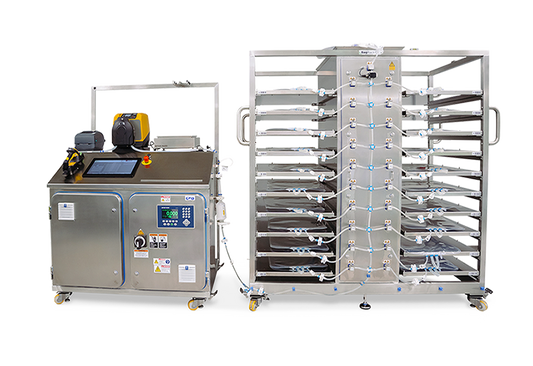
RoSS.FILL Bag is a flexible automated aseptic filling machine for the aliquotation and dispensing of bulk drug substance (BDS) into single-use bags. The system for aseptic filling and sterile filtration is highly precise, making RoSS.FILL Bag an e...
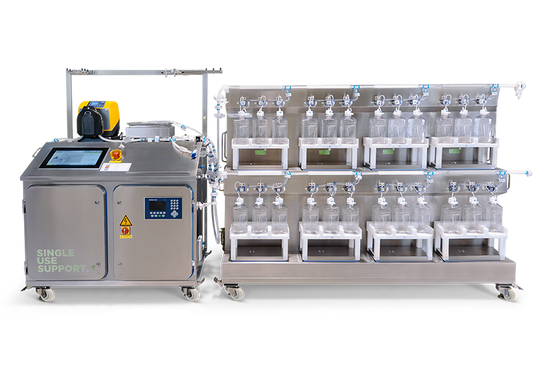
The fully automated RoSS.FILL aseptic single-use bottle filling system enables worry-free filling and filtration of your liquid drug and non-drug substances into bottles. With highest filling accuracy, the single use filling system provides closed...
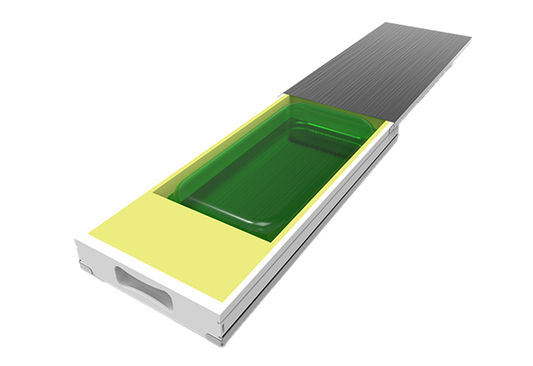
The safest transport solution for all available single-use bioprocess containers. Protect your single-use bag and reduce product loss. RoSS®: Robust Storage & Shipping
Single Use Support's large scale system is a plate-based freeze-thaw unit for any scale and batch size. The system is compatible with single-use bags of all sizes and manufacturers and enables a controlled process down to -80°C of up to 400L per b...
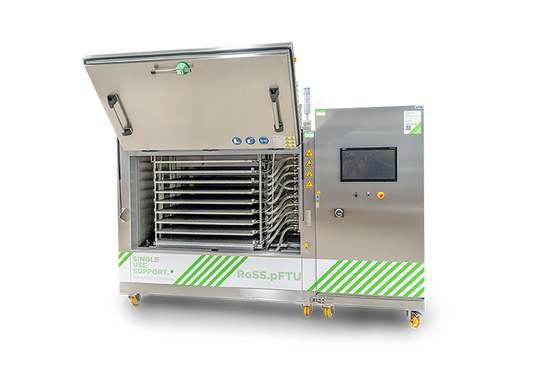
RoSS.BLST is a GMP-compatible system for blast freezing & thawing of drug substances. It is suitable for any primary packaging from all manufacturers and allows freezing and thawing within a temperature range of -80°C to +40°C.
The modular and...
Upstream process intensification is something you currently hear a lot in the context of upstream bioprocessing (USP) optimization. One of the upstream intensification processes being addressed is seed train intensification. This is the use of high density cell banking to increase time and resources during the cell expansion for monoclonal antibody production. It drives manufacturing efficiency tremendously. And with it: safety, process flexibility and product quality - equivalent to CHO cell recovery. Establishing high density cell banks (HDCBs) is beneficial for current mAb manufacturers, but also for those who will soon be producing mAbs. And as we look at drug product pipelines and patent expiry of blockbuster biologics, the need for antibodies will increase.
More about Seed Train Intensification
[[ToC]]
Why HDCB in seed train intensification is more relevant than ever
Seed train intensification is a key strategy in upstream bioprocessing, aimed at streamlining biologics production. It focuses on optimizing the early stages of cell culture, particularly through high density cell banking. These banks store concentrated CHO cells, which are subsequently used to inoculate bioreactors, enable faster and more efficient cell cultivation.
Banking CHO cell intermediates is crucial, preserving cells at various growth stages. This ensures a consistent supply of high-quality cells for upstream processes such as N-1 bioreactor perfusion. Advanced aliquoting and cryopreservation techniques maintain cell viability, resulting in high cell recovery rates when Ultra-High Cell Density Working Cell Bank (UHCD-WCB) are thawed for inoculation.
Consequently, viable CHO cells lead to higher mAb yields during production. Intensifying the seed train accelerates cultivation, reduces time-to-market and enhances overall productivity. However, speed is not everything. It also optimizes the entire upstream process. As a result, process intensification helps manufacturers significantly improve efficiency and output, making it an demanded strategy in modern biomanufacturing.
Biosimilars igniting mAb production even more
Already now antibodies are in high demand. They are used to treat a wide range of diseases, including cancer, chronic inflammatory diseases or infectious diseases. Monoclonal antibodies serve as a crucial component for bioconjugates, such as antibody-drug conjugates (ADCs), which precisely deliver cytotoxic drugs to cancer cells, especially in targeted cancer therapies.
The growing importance of mAbs in biomanufacturing is also driven by the rise of mAb-based biosimilars. Due to the soon expiration of patents for mAb therapies, biosimilars will increasingly enter the market. Keytruda (pembrolizumab) and Opdivo (nivolumab) are among the most prominent with patents expiring in 2028.[[1]] Currently the mAb segment captures more than 40% of revenue share in the biosimilar market. [[2]] A similar trend is seen in biosimilar product pipeline with approx. 30% based of antibodies.
Upstream intensification with single-use technology
What is the most efficient way to transfer CHO cells from incoluation or seed train to cell banks? There is still a gap in process solutions for fluid and cold chain management.
The dispensing of CHO cells into single-use cryobags and the subsequent banking of working cells must be performed in an aseptically closed system to minimize the risk of contamination, and to optimize cell viability. The risk of degradation should be reduced as much as possible, which includes too long exposure to ambient temperature after the addition of cryoprotectants, such as DMSO, or uncontrolled freezing and thawing.
Single Use Support’s process solutions meet these requirements. Large single-use source bags of 1L to 20L are aliquoted into dozens of small single-use bags with RoSS.FILL. CHO cells can be cooled during homogenization and during dispensing at the fluid path (RoSS.PADL). The filled cryobags are protected by robust secondary packaging, like RoSS.KSET, to start cryopreservation of the mammalian cells. The RoSS.pFTU as plate freezer and the RoSS.LN2F as liquid nitrogen cryogenic freezer are two methods that perform controlled-rate freeze-thaw cycles that help manufacturers achieve maximum cell viability post-thaw.
With maximum process flexibility based on single-use technology, process engineers and scientists can benefit from the efficiency of seed train intensification whilst maintaining high cell viability. Until now, this has only been promised in theory.
Single Use Support’s bag-independent and scalable process solution is the first for seed train intensification that maximizes cell viability while shortening the time from lab to final mAb.
[[download-1]]
References
Proclinical: Top drug patent expirations in next 5 years
Biospace: Biosimilars Market Size Poised to Hit USD 150.26 Billion by 2033 - BioSpace
Handling monoclonal antibodies safely can be quite a challenge for biopharmaceutical manufacturers. mAb production is a sensitive process, prone to contamination risks that can easily lead to product alterations and product loss.1 To protect staff and patients from severe consequences, it is therefore necessary to meticulously follow manufacturing regulations all along the monoclonal antibody production process. The right equipment and technological solutions can help to streamline the manufacturing process, increase product safety, and improve time and cost efficiency.
In the following, we take a closer look at the risk of monoclonal antibodies, how staff and patients can be protected, as well as innovative solutions that help manufacturers master these challenges. [[1]]
Single-use technologies in mAb production – read more
[[ToC]]
Monoclonal antibody handling – who is at risk of what?
The limited research on the handling of mAbs provides no evidence that mAbs should be considered a health risk to medical personnel. However, monoclonal antibody drugs often require special handling.2 The safety risk for staff in handling monoclonal antibody conjugations arises from components like cytotoxic agents or radioisotopes. Direct exposure of operating staff during manufacturing processes can evidentially lead to chromosomal abnormalities, cancer, or severe skin irritation. [[3]]
Advanced therapeutics like ADCs are composed of monoclonal antibodies and a cytotoxic payload. And while there is a considerable amount of research on the risks of conjugation agents available, there is a lack of conclusive studies on the handling of mAbs. As a consequence, there is no universal code of conduct for medical staff when handling mAbs, yet.
Concerns are that frequent exposure via dermal, inhalation, and mucosal absorption of mAbs in manufacturing companies can lead to immunogenicity, toxicity, cytotoxicity or carcinogenicity, which is why safety measures are advised. These range from basic precautions like wearing a gown and covering eyes, nose and mouth while handling mAbs to the use of closed-system-drug-transfer-devices (CSTDs). [[4]] [[5]]
CSTDs prevent drug substances from being exposed to the environment and show a substantially lower risk of leakage than common transport devices.6 They come with features that not only safeguard the safety and health of medical staff when administering the drug as well as during production, but can also guarantee increased product safety because the drugs maintain sterility. [[2]] [[3]] [[4]] [[5]] [[6]]
Regulations concerning mAb handling
In order to guarantee a drug product that is safe to use for patients, there are specific regulations concerning mAb handling during manufacturing of pharmaceutical products. Regulations for mAb production may vary slightly between regions, but they all follow guidelines set by the World Health Organization (WHO) [[7]]
During mAb production, manufacturers are obliged to document the different steps as well as starting materials meticulously.
Further, the WHO established rules to minimize the risk for contamination through microbes through sterilization of production materials and equipment. Staff is advised to perform tests on container safety regularly, such as PUPSIT (pre-use post sterilization integrity testing), as well as on batch integrity. [[8]] [[9]]
To comply with all the regulations and maintain aseptic handling throughout the manufacturing process can be a challenge that is only to be addressed with innovative technological solutions that are highly adaptable and flexible. 7 7 9
Best practices for critical mAb production steps – with RoSS® Shell
There are several process steps in mAb production that require an increased amount of precaution. One of the biggest challenges in mAb production is product loss because of errors during handling, and contamination risks through leakage, exposure to hazardous intermediates, and improper handling during transportation.
Challenges like maintaining the cold chain call for innovative protection devices for mAbs during storage and transport. This is why Single Use Support has developed the RoSS® Shell. This protective secondary packaging was designed to keep drug substances and starting fluids in single-use bags safe from damages during handling. The protective shell is stackable to save space during storage, and enables improved freezing and thawing mechanisms.
Closed end-to-end processes – a holistic approach
Closed end-to-end processes are very efficient in reducing costs in mAb production, as they minimize contamination risks as well as product loss. Every step of the production is compatible and carried out in one closed platform, which means that substances are protected from exposure during filling and dispensing, as well as freezing and thawing.
Flexibility and adjustability to changing manufacturing requirements are one of the most important trends in monoclonal antibody production. The purpose of end-to-end processes is to make it easier for producers to react to the industry’s demands and, in consequence, significantly reduce costs in mAb production. [[10]]
Safe filling of monoclonal antibodies
Biologics must be produced aseptically and sterilized by filtration to guarantee product safety for patients, which is why aseptic filling of mAbs is of utter importance. If mAbs are exposed to contamination during filling in transport containers, vials or bags, this results in product loss of a full production batch.
To minimize these risks and make the process of mAb production more consistent and reliable, Single Use Support has developed RoSS.FILL – an automated aseptic filling platform. This fully automated drug dispensing system is highly flexible in terms of production volume (scale-up) and number of bags or bottles (scale-out). [[11]]
Freezing process in mAb manufacturing
The freezing process in mAb production is a crucial procedure to preserve antibodies and keep them accessible. It allows the safe storage and transport of monoclonal antibodies over extended periods of time. However, intricacies include designing a process that meets the freezing behavior of monoclonal antibodies. This calls for high control over freezing rates, as well as safe packaging of single-use bioprocess container
Singe Use Support offers RoSS.pFTU – a freeze/thaw platform based on plate freezing that allows high customization of freezing processes. The enhanced control over cooling and thawing rates, combined with the bag’s protection provided by RoSS® Shell, makes this plate freezing platform ideal to prepare mAbs for cold chain storage and transport.
[[download-1]]
mAb storage and transport
After mastering the critical freezing step for mAbs, they are typically stored for future use or transported to the next production facility. Especially in large productions, monoclonal antibody storage solutions need to be efficient and save space while also being able to maintain the cold chain.
For this reason, Single Use Support has designed the ultra-low temperature freezer RoSS.ULTF, where mAbs can be efficiently stored at temperatures as low as -75 °C. Real-time temperature control and high storage density are main assets of this device, powered by the modular interior that can provide space for primary packaging in various sizes.
In addition, the RoSS.SHIP container is designed to facilitate mAb transportation, able to hold the cold chain for almost one week. Both can be efficiently filled with RoSS® Shell protection containers for single-use bags, for maximized space efficiency and process safety.
Read more: Monoclonal antibody storage
Partnering with Single Use Support in safe mAb handling
With mAb production being one of the fastest growing sectors in the pharmaceutical industry, there is a great demand for new solutions for monoclonal antibody development and manufacturing. Single Use Support aims to provide cost- and time-efficient solutions for companies that manufacture mAbs and help them face their production challenges.
End-to-end technologies for bioprocessing fluid management help to make mAb production more efficient. RoSS.FILL, in combination with highly adaptable and flexible equipment, ranging from single-use bags to RoSS® Shell, minimize the risk for human errors and product loss.While transport can become a burden due to mAbs’ sensitivity to temperature changes, the combination of Single Use Support’s plate freezer RoSS.ULTF, RoSS® Shell, and the protective transportation system RoSS.SHIP makes sure that the cold chain can be maintained. [[12]]
mAb production with Single Use Support – learn more
References
Viral contamination of monoclonal antibody preparations: Potential problems and possible solutions, https://link.springer.com/content/pdf/10.1007/BF00148806.pdf, Published 1990
Safe handling and administration of MABS: the guidance, http://dx.doi.org/10.12968/bjon.2015.24.sup16a.s14, Published 2016-06-11
Challenges of Using Closed System Transfer Devices With Biological Drug Products: An Industry Perspective, http://dx.doi.org/10.1016/j.xphs.2019.10.042, Published 2019-11-04
Frequency and component analysis of contaminants generated in preparation of anticancer agents using closed system drug transfer devices (CSTDs), http://dx.doi.org/10.1038/s41598-021-03780-0, Published 2022-01-07
Understanding Closed-System Transfer Devices: Why They Are Important and How to Select an Appropriate System, https://www.pharmacytimes.com/view/understanding-closed-system-transfer-devices-why-they-are-important-and-how-to-select-an-appropriate-system, Published 2016
Position Statement on safe handling of monoclonal antibody drugs, https://clearvoice-media.s3.amazonaws.com/act_bIfy6fAJQzK1gLfS/reference-materials/1619015740026-2020-08-03PositionStatement-SafeHandlingofMonoclonalAntibodydrugs2.pdf, Published 2020
Current GMP standards for the production of vaccines and antibodies: An overview, http://dx.doi.org/10.3389/fpubh.2022.1021905, Published 2022-11-03
Current GMP standards for the production of vaccines and antibodies: An overview, http://dx.doi.org/10.3389/fpubh.2022.1021905, Published 2022-11-03
Guidelines for the production and quality control of monoclonal antibodies and related products intended for medicinal use, https://cdn.who.int/media/docs/default-source/biologicals/final-who-guidelines-on-mab-production-and-quality-control-annex-4---7-jun-2022.pdf?sfvrsn=8c542f00_1&download=true, Published 2022
End‐to‐end continuous bioprocessing: Impact on facility design, cost of goods, and cost of development for monoclonal antibodies, http://dx.doi.org/10.1002/bit.27774, Published 2021-04-01
Aseptic Vial Filling, http://dx.doi.org/10.1385/1-59259-076-4:313, Published 2003-11-15
A Look At The Growing Market Landscape For Monoclonal Antibodies, https://www.bioprocessonline.com/doc/a-look-at-the-growing-market-landscape-for-monoclonal-antibodies-0001, Published 2023
Monoclonal antibody production is shaped by changing trends and continuous scientific progress. The increasing need for high-quality mAbs for more and more applications require manufacturers to permanently improve production processes. However, it might be difficult to determine which developments come and go without a significant impact, and which trends are actually going to make a lasting difference.
In this article, we will highlight some hot trends in monoclonal antibody production that we believe are to be watched out for in the future, as they describe promising approaches to bring the mAb production process several steps further.
Single-use technologies in mAb production – read more
[[ToC]]
What drives the monoclonal antibody market?
The monoclonal antibody market anticipates a robust Compound Annual Growth Rate (CAGR) exceeding 11% from 2023 to 2030, indicative of its pivotal role in the pharmaceutical landscape. Bolstered by a substantial global market volume of $210.06 billion USD in 2022, mAbs are expected to keep playing a major role in research, diagnostics, and therapeutics.[[1]]
This growth is fueled by an escalating need for larger quantities of monoclonal antibodies, due to their expanding applications across diverse medical domains. As the industry shifts towards personalized therapies for more effective and individualized treatments, mAbs play a crucial role in meeting these emerging needs.
For instance, novel approaches in cancer immunotherapy leverage the precision of mAbs to enhance the body's immune response against cancer cells. Additionally, the development of mAb-based treatments for autoimmune diseases, like rheumatoid arthritis and psoriasis, showcases the huge potential of these antibodies.[[1]] [[2]]
Trends that re-shape mAb production
The landscape of monoclonal antibody (mAb) production is undergoing transformative shifts, driven by strategic trends that redefine industry standards and optimize operational processes.
Less in vivo, more in vitro
The move from in vivo to in vitro methodologies in monoclonal antibody production is motivated by ethical considerations and practical benefits. On a practical level, adopting in vitro methodologies allows for enhanced control over crucial production variables such as temperature, pH, and nutrient concentrations, ensuring a more reproducible and standardized manufacturing process.
However, it's worth noting that the transition to in vitro production has often encountered challenges related to scaling up monoclonal antibody manufacturing. Innovative approaches are required to address these challenges in mAb production and ensure a seamless and efficient production process.[[3]]
High-performance cell lines
The increasing need for larger volumes of monoclonal antibodies has led to a shift towards high-performance cell lines that can express high-quality mAbs at scale. Chinese Hamster Ovary (CHO) are one of these cell types, widely acknowledged for their proficiency in producing complex proteins with human-like modifications. Rigorously engineered, CHO cells not only enhance productivity but also play a pivotal role in optimizing mAb yields, a critical factor in meeting the escalating demand for these therapeutic agents.
Another prominent player in mAb production is the NS0 cell line, a mouse myeloma cell line lauded for its efficiency in generating antibodies. Employed extensively, NS0 cells have been modified to enhance productivity, contributing significantly to streamlined and efficient production processes.[[4]] [[5]]
Culture systems for high cell density
A notable trend in monoclonal antibody production involves the adoption of advanced culture systems designed for achieving high cell density. For this purpose, innovative bioreactors, including hollow fiber bioreactors, wave bioreactors, and cryogel bioreactors, are considered viable options:
Hollow fiber bioreactors: With large surfaces for cells for adhesion, these bioreactors create an environment conducive to high-density cell growth during mAb production.
Wave bioreactors: Employing a rocking motion, wave bioreactors enhance nutrient distribution and oxygenation, fostering optimal conditions for achieving high cell density in mAb cultures.
Cryogel bioreactors: Leveraging gel matrices, cryogel bioreactors create a three-dimensional environment that supports high-density cell cultures.
Source: National Center for Biotechnology Information[[6]]
Conjugation of mAbs – ADCs are on the rise
In addition to the use of naked antibodies, mAbs open new therapeutic possibilities through strategic conjugation with small-molecule drugs. The rationale behind mAb conjugation lies in the desire to synergize the high specificity of antibodies with the potent therapeutic payloads of small molecules.
Therapeutics like antibody-drug conjugates (ADCs) allow for a targeted and nuanced approach to diseases, particularly in oncology. By profiting from the precision of mAbs and the cytotoxic potential of drugs, this conjugation strategy addresses challenges associated with conventional treatments, offering heightened efficacy with minimized collateral damage.
Automated, closed processes
A groundbreaking trend in monoclonal antibody production revolves around the adoption of automated, closed processes. This marks a strategic departure from traditional methods, introducing a paradigm shift that prioritizes efficiency, precision, and quality control.
Automated processes in mAb production involve the integration of robotics and advanced technology to streamline various stages, from cell culture to purification, from fluid transfer to cold chain management. This not only significantly reduces the risk of contamination but also enhances reproducibility and scalability. The closed system approach, on the other hand, minimizes exposure to external contaminants, ensuring a controlled and sterile environment throughout the production cycle.
Sustainability in mAb manufacturing
Sustainability is a major concern in biopharmaceutical manufacturing, requiring measures to keep the environmental impact of processes like mAb production as little as possible. Water and energy consumption as well as the use of chemicals are therefore to be optimized, along with waste management.
Monoclonal antibody manufacturers can make various significant changes in their production processes. While some affect only distinctive steps in the mAb production process – such as a reduced number of chromatography cycles to minimize water consumption –, others impact the entire supply chain.[[6]]
For instance, processes, systems and consumables with a minimized need for elaborate in-house cleaning can be opted for, in order to reduce resource consumption and thus the environmental impact of monoclonal antibody production. To this end, several manufacturers adopt single-use technologies in their processes.[[7]]
Ready for tomorrow – single-use technologies in mAb production
This is not listed among the latest trends – simply because the development has been going on for years now. However, the ever-increasing implementation of single-use technologies in monoclonal antibody production makes a considerable contribution to recent advances and achievements.
In the pharmaceutical industry, single-use technologies are praised for their ease of use as well as the increased level of flexibility, scalability, and sustainability. Suppliers like Single Use Support have therefore put great effort in the development of end-to-end processes based on SUT.
In the product line-up of Single Use Support, biopharmaceutical manufacturers can find systems to implement automated, closed and safe production lines that cover both upstream and downstream processes. RoSS.FILL, a platform for automated fluid management – can perform different volumes of biologics under aseptic conditions, with high throughput and precision.
Being filled into single-use bioprocess containers and covered by protective shields like RoSS® Shell, monoclonal antibody products are ready to be frozen and either prepared for mAb storage or shipping. To allow this, Single Use Support has developed a plate freezing platform that is able to achieve controlled freezing and thawing rates, aiming to ideally cater to the biologics’ characteristics and requirements.
End-to-end fluid management processes, scalable production, and sustainability – these major trends in monoclonal antibody production are reflected in Single Use Support’s solutions for monoclonal antibody manufacturing. By adopting single-use technologies in mAb production, manufacturers can get themselves ready for the future.
Single Use Support in mAb production
References
The pharmacology and therapeutic applications of monoclonal antibodies, http://dx.doi.org/10.1002/prp2.535, Published 2019-12-20
Monoclonal Antibodies Market Size, Share & Trends Analysis Report By Source Type (Chimeric, Murine, Humanized, Human), By Production Type (In Vivo, In Vitro), By Application, By End-use, By Region, And Segment Forecasts, 2023 - 2030, https://www.grandviewresearch.com/industry-analysis/monoclonal-antibodies-market, Published
Trends in Monoclonal Antibody Production Using Various Bioreactor Syst, http://dx.doi.org/10.4014/jmb.1911.11066, Published 2020-07-02
Cell culture processes for monoclonal antibody production, http://dx.doi.org/10.4161/mabs.2.5.12720, Published 2010-10-01
CHO cells – 7 facts about the cell line derived from the ovary of the Chinese hamster, https://www.evitria.com/journal/cho-cells/cho-cells/, Published 03.05.2022
Trends in Monoclonal Antibody Production Using Various Bioreactor Syst, http://dx.doi.org/10.4014/jmb.1911.11066, Published 2020-07-02
What's The Environmental Impact Of Biopharma Continuous Manufacturing? Part I, https://www.biosimilardevelopment.com/doc/what-s-the-environmental-impact-of-biopharma-continuous-manufacturing-part-i-0001, Published 2022