The safest transport solution for all available single-use bioprocess containers. Protect your single-use bag and reduce product loss. RoSS®: Robust Storage & Shipping
Single Use Support's large scale system is a plate-based freeze-thaw unit for any scale and batch size. The system is compatible with single-use bags of all sizes and manufacturers and enables a controlled process down to -80°C of up to 400L per b...
RoSS.ULTF is an upright ultra-low temperature storage freezer for frozen drug substances in different sizes. The ultra cold storage freezer keeps the desired set point temperature down to -80°C.
It is compatible with RoSS® Shells to protect your ...
As an expert in single-use solutions, we have made it our goal to deliver vendor agnostic single-use assemblies manufactured at highest quality standards in ISO 7 cleanrooms and sterilized within shortest lead times. Prevent downtime and ensure an...
As the demand for mRNA vaccines and therapeutics increases, the biotech industry needs solutions that enhance scalability and productivity. Single-use technology has emerged as a game-changer in this regard, making mRNA manufacturing more efficient and adaptable to surges in demand. Single Use Support has been at the forefront of this innovation, providing unique solutions to alleviate mRNA manufacturing challenges.
Single-use technologies in mRNA production
[[ToC]]
Advantages of single-use technology in mRNA production
Single-use technology has revolutionized the biopharmaceutical industry, and mRNA production is no exception. With the ability to drastically reduce contamination risks, streamline workflows, and scale up rapidly, single-use systems bring several advantages and have enabled the mass production of life-saving mRNA vaccines and therapeutics.
It is the flexibility of single-use technology which is a major contributor to the process development. Production lines can be quickly set up, scaled, or repurposed to meet urgent demands, enhancing productivity and cutting down the time from development to deployment.1
Safe fluid management during mRNA manufacturing
MRNA products are sensitive formulations which require specific production modalities. This is not only because of low mRNA stability, but also due to special requirements of other sensitive components like LNPs that are used as mRNA delivery systems. The manufacturing process from plasmid DNA to mRNA formulation bears considerable risks of contamination, as well as product alterations. Fully automated and modular solutions by Single Use Support help to minimize human error during manufacturing and safeguard maximum product viability.
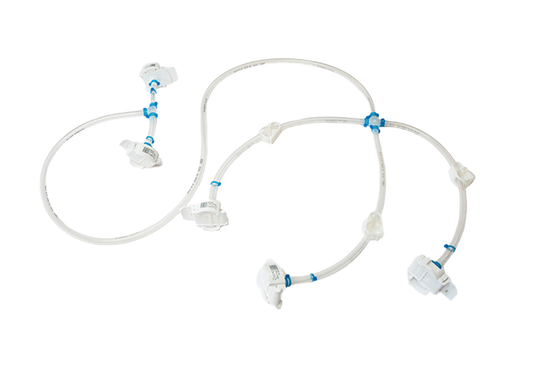
By using single-use bioprocess containers in combination with the aseptic filling and filtration system RoSS.FILL, fluid management does not only become safer, but easier to scale-up, depending on your project’s requirements and specifications.
Preserving the integrity of mRNA and deriving products also implies paying tribute to their high requirements in terms of temperature control. Especially for longer storage, ambient temperature is not suitable for mRNA products, which would quickly deteriorate.
Consequently, one of the biggest challenges when handling mRNA products is the continuous cold chain. To achieve this, we rely on plate-freezing, which in comparison to other freezing methods minimizes the risk for protein denaturation through even freezing at -80°C.
Nevertheless, control is key in the ultra-cold freezing process of mRNA. With adjustable cooling rates and single-use bioprocess containers that can withstand the physical stress of extremely low temperatures, Single Use Support’s cooling platform helps to optimize mRNA manufacturing and processing.
Following ultra-cold freezing processes, mRNA can be prepared either for further processing, storage, or transport.
[[download-1]]
Advanced cold chain solutions for mRNA manufacturing
Preserving the integrity of mRNA and deriving products also implies paying tribute to their high requirements in terms of temperature control. Especially for longer storage, ambient temperature is not suitable for mRNA products, which would quickly deteriorate.
Consequently, one of the biggest challenges when handling mRNA products is the continuous cold chain. To achieve this, we rely on plate-freezing, which in comparison to other freezing methods minimizes the risk for protein denaturation through even freezing at -80°C.
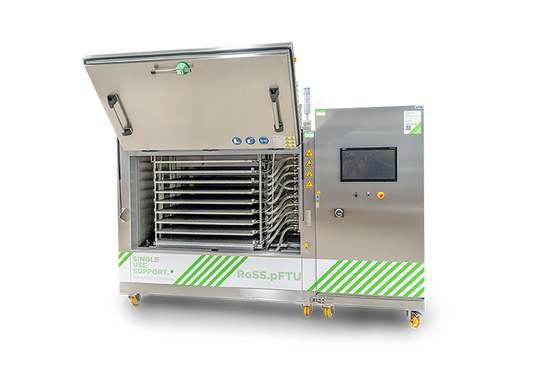
Nevertheless, control is key in the ultra-cold freezing process of mRNA. With adjustable cooling rates and single-use bioprocess containers that can withstand the physical stress of extremely low temperatures, Single Use Support’s freezing platform RoSS.pFTU helps to optimize mRNA manufacturing and processing.
Following ultra-cold freezing processes, mRNA can be prepared either for further processing, storage, or transport.
Storage and transport of mRNA products with single-use technologies
Achieving ultra-low temperatures is not enough to preserve mRNA products from deterioration: Maintaining these temperatures is just as essential when preparing the valuable goods for storage and transport.
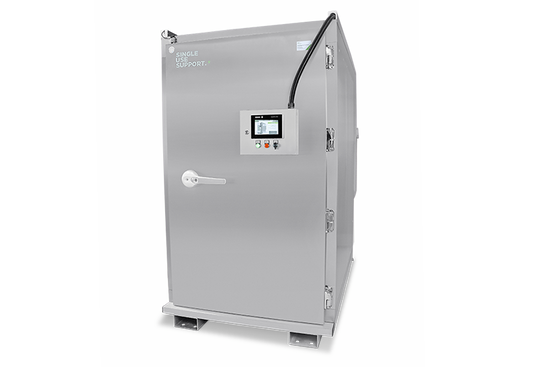
Yet again, single-use technologies have proven to be a viable option to fulfill this task: Single Use Support’s ULT storage freezer RoSS.ULTF is ready to provide stable temperatures as low as -75 °C. With storage density as an additional focus to maximize scalability as well as efficiency, the storage freezer offers space even for large amounts of mRNA products, filled in single-use bioprocess containers and safely protected by RoSS® Shell.
This single-use bag protection brings additional safety to mRNA manufacturing, storing, and transport, the latter of which is further simplified by RoSS.SHIP – a cold chain shipping container able to keep drug substances at temperatures below -60 °C for at least six days. However, this is just one puzzle stone in the product portfolio of Single Use Support that has been established to optimize mRNA manufacturing based on single-use technologies.
Single-use technologies in mRNA manufacturing
References
Enhancing mRNA vaccine production efficiency with Single Use Technologies, https://www.thechargepoint.com/news/mrna-vaccine-production-efficiency-single-use-technology/, Published 2022
Handling monoclonal antibodies safely can be quite a challenge for biopharmaceutical manufacturers. mAb production is a sensitive process, prone to contamination risks that can easily lead to product alterations and product loss.1 To protect staff and patients from severe consequences, it is therefore necessary to meticulously follow manufacturing regulations all along the monoclonal antibody production process. The right equipment and technological solutions can help to streamline the manufacturing process, increase product safety, and improve time and cost efficiency.
In the following, we take a closer look at the risk of monoclonal antibodies, how staff and patients can be protected, as well as innovative solutions that help manufacturers master these challenges. [[1]]
Single-use technologies in mAb production – read more
[[ToC]]
Monoclonal antibody handling – who is at risk of what?
The limited research on the handling of mAbs provides no evidence that mAbs should be considered a health risk to medical personnel. However, monoclonal antibody drugs often require special handling.2 The safety risk for staff in handling monoclonal antibody conjugations arises from components like cytotoxic agents or radioisotopes. Direct exposure of operating staff during manufacturing processes can evidentially lead to chromosomal abnormalities, cancer, or severe skin irritation. [[3]]
Advanced therapeutics like ADCs are composed of monoclonal antibodies and a cytotoxic payload. And while there is a considerable amount of research on the risks of conjugation agents available, there is a lack of conclusive studies on the handling of mAbs. As a consequence, there is no universal code of conduct for medical staff when handling mAbs, yet.
Concerns are that frequent exposure via dermal, inhalation, and mucosal absorption of mAbs in manufacturing companies can lead to immunogenicity, toxicity, cytotoxicity or carcinogenicity, which is why safety measures are advised. These range from basic precautions like wearing a gown and covering eyes, nose and mouth while handling mAbs to the use of closed-system-drug-transfer-devices (CSTDs). [[4]] [[5]]
CSTDs prevent drug substances from being exposed to the environment and show a substantially lower risk of leakage than common transport devices.6 They come with features that not only safeguard the safety and health of medical staff when administering the drug as well as during production, but can also guarantee increased product safety because the drugs maintain sterility. [[2]] [[3]] [[4]] [[5]] [[6]]
Regulations concerning mAb handling
In order to guarantee a drug product that is safe to use for patients, there are specific regulations concerning mAb handling during manufacturing of pharmaceutical products. Regulations for mAb production may vary slightly between regions, but they all follow guidelines set by the World Health Organization (WHO) [[7]]
During mAb production, manufacturers are obliged to document the different steps as well as starting materials meticulously.
Further, the WHO established rules to minimize the risk for contamination through microbes through sterilization of production materials and equipment. Staff is advised to perform tests on container safety regularly, such as PUPSIT (pre-use post sterilization integrity testing), as well as on batch integrity. [[8]] [[9]]
To comply with all the regulations and maintain aseptic handling throughout the manufacturing process can be a challenge that is only to be addressed with innovative technological solutions that are highly adaptable and flexible. 7 7 9
Best practices for critical mAb production steps – with RoSS® Shell
There are several process steps in mAb production that require an increased amount of precaution. One of the biggest challenges in mAb production is product loss because of errors during handling, and contamination risks through leakage, exposure to hazardous intermediates, and improper handling during transportation.
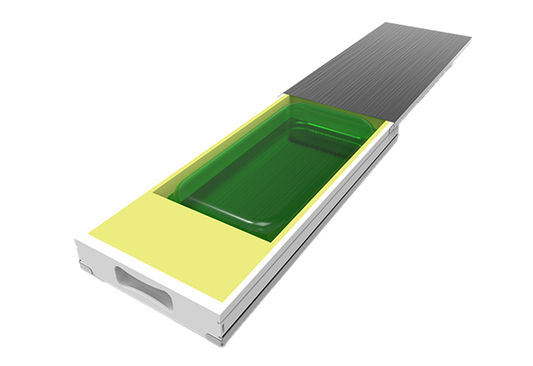
Challenges like maintaining the cold chain call for innovative protection devices for mAbs during storage and transport. This is why Single Use Support has developed the RoSS® Shell. This protective secondary packaging was designed to keep drug substances and starting fluids in single-use bags safe from damages during handling. The protective shell is stackable to save space during storage, and enables improved freezing and thawing mechanisms.
Closed end-to-end processes – a holistic approach
Closed end-to-end processes are very efficient in reducing costs in mAb production, as they minimize contamination risks as well as product loss. Every step of the production is compatible and carried out in one closed platform, which means that substances are protected from exposure during filling and dispensing, as well as freezing and thawing.
Flexibility and adjustability to changing manufacturing requirements are one of the most important trends in monoclonal antibody production. The purpose of end-to-end processes is to make it easier for producers to react to the industry’s demands and, in consequence, significantly reduce costs in mAb production. [[10]]
Safe filling of monoclonal antibodies
Biologics must be produced aseptically and sterilized by filtration to guarantee product safety for patients, which is why aseptic filling of mAbs is of utter importance. If mAbs are exposed to contamination during filling in transport containers, vials or bags, this results in product loss of a full production batch.
To minimize these risks and make the process of mAb production more consistent and reliable, Single Use Support has developed RoSS.FILL – an automated aseptic filling platform. This fully automated drug dispensing system is highly flexible in terms of production volume (scale-up) and number of bags or bottles (scale-out). [[11]]
Freezing process in mAb manufacturing
The freezing process in mAb production is a crucial procedure to preserve antibodies and keep them accessible. It allows the safe storage and transport of monoclonal antibodies over extended periods of time. However, intricacies include designing a process that meets the freezing behavior of monoclonal antibodies. This calls for high control over freezing rates, as well as safe packaging of single-use bioprocess container
Singe Use Support offers RoSS.pFTU – a freeze/thaw platform based on plate freezing that allows high customization of freezing processes. The enhanced control over cooling and thawing rates, combined with the bag’s protection provided by RoSS® Shell, makes this plate freezing platform ideal to prepare mAbs for cold chain storage and transport.
[[download-1]]
mAb storage and transport
After mastering the critical freezing step for mAbs, they are typically stored for future use or transported to the next production facility. Especially in large productions, monoclonal antibody storage solutions need to be efficient and save space while also being able to maintain the cold chain.
For this reason, Single Use Support has designed the ultra-low temperature freezer RoSS.ULTF, where mAbs can be efficiently stored at temperatures as low as -75 °C. Real-time temperature control and high storage density are main assets of this device, powered by the modular interior that can provide space for primary packaging in various sizes.
In addition, the RoSS.SHIP container is designed to facilitate mAb transportation, able to hold the cold chain for almost one week. Both can be efficiently filled with RoSS® Shell protection containers for single-use bags, for maximized space efficiency and process safety.
Read more: Monoclonal antibody storage
Partnering with Single Use Support in safe mAb handling
With mAb production being one of the fastest growing sectors in the pharmaceutical industry, there is a great demand for new solutions for monoclonal antibody development and manufacturing. Single Use Support aims to provide cost- and time-efficient solutions for companies that manufacture mAbs and help them face their production challenges.
End-to-end technologies for bioprocessing fluid management help to make mAb production more efficient. RoSS.FILL, in combination with highly adaptable and flexible equipment, ranging from single-use bags to RoSS® Shell, minimize the risk for human errors and product loss.While transport can become a burden due to mAbs’ sensitivity to temperature changes, the combination of Single Use Support’s plate freezer RoSS.ULTF, RoSS® Shell, and the protective transportation system RoSS.SHIP makes sure that the cold chain can be maintained. [[12]]
mAb production with Single Use Support – learn more
References
Viral contamination of monoclonal antibody preparations: Potential problems and possible solutions, https://link.springer.com/content/pdf/10.1007/BF00148806.pdf, Published 1990
Safe handling and administration of MABS: the guidance, http://dx.doi.org/10.12968/bjon.2015.24.sup16a.s14, Published 2016-06-11
Challenges of Using Closed System Transfer Devices With Biological Drug Products: An Industry Perspective, http://dx.doi.org/10.1016/j.xphs.2019.10.042, Published 2019-11-04
Frequency and component analysis of contaminants generated in preparation of anticancer agents using closed system drug transfer devices (CSTDs), http://dx.doi.org/10.1038/s41598-021-03780-0, Published 2022-01-07
Understanding Closed-System Transfer Devices: Why They Are Important and How to Select an Appropriate System, https://www.pharmacytimes.com/view/understanding-closed-system-transfer-devices-why-they-are-important-and-how-to-select-an-appropriate-system, Published 2016
Position Statement on safe handling of monoclonal antibody drugs, https://clearvoice-media.s3.amazonaws.com/act_bIfy6fAJQzK1gLfS/reference-materials/1619015740026-2020-08-03PositionStatement-SafeHandlingofMonoclonalAntibodydrugs2.pdf, Published 2020
Current GMP standards for the production of vaccines and antibodies: An overview, http://dx.doi.org/10.3389/fpubh.2022.1021905, Published 2022-11-03
Current GMP standards for the production of vaccines and antibodies: An overview, http://dx.doi.org/10.3389/fpubh.2022.1021905, Published 2022-11-03
Guidelines for the production and quality control of monoclonal antibodies and related products intended for medicinal use, https://cdn.who.int/media/docs/default-source/biologicals/final-who-guidelines-on-mab-production-and-quality-control-annex-4---7-jun-2022.pdf?sfvrsn=8c542f00_1&download=true, Published 2022
End‐to‐end continuous bioprocessing: Impact on facility design, cost of goods, and cost of development for monoclonal antibodies, http://dx.doi.org/10.1002/bit.27774, Published 2021-04-01
Aseptic Vial Filling, http://dx.doi.org/10.1385/1-59259-076-4:313, Published 2003-11-15
A Look At The Growing Market Landscape For Monoclonal Antibodies, https://www.bioprocessonline.com/doc/a-look-at-the-growing-market-landscape-for-monoclonal-antibodies-0001, Published 2023
Pharma 4.0 is no longer a thing of the future. Industry 4.0 for biopharmaceutical manufacturing is here now.
Innovative manufacturers are striving for operational excellence in as many areas of bioprocessing as possible. In return, they will benefit from standardized and fully automated processes that reduce the number of unpredictable events, product loss, cross-contamination, and resource consumption. Successful adoption of Industry 4.0 will therefore contribute to cost efficiency, patient safety, and sustainability in pharmaceutical manufacturing.
This paradigm shift isn't just about automation; it's about orchestrating a symphony of smart devices and systems to create seamless, efficient operations across the biopharmaceutical landscape. A prime example of this shift is the integration of cold drug storage into the Pharma 4.0 framework. Interest in advancing this process step is already high among pharmaceutical companies. What does a smart ultra-cold storage process look like according to Pharma 4.0 principles? Let’s take a closer look at ways to automate ultra-cold storage through Single Use Support.
[[ToC]]
Opening Doors for Pharma 4.0
Traditionally, freezers and cold chain drug storage facilities are managed manually, requiring human intervention for tasks as simple as opening doors. Imagine a storekeeper leaving a door open for too long, disrupting the delicate ecosystem inside and allowing ice crystals to grow on the door, which can ultimately reduce the freezer’s insulation.
Autonomous forklifts navigate the facility to load and retrieve materials to and from ultra-low temperature (ULT) freezers. But the real magic lies in the interplay between technology and precision. The freezer doors need to open at just the right time – not too long to avoid temperature loss and ice formation. This choreography of control is achieved through robust software integration that links the storage freezer to the process control system.
But that's not all. Communication between the robot and the ultra-cold storage freezer is critical for flawless material handling. The robot must position itself precisely for loading and unloading operations. This is where the power of Pharma 4.0 comes in – ensuring that this dance is executed to perfection. Every step, every access is documented by comprehensive audit trails that are securely stored in the central process control system.
The interconnection of Freeze-Thaw Units (FTUs) and ULT storage freezers with autonomous forklifts is a vivid example of Pharma 4.0 perfection. The ability to implement automated door systems triggered by the process control system and to store substances at a chilling -75°C while maintaining stringent alarm systems ensures that drug substances are preserved at their best. The result? A seamless, controlled environment for drug substance storage.
Robotics Takes Over Cold Chain Management
Integrating robotics into ultra-low temperature (ULT) storage isn’t just an evolution; it's a leap toward greater efficiency, safety, and precision in cold chain management and storage of drug substances. It can help improve cohesive process steps.
Automated loading & unloading: Automation eliminates the variability associated with human intervention, ensuring consistent and safe operations.
Transportation: The movement of drug substances from a Grade C clean room to freezing and storage platforms can be orchestrated by transport robots. Autonomous forklifts can also safely pass through airlocks. They help navigate the facility and ensure materials reach their destination without compromising sterility and integrity.
Loading into plate-based freezers: One robot can load two plate-based freeze-thaw platforms, such as the RoSS.pFTU Large Scale, with a total of up to 800L in single-use bags, protected by secondary packaging shells. The smart layout of robotic systems minimizes congestion and optimizes drug placement and retrieval.
Transit of frozen liquids to ultra-cold storage: The conveyor becomes a gateway for transporting frozen bioprocess containers in RoSS® shells toward the ULT freezers.
Loading into ultra-low temperature freezers: Robotic loaders place RoSS® shells into ultra-cold storage freezers, such as RoSS.ULTF – and retrieve them for cold chain shipping.
The concept of an intelligent, integrated end-to-end cold chain process solution is becoming more than just a notion. By harnessing automated technologies, biopharmaceutical manufacturers can achieve precision, efficiency, and safety.
Introducing Single-Use Bag Handling to Pharma 4.0
Reasons to Start Now
Embracing Pharma 4.0 is about more than just adopting technology; it's about reimagining processes. The marriage of cold storage and Pharma 4.0 isn't merely about opening doors; it's about opening doors to a future where biopharmaceutical manufacturing reaches new heights of efficiency, reliability, and precision.
Start Pharma 4.0 with RoSS.ULTF today
"The marriage of cold storage and Pharma 4.0 isn't merely about opening doors; it's about opening doors to a future where biopharmaceutical manufacturing reaches new heights of efficiency, reliability, and precision."Alexander Fuchs
Predictive maintenance is another emerging area that can be part of integrated fluid and cold chain manufacturing solutions. By continuously monitoring any changes, caused by pressure, temperature or else, technologies can report and flag deviations. Picture a stepper and sealer valve used in aseptic aliquoting with RoSS.FILL alerting the process control system when action needs to be taken, such as integrity testing or replacement.
With predictive maintenance as part of Pharma 4.0, the orchestrated operations eliminate the risk of temperature fluctuations, ensuring that drug substances remain intact and viable. In addition, automation saves time and minimizes human error, allowing researchers to focus on tasks that truly require their expertise.
As we stand on the brink of this transformation, it's clear that integrating robotics into ULT storage is not just about machines; it's about advancing standards, pushing boundaries, and creating a future where the cold chain management continues to evolve.
[[download-1]]