

RoSS.FILL Bottle

Single-use bottle filling system

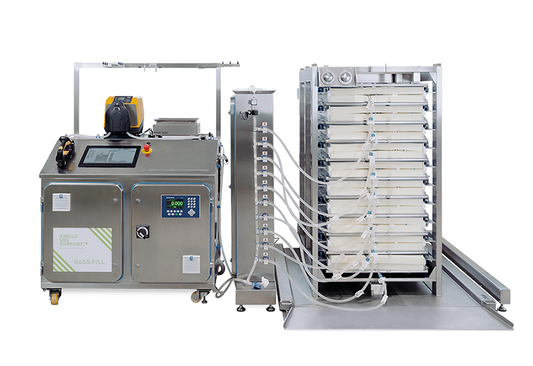
RoSS.FILL Bottle is an aseptic single-use bottle filling and filtration system.

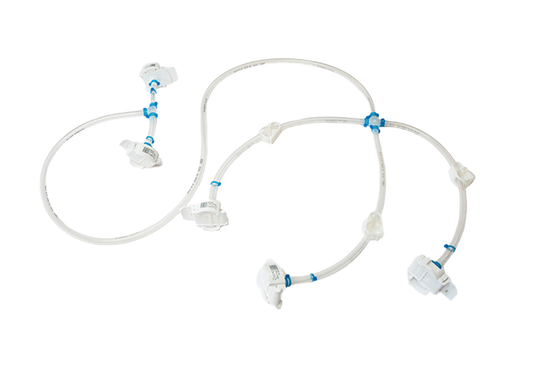
Image of RoSS.FILL Bottle on a transparent background, a single-use bottle filling system by Single Use Support.

Key features

Up to 10 L

Suitable for different bottle sizes

Bottle independent 

Compatible with Sanisure, Nalgene, etc.

Parallel filling 

Several bottles can be filled at the same time & multiple modules per control unit

Single-use filtration assembly

Custom bottle assemblies can be easily placed on the filling system

GMP, CFR Part 11 compliant

Control unit can be used with the bottle filling module or the bag/shell transport devices

Highest filling accuracy

Better than ±15 g

Modular design

Solution for single-use bottle and bag filling with one control unit

Optional MES integration 

Compatible with DeltaV or other

Fill and filter your drug substance into single-use bottles

The fully automated RoSS.FILL aseptic single-use bottle filling system enables worry-free filling and filtration of your liquid drug and non-drug substances into bottles. With highest filling accuracy, the single use filling system provides closed, parallel filling for bottles of up to 10L. 

The cGMP compliant design of the RoSS.FILL bottle filling and filtration machine allows controlled and automated transfer of your fluids without limitations for your custom process.

An operator fills a biopharma bottle with antibody-drug conjugates manually, resulting in insecurities and inaccuracies

Second-guessing your manual ADC filling process?

Applicable for many different areas of applications, RoSS.FILL Bottle can also be used for antibody-drug conjugates (ADC) manufacturing. Next‑gen ADC formats (site‑specific, dual payload, novel linkers) increase product value, making filling accuracy and minimization of product loss critical.

Closed, automated filling systems support Annex 1-aligned contamination control strategies for HPAPI/ADC environments.

Find your workflow fit

Our customers trust in us:

Downloads

Preview of datasheet for RoSS.FILL Base fill-filtration unit by Single Use Support

Datasheet

RoSS.FILL Bottle - Datasheet

RoSS.FILL Bottle - Datasheet
 
Preview of Single Use Support's case study about automating the process of filling media into bottles

Case Study

Automating the process of filling media into bottles - Case Study

Automating the process of filling media into bottles - Case Study
 

Send a request

  • End-to-end solutions for biopharma bottles: increase efficiency and reduce risk

    The concept of end-to-end solutions is transforming industries with a focus on seamless and efficient processes. For biopharmaceuticals this includes the drug substance handling with filling, freezing/thawing and transporting sensitive drug substances by using a streamlined and compatible platform. With single-use bottles, it's been only siloed solutions that weren't working together as one process. [[ToC]] Fluid management with rigid containers To cover the entire process from A to Z, the biopharma industry has so far been confronted with bottles from various suppliers. However, if the process involves different providers the risk of incompatibility, product loss or damage caused by human error increases. This is also a reason why biopharmaceutical bottles were not filled using an automated and aseptically closed system. Single Use Support has addressed this problem and accomplished the last missing link of end-to-end solutions for biopharma bottles. What is special about it? The end-to-end process applies independently from pharma bottle manufacturers. Meaning, you can use it no matter what bottle size or type you're using. Furthermore, it is modular and compatible to previous and following manufacturing process steps. This does not only mean a streamlined workflow with single-use technologies and consumables, but also with services such as qualification, documentation and validation and after-sales service. Challenges of manual bottle handling in biopharma Manual bottle handling in biomanufacturing leads to many risks. It is slow, prone to human error, and has a high risk of contamination. These factors can jeopardize product quality and safety, making it challenging to scale up production. This is also the main reason why Annex 1 has emphasized to aseptically close the fluid path. Due to the time required manual bottle filling has also shown to be ressource intensive: it takes more time for more operators to fill bottles. Why manual bottle filling puts biomanufacturers at risk Aseptic filling as the last missing link of end-to-end bottle solutions To maintain product integrity and increase efficiency, closed and automated systems are crucial. For optimal results and to minimize risks throughout the entire workflow, a comprehensive end-to-end solution is necessary. Single Use Support meets these challenges and revolutionizes not only end-to-end solutions for single-use bags but also for single-use bottles. The RoSS.FILL Bottle is an aseptic single-use bottle filling system that enables automated filling and filtration of your liquid drug and non-drug substances into bottles. The bottle filler can fill dozens of bottles of up to 10 L with highest filling accuracy. Bottle assemblies for aseptic filling Single Use Support has ISO7 cleanroom capabilities to produce single-use assemblies, including bottle assemblies for asepticaly closed filling of bottles. These can be customized in order to become off-the-shelf standardized sterile consumables. The major advantage of end-to-end solutions for bottles is that all process steps are carried out by only using a single platform. Companies in the biopharmaceutical industry are thus able to work flexibly and efficiently. Moreover, they benefit from independence from manufacturer, scale, size, and single-use components. Single Use Support can provide manufacturers and CDMOs with end-to-end process solutions for both primary packaging, single-use bags and single-use bottles. Its modular design enables scalability and process flexibility to cope with small or large volumes. This also facilitates a switch from single-use containers to single-use bags or working with both simultaneously. Thus, a positive effect on storage space and costs can be achieved. Optimizing your workflow with Single Use Support's integrated platform  Single Use Support offers an elaborate platform for single-use containers and bags that covers the entire process from filling and filtration to freezing/thawing and shipping. Unlike stand-alone silo platforms, this approach addresses specific manufacturer and laboratory requirements. Single Use Support provides the following end-to-end solutions for bottles: IRIS bottle assemblies: Connect your bottle with tubing, connectors, and more RoSS.FILL Bottle: Closed bottle filler for drug substances Bottle.RoSS: Protect tubing on your single-use bottle RoSS.BLST: Controlled blast freezer for pharma bottles to freeze & thaw RoSS.ULTF: Temperature-controlled storage to maintain cold chain RoSS.SHIP: Protect your bottles for transportation at sub-zero temperature It is high time to let go of said silo mentality that still dominantes many areas and industries. It is time to increase rationalization processes and to eliminate the risk of product loss. This will help biomanufacturers and CDMOs to increase efficiency and reduce risk in fluid and cold chain management significantly. [[download-1]]

    READ MORE
  • An operator’s burden: Why manual bottle filling puts biomanufacturers at risk

    The hidden risk in biomanufacturing Manual bottle filling in biopharmaceutical production is more than a routine task - it’s a high-stakes responsibility. From upstream cell culture to downstream purification, every step is tightly controlled - until the deceptively simple task: filling bottles. Often performed manually, this step of filling sterile bottles places enormous responsibility on the shoulders of a single operator. And when human hands are the last line of defense, what’s really at stake? Spoiler: it's not just about jeopardizing the product's safety or creating inefficiencies. It also endangers patient safety. [[ToC]] An operator’s role in manual filling Operators in biomanufacturing are not only technicians, but also guardians of quality. Inaccurate dispensing of rigid containers can lead to underdosing, reducing efficacy, or overdosing, increasing toxicity. Therefore, the implications of an operator's work extend far beyond the cleanroom. Contaminated batches can delay treatment or even harm patients. Yet, even the most skilled operator is vulnerable to fatigue, distraction, or procedural error - especially in repetitive, high-volume environments. In short, the operator’s performance directly affects patient outcomes - a burden that is not fully on the radar within or outside the industry. Manual bottle filling: What pains biomanufacturers must go through? Despite the critical nature of the task, filling single-use bioprocess containers manually remains common in many facilities. But it comes with significant challenges: Accuracy and dosing variability A few milliliters too much or too little can affect a therapeutic success. Manual filling lacks the precision and consistency required for high-value biologics. Even minor deviations can trigger quality issues or necessitate additional work. Even when there are extensive operator trainings and SOPs in place, inconsistencies in fill volume can occur. And it is just natural considering long shifts or high throughput runs of a filling run. Sterility and contamination risk Cross contamination is the bioprocessing staff's worst nightmare. And every manual intervention increases the risk of microbial contamination. Despite ISO-classified cleanroom controls, human interaction and just physical presence in such sterile environments remains a major source of contamination. Efficiency and labor intensity Manual processes are mostly slower and more labor-intensive. When manual processes work well in a laboratory setting, this does not mean it works well in commercial production. Scaling the volumes efficiently is difficult and often require additional shifts or staff to meet production targets. Consequently, they limit throughput, necessitate more staff, and increase the likelihood of fatigue-related errors. GMP compliance and documentation Every action must be recorded in compliance with GMP standards. Manual data entry and paper-based batch records are vulnerable to omissions, transcription errors, and audit findings. When traceability suffers, so does regulatory confidence. Stories of relief: Why automation is the answer Automated bottle filling systems are becoming a necessity for modern biomanufacturers. Here are some manufacturers' requirements: "It is essential that we can trust our dosage" Automated systems use pumps with flow sensors or gravimetric systems to deliver consistent, accurate fills. The repeated precision of the fill runs reduces product loss and the risk of over- or underfilling bottles which can affect patient’s safety. “Closed systems are always to prefer for aseptic integrity” Closed, automated systems minimize human contact, reduce contamination risk and improve sterility assurance in liquid transfers. Not just since Annex 1. “Reallocating operators to higher-value tasks while increasing our fill rate.” Automation doesn’t replace operators, but empowers them. By removing repetitive, high-risk tasks, it allows operators to focus on oversight, quality control, and process optimization. This also improves EHS (environmental, health, and safety) related matters. Integrated software captures fill data in real time, ensuring full traceability, audit readiness, and compliance with 21 CFR Part 11 and EU Annex 11. Closed Bottle Filler The closed bottle filler RoSS.FILL is a cGMP compatible bottle filling and filtration machine that allows controlled and automated aliquoting of your buffer, media or API into sterile bottles – without limitations for your custom process. Suitable for any type and size up to 20L, multiple bottles can be dispensed in one run – even in parallel. From burden to breakthrough Manual bottle filling places a heavy burden on operators and as a consequence a hidden risk on manufacturers. In an industry where every drop counts and every dose matters, relying on manual processes is no longer sustainable. By investing in automation, biomanufacturers can improve product quality, enhance patient safety, reduce operational costs and reallocate their workforce. The future of biomanufacturing is not just about faster production - it’s about smarter, safer, and more flexible yet scalable end-to-end processes. And it starts by lifting the burden off the operator’s shoulders. Interview: Trends and Innovations with Bottles [[download-1-email-detailed]]

    Read more
  • Interview: Trends with Single-Use Bottles in Bioprocessing

    One could read a lot about single-use bags in biopharmaceutical industry as a primary packaging in bioprocessing in the previous last years. The rise of bags has become more relevant, since they largely replaced single-use bottles. Nevertheless, sterile bottles still hold a significant share in the industry as primary packaging for biopharmaceutical manufacturing. Will they continue to do so?  Khalil Essani, Technical Product Owner of Sterile Consumables at Single Use Support, has discussed the role of sterile bottles and their bottled potential in an interview. Do you have any insights about the share of sterile bottles in the biopharmaceutical industry as primary packaging in manufacturing compared to single-use bags or others? Khalil Essani: Bottles still hold a significant share in the biopharmaceutical industry. Without having a reference by hand I’d say that there are currently more single-use bottles than single-use bags in use. The fact that there are still so many bottles being used in bioprocessing has different reasons. One is that it is historically influenced. Another one is that the ecosystem and processes involved for bottles are optimized for various applications. And for some areas of application, bottles can be and will remain a legit choice. So, despite the rise of bags, bottles continue to be a preferred choice for many processes.  What are these areas of application where bioprocessing bottles are used? Khalil Essani: Bottles are generally used for more robust products, such as media, buffer and DNA in small volumes. On the other hand single-use bags are to be preferred for more sensitive freezing applications, for example cell-based applications. So, bottles are largely used when adding buffer solutions or media to API. But there are also more robust biopharmaceutical products, such as monoclonal antibodies and ADCs, where it's conceivable that manufacturers still use bottles – even if single-use bags might be a better choice. As mentioned, the usage of primary packaging is often due to historical reasons. You don’t necessarily change a regulatory manifested process when the system still works satisfactory.    Do you think that bottles would remain a popular choice or even be revived, if bottle processes were closed systems during fluid and cold chain management? Khalil Essani: If the integrity of the closed system is ensured, I believe bottles could maintain their popularity and possibly even see a revival. EU regulations have addressed this pain point of manufacturers in Annex 1 to go towards aseptically closed systems. Therefore, the recommendation is to always prefer closed systems, and this could give bottles a boost, when they’re filled in automated closed process. However, there are several other factors to consider. For example, there have always been challenges with the sealing of bottles, which is a very critical point. Ensuring the integrity of the closure system is essential to prevent contamination and maintain product quality.   Why manual bottle filling puts biomanufacturers at risk  What are other trends and innovations you observe with regards to bottles? Khalil Essani: There is a lot happening in this area. Sustainable bottle materials are becoming more important. There is a lot of research and development on making single-use packaging more eco-friendly. At Single Use Support, we are committed to improving fluid and cold chain management with bottles, in order to enhance product quality and process efficiency. We provide manufacturers and CDMOs with high-precision, modular filling processes and control over the freezing process for bottles. These efforts have culminated in an end-to-end process for biopharmaceutical products in bottles, ranging from automated filling, freezing, storing, and shipping, where bottles are protected safely throughout fluid and cold chain management. Overall, it’s encouraging to see bottles regaining relevance in bioprocessing: With the right technologies in place, there’s great potential to create new value. Perhaps it’s time to let the genie back out of the bottle.  [[download-1-email-detailed]]  

    READ MORE

FAQ about bottle filling platform

When is RoSS.FILL Bottle the best option?

+

RoSS.FILL Bottle is typically used when drug substance, buffer, or media need to be aseptically filled into multiple small and mid-sized bottles with high precision and process control, for applications like media preparation, monoclonal antibodies, live-attenuated vaccines, mRNA, ADCs and more.