

RoSS.FILL LAB SCALE

Aseptic filling for laboratories

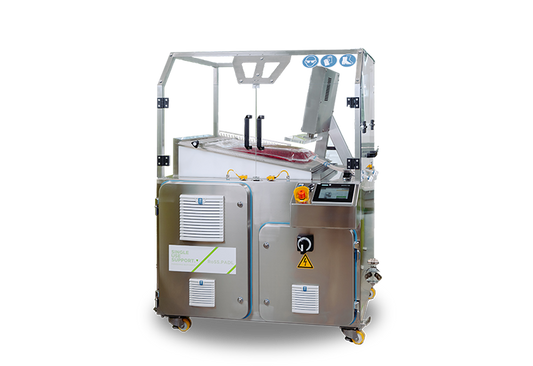
RoSS.FILL Lab Scale offers precise and automated filling for small single-use bags from any manufacturer.

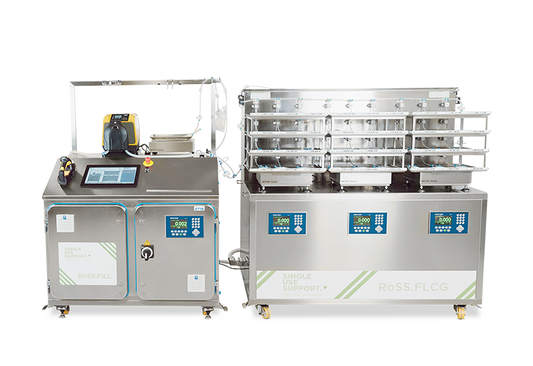
Image of RoSS.FILL Lab Scale on a transparent background, an aseptic filling system for biopharma laboratories.

Key features

Up to 12 single-use bags 

Filling with standard configuration

20 mL- 500 mL per bag

Automated aseptic filling for small volumes

Highest filling accuracy

Down to ±5 g

Drug substance recovery possible

As option to reduce dead volume

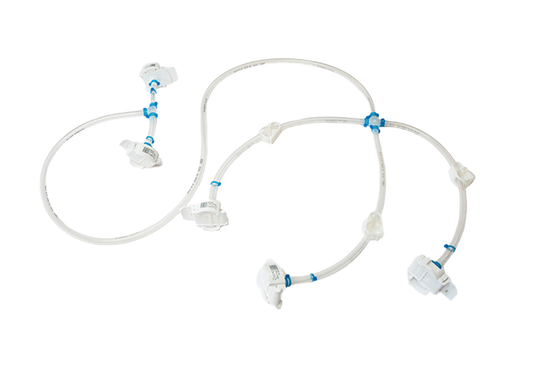
Custom-made single-use assemblies

Suitable for the reliable filling platform

Controlled filling, sealing, perforation

Stepper pinch valve with several functions

Bag & connector agnostic

All single-use components to be added as assembly setup

GMP EU Annex 1 aligned

For aseptic filling in a closed system

Highest filling accuracy for the smallest volumes

Fully automated aseptic filling platform at smallest footprint with state-of-the-art technology for highest accuracy to fill up to 12 single-use bags in standard configuration. RoSS.FILL Lab Scale is therefore most suitable for filling small volumes in cell & gene therapies or seed train intensification.

Close-up of an operator handling small-volume drug substances on a RoSS.FILL CGT aseptic filling system.

From process development to clinical manufacturing

Designed for laboratories and space-constrained environments, the platform supports small-volume filling for cell and gene therapies, low-volume drug substances, and clinical manufacturing. Validate filling strategies, generate process data, and streamline tech transfer by moving seamlessly from early-stage development to larger-scale production as requirements evolve.

Our customers trust in us:

Downloads

Preview of datasheet for RoSS.FILL Lab Scale fill-filtration unit by Single Use Support

Datasheet

RoSS.FILL Lab Scale - Datasheet

RoSS.FILL Lab Scale - Datasheet
 
Preview of Single Use Support's whitepaper about automated filling with RoSS.FILL

Whitepaper

RoSS.FILL - Automated aseptic filling - Whitepaper

RoSS.FILL - Automated aseptic filling - Whitepaper
 

Send a request

  • The Role of Single-Use Systems in Cell and Gene Therapies

    As cell and gene therapies (CGT) continue to advance, single-use systems have become essential for maintaining the safety and effectiveness of these intricate biological products. These systems not only improve sterility but also simplify manufacturing processes, playing a vital role in both the initial and final stages of production, and ensuring that these potentially life-saving therapies remain reliable and high-quality for patients. Read following considerations for manufacturers in the area of cell & gene therapies. Most suitable areas of single-use systems in CGT manufacturing processes Ensuring that cell and gene therapy products are shipped at cold temperatures with robust controls is, if anything, even more important for this class of products than it is for more traditional biopharmaceutical products because they are complex biological systems and you really don't want to take any risks of them being disrupted during storage and shipment. The use of single-use systems is particularly important for cell and gene products because maintaining sterility and the aseptic nature of processing is so critical. For a cell therapy product you can't do sterile filtration at the end of your manufacturing process, so integrating aseptic processing into every stage of manufacturing is far more critical compared to, for example, monoclonal antibodies where you have the benefit of being able to do a sterile filtration step at the end. Different applications of single-use systems in cell & gene therapies There are robust applications both upstream and downstream. For example, in an autologous CAR-T process, the initial leukapheresis product that you're taking from the patient and shipping to your manufacturing site is a critical starting material that's entering into your process at the very upstream part of your manufacturing process. There is high potential to improve the reliability, reproducibility, and robustness of that shipping process using secondary packagings, such as the RoSS shell. Because it is a patient-specific raw material it is incredibly precious (in fact, close to irreplaceable), so it is critical that it not be damaged or destroyed during shipping and that its quality is maintained at the highest level. Similarly, once the CAR-T product has been manufactured, it needs to be returned from the manufacturing site to the point of care for the patient, and arguably it is even more precious at this stage since a patient life hangs in the balance.  Therefore, ensuring the highest possible control of shipping conditions to maintain product quality during that return shipment is also critical. There are pretty robust use cases for single-use system products at both the most upstream and the furthest downstream steps of cell and gene therapy manufacturing processes. Why are single-use technologies established as a standard in gene therapy? First, since gene therapy processes are younger, they've had the benefit of being able to adopt these newer technologies during their development processes. Given that, and combined with the relative importance of aseptic processing as I described earlier, Therefore, developers tend to gravitate towards single-use systems in designing their processes. An additional factor is that cell and gene therapy processes are typically not operating at the very large scales of some more traditional processes. For example, typical monoclonal antibody facilities are operating at a scale of hundreds to thousands of liters, whereas many cell and gene therapy processes operate at a fraction of that scale, making those processes more amenable to single-use systems as opposed to, for example, the large stainless stirred tanks of older manufacturing processes. Chicken or egg: did cell & gene therapies boost the use of single-use technologies or vice versa? Newer, more modern biopharmaceutical processes that are being developed have already been migrating towards single-use systems. And cell and gene therapies are building on the back of that. There are a lot of things that are different about cell and gene therapy manufacturing, but there are also a lot of things that are the same. For example, to make a monoclonal antibody, you grow cells, harvest the cells, and purify the antibody. Thinking about cell therapy manufacturing, the process is very similar: you grow your cells using, in many cases very similar processes, and the only difference is that now the cells themselves are your product rather than the protein that they've been harnessed to produce. And for a viral process it's even more similar because you're just harnessing the cells to produce your virus instead of a protein. So the basics of cell cultures are the same across all types of processes and the difference is basically, what are you harvesting at the other end of that process and purifying and formulating and filling? Therefore, cell and gene therapy manufacturing processes very much benefit from the learnings of best practices around cell cultures that have already been developed in other areas of biopharmaceutical manufacturing. Considerations for manufacturers when implementating or ramping-up single-use systems Manufacturers should be sure that they understand what the ultimate goal is with respect to their manufacturing process. This can take different forms for different products, but let’s consider the case of an allogeneic cell therapy product.  For an allogeneic product in early clinical trials, you may only need to be manufacturing product for tens of patients in a year, but you want to make sure that the manufacturing processes that you have developed has a clear path to scalability to where you want to be at your commercial scale, which, depending on the indication that you’re going after, could be thousands or even tens of thousands of patients. It has a few different implications:  one is, at what scale does your manufacturing process ultimately need to be able to operate in order to make it manageable in terms of the number of manufacturing lots you need to make per year for that product? Typically you may be aiming for something in the low tens of manufacturing lots per year, so if you're aiming to make product for tens of thousands of patients, that can be a pretty large scale manufacturing process that you need to be able to achieve. You need to think about what that vessel looks like and is there an appropriate scale down model that you can be using today to enable you to get to that with minimal comparability risk and technical risk for scale up. And then the other thing that comes into play for cell therapy products in that calculation is making sure that your cells are able to undergo the number of cell divisions that is required to achieve that scale, without impacting the critical quality attributes of your product. So even when you're not manufacturing at that large scale in an early clinical stage, you need to be sure that you are still testing the robustness of your process with late passage cells so that you don't hit an unexpected roadblock later when you scale up.   More Solutions for Advanced Therapies  

    READ MORE
  • Small batch manufacturing & fill-finish in cell and gene therapy

    In these years, we are witnessing the advent of a new era in medicine and pharma. Recent breakthrough advances in life sciences such as immunotherapy, next generation sequencing and cell and gene therapies have sparked an unbelievable acceleration of biotechnology development. The COVID-19 pandemic forced the biotech field to even higher productivity and catalyzed much needed progress in regulatory processes. With the first approvals by the US Food and Drug Administration (FDA) and several hundreds of such advanced therapies in early to late stage clinical trials, there is no slowing down on the horizon. But this progress is not easy to achieve. Biopharma companies face unprecedented challenges that pertain to the cost of goods, formulation, supply chain and logistics of large-scale commercial production of cell and gene therapies (CGT). With biopharmaceutical drug products becoming more personalized, the supply chain must change from traditional manufacturing to keep an inventory, towards a manufacturing process that commences very close to the actual treatment process. See also the advanced CGT bag filling system. A great example is the treatment of insidious cancers with chimeric antigen receptor T-cells, in short CAR T-cells, that relies on modifying the patient’s own T-cells to instill them with a targeted way to fight cancer cells. The notion of keeping an inventory of such therapies is absurd, yet the benefits of personalized medicines drive biotech companies to form strong partnerships with contract development and manufacturing organizations (CDMOs) and supply companies to find and optimize innovative ways to solve these challenges. Cell and gene therapy bag filling - learn more! The difference between cell therapy and gene therapy What is cell therapy and what is gene therapy? What are the differences? Cells are small building blocks of organisms that come in many shapes and functions, e.g. liver cells, muscle cells, nervous system cells and skin cells. Genes are regions of DNA molecules inside cells and carry genetic information, much like a blueprint or a program. Every person carries approximately 20 thousand genes and two copies of each that stem from each parent. If a gene is altered (mutated) at a critical region, this could lead cells to malfunction or perish, ultimately leading to a genetic disease. This might be caused by environmental influences or hereditary. Gene therapies aim at either silencing destroyed genes or restoring malfunctioning genes by repairing them or replacing them with a working copy. Cell therapies work through replacing missing cells or altering a class of cells to carry out their normal function. Moreover, some cell therapies rely on modifying cells to carry a therapy into the patient’s body. For cell therapy, cells are first cultivated or modified outside the body in manufacturing facilities and then introduced into the patient through an injection. The cells could be derived from the patient (autologous cells) or from a donor (allogeneic cells). Read more about autolgous vs. allogeneic.  For CAR T-cell therapy, the patient’s own T-cells are harvested and subsequently genetically modified and subjected to validation, before being reintroduced into the body. Therefore, CAR T-cells are autologous cells and both cell therapy and gene therapy. Hurdles in CGT manufacturing The manufacturing of cell and gene therapies is a fledgling field that is continuously evolving with developments in bioprocessing, filling, robotics, process development and quality control. The production and logistics in small batches for initial clinical trials is becoming a solved problem but the scale-up to batch sizes suitable for large clinical development trials and ultimately commercialization in accordance to (current) Good Manufacturing Practice (GMP and cGMP) is challenging biotech companies. A key part of the solution to manufacturing and logistics hurdles is the formation of strong partnerships with companies that are experienced in the development of single-use equipment for batch production filling lines and fill-finish of injectable final products, e.g. biologics. Their experience has direct carryover to emergent novel cell culture and cleanroom methodologies and facilitates innovative solutions for automated systems performing aseptic fill into vials and syringes. Fluid management of cell and gene therapies – prospering areas of application for SUT In the wide field of cell and gene therapy (CGT), reliable and safe manufacturing processes are vital. As more and more treatment options are being approved by regulators like FDA or NIH, there is also an increasing need for more flexible and efficient solutions, considering that upscaled production processes can be cost and resource consuming. This is why single-use technologies are predicted to play an even greater role in CGT manufacturing process in the future than they already do: Turnaround times can be shortened significantly, and both costs, time and resources can be saved by the implementation of SUT-based fluid management solutions. Fluid management solutions in cell therapies Cell therapy manufacturing has allowed major breakthroughs throughout life sciences and opened new treatment options of various diseases. For instance, the transplantation of human cells is crucial in oncology, as the insertion of stem cells can be a life-saving procedure in the fight against leukemia and other types of cancer. Yet another field of application is regenerative medicine: Here, success has already been achieved far beyond clinical trials. Since cell therapies – be it autologous or allogeneic cell therapies – include various steps to be taken ex vivo (including storage of the cell products before its application), it is vital in the healthcare sector to rely on dedicated fluid management solutions that allow for a seamless transition from harvesting a respective type of cell (e.g. from a patient’s bone marrow) and eventually further processing steps up to the final application of the product. Fluid management in cell therapy – learn more   Fluid management systems in gene therapies Genome sequencing – the decodification of the human genome – has allowed unprecedented insights into the genetic “blueprint” of our bodies, thus also in the origin of many genetic diseases, caused e.g. by mutations, missing or faulty genetic material. Gene editing techniques like CRISPR/cas9 have been developed to gain influence on the human genome and medical conditions resulting from it. For instance, this is achieved by inserting a new gene into a patient’s genome, e.g. by the means of viral vectors like AAVs (adeno-associated viruses) for gene delivery. Given the great impact such therapies can have on a patient’s health, fulfilling the requirements of regulators like FDA is vital for both the procedure of gene therapy manufacturing and the involved equipment, which also applies for the fluid management systems in gene therapies, but also in CGT in general. Fill and finish processes need to minimize the risk of contamination, which is why a specialized fill and finish system is advisable to carry out the critical step of aseptic filling into bioprocess containers. Fluid management in gene therapy – learn more   Fluid management solutions in gene-modified cell therapies Modifying or adding a specific human gene into a cell is a major aspect in gene-modified cell therapies, which play an essential role in the fight against several medical conditions. By the modification of certain immune cells, for example, CAR T cells (chimeric antigen receptor t cells) are produced as a novel approach in the treatment of certain types of lymphoma and other forms of cancer. By the means of therapeutic genes for CAR T cell therapy, a patient’s immune system can be trained to fight specific target cells – cancer cells. This is how immunotherapy represents a promising approach in the fight of previously incurable diseases. In order for gene-modified cell therapy to be both effective and secure, standards have to be fulfilled both within every step of a respective procedure and the equipment that is called on. This is why fluid management systems by Single Use Support have been developed to provide safety and efficiency along the respective processing steps. Challenge accepted As highlighted in the previous chapters, there is a wide spectrum of medical conditions where cell and gene therapies represent promising treatment options that could not even be dreamt of even a few years ago. Considering the great amount of clinical trials being carried out in this field, CGTs are presumably playing an even more central role in life sciences. It is only natural that industry needs to adapt to these innovations, and this is where we come in: With RoSS.FILL CGT, Single Use Support developed a fully automated cell and gene therapy filling & draining system for parallel use of small single-use bags at highest accuracy down to few g. It allows the use of 36 single-use bags with volumes from 10 mL to 500 mL, with filling times of down to 20 seconds for 250 mL bags. This system is ideal for studies on the laboratory scale and small volumes in cell and gene therapies or seed train intensification. RoSS.FILL for CGT is fully compatible with the protective shell RoSS.KSET that makes transporting highly valuable goods convenient and secure. Conclusion We are experiencing exciting times in medicine and the life science sector. Breakthrough therapeutics are entering the broad market, curing and treating previously devastating diseases. The key players face big challenges in the commercial manufacturing of cell and gene therapy products but forming collaborations with strong partners in the field of drug substance logistics will solve many issues that accompany the accelerating speed of CGT commercialization. Single Use Support is excited to contribute to these developments.  

    Read more
  • Aseptic Filling of Small Volumes with High Precision

    Filling accuracy has become increasingly important for laboratories and biopharmaceutical manufacturers. Single Use Support has developed best-in-class filling precision for aliquoting small single-use bags with its RoSS.FILL aseptic filling platform. Typically, the distribution of small volumes of advanced therapy medicinal products (ATMP) into small single-use bags was done manually. However, manual handling carries the risk of cross-contamination, overfilling, inconsistent cell counts, and, as a result, product loss. RoSS.FILL Lab Scale is a fully automated cGMP-compatible aseptic filling technology for up to 12 small single-use bags of 10mL to 500mL. RoSS.FILL CGT, on the other hand, is specifically designed for cell and gene therapy manufacturing, able to fill from 36 up to 128 single-use bags with volumes between 1mL and 1000mL. Single-use technology optimizes bag filling with fast, scalable, and accurate aliquoting. Single Use Support’s state-of-the-art small volume filling systems are specifically designed to support laboratories and pharma companies in accurately handling small fill volumes of biologics to advance fluid management processes through automation. The role of aseptic filling of small volumes Aseptic processing and filling of small volumes is an increasingly frequent task in the biopharmaceutical industry. One reason is a major shift in healthcare towards personalized medication, where therapeutics are customized for few individuals, if not for one single patient. This approach has led to huge progress in the fight against medical conditions like cancer or autoimmune disorders. However, accessibility and costs pose challenges for the pharmaceutical industry as well as for healthcare providers. This is because – in contrast to large-volume production – low-volume drug manufacturing may require more resources due to the high degree of customization. Therefore, while there are large-scale vaccines that hardly cost more than the syringe used for their injection, minute vials of personalized injectables may come with considerably higher price tags. But also before these innovations in the field of advanced therapies, the life sciences sector had been relying on precise fill-finish processes of biologics on a smaller level. In research, drug discovery and development, for instance, smaller units are dealt with. Nevertheless, trials, testing and case studies have to prove successful before an eventual aseptic manufacturing process, including respective GMP filling lines, is initiated. Nonetheless, cleanroom and regulatory requirements (e. g. issued by the FDA) need to be addressed even in early stages. These two sectors – personalized medicine as well as research and development in biopharma – are consequently in need of bioprocess platforms that can cope with aseptic filling of minute volumes without compromising in precision or safety. Read more: Aseptic filling of large volumes High Precision Filling Single Use Support offers best-in-class fluid management solutions for volumes as little as 3mL. With a filling accuracy of ±5% for volumes ranging from 20mL to 50mL and a filling accuracy of ±2% from 50mL upwards, the globally operating process solution provider enters new realms of automated filling accuracy for biopharmaceuticals. By complying with 21 CFR Part 11, the  automated aliquoting system for single-use bags replaces manual documentation. Advanced sealer pinch valves can be optionally integrated into any of the modular RoSS.FILL platforms. With variable fluid control to accelerate throughput and facilitate fast filling as well as simple aseptic decoupling of single-use bags, these valves significantly improve the fluid management process. Single Use Support’s modular and vendor-independent process solutions for sterile filling–draining, freezing–thawing in addition to their protective solutions that cover the entire storage and shipment process further optimize the fluid management of high-value liquid drug substances. More about RoSS.FILL Lab Scale Aseptic fill-finish platform for small volumes Filling & Filtration for Small Volumes (1mL-1000mL) Single Use Support’s small volume filling systems help laboratories and manufacturers aliquot volumes from 1mL to 1000mL and scale up to 72+ single-use bags. More information  

    READ MORE

FAQ about small volume filling

What are the main advantages of the pharmaceutical aseptic filling system?

+

Pharmaceutical aseptic filling systems help maintain the product quality and yield by reducing human error, ensuring sterility, and improving dosing accuracy, while also streamlining workflows through automation and traceable, Annex 1 aligned operations.

For which applications can I use RoSS.FILL Lab Scale?

+

RoSS.FILL Lab Scale is ideal for small‑volume aseptic filling from 1 mL to 1000 mL into small 2D single-use bags. It is mostly used for process development, pilot batches, preclinical and clinical studies, or applications such as ATMPs, viral vectors, seed train intensification, and other small‑scale intermediate biopharmaceutical workflows requiring precise aliquoting and closed handling.

RoSS.FILL enables seamless scale-up or scale-out from R&D, drug discovery and clinical phases to commercial production with larger RoSS.FILL units by attaching filling modules.