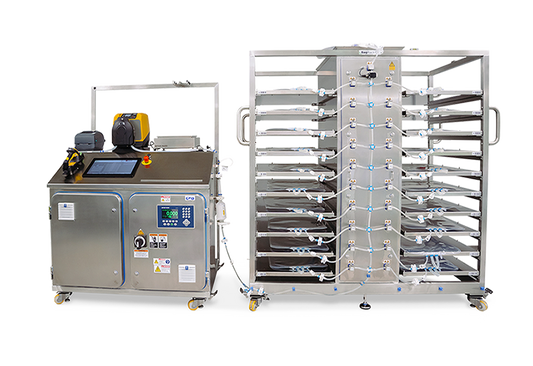
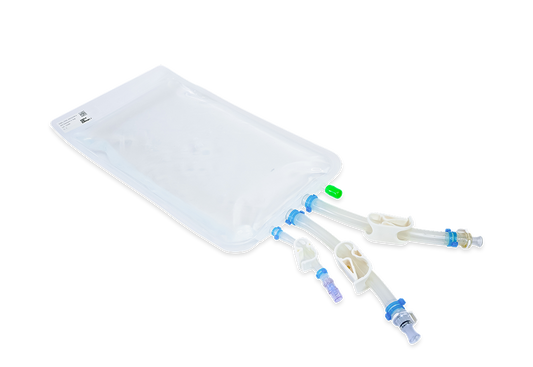
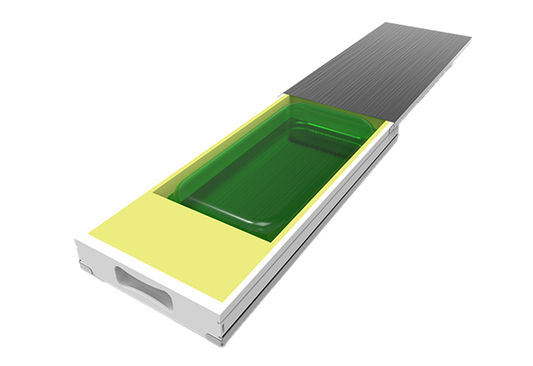
Safe and efficient fill-filtration workflows for biopharma

To ensure product quality, bioprocess fluids must be filtered, filled, and aliquoted with a high degree of accuracy. Single Use Support helps manufacturers overcome these challenges through automated, GMP-ready fill-filtration solutions.

Why Single Use Support for fill & filtration workflows?

Processes not reproducible?

Inconsistent processes regarding filling accuracy result in non-GMP-compliant workflows and jeopardize product quality.

Green icon with a check list and certificate

Controlled GMP-ready processes

Recipe-driven filling protocols align with Annex 1 and support 21 CFR Part 11 electronic records and closed system processing, making biomanufacturing GMP-ready.

Scalability challenges?

With scaling batch volumes and container sizes, it is critical to maintain efficiency and safety in workflows at different scales.

Green icon of two single-use bags on a transparent background demonstrating the availability of different sizes

Scale-up and -out

Single Use Support's automated filling systems enable scaling up and out for volumes ranging from 1 mL to 500 L in various container formats.

Inaccuracies through manual filling?

Manual filling of single-use containers can lead to bag-to-bag deviations and further product losses.

Green icon of a checkmark symbol inside a target on a transparent background demonstrating highest accuracy

High filling accuracy

Automated filling with gravimetric of flow sensor technology provides operators better control over filling volume, especially with small volumes.

Graphic of different scale-up stages for aseptic filling systems used in biopharmaceutical manufacturing from small to large volumes.

Fluid management systems by Single Use Support

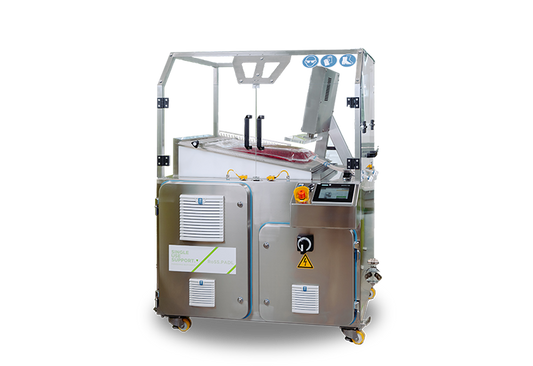
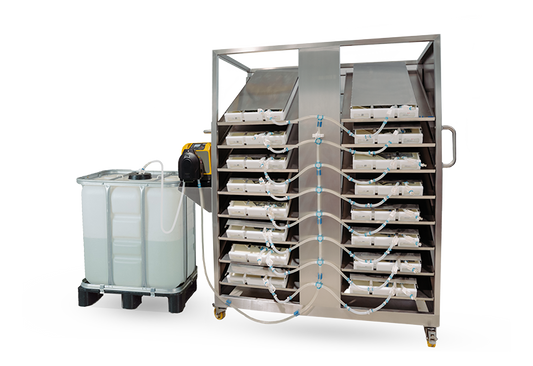
Fluid management systems by Single Use Support provide highly professional solutions for applications both on lab scale and bulk scale allows for the greatest flexibility and scalability. It ranges from single-use aseptic bag filling machines for cell and gene therapy up to single-use bottle filling machines, single-use drain systems and bulk drug dispensing systems including sterile filtration solutions.

Advantages of RoSS.FILL to other solutions

Automated filling platform 1

Automated filling platform 2

RoSS.FILL Automated filling of single-use bags & bottles

Comments

Accuracy

~

x

RoSS.FILL enables a weighing accuracy down to 2g (gravimetric) and filling accuracy down to 1mL (flow sensor)

Speed

✔️

~

Parallel and sequential filling for highest throughput

Automation & process control

~

~

Fully automated process control with user-friendly HMI, optional MES integration and integrated dispensing and sealing of all primary packaging

Modularity & scalability

x

x

One control unit to attach different filling racks for simple scale-up and -out: up to 100+ bags per rack | 2D bags from 10 mL to 50 L | All types of 2D and 3D single-use bags and bottles

Operator effort

~

~

RoSS.FILL with dispensing and sealing of primary packaging process solutions that enable GMP-readiness

Close-up image of a sterile medical filter.

Integrating single-use filtration

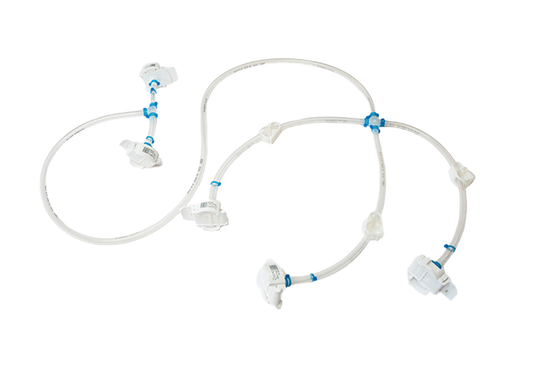
Single Use Support's RoSS.FILL supports optional, supplier-independent filtration, extending automation and process flexibility across bulk drug substance operations. By integrating single-use filters and PUPSIT directly into the filling platform, users can eliminate cleaning and maintenance efforts while benefiting from a streamlined, fully automated workflow.

Suitable for applications ranging from cell harvest clarification to viral vector processing, the filtration option offers scalable filter surface areas and multiple pore sizes to match varying process demands. The result is a more flexible and efficient approach to sterile bulk drug substance handling.

Case study on automating the filling process. Preview image with a tablet and equipment on a white background.

RoSS.FILL: Automating the filling process - Case study

It is still common practice to manually fill drug substances into primary packaging. A biopharmaceutical manufacturer in the Netherlands sought to transition from manual filling of single-use bags to an automated process. To support this decision, a comprehensive assessment comparing the costs, benefits, and limitations of manual versus automated bulk drug substance filling was required.

The findings offer insights into the return on investment (ROI) and additional advantages that extend well beyond cost savings.

Preview of Single Use Support's whitepaper about automated filling with RoSS.FILL

RoSS.FILL - Automated aseptic filling - Whitepaper

Discover how RoSS.FILL revolutionizes aseptic filling in biopharma by replacing manual processes with scalable, modular automation and precise aliquotation from 1mL to 1000L.

  • Bubble point test: Purpose & Procedure

    Ensuring the integrity of filtration processes is fundamental for the safety of bioprocessing. Among the array of methods available for assessing filter integrity, the bubble point test emerges as one of the most frequently used techniques. By scrutinizing the behavior of filters under specific conditions, this test provides insights into their efficacy and integrity, aiding in the identification of potential flaws and ensuring compliance with Annex 1 and other, stringent GMP standards. Along the following lines, we will take a closer look at the bubble point test, including its purpose and the way it is performed. Also, we will present alternatives and possibilities to integrate filter integrity tests directly into end-to-end fluid paths.   Discover biopharma fluid transfer solutions   What is the bubble point test? The bubble point test is a method used to evaluate the integrity of sterilizing grade filters in pharmaceutical manufacturing. It determines the pore diameter by observing the first bubble formation in a controlled testing setup. By applying air pressure to the filter, the point at which the first bubble appears indicates the minimum pressure required to push air through the largest pore. This test ensures that filters maintain their specified pore size, essential for maintaining product quality and safety in pharmaceutical processes, and is also described by the ASTM (American Society for Testing and Materials). What the bubble point test is used for The bubble point test is crucial in the pharmaceutical industry for validating the integrity of sterilizing grade filters. It serves as a non-destructive test method to ensure that membrane filters maintain their specified pore size and effectively remove contaminants. By conducting this test, pharmaceutical manufacturers can validate the reliability and effectiveness of their filtration processes, ensuring product quality and safety. Additionally, the bubble point test is applicable to various types of filters used in pharmaceutical manufacturing, such as disc filters or cartridge filters, providing a versatile tool for quality control. Filter integrity testing – when is it performed? Filter integrity testing is mandatory in the sterile manufacturing of pharmaceutical products to ensure compliance with regulatory standards and to uphold product quality and safety. Regulatory agencies such as the FDA and EMA mandate filter integrity testing to verify that sterilizing grade filters effectively remove contaminants and maintain their specified pore size. The revision of EU GMP Annex 1, for instance, includes PUPSIT (Pre-use Post Sterilization Integrity Testing) as a mandatory step in the production of sterile pharmaceutical products.[[1]]   Procedure: Performing the bubble point test in 5 steps Performing the bubble point test follows a straightforward procedure, demanding both precision and thorough documentation. The process is framed by the following 5 steps: Preparation – Gather all necessary equipment, including a beaker, filter holder, gas pressure source, pressure regulator, pressure gauge, and a filter with known specifications. Ensure tight sealing of connections to prevent air leakage. Setup – Submerge the filter holder with the filter into a beaker filled with a wetting fluid like water. Connect the gas pressure source to the holder's inlet using tubing. Attach the pressure gauge to monitor pressure changes accurately. Initiate testing – Gradually increase gas pressure using a regulator, enabling airflow through the filter. Observe the filter's surface for the emergence of first bubbles. Bubble point detection – Continue increasing pressure until the bubble point pressure is reached, indicated by pores releasing trapped air. Monitor the pressure gauge closely to note the pressure required for a steady air flow. Completion – Record the results and calculate pore sizes using fluid properties and observed pressure. Depressurize the system after testing. Source: Merck[[2]] Video: Sterlitech Corporation Advantages and limitations of the bubble point test The bubble point test offers several advantages in assessing the integrity and performance of filters, particularly hydrophobic filters commonly used in pharmaceutical applications. One significant advantage is its ability to detect the largest pores in the filter matrix accurately. By observing the formation of a steady stream of bubbles at the bubble point pressure, the test provides a clear indication of the filter's pore size distribution and its ability to retain particles of specific sizes. Moreover, the bubble point test procedure is relatively straightforward and can be performed quickly, making it a convenient method for routine quality control assessments. Additionally, it offers a non-destructive means of evaluating filter performance, allowing filters to be tested without compromising their structural integrity. However, the bubble point test also has its limitations. For instance, variations in flow rate and the wetted membrane can influence the accuracy of the results, requiring careful standardization to ensure consistency.[[3]] Alternative filter integrity test methods The bubble point test is not the only way of determining the integrity of a pharmaceutical filter. Additional filter integrity testing methods include: Water intrusion test The water intrusion test involves applying water pressure to the filter membrane to detect any breaches or leaks. By subjecting the filter to increasing water pressure, this test evaluates its ability to withstand pressure without allowing water to penetrate through. Pressure hold test The pressure hold test evaluates the filter's integrity by subjecting it to a specified pressure and monitoring its ability to maintain pressure over time. This test helps detect any leaks or breaches in the filter membrane that may compromise its integrity. Diffusion test The diffusion test measures the rate at which a gas or liquid diffuses through the filter membrane. By assessing the filter's ability to retain particles or molecules, this test provides insight into its integrity. Automating filter integrity testing with Single Use Support Integrating filter integrity testing methods such as the bubble point test into the closed fluid paths offered by Single Use Support presents numerous advantages for biopharmaceutical manufacturing processes. By incorporating these tests directly into the single-use systems, manufacturers can test the integrity of the filters they use with high efficiency while ensuring compliance with cGMP standards and regulatory requirements like Annex 1 and PUPSIT. The seamless integration of filter integrity testing into single-use systems reduces the need for manual handling and reduces the risk of contamination or human error. This not only improves process reliability but also saves time and resources by eliminating the need for separate testing setups. Furthermore, the use of single-use assemblies, such as filters or tubings, enhances process flexibility and scalability. These disposable components reduce the risk of cross-contamination and simplify cleaning and validation procedures, as they come pre-sterilized and ready to be implemented in pharmaceutical fluid paths, powered by Single Use Support’s fluid management system RoSS.FILL. This way, automating filter integrity testing with Single Use Support's closed fluid paths offers significant benefits in terms of compliance, efficiency, and process optimization, making it an invaluable solution for modern biopharmaceutical manufacturing facilities. Find your fluid transfer solution   References The Rules Governing Medicinal Products in the European Union Volume 4 EU Guidelines for Good Manufacturing Practice for Medicinal Products for Human and Veterinary Use, https://health.ec.europa.eu/system/files/2022-08/20220825_gmp-an1_en_0.pdf, Published Integritätstestmethoden, https://www.merckmillipore.com/AT/de/product/Integrity-Testing-Methods,MM_NF-C537, Published Abstract of integrity tests 2/3 – Bubble Point Test (BPT), https://www.filtrainternational.com/abstract-of-integrity-tests-bubble-point-test, Published 01.2020

    READ MORE
  • Evolving Aseptic Filling in Biomanufacturing

    In the dynamic landscape of pharmaceutical manufacturing, the journey from laminar flow to automated fluid management has been nothing short of transformative. This evolution, marked by innovation and adaptability, has reshaped the way smaller volumes of biopharmaceuticals are handled and transferred with precision and sterility. Advances from Laminar Flow to Automated Fluid Management Decades ago, laminar flow hoods and biosafety cabinets were the stalwarts of aseptic processing, providing controlled environments for fluid transfer tasks. However, as the demand for sterile drug products escalated and regulatory standards tightened, the industry embarked on a quest for more robust and efficient methods. With advances in advanced therapies came the need to transfer small volumes in an aseptically closed system to reduce the risk of contamination. But it also led to reproducible aliquot consistency, filling accuracy and speed, resulting in improved efficiency in fluid management techniques. Let's rewind the success story of aseptic filling in the pharmaceutical environment. Then: Use of Laminar Flow Hood and Biosafety Cabinet What is a laminar flow hood? Laminar flow is a technique that creates a unidirectional stream of air with minimal turbulence, ensuring that the air in the work area is free of particles and microorganisms. Laminar flow hoods and biosafety cabinets use this technique to provide a sterile environment for fluid handling tasks, such as filling vials, syringes, or bags with drug substances and drug products. The laminar flow hood consists of a cabinet with a high-efficiency particulate air (HEPA) filter that removes contaminants from the incoming air. The filtered air is then blown across the work surface at a constant speed, preventing any particles or microbes from entering the work area. What is the difference to a biosafety cabinet? The biosafety cabinet is similar to the laminar flow hood, but also provides protection for the operator and the environment by enclosing the work area and exhausting the air through another HEPA filter. Applications of laminar flow hoods and biosafety cabinets Laminar flow hoods and biosafety cabinets are widely used in pharmaceutical environments where aseptic processing is required, such as compounding pharmacies or research laboratories. These methods enable the manipulation and transfer of sterile fluids without compromising their quality or safety. However, they also require careful adherence to aseptic techniques and sterility requirements, such as wearing sterile gloves, gown, and mask, disinfecting the work surface and equipment, and minimizing the movement and disruption of the airflow. Laminar flow hoods and biosafety cabinets served as pioneering solutions, offering localized clean environments for fluid handling. Both methods provided controlled environments conducive to aseptic processing. Despite their efficacy in handling smaller volumes, these methods had limitations. They were prone to human-induced contamination despite stringent protocols and lacked the scalability needed for larger operations, which posed challenges in meeting evolving industry demands. Later: Switch to Filling Line Isolators The emergence of filling line isolators represented a significant advancement in biopharmaceutical manufacturing. These enclosed systems provided enhanced sterility by isolating the filling process from the external environment. What are Filling Line Isolators? Filling line isolators are systems that enclose the filling equipment and the product containers in a sterile chamber, preventing contact with the external environment. The chamber is continuously supplied with filtered air (by HEPA filters) and maintained at a positive pressure to avoid contamination. There are different ways to perform filling under a Restricted Access Barrier System (RABS). While an active RABS has a HEPA filter and fan unit enclosed inside the barrier framework, a passive RABS uses the existing room HEPA filters. The operators can access the chamber through gloves or half-suits or use robotic arms to perform the filling process. Pros and cons of filling line isolators Filling line isolators are used in pharmaceutical manufacturing to fill liquid products into vials, syringes, single-use bags or bottles. They offered enhanced sterility and reduced contamination risks compared to their predecessors providing manufacturers with advantages including: Improved product quality and sterility assurance by reducing human intervention and reducing the potential sources of contamination. Risk assessment certifies increased operator safety by providing a physical barrier between the operators and the hazardous products. Reduced operating costs by saving on cleanroom space, utilities, cleaning, and validation. Increased productivity and efficiency by allowing faster changeovers, higher filling speeds, and lower downtime. Although they offer improved sterility and reduced risk of contamination, isolators for filling lines have downsides, including: Limited in their process flexibility Require significant initial investment Implies manual processes with a high risk of deviations such as overfilling or underfilling, human operator error and a higher demand on resources such as manpower and operating time.  These disadvantages have hindered widespread acceptance in the industry. Now: Automated & Scalable Filling Platforms Today, automated filling platforms stand at the forefront of biopharmaceutical manufacturing, embodying the convergence of robotics, automation, and cutting-edge technology. These platforms offer unparalleled levels of sterility, scalability, and process flexibility, revolutionizing the way fluid transfer processes are executed. How do Automated Filling Platforms work? One of the main applications of automated filling platforms in pharmaceutical manufacturing is to perform aseptic filling of single-use bioprocess containers and bottles with liquid products. Aseptic filling is a critical process that requires strict adherence to quality and safety standards, as any contamination or variation can compromise the efficacy and integrity of the product. Automated filling platforms provide an aseptically closed system that eliminates the need for human intervention and reduces the risk of microbial or particulate contamination. Additionally, automated filling platforms, such as Single Use Support’s RoSS.FILL, enable standardization of the process, ensuring consistent and reproducible results across different batches and sites. By minimizing manual operations, automated filling platforms also reduce the potential for operational errors, such as overfilling or underfilling, that can affect the quality and yield of the product. Furthermore, automated filling platforms offer high accuracy and precision in delivering the required volume and concentration of the product, reducing product loss and improving productivity. Automated filling platforms represent a quantum leap in biopharmaceutical manufacturing, offering unmatched sterility, scalability, and process flexibility. With minimal human intervention, these platforms streamline operations while ensuring precision and efficiency. Automated Filling Platform RoSS.FILL The advantages of automated filling machines extend beyond sterility and scalability. These systems offer enhanced efficiency, reduced product loss, and improved throughput compared to traditional methods. While the initial investment may be high, the long-term benefits far outweigh the costs, making automated filling machines a compelling choice for modern manufacturing facilities. Advantages of Modular Automated Filling Machines The advantages of automated filling machines extend beyond sterility and scalability. These systems offer enhanced efficiency, reduced product loss, and improved throughput compared to traditional methods. While the initial investment may be high, the long-term benefits far outweigh the costs, making automated filling machines a compelling choice for modern manufacturing facilities. Comparison Laminar Flow vs. Filling Line Isolator vs. Automated Filling Platforms Characteristics Characteristics Laminar Flow Hood Filling Line Isolator Automated Filling Platform Comment Reduced Risk of Contamination × ⁓ ✅ No human operation, no open handling with RoSS.FILL CAPEX ⁓ × ⁓ One time investment with early amortization OPEX × × ✅ Reduced resources of workforce required Speed of Operation × × ✅ Parallel and sequential filling for highest throughput with stepper valves. Automated sealing optional Filling Accuracy × × ✅ Reproducible accuracy to few mL per bag GMP Annex1 × × ✅ Recommended fluid path as aseptically closed system. Modularity / Scalability × × ✅ Scalable aliquotation from 1mL to 1000L+ for 2D bag sizes from 50mL to 50L Footprint ⁓ ⁓ ✅ Optimized for a maximum volume on the lowest footprint needed Advanced Technologies for a Bright Future The future of aseptic aliquoting and filling in biopharmaceutical manufacturing is bright. Advanced technologies and real-time monitoring systems are poised to further optimize sterility, efficiency, and process control. By embracing innovation and automation, the industry can navigate the evolving regulatory landscape while delivering safe, high-quality medicines to patients worldwide. Pharma 4.0 can drive improved manufacturing processes by leveraging advances with AI with the interplay between advanced technologies.  In summary, the evolution of aseptic aliquoting and filling reflects the industry's relentless pursuit of excellence and innovation. From humble beginnings to automated marvels, the evolution of fluid transfer methods underscores the industry's commitment to quality and patient safety in transferring biologics and advanced therapies. [[download-1-email-detailed]] Automated Filling with RoSS.FILL

    Read more
  • Fluid management in biopharma: Advantages of single-use systems

    Fluid management in biopharma has changed considerably in recent years. With the advances in life science and the related healthcare adaptations, the manufacturing and supply chain divisions of biopharmaceutical companies are going through a major paradigm shift.  Innovative therapies like gene and cell therapies (CGT) require completely novel approaches to drug manufacture, since the supply chains often begin and end at the patient, in contrast to the distribution network in traditional pharma. These business models do not scale up easily during broader commercialization. The industry is finding support in partnerships with companies that offer scalable solutions to their workflow bottlenecks. Single Use Support offers the needed innovative platform solutions for fluid management in biopharma. What is a fluid management system? A fluid management system in the context of pharmaceuticals refers to a set of processes, equipment, and controls designed to handle and manipulate fluids (liquids or gases) within the pharmaceutical manufacturing and drug development processes. This system plays a crucial role in ensuring the quality, safety, and efficiency of pharmaceutical production.  Single Use Support specializes in providing advanced fluid management systems, including their automated aliquoting system, RoSS.FILL complemented by single-use tubing solutions, IRIS Single-Use Assemblies.  Fluid management systems in biopharma The manufacturing divisions of biotech companies are deeply involved with fluid control systems, since the vast majority of steps involve liquids, e.g. feed media, buffer solutions, cell extracts and product fractions. Process engineers distinguish the requirements for fluid management as “greenfield”, i.e. having no strict constraints in the process setup, and established plant floors, on which existing equipment defines boundary conditions in the process layout. In the latter case, single-use equipment allows for increased flexibility. For instance, a facility that produces seasonal vaccines needs to establish novel workflows regularly. At such plants with multiple manufacturing campaigns, single-use systems can play on their biggest advantages: absence of cross-contamination risks and no need for cleaning or sterilization steps along the fluid path. Process simulations help to determine flow diagrams for the involved liquids and their flow volumes and daily and long-term storage needs. Another critical aspect of fluid transfer is the consideration of involved materials, as they need to have the required mechanical and chemical properties like flexibility, durability and solvent compatibility to minimize the risk of leakage. Additionally, they must be biocompatible and conform to regulatory requirements. Single-use equipment is generally made of materials that fulfill both: silicone, TPE and PTFE. [[1]]  Challenges for liquid management systems The challenges for liquid control systems in biopharmaceutical manufacturing processes encompass not only meeting requirements in process logistics. To ensure the safety of biopharmaceutical products, the high demands of regulatory bodies must be met. In particular, biomanufacturing processes are generally performed under sterile or aseptic conditions to achieve bioburden levels conforming to the respective specifications, which is a crucial element of current good manufacturing practice (cGMP). Traditional processes using stainless steel pipes require cleaning and sterilization steps (e.g. clean in place and/or sterilize in place) and respective validation prior to any contact with process liquids. Naturally, this limits scalability and cost efficiency, as resources (labor, time, plant footprint) are bound to these steps. The critical examination of the bioprocessing workflow reveals that an adoption to single-use solutions enables enough resources to beat the possible lower acquisition cost of multi-use equipment over the campaign life-cycle and enable increased efficiency and productivity. Single-use components are available for most process steps commonly performed by biopharmaceutical industry facilities, ranging from sterile connectors and tubing sets between bioreactors and process buffer storage vessels, single-use chromatography equipment or final sterile filtration prior to the final fill of biologics. [[download-1]] Advantages of fluid handling with single-use systems Advantages of fluid handling with modern single-use systems are numerous: the transfer of liquids across manifolds can be performed in a very fast and precise manner. Moreover, the use of sterile connections and tubings facilitates the fluid transfer of intermediates into single-use storage bags under sterile conditions without the need for SIP procedures. Innovative products like Single Use Support’s IRIS single-use assemblies offer highly flexible, easy to scale-up manifold solutions that are tailored to the customer’s needs in ISO 6 clean rooms and consist of sterilized components that conform to FDA, ISO and additional regulatory standards. IRIS sterile consumables are perfectly complemented by Single Use Support’s RoSS.FILL platform that enables the scalable filling of single-use bags. Seamless fluid management with RoSS.FILL Novel achievements of the biopharma sector, such as cell and gene therapies (CGT) require maximal process control in manufacturing facilities. The RoSS.FILL platform developed by Single Use Support offers fully automated and very fast (300 liters per hour) handling of sensitive liquids in sterile conditions.  This platform is compatible with all major component supplies and thus facilitates flexibility and limitless scalability. It is possible to integrate filtration units that allows inline filtration of the processed liquids, e.g. as part of a segregation strategy or general reduction of bioburden of the product.  Moreover, the new RoSS.FILL filter components come in a range of pore sizes and supply enough filter surface area at low hardware costs and as a single-use component avoid the requirement for cleaning and validation after and prior use. A novel addition to the platform is the integrated advanced stepper and sealer valve which allows for variable fluid control for fast filling and simple aseptic decoupling, and hence automated dropless disconnection by sealing, in one.   More about RoSS.FILL   Fluid management with IRIS Single-Use Assemblies Single Use Support offers the ideal solution for sterile consumables to complement the RoSS.FILL platform: the IRIS Single-Use Assemblies. Sterile consumables are sterile manifolds of single-use components that are fully customizable by the clients to their specific requirement in configurations. Customers may use the online configurator tool to plan, review and optimize their individual design of customized single-use filtration assemblies with ease - allowing users to save it for later or order their manifold directly. Single Use Support customers may choose from preset designs developed by the company’s experts and receive technical advice on it. All manifolds are supplied either gamma-irradiated or e-beam sterilized which both conform to ISO regulatory requirements.   More about our End-to-end solutions   References S. Haigney, "Fluid Handling in Biopharma Facilities", BioPharm International-08-01-2015, Volume 28, Issue 8, https://www.biopharminternational.com/view/fluid-handling-biopharma-facilities, Published 2015

    READ MORE

Talk to an expert