Reliable cold chain management for biopharma

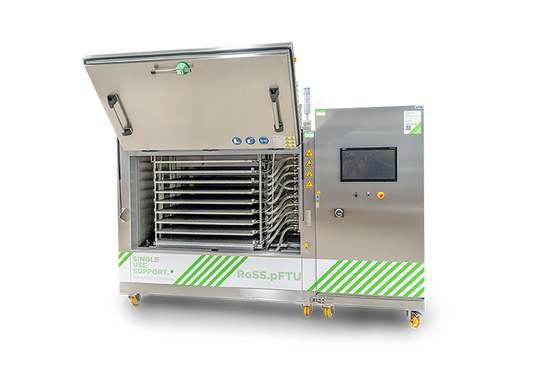
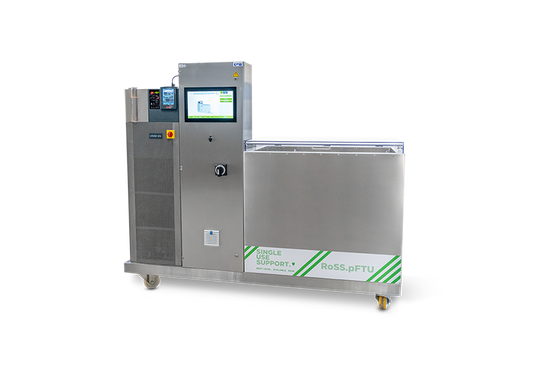
Freezing and thawing processes enable the safe storage, transport, and management of valuable drug substances throughout the cold chain. Single Use Support provides advanced freeze-thaw solutions designed to ensure controlled, reproducible, and scalable cold chain operations.

Why Single Use Support for freeze-thaw processes?

Suffering high product loss rates?

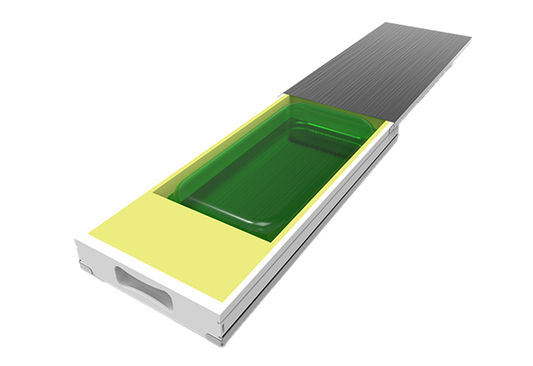
Unprotected single-use bioprocess containers can break or product quality can deteriorate during freezing & cold chain handling.

Green icon of a droplet and a protective shield on a transparent background demonstrating aseptic decoupling

Reduced product loss

Using controlled freezing platforms with protected single-use bags and bottles improves container integrity rates, product quality, and process cost-effectiveness.

Processes not reproducible?

Inconsistent processes regarding freezing rates result in non-GMP-compliant workflows and jeopardize product quality.

Green icon with a check list and certificate

Controlled GMP-ready processes

Recipe-driven freezing protocols align with Annex 1 and support 21 CFR Part 11 electronic records and closed system processing, making biomanufacturing GMP-ready.

Scalability challenges?

When batch volumes and container sizes increase, it is challenging to maintain critical quality attributes (CQAs) of the product and efficiency in workflows at different scales.

Green icon of two single-use bags on a transparent background demonstrating the availability of different sizes

Scale-up and -out

Single Use Support's automated controlled freeze-thaw systems enable scaling up and out for volumes ranging from 1 mL to 500 L in various container formats.

Graphic of two frozen single use bags showing different freezing results with and without controlled freezing

Advantages of controlled rate plate freezers

To demonstrate the effects of cryoconcentration, Naphthol Blue Black was used as a visual marker. The intensity of the blue coloration indicates the concentration of dissolved substances within the frozen solution.

Slow uncontrolled freezing (A)In contrast, bags frozen in a static freezer show uneven solute distribution. Dark blue areas, especially in the lower regions of the bag, highlight significant cryoconcentration.

Fast controlled freezing (B)Bags frozen using our plate-based controlled rate freezer show a uniform distribution of solutes. The result is a consistent, light-blue hue with a distinct white line through the center indicating minimal cryoconcentration.

Operator handling biologics with gloves on a cold chain integrity system, featuring text about biologics protection.

Cold Chain Integrity for Biologics - App Note

What impact does controlled end-to-end cold chain management have on preserving the quality, potency and safety of biologics? Find out how Single Use Support's modular, automated technologies for single-use bags and bottles minimize cryoconcentration, prevent container damage and ensure consistent, sustainable handling that aligns with Annex 1 throughout bioprocessing.

Preview of Single Use Support's case study about the advantages of robust cold chain transport solutions

RoSS.SHIP - Robust cold chain transport solution - Case Study

A multinational biopharmaceutical company producing monoclonal antibodies is shipping frozen API in 240L batches across borders. Aside from the importance of maintaining the cold chain during the 5-day shipment overseas from Europe, the transportation of the drug product should be as safe and cost-effective as possible.

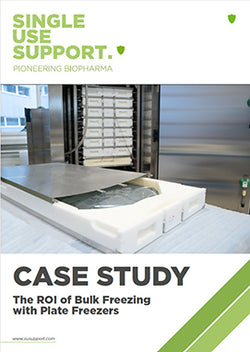
Preview of Single Use Support's case study about the ROI of bulk freezing

The ROI of Bulk Freezing with Plate Freezers - Case Study

A CDMO aspires to achieve improved freezing control, uniformity, and scalability when freezing BDS. New technologies are meant to reduce the need for manual handling as well as increase process efficiency and throughput. The goal was to evaluate and determine the return on investment (ROI) of cryovessels and plate freezers with RoSS.pFTU XL when freezing bulk.

  • Blast freezer in biopharma: What, when and why?

    Blast freezers have emerged as a reliable solution in the biopharmaceutical industry. However, pharmaceutical bulk freezing is not just about turning liquids into solids; it is also about preserving the integrity and quality of life-saving drug substances during manufacturing processes. Not all biopharmaceutical products can be frozen the same way, however. There are different types of bulk pharmaceutical freezers on the market for good reasons. When and why are blast freezers used? This article provides an overview of the types of bulk pharmaceutical freezers used in biopharma, the principles of blast freezing, and its suitability for different drug substances and container formats. 5 critical considerations when freezing bottles The blast freezing technology What is a blast freezer? Blast freezing relies on forced air convection inside a freezing chamber to rapidly reduce the temperature of drug substances. Cold air is circulated at high speed around the containers, ensuring uniform heat transfer and minimizing the risk of thermal gradients. Unlike static freezers, blast freezers are engineered for pharmaceutical applications to freeze drug substances by maintaining consistent airflow. Controlled rate freezing is essential for preserving the integrity and quality of sensitive biologics. This process helps prevent cryoconcentration and ice crystal formation, which can compromise product quality. What drug substances are frozen with air blast freezers? When to use blast freezers? They are particularly effective for freezing high-value drug substances that are stored in rigid containers. Common examples include: Live attenuated vaccines: These biologics require rapid and uniform freezing to maintain potency and prevent degradation. Bulk biologics: Enzymes, recombinant proteins, and other biologically active substances benefit from controlled freezing to preserve activity and stability. [[1]] Monoclonal antibodies (mAbs): When filled into bottles, mAbs are often frozen using blast freezers to ensure consistent product quality across batches. However, the suitability of blast freezing depends not only on the drug substance but more on the container format and the required freezing profile. What single-use containers work best with pharmaceutical blast freezers Why use blast freezers? Container compatibility plays a crucial role in the effectiveness of the freezing process. Plate freezing is the preferred way to freeze biopharmaceutical products in single-use bags, which is mainly due to their flexible structure. However, bags may experience uneven freezing in blast freezers, which can affect product quality. Therefore the following bulky container formats are preferred for blast freezers: Bottles: Rigid and uniform in shape, bottles allow for optimal airflow and consistent freezing. Bulky containers: Larger containers, such as 3D single-use bags, drums and CryoVault®, can be accommodated with customized airflow systems to ensure uniform temperature distribution. Key challenges in drug substance freezing Freezing drug substances is a crucial step in biopharmaceutical manufacturing, but it comes with several hurdles. One of the main issues is matching the freezing method to the container type – what works for single-use bags may not suit bottles or stainless-steel vessels. Inconsistent freezing profiles across batches can also affect product quality, making precise process control essential. As production scales up, freezing systems must keep pace while meeting GMP-relevant quality standards. And throughout the process, protecting the integrity of the biologic is critical. Ice crystal formation and thermal stress can compromise stability, so careful control of freezing conditions is a must to maintain product integrity. What we learnt from tests about cryoconcentration in bottle freezing   Choosing the right freezing technology for bottles Selecting the appropriate freezing method for drug substances in biopharma is not a one-size-fits-all decision. It depends on several factors, including the type of drug substance, container format, required freezing rate, and process scalability. Blast freezing, with its air convection technology, is well-suited for rigid containers such as sterile bottles. It offers uniform temperature distribution and controlled freezing profiles, which are essential for maintaining the stability of sensitive biologics. In contrast, plate freezing is preferred for flexible containers like single-use bags, where direct contact with cold surfaces ensures rapid and even freezing. Static freezing, often used in legacy systems, lacks the precision and consistency required for modern biopharmaceutical processes to cool liquids and is more appropriate for storage of already frozen drug substances. It cannot control temperature gradients and results in longer freezing times, increasing the risk of cryoconcentration and product degradation.[[2]] Freezing solutions from Single Use Support Single Use Support offers a comprehensive portfolio of freezing technologies tailored to the needs of biopharma, including plate-based freezers, cryogenic liquid-nitrogen freezers and blast freezers. The latter is best for controlled freezing of bulk-packaged drug substances, such as biopharma bottles. These integrated systems that support scalable workflows and are ready for GMP use. They are designed to ensure consistent product quality, operational efficiency, and flexibility across various container formats and drug substance types. Controlled blast freezing with RoSS.BLST References Singh S. et al.: Large-Scale Freezing of Biologics, 2009. Available at: Large-Scale Freezing of Biologics Brandmayr P.: Optimization of the freezing process with a liquid nitrogen freezer to increase cell viability of a mammalian cell line. 2023

    READ MORE
  • Freezing bottles – 5 critical considerations

    Freezing drug substances to ultra-cold temperatures is a standard step in biopharmaceutical manufacturing. Yet, beyond simply cooling, it’s the critical quality attributes (CQA), like product safety, consistency, and process efficiency, that truly define success in biopharma. When preparing to freeze drug substances in sterile bottles, it’s essential to weigh several key factors. These considerations help ensure the freezing process not only preserves product integrity but also supports reliable and productive operations. 1. Secure product quality with controlled freezing Controlled and uniform freezing is essential to avoid cryoconcentration – a phenomenon where solutes concentrate unevenly due to ice formation from the outside in. This can lead to protein denaturation and pH shifts, which ultimately impact drug stability and efficacy. Studies show that the “volcano effect” in bottles, where solutes are pushed to the center and top, can cause significant concentration gradients. Manufacturers can minimize these risks by controlling the freezing rate and temperature profile throughout the freezing process including the solidification phase. Product integrity stems from a controlled freezing which can be adapted depending on the specifications of the drug substance, such as cell-based or mAbs. What we learnt about controlled bottle freezing   Figure 1: Visualization of the volcano effect in bottles occurring in uncontrolled freezing, compared to consistent distribution in controlled freezing.    2. Protect bottles to ensure container closure integrity When drug substances or other raw materials, such as buffer or media, are frozen in bottles, the single-use containers must maintain their integrity. Even though they’re called rigid containers, there are vulnerable spots, particularly when the single-use container and assemblies become more brittle under sub-zero conditions.  To prevent leakage or contamination, bottle integrity can remain secure when the assemblies are protected during cold chain handling. Bottle RoSS is the equivalent of the RoSS® shell, which is the protective shell for single-use bags. With Bottle RoSS the tubing on bottles is protected at glass-like sub-zero temperatures with the help of a soft 3D foam which hardens at frozen state. More about Bottle RoSS 3. Static or blast freezing? In general, the choice between static and blast freezing for cooling drug substances in bottles depends on the container format and the sensitivity of the drug substances. Static freezers are meant for storing drug substances at low temperatures, not for freezing them. Using them to freeze bottles can lead to issues like cryoconcentration and product degradation. Even if the freezing time is similar to other methods for small bottles, the lack of control during the critical phase transition still negatively impacts product quality. In contrast, blast freezers with high-speed air convection technology are more effective at rapidly and uniformly freezing drug substances. This technology is particularly effective for biologics stored in bulky containers, such as bottles, as it minimizes thermal gradients and preserves product quality. 4. Role of bottle types and sizes Not all bottles are created equal. Manufacturers can choose among bottles with different types, geometry and size of the bottle, which may impact on freezing efficiency and uniformity. HDPE and PETG bottles have different features affecting the following fluid and cold chain management processes. Same with the sizes that can range up to 20L bottles. Overall, rigid bottles allow for optimal airflow in blast freezers, supporting consistent freezing profiles. Larger containers may require customized airflow systems to ensure uniform temperature distribution.   5. Think end-to-end for closed system efficiency Look left and right before freezing bottles. An efficient and safe freezing process requires an aseptic closed system, beginning with the aseptic filling and filtration stages. This continues through cold chain storage and shipping with a controlled thawing process. Integrating closed systems minimizes contamination risks, streamlines workflows, and ensures that drug substances remain protected at every stage. This end-to-end strategy meets GMP-relevant quality standards, including Annex 1, and operational efficiency, making it the gold standard for working with bottles in biopharma.  Interview: Trends with Single-Use Bottles in Bioprocessing – Single Use Support Mastering filling & freezing of bottles with Single Use Support Uncontrolled bottle freezing processes often struggle to scale, leading to inefficiencies and risks for critical drug substances. With RoSS.BLST, Single Use Support addresses these pain points by enabling seamless transitions from clinical to commercial production – without compromise. Single Use Support’s end-to-end fluid management and cold chain solutions deliver scalable, aseptically closed processes for advanced fluid and cold chain management of bottles, ensuring product safety and regulatory compliance at every step. As the only provider offering fully integrated handling, filling and cooling critical liquids in bottles, Single Use Support empowers biopharma manufacturers to streamline fluid and cold chain management with bottles with compatibility, safety and efficiency. [[download-1-email-detailed]]

    Read more
  • Plate freezing: best approach for freezing biopharmaceuticals in single-use bags

    Plate freezing is a process where a product’s temperature is reduced by the means of contact with cold surfaces. Thus, a defining step in the freeze-thaw process for conservation in flat primary packaging, such as single-use bags. Things to know about plate freezing techniques Although plate freezing is very commonly known in food production, this freezing process has proven equally indispensable for the biopharma industry. After all, it is to fullfill the same purpose in both fields of application: to freeze products for storage and transport in order to ensure maximum product quality – be it frozen food like fish fillets or highly delicate biologics like mRNA vaccines. How freezing techniques emerged Like many scientific discoveries, the advantages of freezing (then) food for shipment were found by chance: In general, cold environments have been used for ages in order to cool food with the aim to impede the growth of microorganisms. After all, it was in 1890 when, by accident, refrigerated meat that was being transported overseas from Australia to Britain got frozen. This had such remarkable results on the quality of the delivered food that the procedure of freezing has soon been widely adopted in food transport and storage. Later on, in the 20th century, quick freezing has shown to be advantageous for various kinds of food. Since its beginnings, refrigeration systems have undergone many steps of evolution and improvements – from the combination of salt brine and ice that products were induced in (a patent on this dates back to 1848’s Britain) up to high-performance automatic plate freezers. Alongside, freezing time has been optimized, freezing capacities expanded and new fields of application discovered. What freezing techniques are most counted on? The most frequently used freezing techniques are: brine freezing: A product is submerged in a brine that is additionally cooled by refrigerants. cryogenic freezing: Liquid nitrogen is applied on a product in order to instantly freeze it; this is a quick yet costly freezing procedure. A cryogenic freezer freezes down to -180°C/-292°F.  blast freezing: Products are put into an environment which is cooled by the means of cold air – a very common practice for bulk packaging, i.e. for ultra cold storage in laboratories. contact freezing (plate freezing): A product is frozen via direct contact with cooled surfaces like those of a contact plate freezer. Considering the different approaches in refrigeration with multiple challenges and benefits, a focus on the plate freezing process shall illustrate the huge potential and its key role in pharmaceutical production.   More about our Pharmaceutical Plate Freezer Plate freezer vs. blast freezer – the main differences for biopharma During the process of blast freezing, air is blasted in a cooling chamber on a product in order to set or keep it at low temperature; it is frequently chosen to create a cold storage for frozen items, conserving them over a longer time. Drug substances in bulky primary packaging, such as bottles or 3D bags are more mostly frozen in blast freezers. Plate freezing, on the other hand, relies on cooled surfaces themselves rather than a cooling air blast: Via direct contact with these freezing plates, heat transfer is induced between them and the yet to be frozen products, allowing quick freezing of drug substance between the two metal plates. In that a plate freezer requires the product to be touched by both surrounding surfaces, the shape of its containers is to be taken into account as well which is why this is the more suitable freezing technique for single-use bags. Advantages of plate freezing for biopharma As for biopharma, the use of a pharmaceutical freezer can be substantial e.g. on the attempt to exactly control the freezing time according to the requirements of the processed substance. Recipe-driven setpoints for product-tailored freezing allows standardization and reproducibility of freezing kinetics that meet GMP relevant quality standards. Plate freezers facilitate fast and controlled freezing of bulk drug substance in bags which has proven to significantly reduce the occurrence of cryoconcentration: Caused by the different solubilities of a product’s components, the ongoing emergence of crystals leads to the separation of certain ingredients. With fast plate freezing it is hence possible to minimize reduction of product quality by achieving high homogeneity in the liquids. Homogeneous freezing is a result from quicker heat exchange.   Freezing results in x-ray view As a result of a slow freezing process through conventional freezing techniques, such as a laboratory static freezer, larger crystals with proteins coagulate in the center of primary packaging which causes tensions that lead to diminishing product quality.  [[download-1-email-detailed]] Freezing solutions for biologics – from lab- to bulk-scale Acknowledging the many benefits of plate freezing in the production of high quality biologics, Single Use Support has developed an elaborate product lineup of freeze-thaw-platforms to address a wide array of applications with RoSS.pFTU (plate-based freeze-thaw unit) for single-use bags  and RoSS.BLST (controlled blast freezer) for single-use bottles and other bulky packaging. Having the choice between different sizes (from 100 mL up to more than 200L), customers are provided with the appropriate freezing solution for their very needs. From the use in studies conducted in labs with the small lab freezer for pharma up to bulk production of biopharmaceuticals, a fully scalable freezing option has been developed to ensure maximum product quality. Compatibility with single use bags of all sizes and manufacturers is given both in lab-scale and in large-scale freezing systems thanks to the secondary packaging with RoSS shells. These robust shells are a valuable complement to the reliable end-to-end solution provided by Single Use Support. More about the Freeze-Thaw Platform

    READ MORE

Talk to an expert