
Precision fluid management for ADCs

Flexible and reliable fluid and cold chain handling of antibody-drug conjugates for use in upstream, downstream, and fill-finish processes.

Why Single Use Support for ADC manufacturing?

Operators at risk due to cytotoxicity?

Manual handling of highly potent cytotoxic payloads exposes operators to significant risk and increases the likelihood of process deviations, human error, and safety-related incidents.

Green icon of a checkmark symbol inside a shield demonstrating safe and efficient handling.

Safety by design

Closed single-use flow paths reduce operator exposure and minimize product loss in cytotoxic environments.

Annex 1 compliant?

HPAPI and ADC manufacturing environments require robust contamination control strategies that support Annex 1-aligned closed ADC handling concepts.

Green icon with a check list and certificate

GMP-ready workflow

Safe filling and controlled cold chain solutions for ADCs in single-use bags and bottles enable a reliable and GMP-ready manufacturing workflow with closed transfer and audit-ready data. Scalable from bench to commercial scale without re-engineering.

Risking loss of valuable ADCs?

Product loss can be a result from inaccurate aliquoting into bags and bottles, excessive holdup volumes, or container integrity failures. For high-value ADCs, lower production yields directly impact the cost of goods.

Green icon of a checkmark symbol inside a target on a transparent background demonstrating highest accuracy

Controlled fluid path

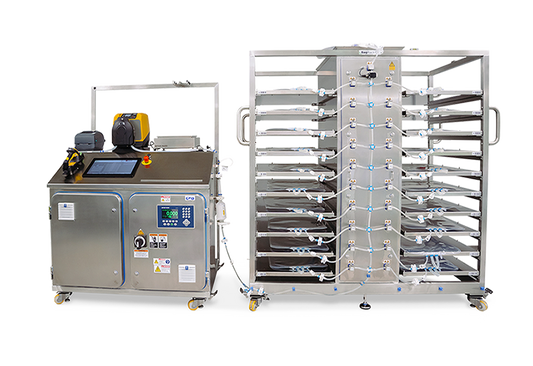
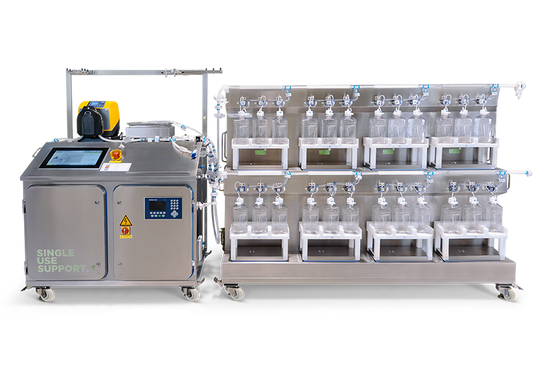
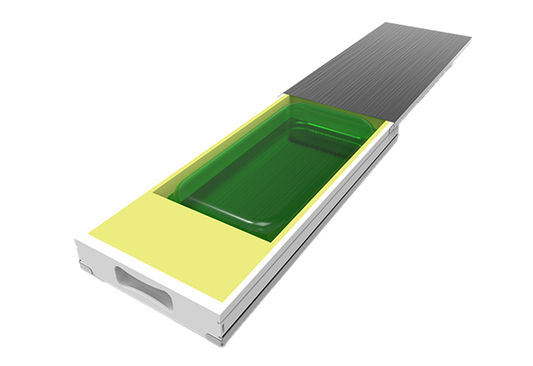
Automating the process of aliquoting ADCs into single-use bioprocess containers helps ensure a high filling accuracy, reproducible process control, and electronic recordkeeping. Protective shells enhance container integrity and safety.

Biomanufacturing setup with PETG bottles and white caps on a filling module.

Safe and efficient ADC handling

Antibody-drug conjugates are advancing in potency, value, and complexity, driving improvements in cancer treatment. At the same time, safety expectations and the need for GMP-compliant, efficient manufacturing continue to rise.

Single Use Support partners with CDMOs to provide reliable fluid and cold chain management for critical ADC handling. Automated and controlled systems support accuracy, process control, and safety across manufacturing workflows.

Preview of a guide about ADC manufacturing

DOWNLOAD GUIDE

Navigating 5 overlooked ADC manufacturing challenges - Guide

Fluid and cold chain management entail multiple challenges in antibody-drug conjugate manufacturing, including the following five often overlooked aspects:

  • Handling ADC cytotoxicity
  • Precision in fluid management
  • Maintaining ADC stability after freeze-thaw cycles
  • Transition from bench scale to commercial production
  • Cost considerations of filling & freezing equipment

Learn more about how to navigate these 5 underestimated challenges in this ADC Manufacturing Guide.

  • Fluid management in HPAPI manufacturing: Getting from high risk to controlled efficiency

    In high potent active pharmaceutical ingredients (HPAPI) and antibody-drug conjugate (ADC) manufacturing, the most critical risks are often not visible at first glance. While much attention is given to payload potency and containment concepts, it is fluid handling that frequently determines whether a process is safe, reproducible, and scalable. HPAPI-containing liquids combine extreme biological activity with exceptionally high value per milliliter. As ADC designs evolve toward multi-linker and multi-payload formats, this value density continues to increase.  Every fluid transfer step introduces risk: for the operator, for the environment, and for the product itself. In this context, fluid management is no longer a supporting operation. It becomes a core engineering discipline that directly impacts contamination control, Annex 1 alignment, and manufacturing efficiency.  So how can manufacturers enhance safety levels and, at the same time, transform ADC handling into a far more time‑ and personnel‑efficient process? Read on to find out how efficiency gains of up to 90% in labour hours can be achieved.   Fluid transfer equipment used in ADC and HPAPI manufacturing  Liquid handling of HPAPIs typically relies on containment systems originally designed for aseptic processing. Common solutions include:   Biosafety cabinets class II or class III: These biosafety cabinets are frequently used during early development or for small batch sizes, where predominantly manual operations are still performed.  Restricted access barrier systems (RABS) and isolators: These systems provide a higher level of physical separation between operator and product and are widely adopted in commercial ADC fill-finish environments.   Automated filling platforms integrated into closed single-use workflows. These fillers add an additional layer of process control by minimizing manual interventions and enabling recipe‑driven, fully documented operation.  Aside from automated filling platforms, airflow behavior remains a critical consideration: Annex 1 places strong emphasis on predictable, unidirectional airflow and well‑controlled HEPA filter performance. Any fluid management solution operating in these environments must not disrupt laminar airflow through unnecessary movements, pressure fluctuations, or poorly engineered transfer interfaces.  Challenges with isolators and RABS in ADC filling  Isolators and RABS offer strong advantages in terms of operator protection and contamination control, but they introduce technical challenges that are often underestimated in HPAPI fluid management.   One of the most common issues is pressure instability triggered by transfer interfaces such as alpha–beta ports. Each transfer event introduces short‑term pressure deviations that can disrupt unidirectional airflow within the critical zone. Air turbulence may also result from misaligned HEPA filters or from excessive mechanical movements of transfer systems. From an Annex 1 perspective, these disturbances are critical because they challenge the foundational assumptions of a consistently protected Grade A environment. If airflow visualization studies show instability, turbulence, or backflow, implementing corrective actions becomes complex and costly.  Despite these challenges, isolators and RABS remain attractive solutions. They provide excellent operator safety against ADC cytotoxicity and support a high degree of automation, including the option to implement fully robotic fill-finish workflows for potent molecules. The key challenge is ensuring that fluid transfer technologies are engineered to complement the airflow concept rather than compromise it.    Challenges with biosafety cabinets in HPAPI filling  Biosafety cabinets are widely used in HPAPI development and clinical manufacturing. However, their limitations become evident as process requirements increase in complexity. Just like isolators, biosafety cabinets are sensitive to airflow disruptions caused by damaged or improperly installed HEPA filters. Manual interventions, frequent hand movements, and equipment changes further increase the risk of laminar flow disturbances.  From a regulatory perspective, this creates a potential risk for Annex 1 alignment, especially when processes move toward commercial scale.  In addition, operator protection relies heavily on procedural discipline rather than engineered physical separation, which is not ideal when handling highly potent ADC intermediates.  Manual filling inside biosafety cabinets also introduces operational inefficiencies. Filling accuracy depends on operator skill, throughput is limited, and product loss due to handling errors becomes more likely.   While biosafety cabinets can be a pragmatic solution for small volumes and early-stage batches, they offer limited scalability and often become a bottleneck during tech transfer. Single-use technologies for automated filling  Single-use filling technologies address many of the limitations seen with open or semi-open systems. By creating a fully closed fluid path, these systems support Annex 1-aligned contamination control strategies while significantly reducing operator exposure to HPAPIs.  In addition, filling ADCs into single-use bags or bottles with automated filling platforms can significantly reduce inefficiencies. An Irish manufacturer reported a reduction of more than 90% of labor hours per batch required when using automated filling platforms.   [[download-1-email-detailed]]   Automated platforms such as RoSS.FILL enable accurate and reproducible (recipe-driven) filling of liquid HPAPI intermediates with minimal manual interaction. Regardless of whether manufacturers use single-use bags or bottles as the bioprocess container, and independent of container size or type, the modular design of RoSS.FILL enables process flexibility.  The closed design supports stable airflow conditions, as no open manipulations are required in the critical zone. Single-use assemblies simplify cleaning validation and allow rapid changeovers when scaling out production.  Single Use Filling System - Single Use Support Takeaways for HPAPI manufacturers  Fluid management has become a defining capability in HPAPI and ADC manufacturing. As molecules become more potent and fluid transfer processes more automated, the way liquids are filled and protected determines both regulatory robustness and economic success. Technologies that combine closed processing, automation, and single-use flexibility enable manufacturers to meet Annex 1 expectations while protecting operators and preserving every drop of valuable product.  A well-designed fluid management strategy delivers measurable benefits throughout the ADC lifecycle.   Operator safety improves through physical separation and aseptically closed and automated systems.   Manufacturing processes become more reproducible, scalable, and suitable for scalable production.  Automation and closed systems help ensure that high-value HPAPI liquids stay in the process where they belong. In a manufacturing environment where every drop counts, reducing avoidable losses has a direct impact on cost of goods and supply reliability.  Learn how Single Use Support fluid management technologies support safe, scalable, and Annex 1-aligned HPAPI manufacturing. Learn how  

    READ MORE
  • Are these 7 ADC handling considerations on your radar?

    Every new generation of ADC is more potent, more complex, and more valuable than the last. At the same time, manufacturing timelines are tightening, and safety expectations are rising. In this environment, traditional approaches to fluid handling and cold chain management quickly reach their limits.  The following 7 considerations increasingly define how ADC handling is approached in real manufacturing environments, to achieve the safety, precision, and scalability that have become inseparable requirements. 1. Operator safety must come first Antibody-drug conjugates (ADCs) introduce cytotoxic risk directly into routine liquid handling operations in manufacturing facilities. Even minimal exposure may be hazardous for operators, particularly during open or semi‑open process steps such as manual filling, draining, or transfer operations. For this reason, closed handling concepts have become essential rather than optional. EU GMP Annex 1 explicitly promotes the use of closed systems to reduce both product contamination and operator exposure. In practical terms, this includes fully sealed fluid paths, minimized manual intervention, and automation wherever feasible. In cold chain handling, container closure integrity is of highest importance. Freezing and subsequent cold‑chain handling can impose mechanical stress on single‑use bioprocess containers, potentially resulting in leakage or breakage. Secondary packaging solutions, such as the RoSS® shell, provide an additional protective barrier, reducing the risk of product loss while serving as a critical layer of protection for both product quality and personnel safety. 2. Light as invisible threat for ADCs ADCs are especially susceptible because their components – the antibody, linker, and payload – exhibit different photostability profiles, making gradual degradation possible even in the absence of immediately visible changes.[[1]]. Although UV light represents only a small portion of the overall light spectrum, it is the most energetic component and therefore the most critical for light‑sensitive biologics. However, light exposure is unavoidable in manufacturing environments, for example as USP <790> requires visual inspection under defined lighting conditions to assess product quality.[[2]] Unnecessary light exposure can, however, be minimized elsewhere in the process though.  So how can manufacturers protect ADCs from light? Only a limited number of single-use bags provide inherent UV protection through the film material. Yet again the RoSS® shell as secondary packaging for 2D bags can play an important role as it is designed not only to protect against mechanical damage of the bag, but also fully encloses single‑use bags and assemblies tamper-evidently and minimize ambient light exposure during handling and transport. Where required, UV‑protective single‑use bags with a black film can provide an additional layer of protection against light exposure, helping preserve product quality beyond the mandatory inspection steps. Blocking UV light from biopharmaceuticals   [[download-1-email-detailed]]   3. Patient safety already starts in the fluid path Patient safety in ADC manufacturing is not (only) determined at the bedside – it is engineered already into the fluid path through manufacturing processes. Closed system devices play a decisive role in determining how accurately, consistently, and safely a drug product is transferred and filled. Variations in fluid‑path geometry or internal volumes across closed system transfer devices can lead to meaningful differences in holdup volume, product (quality) loss, and drug‑product interaction. Such incompatibility may result in compromising product quality and dose accuracy.[[1]] High‑precision, recipe‑driven fluid management systems such as RoSS.FILL are designed to address these risks by controlling fluid‑path design, minimizing residual volumes, and ensuring material compatibility across the complete assembly. Reproducible filling performance and defined drainage behavior reduce dose‑to‑dose variability and help ensure that the target fill volume is delivered consistently. By focusing on controlled, yet modular closed system fluid paths early in development, manufacturers establish a robust foundation for drug‑product integrity, process robustness, and, ultimately, patient safety. HPAPI fluid management entails further process steps and equipment to provide restricted barrier systems and safe fluid transfers. Getting HPAPI fluid management to controlled efficiency   4. What is the weakest link(er) when freezing? Freezing and thawing are among the most stressful moments in the life of an ADC. Cryoconcentration, local pH shifts, aggregation, and denaturation are well‑documented risks for biologics. Furthermore, the linker often represents the weakest structural element in ADCs. Temperature‑ and pH‑sensitive linkers can be altered by uncontrolled freeze‑thaw stress, reducing conjugation integrity and stability. Controlled, recipe‑driven freezing of antibody-drug conjugates in single-use bags and bottles replaces uncertainty with reproducibility. Managing cooling rates, phase transitions, and thawing profiles helps preserve critical quality attributes (CQA) throughout cold storage and transport. 5. ADC value keeps rising Modern ADCs are steadily increasing in value per milliliter. Higher drug-to-antibody ratios, more potent cytotoxic payloads, and advances in linker technologies are raising the therapeutic and economic value of every batch.[[3]] At the same time, the industry is moving beyond classical ADCs toward increasingly complex bioconjugates, including next-generation conjugated vaccines with polysaccharides and nanoparticle-based targeted therapies.[[4]] As molecule complexity grows, so does the importance of protecting product yield throughout downstream handling and fill-finish operations. In this environment, product loss due to contamination, hold-up volume, single-use bag failures, or inaccurate filling becomes increasingly difficult to justify. Manual filling remains labor-intensive and introduces avoidable operational risk, particularly when handling high-value intermediates.  Automated filling systems can reduce operator involvement by more than 90%, requiring just one operator for approximately two hours per batch while delivering precise, sterile filling and complete batch documentation. Beyond reducing risk, automation Automation can also provide significant economic benefits: in one industrial case study about RoSS.FILL as automated bottle filling platform involving higher-value ADCs, for example, the return on investment (ROI) was achieved after only five batches with lower labor requirements and reduced product losses translating into substantial operational savings. [[download-2-email-detailed]]   6. ADC manufacturing never stands still ADC programs rarely follow a linear path. Batch volumes fluctuate, clinical indications evolve, and production is often distributed across multiple sites or partners or fully outsourced to CDMOs. Given the volatile market dynamics of ADC manufacturing, it is challenging for manufacturers to maintain consistently aligned process flexibility. This variability places significant pressure on manufacturers during tech transfer, requiring them to: Scale batch volumes without process redesign Increase throughput within tight timelines Transfer processes seamlessly to CDMOs Adapt container formats quickly Conventional, rigid systems are poorly suited to these demands. In contrast, modular and scalable platforms enable manufacturers to respond to changing requirements without compromising safety, process control, or compliance. Additionally, the straightforward implementation and adjustment of automated filling systems for scale-up or scale-out significantly improves operational efficiency and reproducibility.   7. End‑to‑end process thinking wins Many ADC challenges cannot be solved in isolation. Operator safety, product quality, cold chain stability, and scalability are interdependent: End‑to‑end approaches combine closed, automated fluid handling, protective secondary packaging, controlled freezing, storage, and thawing. Modular systems that scale with demand are not only easier to integrate in existing processes, but also seamlessly scalable. In addition, reducing interfaces and manual steps improves robustness and makes complex ADC processes easier to control over time. [[download-3-email-detailed]]   Mastering ADC handling with Single Use Support Single Use Support supports manufacturers with end‑to‑end solutions for safe, closed, and scalable ADC fluid and cold chain management. From automated filling and protected storage to controlled freezing and thawing, the technologies are designed to reduce risk while preserving product integrity. This integrated approach helps manufacturers handle increasingly potent and valuable ADCs with confidence across development and commercial manufacturing. ADC Handling with Single Use Support   References Patnaik, P.: ADC Manufacturing’s biggest CMC challenges and ways to approach them, in: ADCs: ADC Manufacturing's Biggest CMC Challenges And Ways To Approach Them USP-NF/PF: 〈790〉 Visible Particulates in Injections Tao J, et al.: Dual-payload antibody-drug conjugates: Taking a dual shot:  ScienceDirect Kwon, Y.:  A Love for Complexity: ADC Drug Development

    Read more
  • ADC cytotoxicity: How to provide operator safety

    Antibody‑drug conjugates (ADCs) have become a key treatment option in oncology, merging the targeted specificity of antibodies with highly potent cytotoxic payloads. While their therapeutic potential is remarkable, this same potency poses substantial risks for operators during manufacturing. Even minimal exposure to the ADC cytotoxicity can lead to serious health issues, making it crucial to implement strict handling protocols.  Throughout the production of ADCs, cytotoxicity remains a pervasive risk during upstream processing, conjugation, fill‑finish, and packaging operations. Facilities must safeguard operators, maintain product integrity, and prevent environmental contamination. So, what is the best solution to ensure ADC safety in cGMP-compliant manufacturing?    What makes an antibody-drug conjugate so toxic?  A scientific look at ADC cytotoxicity  ADC toxicity originates from the cytotoxic payloads attached to the antibody molecule. These payloads – such as auristatins, maytansinoids, or DNA‑damaging agents – are engineered to kill cancer cells at extremely low concentrations. Unlike biologics such as monoclonal antibodies, ADC payloads are classified as high‑potency active pharmaceutical ingredients (HPAPIs).  More about ADC technology   How can ADCs pose a threat to operator safety?  Even exposure at nanogram‑level can be harmful to human cells, as many ADC payloads interfere with DNA replication or microtubule formation. Long-term exposure may elevate the risk of cancer, while aerosols, droplets, surface contamination, or bag breakages can lead to immediate safety hazards in the workplace. [[1]]  Before the production begins, the potential hazard risk in ADC handling is assessed by the occupational exposure limits (OELs). Each ADC compound is assigned to an OEL value which determines the necessary safety measures for maintaining a controlled ADC manufacturing environment. [[2]]    Safe ADC facilities Facility safety risks in ADC manufacturing Facilities handling ADCs must manage compounds whose payloads are highly potent and active at extremely low volumes, which drives the need for consistently enclosed, tightly controlled processing environments. Hazard and exposure assessments establish very low OELs for payloads and often for the conjugated molecule, meaning facility design must prevent airborne release and cross‑contamination. This includes controlled pressure regimes, segregated zones, and validated cleaning and containment procedures, ensuring that operations with elevated exposure potential are executed in a manner that minimizes aerosolization and prevents migration into adjacent areas. The overall objective is a facility and process architecture that reliably supports closed, leak‑free product handling across all process steps. [[2]]  Operator safety risks in ADC manufacturing Because ADC payloads have extremely low allowable exposure levels, even small quantities can present meaningful risk. Exposure can occur via inhalation or surface contamination, especially during tasks with higher dispersion potential, such as: Conjugation and buffer exchange may involve manual sampling or open manipulations that can generate contamination. Filling and aliquoting require particular attention, since even if Annex 1 does not mandate isolators for every setup, aseptic and closed filling remains essential to prevent aerosol formation and accidental release. Single-use bag handling introduces breakage risks, especially when bags are frozen or exposed to mechanical stress. Therefore, secondary containment is recommended to prevent product loss and operator exposure. Dispensing and weighing of HPAPI powder pose an immediate exposure risk when performed without a closed, automated transfer route. Transfer between unit operations increases contamination and safety risks when bulk drug substances are moved without protected, closed pathways. Together, these challenges highlight the importance of closed and reliable secondary‑protection systems. Reducing product loss and contamination risk  For ADCs, preventing product loss is directly tied to reducing operator exposure. Robust secondary containment strategies that mitigate bag breakage or leakage support enhanced operational excellence and promote a safer environment when handling materials associated with high acute toxicity. Single Use Support’s RoSS® shell provides robust secondary containment for all available single‑use bags, protecting frozen ADC solutions and enabling safe handling, storage, and shipping of bulk drug substances. Bottle RoSS protects bottles and connected tubing assemblies, reduces product loss during cold chain handling, and supports the safe movement of HPAPI‑containing fluid paths.  Together, these systems establish a critical physical barrier that reduces operator exposure while maintaining batch integrity.  Closed aseptic filling for ADCs  Open filling can significantly increase the likelihood of operator contamination. Automated filling solutions help to close the system, standardize operations, and reduce human interaction.  RoSS.FILL is a fully closed, automated filling platform that eliminates manual handling of ADC compounds or intermediates. Its recipe‑driven workflows improve reproducibility and scalability while supporting varying fill volumes for both bags and bottles. The platform reduces labor needs and increases containment, making it suitable for HPAPI, ADC bulk drug substance and intermediates handling. The single‑use manifolds, whether configured as standard single‑use assemblies or as overmolded manifolds, are inserted into the RoSS.FILL system to ensure an aseptically closed setup during fluid transfers.  ADC manufacturers require precise filling into small‑ and mid‑volume containers, often at high potency levels. Closed, automated systems help maintain worker safety by minimizing manual operations, ensuring accurate gravimetric or flow‑sensor‑based filling, and eliminating open transfer points. Exposure risks during sampling, aliquoting, and storage are also reduced. Safe filling and aliquoting of ADCs    Benefits for manufacturers with automated ADC workflows  Implementing automated, closed, and protected ADC workflows provides several advantages to improved operator safety through minimized HPAPI exposure:  Reduced contamination risk via closed, sterile fluid pathways Lower product loss due to robust secondary containment Higher reproducibility supported by controlled, recipe-driven automated filling Reduced manual labor, minimizing human‑error risks Scalable processes for commercial ADC volumes Compliance with US and European regulatory expectations for high‑potency compounds  Together, these benefits support safe, compliant, and efficient ADC manufacturing. [[download-1-email-detailed]] Key Takeaways  Antibody‑drug conjugates provide powerful therapeutic effects, yet their cytotoxic payloads introduce unique operator‑safety challenges. Maintaining containment during conjugation, filling, freezing, storage, and shipping is essential across manufacturing facilities.  Closed systems, particularly automated filling technologies, and robust secondary protection form the foundation of safe and scalable ADC manufacturing. By minimizing human interaction and ensuring end‑to‑end containment, manufacturers can safeguard both operators and product quality.    References Rohrer T.: Consideration for the Safe and Effective Manufacturing of Antibody-drug Conjugates:  Consideration for the Safe and Effective Manufacturing of Antibody-drug Conjugates » ADC Review Hermann F. et al.: How to Safely Handle Your Antibody Drug Conjugate. Lonza: https://dam.lonza.com/dmm3bwsv3/assetstream.aspx?assetid=13155&mediaformatid=10061&destinationid=10016  

    READ MORE

Talk to an expert