

RoSS.SHAK

Single-use thawing & shaking system

RoSS.SHAK is a reliable shaker to regain the highest quality and homogeneity of the drug substances inside single-use bags, placed in RoSS® shells.

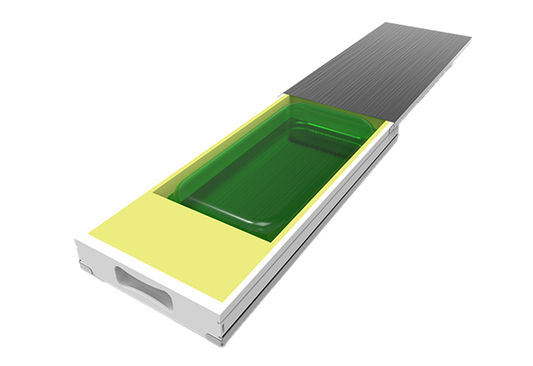
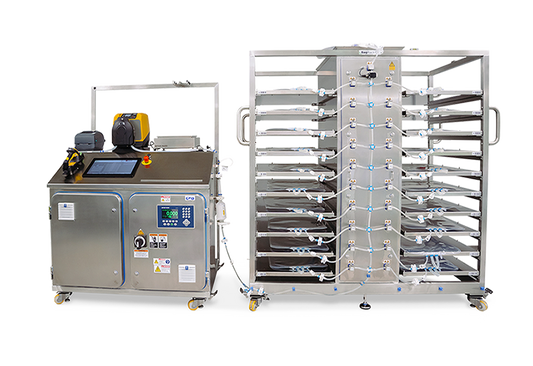
Image of RoSS.SHAK shaking and cooling solution on white background, for uniform mixture of biopharmaceutical drug substances by Single Use Support.

Key features

Homogeneity

Best conditions for regaining homogeneity and protein quality through shaking

Up to 20 L

Suitable for all single-use bags up to 20 L, protected in the RoSS® shell 

Constant movement

Recipe-driven shaking for the required time

Flexible and easy setup

Adjustable to your preferred shaking preferences

Suitable for cleanroom

Based on international biopharmaceutical standards

GMP-ready

Aligned with FDA and EU GMP guidelines

Optional thawing function

In the chamber, a gentle and fast thawing process can be achieved.

Our customers trust in us:

Downloads

Preview of datasheet for RoSS.SHAK shaking and thawing unit by Single Use Support

Datasheet

RoSS.SHAK - Datasheet

RoSS.SHAK - Datasheet
 

Send a request

  • Evaluating freeze-thaw processes in antibody production

    Monoclonal antibodies: Improved quality and better results thanks to controlled freezing and thawing In a field as sensitive as biopharmaceutical development and production, controlled processes and procedures have always played a vital role and will continue to do so. This is especially true for highly delicate substances such as monoclonal antibodies derived from white blood cells: The monoclonal antibody production process may involve critical steps like freezing and thawing processes. They require particular care and sensitivity – as well as the logistics process, in order not to be compromised in their efficacy. Speedy freezing and thawing rates can add to improved levels of quality and lead to better overall results. Freeze Thaw Platform - learn more! [[ToC]] What makes monoclonal antibodies so special – and delicate to deal with?  Antibodies in general and monoclonal antibodies in particular have proven to be valuable tools in life sciences, thanks to some unique features. As they are able to bind to specific epitopes, they can be used for therapeutic but also for diagnostic purposes (e. g. ELISA assays). Their importance has increased significantly ever since they were first approved by the FDA in 1986. [[1]] As opposed to polyclonal antibodies, monoclonal antibodies have the added benefit of being derived from the same lineage. This means their results can be reproduced endlessly by always resorting to aliquots of the same original batch. This last fact notwithstanding, production and the general handling of any kind of antibody are complex processes and require an environment that is both sterile and controllable. After all, antibodies are protein-based and at high risk of deterioration in ex vivo environments. Temperature is therefore one of the most essential parameters to consider along the production process, from development all the way to the final administration, including centrifugation, freeze-thaw cycles, multiple handling steps such as dilution to final concentration at room temperature, storage, shipping as well as thawing after long-term storage conditions. All these procedures are equally important in order to guarantee the best possible result for the patient. [[1]]  The benefits of freezing antibodies at a fast rate With solutions and substances as delicate as blood cells and the antibodies derived thereof, the type of freezing process employed can have a major impact on their final quality, even if preservatives and cryoprotectants (e. g. sodium azide, glycerol) are added to antibody solutions contained in vials. The freezing speed affects both the frozen substance’s homogeneity and viscosity: With virtually any traditional freeze and thaw processes, parts of the substance will always show less activity based on the stress it is exposed to during freezing and thawing. An adequate freezing and thawing rate is thus a key parameter for achieving homogenous results without a major loss of active antibody concentration, hence quality. Various tests have confirmed that a consistently high freezing velocity - which can be achieved with progressive single-use platforms - leads to a significantly lower level of Cryoconcentration (the protein concentration in the solid or liquid parts of a partially frozen mixture), denaturation and formation of aggregates. As a logical consequence, the original characteristics of the substance to be frozen will be better preserved when processed at a speedy and consistent freezing/thawing rate. We implement this with our laboratory freezer, pharma freezer and cryogenic freezer. More about freezing and thawing drug substances: Freezing drug substance | Thawing drug substance | Regulations for Cryoprotectants in ATMP Cryopreservation Freeze & Thaw Platform - learn more The risks of slow freezing in monoclonal antibody production Slow freezing, on the other hand, is primarily characterized by differing freezing rates with a possibly adverse impact on the drug substance’s quality. A slower freezing process leads to the formation of longer ice crystals, which can negatively affect antibody storage. The formation of crystalline structures furthermore causes tension, which in turn can destroy up to 20 % of all contained proteins, without the presence of any protease enzymes! And as the cold temperatures penetrate the substance from the outside in, this can lead to an expansion of the core with the result of harming or destroying the surrounding material. Furthermore, the slow freezing rates offered by static freezers lead to increased levels of Cryoconcentration. In the worst case scenario, this can lead to the destruction of a high number of antibodies caused by friction and rupture. Highly concentrated substances such as mAb, however, require a homogeneous freezing process in order to maintain the original quality in the best way possible. Thawing in the monoclonal antibody production process Thawing monoclonal antibodies poses similar challenges and requirements that are to be mastered in order to preserve the structural and therapeutic integrity of these delicate biopharmaceuticals. As the frozen antibodies transition to a liquid state, the risk of stress-induced damage looms large. Controlled thawing becomes paramount: Too fast or too slow, uncontrolled freezing rates may cause damage to the antibody structure. Factors such as temperature fluctuations and extended thawing times can become silent adversaries, potentially destabilizing the molecules. Harnessing advanced thawing technologies and adhering to stringent protocols become not just best practices but indispensable safeguards. [[download-1]] What about mAb storage conditions? Antibody freezing and thawing can have an enormous impact on product quality. However, what happens in between is just as critical and demands adherence to strict guidelines: monoclonal antibody storage and transport. Central to – especially long-term – preservation of mAbs is storage temperature, demanding meticulous attention to prevent even minor deviations. Furthermore, repeated freeze/thaw cycles are to be avoided, which require thorough planning of which products are to be kept in refrigerators for short-term storage while others are subjected to ultra-low-temperatures. Many companies that manufacture monoclonal antibodies provide detailed data sheets on their respective products, including storage recommendations that one is usually best advised to follow. Proper storage conditions may vary; however, maintaining them is vital to ensure that the preserved antibodies are suited for diagnostics, in vivo studies, or therapeutic applications. Other possible damages due to freezing and thawing of antibodies When freezing and thawing monoclonal antibodies, insufficient processes pose severe risks due to the considerable physical stress that the proteins are subjected to. Freeze-thaw damage due to effects like cryoconcentration, which can alter the structure of monoclonal antibodies, are to be avoided. This requires precise control over freezing and thawing rates, which have to comply with the freezing profile of the drug substance in question. As already stated, repeated freeze-thaw cycles may prove detrimental to antibody quality and lead to loss of activity. One feasible approach is to choose small aliquots in order to flexibly access mAbs. Cryoprotective agents may be used to alter freezing point and behavior, especially for enzyme-conjugated antibodies like HRP-linked antibodies. Antimicrobial agents like BSA or sodium azide can be used as well, but are not suitable in every scenario. Sodium azide, for example, might affect the potential of conjugation and disturbs the cytochrome electron transport system in many organisms. Therefore, dialysis or gel filtration may be performed to remove it from the solution. [[2]] [[3]] Considering the varying kinds of antibodies and respective fields of application, customizable techniques and technologies are to be adopted in order to fully cater to unique process requirements in mAb production. [[2]] [[3]]  New opportunities and chances: Freezing and thawing mAb with next-level technology The implementation of single-use technology in the biopharmaceutical industry is growing rapidly, not least because of increased yields, the adaptability of disposable components, and the acceptance of personalized therapies and medical compounds. On top of that, single-use platforms facilitate a rapid production of clinical trial material, monoclonal antibody reagents for western blotting, and cell as well as gene therapies. Single-use technologies are highly flexible and scalable; thus, they offer the ideal solution for processing antibodies, cells and genes in a variety of volumes. Innovative approaches open up new formulation opportunities that would not be possible with traditional systems, tried-and-tested as they may be. Read more: Trends in monoclonal antibody production: Optimizing processes with single-use technology The growing range of therapies and compounds calls for plants and systems that are or can be adapted to the increased speed of development and production, as well as constantly changing requirements. In the case of monoclonal antibodies, special focus should be put on viscosity: As a result of protein-protein interactions, concentrated mAb solutions can exhibit high levels of viscosity that may pose challenges during the manufacturing process. However, viscosity tests conducted by Single Use Support have shown that the degree of viscosity does not impact the filling process. Nonetheless, with RoSS.FILL, the speed and force of liquid throughput can be regulated and adjusted to the respective product conditions. This allows for individually controlled filling processes before the highly sensitive substances can be sent on to the freezing process with RoSS.pFTU. RoSS.pFTU is an advanced plate freezing platform that can freeze and thaw monoclonal antibodies in several batch sizes. It allows extended control over the freezing rate, enabling researchers to carry out freeze-thaw processes that comply with the freezing profile of different drug substances. Along with the flexibility of this platform, its precision and efficiency contribute to an optimized production of top-notch antibody products. FREEZE & THAW PLATFORM BY SINGLE USE SUPPORT References A Single-use Strategy to Enable Manufacturing of Affordable Biologics, http://dx.doi.org/10.1016/j.csbj.2016.06.007, Published 2016-07-06 Antibody Shelf Life/How to Store Antibodies, http://dx.doi.org/10.13070/mm.en.2.120, Published 2013-10-31 Antibody Storage and Handling – GaoLab, https://drexel.edu/~/media/Files/medicine/drexel-pdfs/labs/gao/Drexel_Gao_Lab_Antibody_Storage_and_Handling.ashx?la=en, Published

    READ MORE
  • Thawing cells – process, difficulties & recommendations

    Cell thawing is a critical procedure in the area of life science and medicine. Ensuring a gentle thawing of frozen cells is essential for preserving their viability and functionality. In this article, we will highlight the cell thawing process, discuss common challenges, and provide recommendations for achieving optimal results in cell banking.  At Single Use Support GmbH, we understand the significance of safe cell thawing for preserving the integrity of valuable cell lines and primary cells. By employing single-use technology, our solutions for freezing, cryogenic freezing and thawing are designed to maintain high cell viability while streamlining the process to be automated and sterile, compliant with cGMP standards. [[ToC]] Thawing cells: the process Both cell freezing and thawing have a direct effect on cell recovery rates and cell viability after thawing, two important quality aspects of cell culture. Whether you are working with primary cells, cell lines, or stem cells, it is essential to follow the correct steps to ensure successful thawing. In this section, we will provide a step-by-step process overview of thawing cells and compare the conventional process using cryovials with an advanced, automated process using a thawing platform and frozen single-use bags. 1. Preparation Gentle storage of the cryopreserved cells in an ultra-cold freezer and its timely transport to the designated thawing area are essential prerequisites for a smooth thawing process. For long term storage, liquid nitrogen storage is the recommended freezing medium. 2. Controlled thawing If cells are needed for studies or tests, they can be taken from the cell bank. For this purpose, the cells must be thawed. For frozen single-use bags, a 37°C/98,6°F water bath or CO2 incubator is commonly used to gradually thaw the cell suspension. Cell medium is added to the thawed cells immediately so that the previously added cryoprotectants (e.g. DMSO) are not exposed to room temperature but are effectively diluted. To protect the cells from sudden temperature shifts that may be harmful during thawing, a controlled thawing process is recommended to produce safe results. OR: Controlled thawing based on freeze-thaw platform Freeze-thaw platforms offer ideal conditions for both cell bank freezing and thawing. The step with manual thawing in the water bath is taken over by the platform in a controlled and automated manner. Human errors and product loss are reduced, while automated and documented processes ensure aseptic processing. Cells are frozen in single-use bags that are protected by a protective shell. The shell enables plate freezing technology performed with a freezing and thawing platform – where the single-use shells are cooled and frozen with a uniformly controlled temperature drop. When thawing, this process is reversed, with a controlled increase in temperature until the cell substance is in a liquid state again. 3. Cell viability assessment Post-thaw, accurate cell viability assessment is essential. Techniques like trypan blue staining can be employed to determine the proportion of viable cells in the suspension. 4. Seeding or Subculturing Depending on the research requirements, cells can be directly seeded into a culture dish or bioreactor or subcultured to propagate and maintain the cell line. Difficulties in cell thawing Thawing cells comes with its fair share of challenges that can impact the overall success of research work or the quality of the medicinal product. Knowing how to address these difficulties is essential to preserve the maximum quality of the cells. Some common challenges encountered during cell thawing are: Liquid nitrogen contamination: Contamination from liquid nitrogen during the cryopreservation process can affect cell quality and sterility, potentially compromising experimental integrity. Cell viability reduction: Too slow or too rapid thawing processes can lead to reduced cell viability, affecting experimental results and the success of upstream processing. In addition, there are studies that advocate shaking after thawing for quality improvement. Cell count inaccuracy: The process of thawing can result in cell loss, leading to inaccuracies in cell counts. This can impact subsequent experiments that require precise cell numbers. Inconsistent thawing: Uneven thawing within the cell suspension can result in variability in cell recovery and survival rates, leading to inconsistent results. Cell resuspension challenges: Thawed cells might be difficult to resuspend uniformly, leading to uneven distribution during subculturing or experimentation. Trypan blue misinterpretation: Misinterpretation of trypan blue staining during viability assessment can lead to inaccurate cell viability results, impacting data interpretation. To overcome these difficulties, careful attention to thawing protocols and best practices for specific cell types is essential. Computer-assisted, controlled thawing with automated platform systems ensures a gentle process and avoids human errors. Safe & efficient thawing in every scale with single-use technology Single Use Support takes the process of cell thawing to the next level – with innovative freeze-thaw platforms designed to process a wide range of cell culture volumes, from small-scale applications to large-scale production. Our cutting-edge single-use technology offers numerous advantages for achieving an optimized cell recovery rate and a high cell viability while streamlining the freezing and thawing processes. The platforms are designed and manufactured in compliance with cGMP guidelines, ensuring the highest quality and reliability for cell-based applications in research and medicine. While previously it was done in a water bath, we bring standardization to the process of thawing. By incorporating Single Use Support's freeze-thaw platforms into your cell culture workflow, operators can significantly enhance the efficiency and success of freezing and thawing processes. Achieving high cell viability, streamlining operations, and ensuring sterility are paramount for advancing research, bioprocessing, and cell-based therapies. References Use of liquid nitrogen during storage in a cell and tissue bank: Contamination risk and effect on the detectability of potential viral contaminants, http://dx.doi.org/10.1016/j.cryobiol.2011.12.005, Published 2011-12-28 Improving Cell Recovery: Freezing and Thawing Optimization of Induced Pluripotent Stem Cells, http://dx.doi.org/10.3390/cells11050799, Published 2022-02-25 Trypan Blue, https://www.sciencedirect.com/topics/biochemistry-genetics-and-molecular-biology/trypan-blue, Published 2012

    Read more
  • Safe handling of monoclonal antibodies: Best practices

    Handling monoclonal antibodies safely can be quite a challenge for biopharmaceutical manufacturers. mAb production is a sensitive process, prone to contamination risks that can easily lead to product alterations and product loss.1 To protect staff and patients from severe consequences, it is therefore necessary to meticulously follow manufacturing regulations all along the monoclonal antibody production process. The right equipment and technological solutions can help to streamline the manufacturing process, increase product safety, and improve time and cost efficiency. In the following, we take a closer look at the risk of monoclonal antibodies, how staff and patients can be protected, as well as innovative solutions that help manufacturers master these challenges. [[1]] Single-use technologies in mAb production – read more [[ToC]] Monoclonal antibody handling – who is at risk of what? The limited research on the handling of mAbs provides no evidence that mAbs should be considered a health risk to medical personnel. However, monoclonal antibody drugs often require special handling.2 The safety risk for staff in handling monoclonal antibody conjugations arises from components like cytotoxic agents or radioisotopes. Direct exposure of operating staff during manufacturing processes can evidentially lead to chromosomal abnormalities, cancer, or severe skin irritation. [[3]] Advanced therapeutics like ADCs are composed of monoclonal antibodies and a cytotoxic payload. And while there is a considerable amount of research on the risks of conjugation agents available, there is a lack of conclusive studies on the handling of mAbs. As a consequence, there is no universal code of conduct for medical staff when handling mAbs, yet. Concerns are that frequent exposure via dermal, inhalation, and mucosal absorption of mAbs in manufacturing companies can lead to immunogenicity, toxicity, cytotoxicity or carcinogenicity, which is why safety measures are advised. These range from basic precautions like wearing a gown and covering eyes, nose and mouth while handling mAbs to the use of closed-system-drug-transfer-devices (CSTDs). [[4]] [[5]] CSTDs prevent drug substances from being exposed to the environment and show a substantially lower risk of leakage than common transport devices.6 They come with features that not only safeguard the safety and health of medical staff when administering the drug as well as during production, but can also guarantee increased product safety because the drugs maintain sterility. [[2]] [[3]] [[4]] [[5]] [[6]] Regulations concerning mAb handling In order to guarantee a drug product that is safe to use for patients, there are specific regulations concerning mAb handling during manufacturing of pharmaceutical products. Regulations for mAb production may vary slightly between regions, but they all follow guidelines set by the World Health Organization (WHO) [[7]] During mAb production, manufacturers are obliged to document the different steps as well as starting materials meticulously. Further, the WHO established rules to minimize the risk for contamination through microbes through sterilization of production materials and equipment. Staff is advised to perform tests on container safety regularly, such as PUPSIT (pre-use post sterilization integrity testing), as well as on batch integrity. [[8]] [[9]] To comply with all the regulations and maintain aseptic handling throughout the manufacturing process can be a challenge that is only to be addressed with innovative technological solutions that are highly adaptable and flexible. 7 7 9  Best practices for critical mAb production steps – with RoSS® Shell There are several process steps in mAb production that require an increased amount of precaution. One of the biggest challenges in mAb production is product loss because of errors during handling, and contamination risks through leakage, exposure to hazardous intermediates, and improper handling during transportation. Challenges like maintaining the cold chain call for innovative protection devices for mAbs during storage and transport. This is why Single Use Support has developed the RoSS® Shell. This protective secondary packaging was designed to keep drug substances and starting fluids in single-use bags safe from damages during handling. The protective shell is stackable to save space during storage, and enables improved freezing and thawing mechanisms. Closed end-to-end processes – a holistic approach Closed end-to-end processes are very efficient in reducing costs in mAb production, as they minimize contamination risks as well as product loss. Every step of the production is compatible and carried out in one closed platform, which means that substances are protected from exposure during filling and dispensing, as well as freezing and thawing. Flexibility and adjustability to changing manufacturing requirements are one of the most important trends in monoclonal antibody production. The purpose of end-to-end processes is to make it easier for producers to react to the industry’s demands and, in consequence, significantly reduce costs in mAb production. [[10]] Safe filling of monoclonal antibodies Biologics must be produced aseptically and sterilized by filtration to guarantee product safety for patients, which is why aseptic filling of mAbs is of utter importance. If mAbs are exposed to contamination during filling in transport containers, vials or bags, this results in product loss of a full production batch. To minimize these risks and make the process of mAb production more consistent and reliable, Single Use Support has developed RoSS.FILL – an automated aseptic filling platform. This fully automated drug dispensing system is highly flexible in terms of production volume (scale-up) and number of bags or bottles (scale-out). [[11]] Freezing process in mAb manufacturing The freezing process in mAb production is a crucial procedure to preserve antibodies and keep them accessible. It allows the safe storage and transport of monoclonal antibodies over extended periods of time. However, intricacies include designing a process that meets the freezing behavior of monoclonal antibodies. This calls for high control over freezing rates, as well as safe packaging of single-use bioprocess container Singe Use Support offers RoSS.pFTU – a freeze/thaw platform based on plate freezing that allows high customization of freezing processes. The enhanced control over cooling and thawing rates, combined with the bag’s protection provided by RoSS® Shell, makes this plate freezing platform ideal to prepare mAbs for cold chain storage and transport. [[download-1]] mAb storage and transport After mastering the critical freezing step for mAbs, they are typically stored for future use or transported to the next production facility. Especially in large productions, monoclonal antibody storage solutions need to be efficient and save space while also being able to maintain the cold chain. For this reason, Single Use Support has designed the ultra-low temperature freezer RoSS.ULTF, where mAbs can be efficiently stored at temperatures as low as -75 °C. Real-time temperature control and high storage density are main assets of this device, powered by the modular interior that can provide space for primary packaging in various sizes. In addition, the RoSS.SHIP container is designed to facilitate mAb transportation, able to hold the cold chain for almost one week. Both can be efficiently filled with RoSS® Shell protection containers for single-use bags, for maximized space efficiency and process safety. Read more: Monoclonal antibody storage Partnering with Single Use Support in safe mAb handling With mAb production being one of the fastest growing sectors in the pharmaceutical industry, there is a great demand for new solutions for monoclonal antibody development and manufacturing. Single Use Support aims to provide cost- and time-efficient solutions for companies that manufacture mAbs and help them face their production challenges. End-to-end technologies for bioprocessing fluid management help to make mAb production more efficient. RoSS.FILL, in combination with highly adaptable and flexible equipment, ranging from single-use bags to RoSS® Shell, minimize the risk for human errors and product loss.While transport can become a burden due to mAbs’ sensitivity to temperature changes, the combination of Single Use Support’s plate freezer RoSS.ULTF, RoSS® Shell, and the protective transportation system RoSS.SHIP makes sure that the cold chain can be maintained. [[12]] mAb production with Single Use Support – learn more   References Viral contamination of monoclonal antibody preparations: Potential problems and possible solutions, https://link.springer.com/content/pdf/10.1007/BF00148806.pdf, Published 1990 Safe handling and administration of MABS: the guidance, http://dx.doi.org/10.12968/bjon.2015.24.sup16a.s14, Published 2016-06-11 Challenges of Using Closed System Transfer Devices With Biological Drug Products: An Industry Perspective, http://dx.doi.org/10.1016/j.xphs.2019.10.042, Published 2019-11-04 Frequency and component analysis of contaminants generated in preparation of anticancer agents using closed system drug transfer devices (CSTDs), http://dx.doi.org/10.1038/s41598-021-03780-0, Published 2022-01-07 Understanding Closed-System Transfer Devices: Why They Are Important and How to Select an Appropriate System, https://www.pharmacytimes.com/view/understanding-closed-system-transfer-devices-why-they-are-important-and-how-to-select-an-appropriate-system, Published 2016 Position Statement on safe handling of monoclonal antibody drugs, https://clearvoice-media.s3.amazonaws.com/act_bIfy6fAJQzK1gLfS/reference-materials/1619015740026-2020-08-03PositionStatement-SafeHandlingofMonoclonalAntibodydrugs2.pdf, Published 2020 Current GMP standards for the production of vaccines and antibodies: An overview, http://dx.doi.org/10.3389/fpubh.2022.1021905, Published 2022-11-03 Current GMP standards for the production of vaccines and antibodies: An overview, http://dx.doi.org/10.3389/fpubh.2022.1021905, Published 2022-11-03 Guidelines for the production and quality control of monoclonal antibodies and related products intended for medicinal use, https://cdn.who.int/media/docs/default-source/biologicals/final-who-guidelines-on-mab-production-and-quality-control-annex-4---7-jun-2022.pdf?sfvrsn=8c542f00_1&download=true, Published 2022 End‐to‐end continuous bioprocessing: Impact on facility design, cost of goods, and cost of development for monoclonal antibodies, http://dx.doi.org/10.1002/bit.27774, Published 2021-04-01 Aseptic Vial Filling, http://dx.doi.org/10.1385/1-59259-076-4:313, Published 2003-11-15 A Look At The Growing Market Landscape For Monoclonal Antibodies, https://www.bioprocessonline.com/doc/a-look-at-the-growing-market-landscape-for-monoclonal-antibodies-0001, Published 2023

    READ MORE