From fill to freeze:  A connected workflow for efficient batch handling

Every handover in 2D bag handling influences process efficiency and product safety. Learn how a connected fill-to-freeze workflow can reduce product loss, drive standardization, and simplify batch handling.

A woman in a white lab coat operates a large stainless steel single-use support freezing machine with multiple shells for single-use bags inside.

How does Single Use Support help to connect fill and freeze workflows?

Control stops after filling? 

Filling accuracy counts for little if the batch then waits for too long at ambient temperature and isn't properly frozen. 

Green icon of a thermometer on a transparent background demonstrating temperature control

One workflow. Consistent product protection.

An integrated fill-to-freeze process minimizes hold times and helps preserve product quality throughout the entire operation.

Handling the heavy burden?

Transferring filled bags manually into a freezer means another open step, and another chance for leakage, mislabeling or drops.

Green icon of a checkmark symbol inside a shield demonstrating safe and efficient handling.

Safe transfers

Keeping the product safe during filling, freezing and in between reduces the risk of handling errors.

Scaling up means starting over? 

Disconnected filling and freezing workflows lead to unexpected issues when scaling or during tech transfer.

Green icon of a water droplet and an arrow on a transparent background demonstrating scalability

Scale capacity, not complexity

A standardized fill-to-freeze approach enables smooth scale-up while helping maintain process consistency and product quality.

One batch, four stages, no repacking

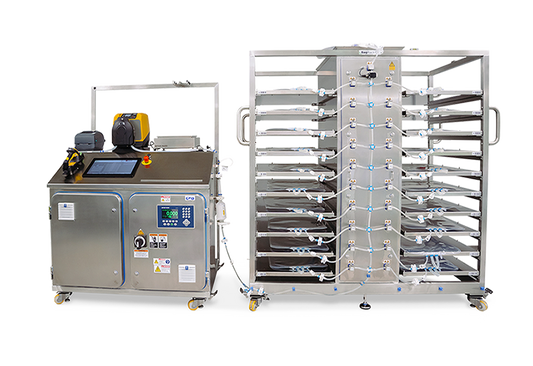
Single Use Support's connected solutions for protected 2D single-use bags during filling and freezing enable an integrated workflow:

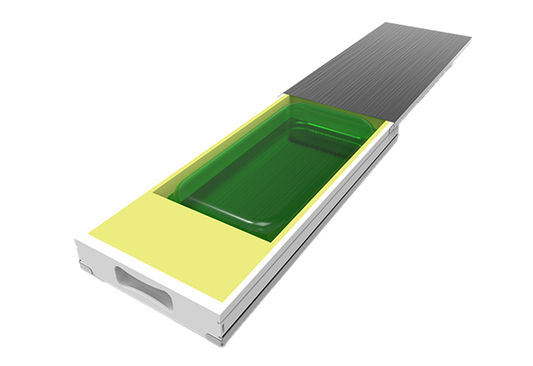
  • Protect: each bag inside a single-use shell that stays with it through freezing, storage and shipping 
  • Fill: automated, aseptically closed aliquoting into 2D bags, at consistent fill weights across the batch
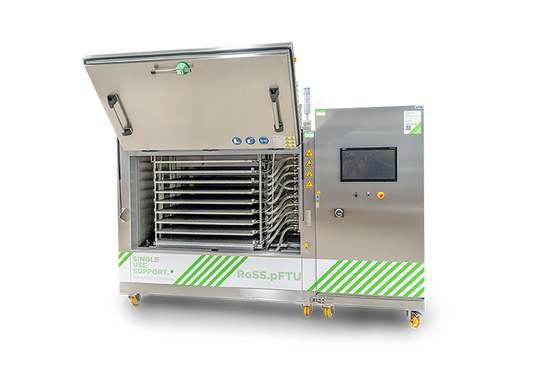
  • Load: RoSS® shells can be loaded into the plate freezer with EHS-friendly semi-automated lifting  
  • Freeze: controlled-rate plate freezing down to -80 °C, on a product-specific profile 
A top-view image of a frozen single-use bioprocess container protected by a RoSS Shell.

Harmonized with the bags you already use

A connected workflow should adapt to your consumables, not the other way around. Because the protective RoSS® shell interfaces with both the filling platform and the freezer, the workflow works with virtually any 2D bag type, size, or manufacturer. You retain full supplier flexibility and keep dual sourcing options open.

Preview image of the guide Fill to Freeze

Guide

From fill to freeze: A connected workflow for efficient batch handling

Every manual handover of single-use bags can impact process efficiency and product safety. Learn how a connected workflow from filling to freezing can reduce product loss, simplify batch handling and make batch handling of bulk drug substances in 2D single-use bags more efficient.

  • An operator’s burden: Why manual bottle filling puts biomanufacturers at risk

    The hidden risk in biomanufacturing Manual bottle filling in biopharmaceutical production is more than a routine task - it’s a high-stakes responsibility. From upstream cell culture to downstream purification, every step is tightly controlled - until the deceptively simple task: filling bottles. Often performed manually, this step of filling sterile bottles places enormous responsibility on the shoulders of a single operator. And when human hands are the last line of defense, what’s really at stake? Spoiler: it's not just about jeopardizing the product's safety or creating inefficiencies. It also endangers patient safety. [[ToC]] An operator’s role in manual filling Operators in biomanufacturing are not only technicians, but also guardians of quality. Inaccurate dispensing of rigid containers can lead to underdosing, reducing efficacy, or overdosing, increasing toxicity. Therefore, the implications of an operator's work extend far beyond the cleanroom. Contaminated batches can delay treatment or even harm patients. Yet, even the most skilled operator is vulnerable to fatigue, distraction, or procedural error - especially in repetitive, high-volume environments. In short, the operator’s performance directly affects patient outcomes - a burden that is not fully on the radar within or outside the industry. Manual bottle filling: What pains biomanufacturers must go through? Despite the critical nature of the task, filling single-use bioprocess containers manually remains common in many facilities. But it comes with significant challenges: Accuracy and dosing variability A few milliliters too much or too little can affect a therapeutic success. Manual filling lacks the precision and consistency required for high-value biologics. Even minor deviations can trigger quality issues or necessitate additional work. Even when there are extensive operator trainings and SOPs in place, inconsistencies in fill volume can occur. And it is just natural considering long shifts or high throughput runs of a filling run. Sterility and contamination risk Cross contamination is the bioprocessing staff's worst nightmare. And every manual intervention increases the risk of microbial contamination. Despite ISO-classified cleanroom controls, human interaction and just physical presence in such sterile environments remains a major source of contamination. Efficiency and labor intensity Manual processes are mostly slower and more labor-intensive. When manual processes work well in a laboratory setting, this does not mean it works well in commercial production. Scaling the volumes efficiently is difficult and often require additional shifts or staff to meet production targets. Consequently, they limit throughput, necessitate more staff, and increase the likelihood of fatigue-related errors. GMP compliance and documentation Every action must be recorded in compliance with GMP standards. Manual data entry and paper-based batch records are vulnerable to omissions, transcription errors, and audit findings. When traceability suffers, so does regulatory confidence. Stories of relief: Why automation is the answer Automated bottle filling systems are becoming a necessity for modern biomanufacturers. Here are some manufacturers' requirements: "It is essential that we can trust our dosage" Automated systems use pumps with flow sensors or gravimetric systems to deliver consistent, accurate fills. The repeated precision of the fill runs reduces product loss and the risk of over- or underfilling bottles which can affect patient’s safety. “Closed systems are always to prefer for aseptic integrity” Closed, automated systems minimize human contact, reduce contamination risk and improve sterility assurance in liquid transfers. Not just since Annex 1. “Reallocating operators to higher-value tasks while increasing our fill rate.” Automation doesn’t replace operators, but empowers them. By removing repetitive, high-risk tasks, it allows operators to focus on oversight, quality control, and process optimization. This also improves EHS (environmental, health, and safety) related matters. Integrated software captures fill data in real time, ensuring full traceability, audit readiness, and compliance with 21 CFR Part 11 and EU Annex 11. Closed Bottle Filler The closed bottle filler RoSS.FILL is a cGMP compatible bottle filling and filtration machine that allows controlled and automated aliquoting of your buffer, media or API into sterile bottles – without limitations for your custom process. Suitable for any type and size up to 20L, multiple bottles can be dispensed in one run – even in parallel. From burden to breakthrough Manual bottle filling places a heavy burden on operators and as a consequence a hidden risk on manufacturers. In an industry where every drop counts and every dose matters, relying on manual processes is no longer sustainable. By investing in automation, biomanufacturers can improve product quality, enhance patient safety, reduce operational costs and reallocate their workforce. The future of biomanufacturing is not just about faster production - it’s about smarter, safer, and more flexible yet scalable end-to-end processes. And it starts by lifting the burden off the operator’s shoulders. Interview: Trends and Innovations with Bottles [[download-1-email-detailed]]

    READ MORE
  • Efficient solutions supporting freezing and storage operations in bulk drug manufacturing

    How is your frozen drug substance moving through the facility?  While freezing performance and storage temperature often receive the most attention, day-to-day efficiency depends on what happens between those steps. Every loading, transfer, and storage activity requires operator involvement, consumes resources, and can introduce process variability or EHS-related challenges. Every transfer also introduces handling-related product loss risk for frozen bags and bottles containing high-value drug substances. Each additional touchpoint increases the likelihood of accidental drops, container damage and product loss. Moving frozen drug substances through the cold chain becomes increasingly complex. Small inefficiencies between freezing and storage can accumulate over time, affecting workflows, capacity utilization, and operator workload.  How can freeze-to-store workflows be optimized without expanding facility infrastructure? Or how can manufacturers reduce handling steps while maintaining flexibility for different batch sizes and container formats? This article explores practical solutions for simplifying bulk production freeze and storage operations. [[ToC]] Supporting efficient bulk drug substance freezing and storage operations  The efficiency of cold chain operations is strongly influenced by how easily frozen batches can be transported, stored, and accessed throughout the process. In bulk drug substance manufacturing, additional handling steps increase operator workload, consume resources, and can introduce variability.  The goal is simple: to move drug substance batches through freezing and storage operations with minimal manual intervention and a reduced risk of errors.   The complexity of cold chain operations depends on several factors, including whether batches can be processed as complete units or whether individual single-use bioprocess containers must be handled separately. The latter often requires splitting a batch into multiple containers, creating additional steps for loading, unloading, transportation, and redistribution between freezing and storage operations.    Full-batch operations: keeping freezing and storage aligned  Problems often start when freezing capacity and storage capacity are not aligned.  A batch may fit into a blast freezer, but then needs to be split. It is either distributed across multiple storage freezers or placed differently into walk-in freezers, where space utilization can be even more challenging. This means that operators must unload, redistribute, and transport containers before the product reaches long-term storage. These additional process steps add complexity without contributing value to the overall operation.    One approach to streamlining full-batch processing is to design both freezing and storage capacity around the same size. When the process steps of freezing and storage follow the same batch concept, complete batches can move directly from freezing to storage without redistribution or division.  The combination of RoSS.BLST and RoSS.ULTF is based on this principle by supporting the same handling logic across both operations. Mobile transport dollies can remain loaded throughout the process, helping simplify transfers, reduce manual intervention, and improve workflow continuity.  The result is a simpler workflow with fewer handling steps, reduced risk of deviations, and more efficient use of existing infrastructure. The systems are integrated into a streamlined process and optimized for their intended purpose:   RoSS.BLST: maximizing freezing capacity within limited space  For facilities where space is limited, a compact freezing solution can help increase throughput without requiring facility expansion.  RoSS.BLST was designed for high-capacity controlled freezing of bulk drug substance and supports a wide range of container formats, including single-use bags, protected by RoSS® shells, bottles, trollies, and transport dollies. Its modular loading concept allows manufacturers to adapt  configurations and throughput to changing process requirements.  A key advantage is its ability to accomodate 30% more batch volumes than comparable blast freezers while maintaining a relatively small footprint. This enables manufacturers to increase freezing capacity without investing in additional freezing infrastructure or valuable cleanroom space. By maximizing the amount of products that can be frozen within a given area, manufacturers can make more efficient use of existing facilities while maintaining operational flexibility as production demands change. Discover RoSS.BLST    RoSS.ULTF: storage designed for bulk operations  Many ultra-low temperature storage freezers were originally developed for laboratory samples or small-volume inventory. While highly effective for those applications, they are not always optimized for storing large bulk drug substance batches. Bulk freezing and storage operations place different demands on equipment and facility design.  RoSS.ULTF is designed for high-density storage and flexible loading configurations that accomodate large batches or multiple container formats. Because it follows the same handling philosophy as RoSS.BLST, manufacturers can maintain a consistent workflow from freezing through storage of bulk drug substance batches.   Discover RoSS.ULTF    EHS-friendly handling of heavy single-use bioprocess containers  Efficiency is important, but so is safe handling. As container volumes increase, manually handling frozen drug substances becomes more challenging for operators and more prone to error. Taking single-use bags larger than 10 L as an example, their weight can become a limiting factor from an EHS (environment, health, safety) perspective.  Fortunately, solutions are available that improve the handling of bioprocess containers while complementing batch-oriented cold chain operations.  Assisted loading of single-use containers with RoSS.LODR  RoSS.LODR supports operators during the loading and unloading of freezers, for example when frozen bioprocess containers are transferred to storage shelves or moved between process steps. The mobile gripper arm enables ergonomic handling of heavy frozen containers, reducing physical strain on operators and supporting a more controlled and repeatable handling process.   Discover RoSS.LODR    Forklift-compatible trolley handling For larger operations, mobile trolleys carrying single-use bags and bottles can be moved throughout the facility on wheels. Because RoSS.BLST and RoSS.ULTF are designed to accomodate fully loaded trolleys, they can be transferred into and out of freezers using forklifts.  Instead of moving individual containers one by one, complete rack assemblies can be relocated in a single step. This reduces handling time, simplifies internal logistics, and supports more efficient material movement throughout the facility.  Small improvements between freezing and storage can have a big impact When freezing, transport, and storage are designed as one connected process, manufacturers can simplify batch handling, reduce operator dependency, and make better use of available infrastructure. Even small improvements between freezing and storage can translate into meaningful gains in efficiency, scalability, and operational consistency. Reducing unnecessary product movement throughout freezing and storage operations therefore supports both operational efficiency and loss prevention. By reducing unnecessary handling steps and maintaining full-batch movement wherever possible, facilities can streamline cold chain operations and make more effective use of existing assets. The result is a process that is easier to scale, easier to manage, and better aligned with the demands of modern biopharmaceutical manufacturing.  Efficient bulk drug substance freezing & storage   

    Read more
  • Plate freezing: best approach for freezing biopharmaceuticals in single-use bags

    Plate freezing is a process where a product’s temperature is reduced by the means of contact with cold surfaces. Thus, a defining step in the freeze-thaw process for conservation in flat primary packaging, such as single-use bags. [[ToC]] Things to know about plate freezing techniques Although plate freezing is very commonly known in food production, this freezing process has proven equally indispensable for the biopharma industry. After all, it is to fullfill the same purpose in both fields of application: to freeze products for storage and transport in order to ensure maximum product quality – be it frozen food like fish fillets or highly delicate biologics like mRNA vaccines. How freezing techniques emerged Like many scientific discoveries, the advantages of freezing (then) food for shipment were found by chance: In general, cold environments have been used for ages in order to cool food with the aim to impede the growth of microorganisms. After all, it was in 1890 when, by accident, refrigerated meat that was being transported overseas from Australia to Britain got frozen. This had such remarkable results on the quality of the delivered food that the procedure of freezing has soon been widely adopted in food transport and storage. Later on, in the 20th century, quick freezing has shown to be advantageous for various kinds of food. Since its beginnings, refrigeration systems have undergone many steps of evolution and improvements – from the combination of salt brine and ice that products were induced in (a patent on this dates back to 1848’s Britain) up to high-performance automatic plate freezers. Alongside, freezing time has been optimized, freezing capacities expanded and new fields of application discovered. What freezing techniques are most counted on? The most frequently used freezing techniques are: brine freezing: A product is submerged in a brine that is additionally cooled by refrigerants. cryogenic freezing: Liquid nitrogen is applied on a product in order to instantly freeze it; this is a quick yet costly freezing procedure. A cryogenic freezer freezes down to -180°C/-292°F.  blast freezing: Products are put into an environment which is cooled by the means of cold air – a very common practice for bulk packaging, i.e. for ultra cold storage in laboratories. contact freezing (plate freezing): A product is frozen via direct contact with cooled surfaces like those of a contact plate freezer. Considering the different approaches in refrigeration with multiple challenges and benefits, a focus on the plate freezing process shall illustrate the huge potential and its key role in pharmaceutical production.   More about our Pharmaceutical Plate Freezer Plate freezer vs. blast freezer – the main differences for biopharma During the process of blast freezing, air is blasted in a cooling chamber on a product in order to set or keep it at low temperature; it is frequently chosen to create a cold storage for frozen items, conserving them over a longer time. Drug substances in bulky primary packaging, such as bottles or 3D bags are more mostly frozen in blast freezers. Plate freezing, on the other hand, relies on cooled surfaces themselves rather than a cooling air blast: Via direct contact with these freezing plates, heat transfer is induced between them and the yet to be frozen products, allowing quick freezing of drug substance between the two metal plates. In that a plate freezer requires the product to be touched by both surrounding surfaces, the shape of its containers is to be taken into account as well which is why this is the more suitable freezing technique for single-use bags. Advantages of plate freezing for biopharma As for biopharma, the use of a pharmaceutical freezer can be substantial e.g. on the attempt to exactly control the freezing time according to the requirements of the processed substance. Recipe-driven setpoints for product-tailored freezing allows standardization and reproducibility of freezing kinetics that meet GMP relevant quality standards. Plate freezers facilitate fast and controlled freezing of bulk drug substance in bags which has proven to significantly reduce the occurrence of cryoconcentration: Caused by the different solubilities of a product’s components, the ongoing emergence of crystals leads to the separation of certain ingredients. With fast plate freezing it is hence possible to minimize reduction of product quality by achieving high homogeneity in the liquids. Homogeneous freezing is a result from quicker heat exchange.   Freezing results in x-ray view As a result of a slow freezing process through conventional freezing techniques, such as a laboratory static freezer, larger crystals with proteins coagulate in the center of primary packaging which causes tensions that lead to diminishing product quality.  [[download-1-email-detailed]] Freezing solutions for biologics – from lab- to bulk-scale Acknowledging the many benefits of plate freezing in the production of high quality biologics, Single Use Support has developed an elaborate product lineup of freeze-thaw-platforms to address a wide array of applications with RoSS.pFTU (plate-based freeze-thaw unit) for single-use bags  and RoSS.BLST (controlled blast freezer) for single-use bottles and other bulky packaging. Having the choice between different sizes (from 100 mL up to more than 200L), customers are provided with the appropriate freezing solution for their very needs. From the use in studies conducted in labs with the small lab freezer for pharma up to bulk production of biopharmaceuticals, a fully scalable freezing option has been developed to ensure maximum product quality. Compatibility with single use bags of all sizes and manufacturers is given both in lab-scale and in large-scale freezing systems thanks to the secondary packaging with RoSS shells. These robust shells are a valuable complement to the reliable end-to-end solution provided by Single Use Support. More about the Freeze-Thaw Platform

    READ MORE
Manufacturing operator in a lab coat working with a large industrial blast freezer with a batch of drug substance in single-use bioprocess containers.

And what happens after freezing?

A harmonized workflow can easily continue: from freezing to ultra-low temperature storage with increased cold chain capacity, reduced manual handling, and scalability within existing infrastructures.

More about freeze-to-store

Talk to an expert