

Future-proof your biologics cold chain

Crying over product loss after freezing?

Protein instability after freezing can ruin an entire batch of biologics. Controlled freezing of drug substances in single-use bags and bottles helps manufacturers maintain product quality and increase productivity.

Learn more
Green icon of a downward arrow demonstrating reduced product loss
Minimize product loss
Green icon of a thermometer on a transparent background demonstrating temperature control
Control freezing & thawing
Green icon of a water droplet and an arrow on a transparent background demonstrating scalability
Scale production capacity

Challenges in biopharma cold chain management

  • Product quality: Uncontrolled freezing can compromise critical quality attributes of drug substances, leading to instability, cryoconcentration, and loss of product integrity.

  • Compliance: Without validated & documented freeze–thaw processes, GMP‑aligned contamination control and data integrity requirements are at risk of non‑compliance.

  • Scalability: Biologics manufacturers face complexities when scaling from clinical phases to commercial production without compromising product quality.
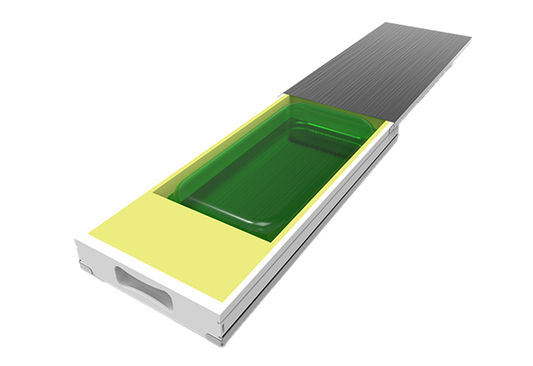
    A top-view image of a frozen single-use bioprocess container protected by a RoSS Shell.

    Why choose Single Use Support?

    • Minimized product loss: integrity of drug substances throughout the entire cold chain
    • Vendor-agnostic: independent from type and brand of single-use bags and bottles
    • Scalable: scale-up and -out while maintaining maximum product quality

    Our customers trust in us:

    From bench to bulk: Freezing biologics right

    Preview of Single Use Support's 
study about scalable freezing

    Scalable freezing of protein-based biologics - Study

    In collaboration with Single Use Support, the Zürich University of Applied Sciences conducted a series of studies to explore how different freezing technologies and controlled freezing and thawing rates affect product quality. Results show experimental insights into cryoconcentration, protein stability, and the impact of freezing rates - highlighting how Single Use Support’s plate-based freeze-thaw platform ensures product integrity and process scalability.

    Controlled and scalable freezing of biologics

    Operator handling biologics with gloves on a cold chain integrity system, featuring text about biologics protection.

    Cold Chain Integrity for Biologics - App Note

    What impact does controlled end-to-end cold chain management have on preserving the quality, potency and safety of biologics? Find out how Single Use Support's modular, automated technologies for single-use bags and bottles minimize cryoconcentration, prevent container damage and ensure consistent, sustainable handling that aligns with Annex 1 throughout bioprocessing.

    • Cold chain compliance for drug substances: Regulatory standards you should know about

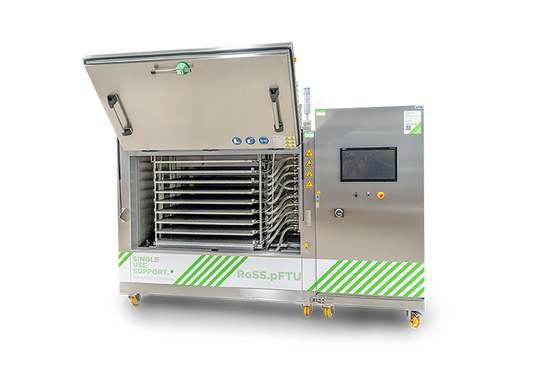
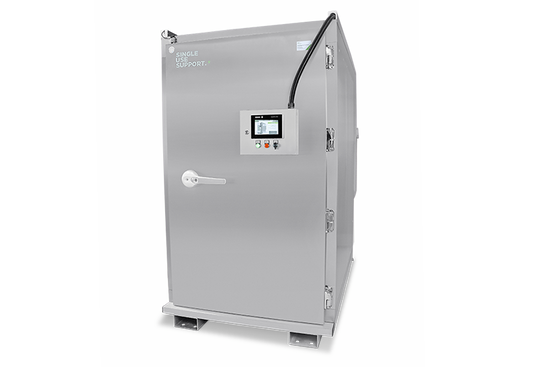
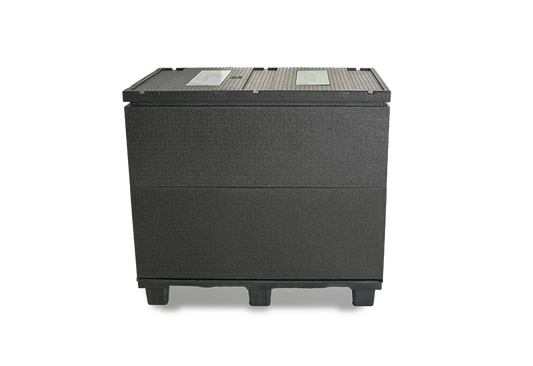
      Coming from manual and uncontrolled freezing methods, manufacturers risk non-compliance and poor consistency when cryopreserving drug substances. Non-compliant CDMOs also risk falling out of consideration for pharmaceutical companies seeking partners to manufacture and develop their products. Most importantly, non-compliant cold chain management puts patient safety at risk.  However, the transition toward compliant and well‑controlled processes for freezing, cold storage, and cold‑chain shipping can be complex and overwhelming due to the number of applicable regulatory expectations. However, this effort can be significantly supported through appropriately designed equipment, process solutions, and services that enable GMP‑relevant readiness from the outset. By utilizing process data generated across an end‑to‑end cold‑chain setup, manufacturers can establish standardized and reproducible workflows. Depending on the specific purpose, process step, and characteristics of the drug substance, compliance requirements must always be assessed individually. Nevertheless, the following provides an overview of the most relevant regulatory and industry standards applicable to freezing and ultra‑cold storage of drug substances in biomanufacturing. So what are the main regulatory standards for cold chain compliance? Compliance standards for the freezing process of drug substances Freezing biologics is a GMP-controlled manufacturing step, not simply “placing product in a freezer.” What does it take for a GMP-grade cold chain freezing platform to support a CDMO manufacturing facility in meeting today’s cold chain compliance pressures?  Several regulations provide guidance in answering this question. Above all, the EU GMP Good manufacturing practices (GMP) guidelines and the FDA Code of Federal Regulations (21 CFR for Food & Drugs) form the core quality and manufacturing frameworks for a compliant pharmaceutical cold chain. Through a broad set of regulations, these risk-based approaches are designed to ensure the safe manufacture of pharmaceutical products and, ultimately, patient safety.  Complementary these frameworks are the guidelines issued by the International Council for Harmonization of Technical Requirements for Registration of Pharmaceuticals for Human Use (ICH), adopted by regulatory authorities such as the European Medicines Agency (EMA). The ICH guidelines develops globally harmonized scientific guidelines for human medicines. For example, ICH Q7 defines GMP requirements for the manufacture of active pharmaceutical ingredients (APIs) under an appropriate system with the goal to ensuring adequate quality and purity consistently.   In addition, the USP (United States Pharmacopeia) provides a set of standards for raw materials, finished products, analytical test methods and reference standards. Efforts are ongoing to harmonize USP requirements with these with the Ph. Eur. (European Pharmacopeia), supporting greater global consistency in pharmaceutical quality standards.    GMP production temperature-control requirements for freezing  EU GMP EudraLex Vol. 4 Part I/II requires that all conditions affecting quality, including freezing and frozen hold, are clearly defined, validated, and justified with data across the entire lifecycle. Bulk drug substance stored in a frozen state must remain under full GMP control throughout.   In practice, this translates into a risk-based validation approach for equipment, utilities and processes used for the manufacture of medicinal products according to EU GMP Annex 15. Annex 15 focuses on URS/DQ, IQ/OQ/PQ (= User Requirement Specification, Design Qualification, Installation Qualification, Operational Qualification, Performance Qualification), temperature mapping of empty and loaded units with worst-case probe locations, alarm challenges, and power‑/ door‑open recovery tests. The depth of these activities follows ICHQ9 and its quality-risk-management logic.  In the U.S., the FDA 21 CFR part 210 and CFR part 211 outlines similar expectations to prevent altering the “safety, identity, strength, quality, or purity of the drug product” in:   Equipment design and suitability (§§211.63/211.65) and   Scientific justification through stability (§§211.160/211.166)   Biologics‑specific regulations in 21 CFR 600–680 strengthen the focus on preventing contamination and degradation during freezing and frozen storage. The European equivalent of the biologics-based scope and intent is EU GMP Annex 2.  The result of this effort is tangible: a validated and uniform freezing process that protects potency, reduces batches at risk, and makes audits and tech transfers faster and more predictable.  Single Use Support’s RoSS.pFTU plate freezer and RoSS.BLST blast freezer provides controlled and reproducible freezing profiles for bags and bottles, while RoSS.ULTF ensures robust frozen storage. Together with Single Use Support’s qualification and validation expertise, these systems support Annex 15‑aligned implementation and help reduce compliance deviations. Whilst maintaining protein stability through cold chain processes the freeze and thaw cycles meet CFR and cGMP standards, backed by ICH Q7 on good manufacturing practices for active pharmaceutical ingredients and ATMP (advanced therapy medicinal products)      Freezing bottles - 5 critical considerations   CCI - Container-closure integrity and single-use system requirements  Because single-use bags and bottles serve as process-contact materials,   EU GMP Chapter 3 on Premises & Equipment requires that they are fully fit for purpose at low temperatures, including robustness, uniformity, and maintainability.   EU GMP Chapter 5 on production further requires clearly controlled handling of frozen in‑process materials, including defined hold times and physical protection during transport or storage.  These foundational GMP expectations work together with   USP 〈1665〉 and 〈665〉, which will be effective in May 2026, which provide a benchmark for risk‑based extractables and leachables assessments and material qualification for polymer‑based single‑use systems. Again, ICH Q7 complements these requirements by defining controls for storing and transporting frozen intermediates, with associated QA‑release principles.  Single Use Support offers solutions for container closure integrity for various single-use sterile consumables, including single-use 2D bioprocess containers and bottles. Irrelevant the type, brand and size of single-use bag a manufacturer has validated to have reduced extractables & leachables, all bioprocess containers can be protected by the RoSS® shell. This secondary packaging significantly reduces the risk of breakages of frozen drug substances in single-use bags during cooling, cold storage and cold shipping. The added layer of protection helps manufacturers reduce the risk of contamination and therefore improves overall productivity. Bottle RoSS is the equivalent approach for bottles, where attached single-use assemblies are protected during cold chain management.    Data compliance standards  Automated bioprocesses helps to increase process efficiency overall. Temperature data and alarms qualify as GMP records. This means that monitoring software and all electronic records must comply with EU GMP Annex 11 and FDA 21 CFR Part 11. Compliance requires validated monitoring systems, secure audit trails, controlled user access, synchronized timestamps, and reliable temperature history retention and retrieval for quality assurance (QA) assessment. GAMP 5 is what you hear in this context as well: GAMP 5 serves as a lifecycle-based validation methodology for demonstrating compliance with Annex 11 and 21 CFR Part 11 for electronic temperature records. While it’s not a regulation itself, it provides a risk-based framework for computerized-system validation, covering system classification, scalable testing, and supplier involvement with a focus on patient safety, product quality, and data integrity.  Again, the GMP and 21 CFR expectations are backed by scientific justification for the selected freezing and storage setpoint, maximum frozen hold time, and excursion criteria are grounded in ICH guidelines. And by the USP 〈1079〉, which is about operational discipline around temperature control. This including for example sensor‑placement strategy, documenting and evaluating excursions, and day‑to‑day cold‑chain handling.   Overview of most relevant regulatory standards for freezing drug substances Decision  Standards GMP Obligation & Scope EU GMP Part I & II + Annex 2; FDA 21 CFR 210/211 + 600-680 (biologics): give guidance in freezing & frozen holds of biologics e.g. equipment suitability, protection from contamination & degradation. Risk & Scientific Justification ICH Q7: drives GMP for cold chain handling of drug substance ICH Q9: drives quality risk management (QRM) to identify freezing-specific risks, e.g. cryoconcentration.   ICH Q10: drives changes in pharmaceutical quality systems (PQS), e.g. scale-up or freezer technology  Qualification & validation of freezing platform  EU GMP Annex 15: proving the freezer works with URS to IQ/OQ/PQ, e.g. empty & loaded mapping, worst-case placements, alarm challenges, door-open recovery. Risk‑based via ICH Q9  Infrastructure & material control  EU GMP Chapter 3 & Chapter 5: fit for low-temperature use, e.g. uniformity, robustness and prevention of damage.  Complemented by USP 〈665〉 / 〈1665〉 with risk-based E&L and material suitability, CCI  Monitoring & data integrity  FDA 21 CFR Part 11: includes monitoring, e.g. audit trails, retention for temperature profiles and alarms on freezers     Cold chain compliance for ultra-cold storage of drug substances  The above mentioned applies for freezing as well as for frozen hold of drug substances. However, there are additional highlights to cold storage of biopharmaceutical products: FDA 21 CFR part 211.150 requires pharmaceutical manufacturers to protect product quality in storage and handling conditions during warehousing and distribution, including product traceability and quality protection.  USP 〈1118〉 provides guidance on the technologies, performance characteristics, and qualification of time/temperature (and humidity) monitoring devices: what accuracy and precision to expect, how to qualify indicators and data loggers, and how to verify performance over time. This allows you to define meaningful specifications and calibration plans so that the data you trend and the excursions you evaluate reliably reflect reality.   USP 〈1079〉 translates validated storage into day-to-day operation, e.g. placement concepts, mapping logic and alarm responses.  Single Use Support’s RoSS.ULTF is designed to deliver stable, uniform sub-zero environments for single-use formats. Combined with Single Use Support’s qualification and validation expertise, it helps establish a compliant, auditable storage program quickly that aligns with robust device selection on top of the existing GMP/ICH framework.    Standards for ultra-cold shipment of drug substances  The handling from storage to staging or transport of drug substances at sub-zero temperatures must maintain its performance under realistic ambient conditions. ASTM D3103 offers a test method for evaluating the thermal insulation performance of distribution packaging, including guidance to test with the actual payload and to simulate worst‑case ambient profiles. It also recommends temperature mapping inside the package to identify variability. The method references ISTA 7D as a transport‑focused temperature‑test protocol. Together, these approaches support specification, qualification, and documentation of shippers so sub‑zero control is preserved between units, areas, and sites.  The cold chain container RoSS.SHIP is Single Use Support’s solution for transport of drug substances. The insulated shipping containers for passive cooling are based on ISTA / ASTM D4169 qualification and offers optional tracking of temperature, GPS and G-Force during transport.     Solutions for regulatory compliance in cold chain management  Achieving cold chain compliance requires an end-to-end strategy rather than isolated technologies. Single Use Support provides a connected workflow of single-use technologies with sterile and non-sterile consumables around single-use bags and bottles, single-use assemblies:  RoSS® shell protects single‑use bags during freezing, storage, and transport, ensuring mechanical safety and optimal heat transfer.  RoSS.pFTU delivers controlled plate‑freezing with homogeneous ice formation.  RoSS.BLST offers smart, controlled‑rate blast freezing for bottles and bags with high‑performance air distribution.  RoSS.ULTF provides uniform ultra‑cold storage down to −80° C for bags in RoSS® shells and bottles in Bottle RoSS.  RoSS.SHIP maintains temperatures below −60° C for multiple days and includes real‑time track‑and‑trace capabilities.  Together, these validated systems help address risk-based qualification, single-use system control, compliant monitoring, protect product integrity and create a regulator-ready data trail during cold chain.  Cold chain compliance is not about ticking boxes. It’s about presenting a defensible, data-driven story. With an integrated end-to-end ecosystem, that story becomes consistent, auditable, and aligned with modern regulatory expectations.  Single Use Support’s qualification, validation & documentation services  [[download-1-email-detailed]]

      READ MORE
    • Sustainable freezing in biopharma: Emerging trends & the role of natural gas

      There will continue to be an ongoing need for cryopreservation and cold chain management of drug substances. However, these processes will no longer depend on F-Gases.  The utilization of F-gases, also known as fluorinated greenhouse gases, is steadily declining in the biopharmaceutical sector and is expected to be banned in the near future. Regulatory frameworks, such as EU Regulation 573/2024, are setting the standards as they support the overarching goal of curbing emissions linked to F-gases used for freezing drug substances in single-use containers. To enable more environmentally friendly freezing of drug substances, the industry must develop and implement more sustainable technologies. One notable trend is the growing adoption of natural gases for refrigeration. This transition is already evident at Single Use Support, where all freezing platforms and ultra-low temperature storage platforms are now available with natural gas technology. But is sustainable freezing truly possible? What challenges accompany the shift to natural gas-powered refrigeration platforms in pharmaceutical manufacturing? And which emerging trends further advance the principles of green engineering (even more) to go toward Global Warming Potential of zero?  Alexander Fuchs, Director Product Innovation at Single Use Support, sheds light on these aspects. What natural gases are used and what role do they play in Biopharma freezers? Alexander Fuchs: We equip our plate-based freezers, blast freezers and ULT storage freezers with natural gas refrigeration technology. R170 ethane, R1150 ethylene, R290 propane and R1270 propylene are natural gases that are not exclusively used by Single Use Support but increasingly adopted by other solution providers as well. The EU regulation 573/2024 mandates a gradual 70% reduction in F-gas emissions by 2030 to mitigate global warming potential (GWP). This directive has prompted manufacturers and solution providers to transition to sustainable alternatives. Non-compliance with the F-gas Regulation beyond 2030 entails penalties, underscoring the urgency of meeting sustainability targets. Even though solutions with F-gas cannot be placed on the market after 2030, they can still be used with the requirement of shortened maintenance intervals the greater the amount of F-gas used. While freezing equipment performing below -50° C is exempt from these regulations until 2030, Single Use Support and its customers already now embrace the trend toward eco-friendly solutions. Even as we offer solutions like the RoSS.pFTU plate freezer for controlled freezing of single-use bags, the RoSS.BLST blast freezer for controlled freezing of bulk packaging including bottles to -80° C, and the RoSS.ULTF for ultra-cold storage down to -80° C, all powered by natural gases. What are the big advantages of using natural gases? Alexander Fuchs: First and foremost, natural gases are not scarce and more readily available than fossil fuels. The incorporation of natural gases into a manufacturing suite does not require a complete overhaul, as these processes can be smoothly assimilated into the biopharmaceutical cold chain storage. Moreover, natural gases are more efficient than F-gases. This energy efficiency translates into a significantly reduced charge requirement, about 1/6th of what was previously needed with F-gases for our RoSS.ULTF, while achieving equivalent performance outcomes.   So why hasn't natural gas always been the obvious choice? Alexander Fuchs: Natural gas is more flammable. The combustibility of natural gas poses a safety concern in biomanufacturing environments. Exceeding a threshold of 500 g per platform triggers a cascade of measures, including infrastructure upgrades. As long as the natural gas charge remains below 500 g per platform, safety protocols are unaffected. This is why we design our RoSS.BLST and RoSS.ULTF to stay below this threshold and as technically permanently sealed systems in accordance with EN378 and ISO 60335-2-89. Importantly, the freezing performance remains uncompromised. So, switching to R170 (ethane) or R290 (propane), for example, does not impact cooling efficiency or reliability. Once safety requirements are met, users experience no noticeable difference. How do natural gases pave the way to Green Engineering and sustainable biopharma practices? Alexander Fuchs: Driven by the F-gases regulation, manufacturers and solution providers are compelled to pursue sustainability. Having such initiatives and guidelines in place is essential to collaboratively reduce emissions and lower GWP. The growing emphasis on natural gas usage supports Green Engineering by integrating life cycle thinking into all engineering processes. This entails minimizing resource depletion, reducing waste generation, and optimizing energy inputs and outputs for maximum safety and eco-friendliness. "The use of natural gases is, after all, a step towards a more sustainable biomanufacturing environment." Alexander Fuchs | Single Use Support However, it's imperative to view this as just one step toward a fully sustainable biomanufacturing landscape. It lays the foundation for future engineering innovations and solutions aimed at refining current technologies and achieving holistic sustainability. For example, CO2 could be a very promising refrigerant for the future - even though it cannot be used for ultra-cold conditions to -80° C. As an environmentally compatible temperature control solution carbon dioxide does not have ozone depletion potential and offers a very low GWP. Are natural gases the end of the line for sustainable freezing? Switching to natural gas and natural refrigerants marks an important step toward sustainable freezing, as it significantly reduces emissions and Global Warming Potential. However, further alternatives stemming from the great commitment of life science solution providers to ongoing development will soon enter the market. One promising approach is the use of pressurized air as a refrigerant. We are currently testing and evaluating temperature control units designed to achieve a Global Warming Potential of zero. These units will be integrated into our freezing devices, representing another major step toward making the freezing of drug substances even more sustainable. "Starting in 2026, customers will be able to access advanced cooling technologies with a GWP of zero in Single Use Support’s freezers."Alexander Fuchs | Single Use Support Overall, there is still room for improvement. The entire industry must commit to a green path; one that goes beyond natural gas. Like other innovators, Single Use Support will continue collaborating with customers to develop eco-friendly solutions. After all, innovation will shape the future of sustainability. Key takeaways Natural refrigerants are replacing F-gases in biopharma freezing due to regulatory pressure such as EU Regulation 573/2024 mandating a 70% reduction in F-gas emissions by 2030. Natural gases in biopharma freezers, including R170, R1150, R290 and R1270, deliver reliable, low-temperature performance while significantly reducing global warming potential (GWP) Freezers operating with natural refrigerants support the principle of green engineering by enabling more energy-efficient cooling cycles, reduced emissions and more environmentally responsible cold chain infrastructures. Airflow-based cooling technology offer an additional option to achieve a GWP of zero in biopharma freezing applications Explore Single Use Support's sustainable freezers

      READ MORE
    • Freezing drug substance – taking control over large volume pharmaceutical freezing

      In the manufacturing process of drug substances and during their long term storage, freezing is a necessary step to preserve product quality. However, various process parameters in freezing and thawing methods considerably influence the critical quality attributes (CQA) of biologics. It is decisive how drug substances are cooled, for example at what freezing rate and whether the freezing performance can be precisely controlled. Additionally, the choice of drug substance container affects the freezing outcome. Beyond product quality, cost and time reduction in process chains must also be taken into account for employing an efficient drug substance management. Freeze & Thaw Platform Freezing bulk drug substances – why take the effort? Freezing drug substances or active pharmaceutical ingredients is necessary to maintain product quality and enable safe transport for CDMOs, pharma manufacturers or biotech companies without risking product integrity. There are legal regulations that must be taken into account to guarantee the safe handling of bulk drug substances. Freezing allows for storage of large volumes of biopharmaceuticals until demand arises. At the same time, cryopreservation reduces the risk of structural changes and mechanical damage to protein or cells during transportation. When freeze thaw logistics is outsourced to CDMOs – due to cost reduction and more streamlined processes – such production steps become essential. Main considerations along the freezing process of large volume drug substances In order to maintain identity, purity, potency of biologics, several aspects have to be considered in process development. This includes the impact of freeze and thaw rates. The speed at which freezing is performed can have a big impact on a drug substance’s efficacy. Fast freezing rates have resulted in lower levels of cryoconcentration and higher protein stability in protein formulations. Furthermore, the goal of an efficient freeze and thaw technology is to prevent alterations in the drug substance through the minimization of protein aggregation.[[1]] [[2]] Facing challenges with conventional freezers Bulk drug substances are typically frozen by using either static or blast freezers. However, plate freezers, are a relatively new approach to freeze drug substances in 2D single-use bags. Controlled-rate blast freezers are equally efficient freezers that are mostly used for bulk-packaged single-use containers, such as single-use bottles. Compared to the conductive (plate freezer) and convective (blast freezer) technologies, static freezers show comparatively slow and inflexible freezing rates. The heat transfer to the drug substance is ineffective which causes a slow freezing rate. Additionally, it can lead to a low external area compared to volume, which can cause damage in complex proteins and alter protein stability. Protein denaturation can potentially impact product quality attributes: Overall, slower freezing leads to greater cryoconcentration which results in higher zones of protein and excipient concentrations in the center bottom area. Read more: Cold storage requirements of APIs Slow uncontrolled freezing vs. fast controlled freezing With controlled-rate freeze and thaw platform concepts, it is possible to maintain the homogeneity of a drug product, facilitating optimal freezing results for drug substances. Especially for products in larger primary packaging, such as bottles, like vaccines, monoclonal antibodies (mAbs) and viral vectors, homogeneity is of utter importance. What bioprocess containers to choose When choosing bioprocess containers for frozen storage, stainless steel vessels or bottles have long been the traditional choice. Whereas, bottles provide better structural integrity, they can limit scalability and require specialized handling equipment. Bulky primary packaging tend to take up too much space in storage, their freeze and thaw process is harder to control and they can lead to process inflexibility. However, bottles are here to stay, and there are options to control the freezing of drug substances in bottles as well. Read more: Freezing bottles – 5 critical considerations – Single Use Support In comparison, with its geometry single-use bags can minimize cryoconcentration by fast freezing and thawing of all scales, up to large volumes of pharmaceuticals. Furthermore, single-use bags take up less space and come already fully assembled and sterilized, meaning they are ready to use. Secondary packaging, such as the RoSS shell can provide 2D single-use bags with protection to reduce product loss through breakages.  The choice of primary packaging used during freezing often determines the subsequent cold chain management technologies employed. This is because not all cold chain management solutions are compatible with all types of primary packaging. Minimizing risks – maximizing resource and cost efficiency The process of drug product manufacturing as well as the cold chain of biopharmaceuticals can be prone to product loss due to contamination and human or mechanical error. While product integrity and staff safety is one of the main challenges for the biopharmaceutical industry, minimizing costs is an important goal for companies to stay economically competitive – especially during the transition from scale-down models to large-scale production. Single Use Support provides a combined solution to all these challenges through automated filling, freezing, thawing and filtration processes. [[download-1-email-detailed]] Freezing bulk drug substances with single-use technologies Handling sensitive drug substances like active pharmaceutical ingredients is an everyday task in biopharma and biotechnology. Single Use Support has developed end-to-end solutions for automated aseptic fluid management as well as solutions for a controlled cold chain management of drug substances at sub-zero temperatures. While these systems are compatible with other types and sizes of single-use systems, additional products have been developed to provide a streamlined process from start to finish. The RoSS Shell, for instance, is designed to ensure robustness and protection of frozen drug substances in 2D single-use bioprocess containers. Its design helps minimize the risk of product loss. Single Use Support’s aseptic filling systems are aligned with EU GMP Annex 1 to provide a closed system for safe and precise fluid transfers. Part of the character of Single Use Support’s product portfolio is scalability. The modular setup of each filling platform and freeze-thaw platform allows the products to be scaled to industrial large-scale batches – such as large-scale freezing – as well as for small-scale demands. Ultimately, an end-to-end process that is compatible with every step of cold chain management – from filling and freezing to storage and thawing – ensures a smooth transition, while also facilitating compliance with relevant quality control standards, such as EU GMP Annex 1. Discover our Freeze/thaw platform Sustainable Freezing of drug substances Sustainability has become a defining metric for today’s biopharmaceutical manufacturers. All freezers manufactured by Single Use Support operate using natural refrigerants, minimizing environmental impact through low refrigerant charge volumes, while maintaining full compliance with safety standards and operational reliability. Another promising approach is the use of cold compressed air as a cooling medium in freezing technologies, achieving a global warming potential of zero. This feature of eco-friendly cold chain management will soon be available in Single Use Support’s freezers.  Read more: Sustainable Freezing in Biopharma: An Exploration of Natural Gas Usage Key takeaways Freezing parameters, such as freezing rate, heat-transfer efficiency and process control, directly influence the critical quality attributes (CQAs) and therefore the quality of biologics. The type of primary packaging, e.g. 2D single-use bag or bottle, affect freezing outcomes. Freezing uniformity, efficiency and product integrity can be achieved by controlling the freezing process. Efficient freeze-thaw management for large volumes of drug substances reduces costs, risks and complexities, thereby supporting outsourcing strategies to CDMOs.   References Freeze–thaw characterization process to minimize aggregation and enable drug product manufacturing of protein based therapeutics, http://dx.doi.org/10.1038/s41598-021-90772-9, Published 2021-05-31 Large-Scale Freezing of Biologics: Understanding Protein and Solute Concentration Changes in a Cryovessel—Part I, https://www.biopharminternational.com/view/large-scale-freezing-biologics-understanding-protein-and-solute-concentration-changes-cryovessel-par, Published 2010

      READ MORE

    Talk to an expert