Fully automated filling for small single-use bags and bottles
Flexible setup
Option to attach a second filling module
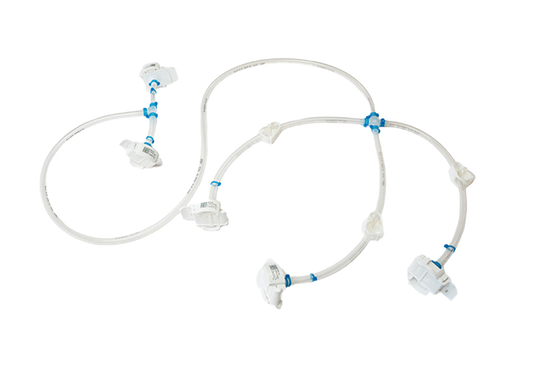
Sealing pinch valves
Integrated sealing pinch valves for fluid control and aseptic decoupling
Parallel filling
Up to 6 single-use bags filled in parallel
Repeatability
Recipe-driven, easy-to-use operation
Bag independent
Bag- and connector-agnostic setup
GMP Compliance
GMP-compatible and suitable for cleanroom use
When is RoSS® FILL Flow the right solution?
Filling very small volumes manually can be time-consuming and challenging, especially when precision and repeatability are critical.
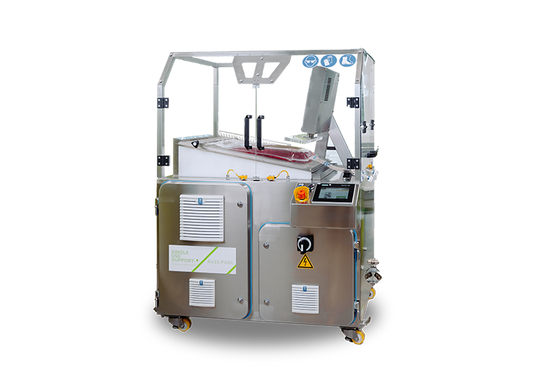
RoSS® FILL Flow is designed for applications requiring accurate, automated filling of 5 mL to 50 mL into small single-use bags and bottles. It is particularly suitable for cell-based applications, seed train intensification, viral vectors, and other advanced therapies across laboratory, clinical, and commercial workflows.
Our customers trust in us:
Downloads
Whitepaper
RoSS® FILL - Automated aseptic filling - Whitepaper
Please fill out the form below to download this file.
As an expert in single-use solutions, we have made it our goal to deliver vendor agnostic single-use assemblies manufactured at highest quality standards in ISO 7 cleanrooms and sterilized within shortest lead times. Prevent downtime and ensure an...
The Freeze & Thaw platform RoSS® pFTU freezes and thaws drug substances in both single-use bioprocess containers and bottles. All in one: plate-based freezing of single-use bags, protected in RoSS® shells, and air flow freezing of bottles cont...
Fully automated aseptic filling platform at smallest footprint with state-of-the-art technology for highest accuracy to fill up to 12 single-use bags in standard configuration. RoSS® FILL Lab Scale is therefore most suitable for filling small volu...
RoSS® PADL is a scalable massaging and mixing system for achieving a uniform mixture in single-use bags. With integrated cooling and heating, it maintains optimal temperatures consistently. This makes it well suited for applications such as cell a...
Despite the fact that lentiviral vectors have been around some decades, the demand for scalable and effective manufacturing methods now rises in tandem with the need for innovative medicines. Due to their special advantages, lentiviral vectors have emerged as crucial instruments in gene therapy, and their advancement and application are still being encouraged. Let's examine lentiviral vectors and how they are produced, highlighting current developments and difficulties in this ever-evolving field.
[[ToC]]
A lentiviral vector: what is it?
Human immunodeficiency virus (HIV)-derived gene delivery techniques are known as lentiviral vectors. In order to promote long-term gene expression, these altered viruses are designed to safely transfer genetic material into target cells. Lentivral vectors, in contrast to the original virus, are made to be incapable of replicating, which guarantees that they do not spread infection or illness.
Types of Viral Vectors: Lentiviral Vector vs. AAV
Both lentiviral vectors (LV) and adeno-associated viruses (AAVs) are viral vectors that are widely used in gene therapy, but they possess distinct characteristics [1,2]:
Lentiviral Vector
AAV
Cargo Capacity
Larger packaging capacity (up to 9 kilobases)
Limited packaging capacity (around 4.7 kilobases)
Integration efficiency
High integration efficiency
Non-integrating, resulting in transient expression
Transgene expression
Long-term transgene expression
Long-term transgene expression, if low cell turnover
Profile range
Effective for both dividing and non-dividing cells
Tissue-specific tropism
The selection between these vectors is influenced by the specific therapeutic application and target tissue.
All types of viral vectors
Lentiviral vectors in Gene Therapy
Due in large part to issues that remained unresolved for late-stage therapeutics, lentiviral vectors in gene therapy were first employed as research instruments in molecular and cell biology. In recent years, nevertheless, they have seen a comeback, especially in the gene therapy sector. They are essential for treating a variety of genetic illnesses and tumors because of their capacity to efficiently transfer genes to different cell types, such as neurons and stem cells. There are a number of significant reasons for this increasing interest in lentiviral vectors:
Better vector designs lead to improved safety profiles
Effective clinical trials that show their efficacy
Ex vivo patient cell modification for customized treatments
The possibility of using in vivo gene editing applications
These advancements have positioned LVs as essential elements in the progress of innovative cell and gene therapies.
Manufacturing of Lentiviral Vectors
Plasmids' function in lentiviral vector production
The production of lentiviral vectors requires plasmids. They serve as the cornerstone for the therapeutic gene, regulatory elements, and viral structural proteins that make up the vector. To manufacture functional viral particles, multiple plasmids are often co-transfected into producer cells, such as HEK293T.
Cell line growth & transfection
Under strictly regulated circumstances, producer cells are grown in bioreactors. Transfection reagents are used to transfect the cells with a mixture of plasmids when the desired cell density has been reached. In order to produce high-titer vectors, this step is essential.
[[download-1-email-detailed]]
Harvest & purification
After transfection, the viral particles are collected from the cell culture supernatant. The initial harvest goes through clarification and purification processes, including chromatography and filtration, to eliminate cellular debris and concentrate the vector product.
Aseptic filling of viral vectors
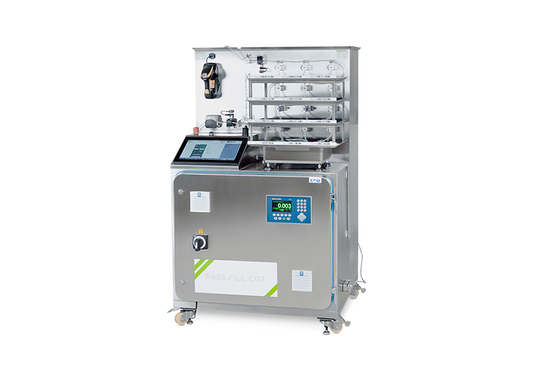
Maintaining an aseptically closed system is crucial in the manufacturing of lentiviral vectors. Automation is key to ensuring safety and efficiency while minimizing operator involvement in the aseptic filling processes. Modular systems, like the RoSS.FILL CGT platform, provide scalability and flexibility, enabling manufacturers to adjust to evolving production requirements. These systems can easily shift from clinical to commercial-scale production, effectively tackling the challenges associated with scale-up or scale-out strategies.
Controlled freezing to prevent lentiviral vector aggregation
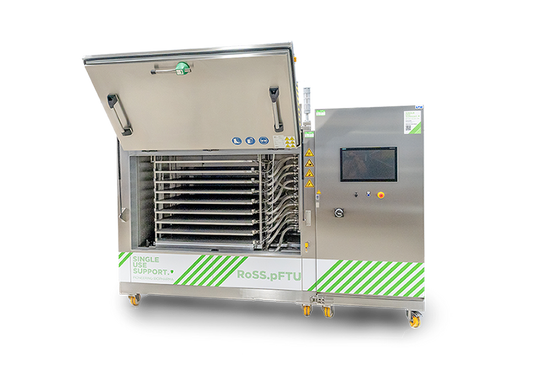
The processes of freezing and thawing lentiviral vectors come with distinct challenges, with aggregation being a significant issue. Controlled freezing is vital for preserving the integrity and functionality of the vectors. Automated platform systems for controlled freezing & thawing, such as the RoSS.pFTU Mid Scale, are specifically engineered for viral vector production, offering precise control over cooling rates to enhance product quality post-freezing. These systems are fully scalable, capable of accommodating various batch sizes from clinical to commercial production and can freeze anywhere from a few to multiple of single-use bags.
Lentiviral vectors remain amidst gene therapy advancements
In summary, the manufacturing of lentiviral vectors is progressing, fueled by the increasing demand for gene therapies and other advanced treatments. As the field develops, innovations in production processes – from plasmid design to aseptic filling and controlled freezing – are addressing critical challenges and enhancing overall efficiency. With continuous research and development, lentiviral vectors are positioned at the leading edge of gene therapy, offering new opportunities for treating a wide array of diseases.
Solutions for Viral Vector Manufacturing
References
Aldevron: Supporting AAV and Lentiviral Vector Development and Commercialization, 2020. Available at: https://www.aldevron.com/blog/supporting-aav-and-lentiviral-vector-development-and-commercialization
Single Use Support: Adeno-associated viruses for gene therapy. 2023. Available at: Adeno-Associated Virus (AAV) for gene therapy (susupport.com)
In the dynamic landscape of pharmaceutical manufacturing, the journey from laminar flow to automated fluid management has been nothing short of transformative. This evolution, marked by innovation and adaptability, has reshaped the way smaller volumes of biopharmaceuticals are handled and transferred with precision and sterility.
[[ToC]]
Advances from Laminar Flow to Automated Fluid Management
Decades ago, laminar flow hoods and biosafety cabinets were the stalwarts of aseptic processing, providing controlled environments for fluid transfer tasks. However, as the demand for sterile drug products escalated and regulatory standards tightened, the industry embarked on a quest for more robust and efficient methods.
With advances in advanced therapies came the need to transfer small volumes in an aseptically closed system to reduce the risk of contamination. But it also led to reproducible aliquot consistency, filling accuracy and speed, resulting in improved efficiency in fluid management techniques.
Let's rewind the success story of aseptic filling in the pharmaceutical environment.
Then: Use of Laminar Flow Hood and Biosafety Cabinet
What is a laminar flow hood?
Laminar flow is a technique that creates a unidirectional stream of air with minimal turbulence, ensuring that the air in the work area is free of particles and microorganisms. Laminar flow hoods and biosafety cabinets use this technique to provide a sterile environment for fluid handling tasks, such as filling vials, syringes, or bags with drug substances and drug products. The laminar flow hood consists of a cabinet with a high-efficiency particulate air (HEPA) filter that removes contaminants from the incoming air. The filtered air is then blown across the work surface at a constant speed, preventing any particles or microbes from entering the work area.
What is the difference to a biosafety cabinet?
The biosafety cabinet is similar to the laminar flow hood, but also provides protection for the operator and the environment by enclosing the work area and exhausting the air through another HEPA filter.
Applications of laminar flow hoods and biosafety cabinets
Laminar flow hoods and biosafety cabinets are widely used in pharmaceutical environments where aseptic processing is required, such as compounding pharmacies or research laboratories. These methods enable the manipulation and transfer of sterile fluids without compromising their quality or safety. However, they also require careful adherence to aseptic techniques and sterility requirements, such as wearing sterile gloves, gown, and mask, disinfecting the work surface and equipment, and minimizing the movement and disruption of the airflow.
Laminar flow hoods and biosafety cabinets served as pioneering solutions, offering localized clean environments for fluid handling. Both methods provided controlled environments conducive to aseptic processing. Despite their efficacy in handling smaller volumes, these methods had limitations. They were prone to human-induced contamination despite stringent protocols and lacked the scalability needed for larger operations, which posed challenges in meeting evolving industry demands.
Later: Switch to Filling Line Isolators
The emergence of filling line isolators represented a significant advancement in biopharmaceutical manufacturing. These enclosed systems provided enhanced sterility by isolating the filling process from the external environment.
What are Filling Line Isolators?
Filling line isolators are systems that enclose the filling equipment and the product containers in a sterile chamber, preventing contact with the external environment. The chamber is continuously supplied with filtered air (by HEPA filters) and maintained at a positive pressure to avoid contamination.
There are different ways to perform filling under a Restricted Access Barrier System (RABS). While an active RABS has a HEPA filter and fan unit enclosed inside the barrier framework, a passive RABS uses the existing room HEPA filters.
The operators can access the chamber through gloves or half-suits or use robotic arms to perform the filling process.
Pros and cons of filling line isolators
Filling line isolators are used in pharmaceutical manufacturing to fill liquid products into vials, syringes, single-use bags or bottles. They offered enhanced sterility and reduced contamination risks compared to their predecessors providing manufacturers with advantages including:
Improved product quality and sterility assurance by reducing human intervention and reducing the potential sources of contamination.
Risk assessment certifies increased operator safety by providing a physical barrier between the operators and the hazardous products.
Reduced operating costs by saving on cleanroom space, utilities, cleaning, and validation.
Increased productivity and efficiency by allowing faster changeovers, higher filling speeds, and lower downtime.
Although they offer improved sterility and reduced risk of contamination, isolators for filling lines have downsides, including:
Limited in their process flexibility
Require significant initial investment
Implies manual processes with a high risk of deviations such as overfilling or underfilling, human operator error and a higher demand on resources such as manpower and operating time.
These disadvantages have hindered widespread acceptance in the industry.
Now: Automated & Scalable Filling Platforms
Today, automated filling platforms stand at the forefront of biopharmaceutical manufacturing, embodying the convergence of robotics, automation, and cutting-edge technology. These platforms offer unparalleled levels of sterility, scalability, and process flexibility, revolutionizing the way fluid transfer processes are executed.
How do Automated Filling Platforms work?
One of the main applications of automated filling platforms in pharmaceutical manufacturing is to perform aseptic filling of single-use bioprocess containers and bottles with liquid products. Aseptic filling is a critical process that requires strict adherence to quality and safety standards, as any contamination or variation can compromise the efficacy and integrity of the product.
Automated filling platforms provide an aseptically closed system that eliminates the need for human intervention and reduces the risk of microbial or particulate contamination. Additionally, automated filling platforms, such as Single Use Support’s RoSS.FILL, enable standardization of the process, ensuring consistent and reproducible results across different batches and sites. By minimizing manual operations, automated filling platforms also reduce the potential for operational errors, such as overfilling or underfilling, that can affect the quality and yield of the product. Furthermore, automated filling platforms offer high accuracy and precision in delivering the required volume and concentration of the product, reducing product loss and improving productivity.
Automated filling platforms represent a quantum leap in biopharmaceutical manufacturing, offering unmatched sterility, scalability, and process flexibility. With minimal human intervention, these platforms streamline operations while ensuring precision and efficiency.
Automated Filling Platform RoSS.FILL
The advantages of automated filling machines extend beyond sterility and scalability. These systems offer enhanced efficiency, reduced product loss, and improved throughput compared to traditional methods. While the initial investment may be high, the long-term benefits far outweigh the costs, making automated filling machines a compelling choice for modern manufacturing facilities.
Advantages of Modular Automated Filling Machines
The advantages of automated filling machines extend beyond sterility and scalability. These systems offer enhanced efficiency, reduced product loss, and improved throughput compared to traditional methods. While the initial investment may be high, the long-term benefits far outweigh the costs, making automated filling machines a compelling choice for modern manufacturing facilities.
Comparison Laminar Flow vs. Filling Line Isolator vs. Automated Filling Platforms Characteristics
Characteristics
Laminar Flow Hood
Filling Line Isolator
Automated Filling Platform
Comment
Reduced Risk of Contamination
×
⁓
✅
No human operation, no open handling with RoSS.FILL
CAPEX
⁓
×
⁓
One time investment with early amortization
OPEX
×
×
✅
Reduced resources of workforce required
Speed of Operation
×
×
✅
Parallel and sequential filling for highest throughput with stepper valves. Automated sealing optional
Filling Accuracy
×
×
✅
Reproducible accuracy to few mL per bag
GMP Annex1
×
×
✅
Recommended fluid path as aseptically closed system.
Modularity / Scalability
×
×
✅
Scalable aliquotation from 5mL to 1000L+ for 2D bag sizes from 50mL to 50L
Footprint
⁓
⁓
✅
Optimized for a maximum volume on the lowest footprint needed
Advanced Technologies for a Bright Future
The future of aseptic aliquoting and filling in biopharmaceutical manufacturing is bright. Advanced technologies and real-time monitoring systems are poised to further optimize sterility, efficiency, and process control. By embracing innovation and automation, the industry can navigate the evolving regulatory landscape while delivering safe, high-quality medicines to patients worldwide. Pharma 4.0 can drive improved manufacturing processes by leveraging advances with AI with the interplay between advanced technologies.
In summary, the evolution of aseptic aliquoting and filling reflects the industry's relentless pursuit of excellence and innovation. From humble beginnings to automated marvels, the evolution of fluid transfer methods underscores the industry's commitment to quality and patient safety in transferring biologics and advanced therapies.
[[download-1-email-detailed]]
Automated Filling with RoSS.FILL
Seed train intensification is an approach in upstream bioprocessing that is gaining more and more attention. With the growing demand for new drugs, manufacturers have to ensure both efficient and flexible production processes. While generally applicable standards must always be adhered to within the seed train, labs and plants are expected to operate as cost-effectively as possible in all phases of process intensification, process development and production.
Processes for seed train intensification by Single Use Support are increasingly of interest. They help manufacturers accelerate their traditional process of cell cultivation to shorten production times, enhanced flexibility and most importantly, to maximize CHO cell viability.
In this article, we will take a closer look at the conventional seed train and how seed train intensification can be achieved.
Interview: Efficient Cell Banking in Seed Train Intensification
[[ToC]]
Improving the seed train for CHO cell culture – cornerstone of upstream intensification
Typically, mammalian cell lines, like CHO cells, are used for intensified production processes of monoclonal antibodies. During cell expansion infrastructures and production processes are changing along with the varying volumes.
Seed train intensification is an agile production process. It allows labs and manufacturers to grow an adequate number of cell lines for the inoculation of production bioreactors. High density cells can be aliquoted from the seed train into single-use bioprocess containers and cryopreserved. These frozen bag intermediates function as working cell banks to further boost productivity in upstream bioprocessing.
Seed train as part of upstream bioprocessing
The conventional cell culture process is an integral part in the production of several biopharmaceuticals, as it involves the production of significant amounts of biomass to produce various proteins, such as immunoglobine G (IgG) or other antibody drug products. The different steps of the workflow are currently performed with open and manual handling. Cell culturing in flasks have to be carried with great attention to not expose cells to contamination.
Traditional seed train process from cryovial to production bioreactor
The traditional seed train procedure begins with the thawing of mammalian cells that have been cultivated as the master cell bank. Fed batch size at this point is around 1mL which is cryopreserved in a cryovial or epipen. As part of the upstream bioprocess, these cells will then be fed to reach a level that is sufficient for the inoculation of a bioreactor. [[1]]
Once the number of cells for the working cell bank has been reached, they are cultivated throughout multiple steps in shake flasks, rocking motion bioreactors and stirred tank bioreactors with the required titer and viable cell density, until they have reached volumes up to 2,000 liters in a single-use bioreactor and up to 15,000 liters in a stainless steel bioreactor. [[2]]
As the traditional procedure of the production process is laid out for large-scale production in larger bioreactors, it is very time-consuming to reach a sufficient cell growth. Further, this manufacturing process requires the handling of cell cultures in the open during transfers, which leads to a higher risk of contamination and causes issues with reproducibility. Open processing and open handling of cells represents an increased likelihood of cross-contamination in multi-product facilities and thereby elevates the risk of product loss. [[1]] [[2]] [[3]]
Tools required for the seed train
The following list contains the cultivation systems as part of the conventional seed train process in biomanufacturing in the order they are used, starting with the smallest equipment for cell culture processes and gradually moving towards larger bioprocessing devices.
Tools required for the traditional seed train include:
Cryovials or Epipen used as master cell bank
Inoculation flasks
Spinner flasks
Wave rocker or wave bioreactor
N-3-bioreactor
N-2-bioreactor
N-1-bioreactor
N-bioreactor (=Production bioreactor)
Why seed train intensification helps save time and costs
With process intensification as strategy to make upstream bioprocessing more efficient, it's main focus is to maintain or improve cell viability after freezing and thawing and establish more automated, enclosed solutions that make sure that no contamination occurs during the whole process.
Seed train intensification based on modern technologies applying High Cell Density Cryopreservation (HCDC) is both time-saving and cost-effective compared to conventional alternatives, like fed batch production processes.
Single-use systems enable fluid transfer of cells in aseptically closed systems not only during upstream processes overall, but also during seed train intensification. Single use technologies as part of seed train intensification provides more process flexibility and scalability. In other words, seed train intensification based on disposable single-use components allows manufacturers to speed up reproducible cell culture growth, regardless of cell bank densities or volumes of high-density cell banks.
While the traditional approach involves the linear cell cultivation from master cell banks to production bioreactors, process intensification processes help make cell expansion more efficient with the inocluation of intermediates working cell banks. In other words: Instead of constantly having to start the entire process from scratch, labs and manufacturers can simply fall back on already cultivated cells as intermediates.
How can a seed train be intensified?
To start protein production in biomanufacturing with animal cells like Chinese Hamster Ovary cells (CHO cells) in an optimized way, there are different strategies available to opt the cell lines for scale-up at faster rates.
One strategy to achieve high cell density and viability is the attachment of a cell retention device to the N-1-bioreactor. [[4]] One of such a device to achieve higher cell density is Repligen's XCell® ATF, based on alternating tangential flow technology. [[5]] Through this method, it becomes possible to use a smaller bioreactor due to the higher initial cell density in the suspension cell culture and seed the production reactor. Theoretically, this step can also be performed in the earlier N-2-bioreactor stage of the work flow, saving considerable amounts of time in the production process.
Another strategy for seed train intensification is the cryopreservation of a working cell bank with a high cell density in single-use bags. High cell density cryopreservation removes the need for traditional seed train expansion. [[4]] [[5]]
Interview: Efficient Cell Banking in Seed Train Intensification
Seed train intensified with high-density cell banks
Banking high-density CHO cells (HDCB) is the essence of seed train intensification. As speed and reproducibility are highly important factors in the production of biopharmaceuticals, the development of a working cell bank (WCB) that can be used for the production of large product quantities is essential. When a small number of cells has been extracted from the master cell bank (MCB), these cells are cultured in large aliquots with cell suspensions. Aliquoted into single-use bags that range from 20mL up to 1L, they are frozen to cryogenic temperatures.
What is high cell density cryopreservation?
In high cell density cryopreservation (HCDC), intermediates with a high cell density are aliquoted in single-use bags and then frozen at -80 °C, before they are transferred into liquid nitrogen in its vapor phase. Keeping cells at cryogenic temperatures and performing controlled freeze-thaw cycles help ensure process reproducibility with optimal cell viability after thawing. Both are crucial aspect in the production of biopharmaceuticals. Process development can start earlier, making the whole endeavor of cell culturing more cost- and time-efficient.
The working cell banks used for seed train intensification can differ in cell density and aliquot volume: High density cell banks can be for example 107 cells/mL filled into a 500mL single-use biocontainer that can then inoculate a 200L bioreactor. The cell density and volume being aliquoted and cryopreserved depends on production specifications of the manufacturer.
It is important to note that case studies have shown good results with cryopreservation with regards to growth and recovery rates of CHO cell lines, the current cell line of choice for the production of monoclonal antibodies used in pharma production. Another critical quality attribute is to maintain a viable cell density (VCD).
Seed train intensification with HCDC comes with several advantages, some of which are:
Time efficiency: HCDC allows for faster cell growth and higher cell densities, reducing the overall time required for the seed train process. This results in shorter manufacturing timelines and quicker production of the final product.
Cost-effectiveness: By achieving higher cell densities in a shorter time, HCDC can lead to reduced resource and facility usage, lowering production costs and increasing cost-effectiveness.
Increased productivity: HCDC enables the production of a larger number of cells in a smaller footprint, maximizing the productivity of bioreactors and improving the overall yield of the biopharmaceutical manufacturing process.
Consistency: The use of HCDC in seed train intensification helps maintain the consistency of the cell culture and VCD and reduces variability between batches, resulting in more reliable and predictable production outcomes.
Scalability: HCDC is easily scalable, allowing biopharmaceutical companies to efficiently transition from small-scale seed train operations to large-scale production without significant changes to the process.
Process optimization: HCDC facilitates better process optimization by providing a controlled and reproducible environment, leading to improved product quality and performance.
Fed-batch or perfusion seed train?
Two different approaches to intensify the seed train process are fed-batch or perfusion:
Fed-batch includes the addition of nutrients to cell cultivation without medium removal. It is therfore considered simpler and its implementation is less expensive. Fed-batch may have limitations in achieving best conditions for longer periods.
Perfusion adds medium continuously while removing waste products. It thereby reaches higher cell densities and productivity. However it also requires more complex devices and control systems.
Manufacturers choose between fed-batch and perfusion processes based on specific performance criteria, typcially the desired cell density, product quality requirements, process complexity, and scalability or flexibility needs.
Equipment in seed train intensification with HCDC
Seed train intensification requires innovative tools and up-to-date technologies for fluid and cold chain management to optimize the time and cost aspects of a project. This does not only mean that time efficiency has to be increased, but also that scalability needs to be taken into account, given that different life science projects require different product quantities.
Before cells are aliquoted into single-use bags as primary packaging, it must be ensured to have a consistent cell count from bag-to-bag. Homogenizing devices, like RoSS.PADL, ensure an even distribution of the high cell density solution while simultaneously cooling it down. The latter functionality fosters cell viability by extending the time before freezing when cryoprotectants, such as DMSO, are already added.
In contrast to traditional seed trains, where the aliquoting and transferring of cells is often carried out manually, exposing the cells to contamination, fully automated aliquoting solutions like RoSS.FILL erase this problem – product loss due to human errors can be reduced to a minimum.
Controlled rate freezing, best achieved with RoSS.LN2F a cryogenic liquid-nitrogen freezer or RoSS.pFTU a plate-based freeze-thaw platform, optimizes high cell viability of cells during cryopreservation. This way cells can be frozen down to -170 °C for storage.
[[download-1]]
Seed train intensification with Single Use Support
As the cultivation of cells is an integral part in the production of many pharmaceutical products and applications, there is a high demand for process solutions that facilitate a more time- and cost-efficient manufacturing process in the early process stages of manufacturing. This is best achieved with fully automated solutions securing an aseptically closed system that reduces the risk of contamination during different production steps where cells have to be transferred from one device to another.
Solutions from Single-Use Support address these problems with single-use technologies and consumables that enable the cultivation cells as well as their preparation for the logistics process. Cells can be filled into single-use bags in an automated filling process before being frozen for sterile cell retention. Following compliance with cGMP and 21 CFR part 11, the freeze-thaw process is fully automated, ensuring sterility while simplifying all process steps.
Single Use Support'solutions are not only scalable and highly automated, but can also be configured to meet specific manufacturing needs. The high level of automation process steps and improved cell viability promotes process efficiency and also contributes to greater patient safety.
References
Seed train optimization for suspension cell culture, http://dx.doi.org/10.1186/1753-6561-7-S6-P9, Published 2013-12-04
Model-based strategy for cell culture seed train layout verified at lab scale, http://dx.doi.org/10.1007/s10616-015-9858-9, Published 2015-03-20
Seed Train Optimization for Cell Culture, http://dx.doi.org/10.1007/978-1-62703-733-4_22, Published 2013-12-02
“Jumping Seed Train Intensification Hurdles to Maximize Yield,” BioPharm International 34, https://www.biopharminternational.com/view/jumping-seed-train-intensification-hurdles-to-maximize-yield, Published 2021
XCell® ATF Devices and Controllers. Repligen, https://www.repligen.com/products/upstream-filtration/xcell-atf/xcell-atf-devices-and-controllers, Published