

RoSS.RACK

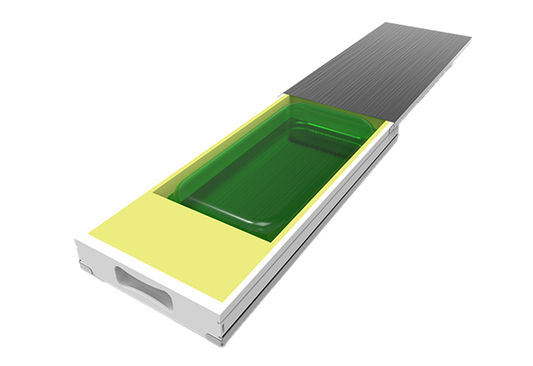
Stainless steel rack for RoSS® shells

RoSS.RACK enables safe storage and transport of RoSS® shells for reliable handling of drug substances across logistics and manufacturing.

Image of stainless steel rack for RoSS shells on a transparent background.

Key features

Compatible with RoSS® Shell

Cleanroom compatible

Suitable for use in cleanroom environments and controlled production areas

Flexible configuration

Adaptable to a wide range of process requirements and batch sizes

Single-use or multi-use

Available as a single-use or multi-use system to fit your process requirements

  • RoSS.RACK storage system for RoSS shells used in cell and gene therapy or high cell density cryopreservation on white background.

    Multi-Use RoSS.RACK

    The multi-use RoSS.RACK is made out of stainless steel and therefore suitable for the use in clean rooms and short-term cooled storage rooms.

  • Top view of RoSS.RACK storage system filled with RoSS shells inside a container for biopharma transport.

    Single-use RoSS.RACK

    The non-cooled single-use racks are best to store RoSS® shells for short-term storage before shipment or for in-house transport.

Image of long term storage of viral vectors in a RoSS.ULFT ultra-cold storage freezer by Single Use Support with an operator placing a RoSS shell into a trolley rack.

Advantages of RoSS.RACK

RoSS.RACK supports safe, efficient storage and transport, ensuring controlled handling of high-value drug substances.

  • Reduces handling risk during storage and transport of multiple units
  • Improves organization and process efficiency in logistics and manufacturing
  • Enhances operational safety when handling sensitive or frozen products
  • Supports reliable and standardized workflows across sites

Our customers trust in us:

Downloads

Preview of datasheet for RoSS.RACK by Single Use Support

Datasheet

RoSS.RACK - Datasheet

RoSS.RACK - Datasheet
 
Preview of instruction for use for RoSS.RACK by Single Use Support

Instruction for use

RoSS.RACK - Instruction for use

RoSS.RACK - Instruction for use
 

Send a request

  • Fluid management and freeze thaw solutions for biosimilar production

    The growing demand for biosimilars and significant increases in the biosimilar market call for innovative solutions for their fluid management and freeze thaw processes. This relates to steps like filling and filtration, freezing and thawing, as well as cooling, storage and transport of biosimilars. While it is of utmost importance to produce high-quality products, manufacturers are also interested in finding ways to optimize production times and create a reliable process that is as cost-efficient as possible. In this article, we will highlight different filling and freezing approaches in biosimilar production and introduce effective and innovative fluid management and freeze thaw solutions.  Challenges in biosimilar fluid management Since biosimilar manufacturing is a costly and time intensive operation, it is important to design the whole process to be as efficient and safe as possible. This includes addressing biosimilar manufacturing challenges connected to fluid management like product loss, streamlining production to save time and navigating biosimilar regulatory requirements. More about challenges in manufacturing biosimilars Product loss in biosimilar production There are different occurrences to lose a product – either when carrying out tedious and monotonous tasks in fluid management manually or when primary packagings are damaged. To maximize safety and guarantee continuous product quality, it is essential for manufacturers to minimize the risks for contamination and product loss due to damaged primary packaging. This can be reached by minimizing the need for manual intervention and errors during production, integrating automated solutions for the entire process or different production steps. Further improvements are protective, durable cases that embed single-use bioprocess containers to prevent ruptures in the fragile when frozen container components. [[1]] Efficient manufacturing for shorter production times There are several factors to be considered when aiming to exploit the full potential of biosimilar manufacturing. These include upping vaccine production speed, as well as the ability to adjust to changing conditions and market demands. In terms of fluid management, this means relying on scalable fluid management solutions for biosimilars and biologics that are preferably automated to reduce downtime. Modular solutions are especially requested, as they can easily be scaled up without the need to replace every machine along the fluid pathway. [[2]]  Efficient strategies for manufacturing biosimilars Navigating regulations in biosimilar manufacturing There is an extensive regulatory framework involved in the production of biosimilars to ensure not only the similarity with its reference biologic, but also achieve continuous quality and safety of the product. Concerning biosimilar fluid management, strategies have to be found to ensure clean room requirements and aseptic filling processes, product protection and regular testing. Therefore, it is vital for manufacturers to find ways to integrate testing practices like pre-use post sterilization integrity testing (PUPSIT) for sterile filters in a way that consumes as little time and effort as possible, but with no compromise on safety.  Advantages of fluid management with single-use technology Single-use technology has proven to be a successful approach for advanced fluid management in bioprocessing. Costs and production times can be significantly reduced by falling back on automated solutions, which is bound to change the biopharmaceutical industry by lowering expenses for innovative treatment options. To ensure the safety of a biosimilar product, it is critical to provide protected and sterile manufacturing conditions. By integrating single-use technologies into the fluid management of biosimilars, it becomes possible to eliminate the process of cleaning and sterilization at the manufacturing site, which costs time and resources. Instead, single-use solutions rely on sterile tubing, connectors, and containers, along with other equipment to increase efficiency and safety that are easily disposable after usage. [[3]] Another important advantage of single-use solutions is their scalability. This addresses the challenge of up-scaling during production. As the size of production batches may significantly vary along development stages and manufacturing, modular single-use platform systems with easy plug & play racks allow for more freedom and flexibility. To summarize, the main advantages of fluid management with single-use technology are: Scalability Reducing production costs and time  Lowering contamination risks Compliance with cGMP regulations Single-use fluid management solutions for biosimilar production There are many ways in which manufacturers can benefit from integrating single-use fluid management solutions into biosimilar production. These range from automated homogenizing units to aseptic filling and filtration systems, as well as robust protective secondary packaging for single-use bags. Homogenizing liquids with RoSS.PADL Achieving a consistently homogeneous mixture in biosimilar solutions is essential to guarantee uniformity in high-quality products. Since process reproducibility is key, Single Use Support has developed RoSS.PADL, a homogenizing platform that gently kneads and cools single-use bags simultaneously. The cooling process prevents product alterations during massaging by maintaining the appropriate temperature for the biosimilar product. This automated homogenizing solution removes the need for human intervention, for instance during draining, and operates in a standardized and reproducible way. It is also possible to combine several RoSS.PADL units with each other and control them with one single operating system.  RoSS.PADL | Homogenizing Solution RoSS.PADL is a scalable massaging platform for achieving a uniform mixture in single-use bags. With integrated cooling and heating, it maintains optimal temperatures consistently. More information Aseptic filling and filtration with RoSS.FILL By integrating automation into aliquotation processes, it becomes possible to minimize the inherent risks for contamination and streamline the process simultaneously to stay economically competitive. With RoSS.FILL, Single Use Support takes on the challenge with a completely scalable design that is able to reach filling speeds up to 300 liters per hour. Single-use bioprocess containers are filled in an aseptically closed system and in a fully automated manner. The process can be controlled via a computerized system. Not only can additional racks be added via plug & play to the aseptic filling and filtration unit, but it is also possible to attach it to other systems and devices, such as RoSS.PADL.  RoSS.FILL | Fill-Filtration RoSS.FILL is a fully automated single-use bag filling system. It is possible to fill unlimited volumes per batch with a speed of up to 300 liters per hour. The entire filling process is fully disposable, thus warranting an absolutely sterile fill & drain process. For further productivity improvements check out our pinch valve innovation. More information RoSS® Shell: Advanced protection for single-use bags Protecting single-use containers during transport and storage is essential to prevent damage and product loss. With RoSS® Shell, Single Use Support has developed a robust protective case for single-use bags. The resilient shell protects 2D single-use bags of different sizes and all vendors and is not only optimized for transport situations but also for freezing biosimilars – another critical step for manufacturers. The durable and compact protective shell also offers enough space for tubing and sterile connectors and maximizes storage density. This leads to a reduction of required space in freezers once advanced plate freezing has been performed, which is also enabled by RoSS® Shell. RoSS® Shell | Protecting single-use bags The safest transport solution for all available single-use bioprocess containers. Robust. Scalable. Single-use bag independent. More information   What makes freezing and thawing biosimilars so complex? Freezing and thawing biosimilars pose unique challenges due to the inherent complexity of these molecules. Unlike small-molecule drugs, biosimilars are intricate biological molecules designed to mimic existing biologic drugs. This complexity arises from their large molecular size, three-dimensional structure, and post-translational modifications. Maintaining the integrity and efficacy of biosimilars during freeze-thaw processes is critical for ensuring their therapeutic effectiveness. Any deviation from the optimal temperature range or handling procedure can lead to changes of protein stability. These changes can compromise the safety, efficacy, and quality of the final product. Furthermore, biosimilars and biologics are often more sensitive to temperature fluctuations compared to small-molecule drugs. Even minor variations in temperature or storage conditions can result in protein denaturation, aggregation, or degradation. These alterations may impact the stability and bioactivity of the biosimilar, rendering it less effective or even potentially harmful to patients. In order to master the complexities revolving around freezing and thawing biosimilars, several approaches have emerged – some of which will be discussed below. Uncontrolled slow freezing Uncontrolled slow freezing due to cooling with air (e.g. with conventional lab freezers, either upright or chest static freezers) may pose significant risks to the integrity and efficacy of biosimilars during the manufacturing process. Slow freezing refers to the gradual reduction of temperature over an extended period. This process can result in several detrimental effects, including cryoconcentration. Static freezers are designed to hold low temperatures which is why it cannot fully control the impact of the cooling process on biosimilars. As a consequence, the slow uncontrolled freezing process may not adequately preserve the biological activity of the biosimilar, compromising its therapeutic effectiveness. This is due to a lack of control over freezing rates and the risk for cryoconcentration. [[4]] Evolving Methods of Bulk Freezing Lyophilization Lyophilization, also known as freeze-drying, is a commonly used method for preserving the stability and extending the shelf life of biosimilars. This process involves freezing the biosimilar at low temperatures and then subjecting it to vacuum conditions to remove water by sublimation. However, lyophilization can be an overall time-consuming and expensive process, requiring specialized equipment, larger footprint and higher risk of product loss. It may come with an elevated potential for microbial contamination and longer reconstitution times, leading to inconveniences in certain formulations. Additionally, it may not be eligible for all kinds of biosimilars, as it brings significant stress to protein structures. While, under certain circumstances, this approach may be eligible for some types of monoclonal antibodies. LNP-based mRNA vaccines and cell therapies using living cells, for instance, are usually not freeze-dried. Despite its challenges, lyophilization remains a technique for ensuring the stability of biosimilar products. [[5]] [[6]] Plate freezing in biosimilar production Plate freezing is a method used in the freezing of biosimilars that offers precise temperature control and uniform freezing rates. In this process, biosimilar solutions, filled into bags or other bioprocess containers, are placed on metal plates that are cooled to the desired temperature using a refrigeration system. The plates provide a large surface area for efficient heat transfer, ensuring rapid and uniform freezing of the biosimilar solution. Plate freezing prevents the formation of undesired ice crystals, minimizing damage to the biosimilar molecules and preserving their integrity and activity. Furthermore, it is a scalable and cost-effective alternative to conventional methods, offering improved product quality and consistency. Cryogenic freezing Cryogenic freezing is an advanced method used in the preservation of biosimilars that involves ultra-low temperatures below -150° celsius. This technique utilizes pressured gases, such as liquid nitrogen or liquid helium, that has the capability to rapidly freeze the biosimilar solution. The extremely low temperatures achieved during cryogenic freezing are necessary for the storage of biologics and biosimilars like certain cell therapies, including gene-modified cell therapies. Cryogenic freezing is recommended when preserving the biological activity and stability of biosimilars over long periods. However, cryogenic freezing has often been “too effective”, meaning that the cooling process occurred too fast and with insufficient control over freezing rates, resulting in intracellular ice formation and hence higher occurrences of cell death. In recent years, though, novel cryogenic freezers have entered the market that address this issue and provide enhanced control during cryogenic freezing. [[7]]   Controlling cryogenic freezing What about thawing biosimilars? Thawing biosimilars means reverting them to their liquid state, which is just as important as freezing them in the first place. And just as intricate, since control over the thawing process is equally vital for the freezing outcome. In order to meet the individual cold chain requirements of protein substances, it is necessary to provide greater control over thawing rates. Controlled thawing of drug substances ensures standardized processes, as opposed to uncontrolled thawing, where items are simply removed from the fridge and brought to a warmer environment, such as water baths. Facing freeze-thaw challenges with single-use solutions A great deal of the challenges in manufacturing biosimilars, especially revolving around freezing and thawing them, comes from the sensitivity of the proteins they are composed of. However, there are also technological limitations to stand in the way of maximum efficiency in biomanufacturing. Conventional freezing technologies are often either not as scalable or as precise as necessary. Furthermore, widespread needs for human intervention may increase the risks of human error, ultimately leading to product loss. Still, there are solutions based on single-use technology on the market that address these very problems. Product loss in biomanufacturing – a bitter pill to swallow? Product loss in biomanufacturing is a significant concern, impacting both the efficiency and profitability of the process. It can occur either due to loss of product quality, as mentioned before, and therefore limited vaccine production yield. But a loss can also occur due to various other factors, including breakage or leakage of single-use bioprocess containers during freezing, shipping, and storage. Excessive manual handling and a missing secondary packaging may be reasons for single-use bags to break. Such vulnerabilities can lead to a loss of valuable drug substances, causing financial setbacks and delaying production timelines. To address this challenge, innovative solutions like the RoSS® Shell offer a robust secondary packaging option. By providing a protective shell around single-use bags, RoSS® Shell minimizes the risk of breakage or leakage significantly. This solution not only safeguards the integrity of the bioprocess containers but also ensures the preservation of valuable drug substances throughout the biomanufacturing process. Freeze-thaw solutions for biosimilar production Achieving precise control over freezing processes presents a significant challenge in biomanufacturing. The delicate nature of biological substances, such as monoclonal antibodies (mAbs) (mAbs) and other biopharmaceuticals, demands meticulous handling to maintain their efficacy and integrity. Traditional freezing methods often lack the necessary precision and consistency, leading to potential product loss and compromised quality. To address this challenge, advanced freezing technologies like the plate freezing platform RoSS.pFTU and the cryogenic freezer RoSS.LN2F offer robust solutions. The RoSS.pFTU leverages plate-based freezing to ensure uniform and controlled freezing of drug substances, maintaining their original quality throughout the process. Similarly, the RoSS.LN2F cryogenic freezer provides an innovative approach to achieve extremely low temperatures. By utilizing an enclosed LN2 system, this freezer ensures safe and efficient freezing down to temperatures as low as -180°C. With precise temperature control of exposure to liquid nitrogen, the RoSS.LN2F offers unmatched reliability and stability for freezing high-value biopharmaceuticals.  Freeze & Thaw platform The Single Use Support freeze-thaw platforms provide insular solutions for the freeze/thaw processes of each clinical phase. Our new freeze-thaw units are fully scalable and compatible with all batch sizes and bags from all established manufacturers – you will only require one single system from the lab to blockbuster production. More information  RoSS.LN2F | Cryogenic Freezer RoSS.LN2F is a powerful cryogenic controlled rate freeze for temperatures down to -170°C. An enclosed LN2 system and our innovative direct injection system ensure no direct exposure and no mechanical compressors are needed. This ensures a safe, low-maintenance and energy-saving handling. More information Freezing pharmaceutical bulk: Preparing for scale-up Scalability is another critical consideration for freezing processes in biosimilar production – but one that, at some point, is inevitable for many manufacturers. There are numerous reasons why these considerations are best made early on in process development, as the necessary equipment requires significant investments. Modular and scalable solutions have therefore entered the market, being able to smoothly transition from small to large scale. Scaling pharmaceutical freezing, though, does not only refer to an increasing number of individual items to be processed, but also to their respective volumes. Freezing pharmaceutical bulk comes with its own set of challenges, such as achieving homogeneous freezing results. Single Use Support has made these considerations while developing its freeze-thaw platform based on single-use technologies. Their modular platform design allows for flexible expansion, accommodating varying batch sizes and production volumes with ease, while transferring freezing protocols to larger units. By using the plate freezing platform RoSS.pFTU, for instance, the direct contact between cooling plates and the packaging surface allows controlled and even freezing processes for various volumes – from 1 ml up to 500 L, depending on the chosen system. This scalability ensures that freezing processes can evolve in tandem with production demands, minimizing disruptions and maximizing productivity. Scalability was not only a core idea at the conception of plate and cryogenic freezers, but rather for all process solutions developed by Single Use Support – such as fluid management solutions for biosimilar production, storage and transport systems. This enables manufacturers to establish highly automated biomanufacturing processes with minimal need for human intervention, enhanced safety and cost efficiency.  [[download-1-email-detailed]] References The process defines the product: what really matters in biosimilar design and production?, http://dx.doi.org/10.1093/rheumatology/kex278, Published 2017-07-03 A Single-use Strategy to Enable Manufacturing of Affordable Biologics, http://dx.doi.org/10.1016/j.csbj.2016.06.007, Published 2016-07-06 A Single-use Strategy to Enable Manufacturing of Affordable Biologics, http://dx.doi.org/10.1016/j.csbj.2016.06.007, Published 2016-07-06 Impact of Freeze/Thaw Process on Drug Substance Storage of Therapeutics, http://dx.doi.org/10.1016/j.xphs.2017.03.019, Published 2017-03-24 Strategies to Reduce Reconstitution Time of Lyophilized Biotherapeutics, http://dx.doi.org/10.1016/j.xphs.2020.02.019, Published 2020-03-02 Lyophilization considerations: Comparing freeze-drying to freezing for biopharmaceutical products, https://www.susupport.com/blogs/manufacturing-processes/lyophilization-considerations-comparing-freeze-drying-to-freezing-for-biopharmaceutical-products, Published 07/2023 Cryopreservation as a Key Element in the Successful Delivery of Cell-Based Therapies—A Review, http://dx.doi.org/10.3389/fmed.2020.592242, Published 2020-11-26

    READ MORE
  • Bulk drug substance management

    With the rising need for novel therapies - and, based on the changes in the disease landscape as most currently highlighted by COVID - the global biopharmaceutical industry is evolving, and market needs are shifting. We are seeing an increasing number of drug products and APIs produced by an equally growing number of pharmaceutical and biopharmaceutical companies, as well as third-party CMOs. The following article aims to take a closer look at the term “bulk drug substance” and its meaning, as well as to investigate smart solutions to shorten the phase between development and blockbuster production. It furthermore aims to give a concise definition alongside an extended view on the daily challenges in biopharmaceutical processing.   Bulk drug substance definition (FDA) According to FDA’s (Food and Drug Administration) definition, bulk drug substance describes substances in various suitable forms used as an active ingredient in the compounding, manufacturing, processing, or packaging of a drug. Suitable forms can be liquid solutions as well as fine powder or crystals. The scientific definition of the term “bulk drug substance” does not include intermediates used in the synthesis of a medical drug. Bulk drug substances or APIs (active pharmaceutical ingredients) - as they are also known - are used in the production of compounded medical drugs. As such, they must meet certain statutory requirements in order to be available for clinical use.  Additionally, the FDA issued an interim policy, giving advice to manufacturers of compound using bulk drug substances, for instance on the additional information on the labels of dosage forms. [[1]]   Drug substance vs. drug product – the differences The use of bulk drug substances can serve an important role for patients for whom an FDA-approved drug product is not appropriate, such as patients who, for example, have an allergy and need a medication to be made without a certain dye or a different kind of inactive ingredient. In such cases, certain physicians and pharmacists (in accordance with section 503A) or outsourcing facilities may be able to provide compound drug products, having to meet several regulatory demands. Outsourcing facilities as nominators, for instance, need to be registered under section 503B of the Federal Food, Drug, and Cosmetic Act (to be found in the Federal register). Additionally, only compound drugs may be produced that are included in the FDA drug shortage list. Otherwise, an appearance of the nominated bulk drug substance in FDA’s 503B bulks list (a list of bulk drug substances with clinical need) is required. Pharmacists and physicians, as well, need to comply with various regulations in the production of bulk drug substances – an applicable United States Pharmacopeia (USP) and National Formulary monographs, for instance, need to be taken into account. In order to be approved, any bulk drug substance must be manufactured by an establishment that is registered under section 510 of the FD&C Act (Federal Food, Drug and Cosmetic Act), and additionally it must be accompanied by a valid certificate of analysis. [[2]] Micro to macro - from lab to commercial scale Once a newly developed product has been approved for the market, manufacturers are faced with having to scale up, so they can move from preclinical to commercial scale manufacture. This is a complex process concerning the entire supply chain that needs to be well managed, as it is not without its challenges. Furthermore, no two production sites are the same and the chemistry processes differ from manufacturer to manufacturer. The obstacles and challenges are manifold, and they apply to scientific as well as to technical aspects, while legal regulations and standards have to be adhered to and complied with. Additionally, moving from micro to macro might lead to the the Food and Drug Administration having to newly approve the entire process. And if this was not complicated enough, the different departments involved in research, development and production may be spread out across various sites. Even if they all operate within the same organization, they may be geographically removed from each other. These are all factors that influence the outcome of any project, and so they should beconsidered early on, with clear steps determined for the scale-up process and clearly assigned responsibilities for all individuals involved While during research, medicinal chemists are focused on whether a certain idea is feasible, once they move ahead, they are more concerned with the scale-up of procedures and logistics. Good Manufacturing Practice (GMP) is key, and strict regulations mandate extensive documentation to safeguard both quality and traceability. Single-use technology - the modern, agile choice for drug substance logistics While the challenges of scaling up the production process for bulk drug substances are obvious, all parties concerned are constantly working on improving existing technologies or coming up with new approaches to make life easier. One such development is the use of single-use components, which was first employed in lab environments. Single-use technology has become an accepted standard in small-scale environments such as the lab and when administering the drug to the patient. However, their modular design allows for great flexibility and as well as scalability, which is why is becoming increasingly common as an agile solution in all areas - all the way to large-scale commercial production. The utilization of disposable equipment allows manufacturers to transfer the entire process - ranging from early-stage development to final product and logistics - relatively easily and without any major risks. The system, which involves both technology and equipment (including bags, connectors, tubings and assemblies) can be scaled up and adapted relatively easily thanks to the nature of the single-use components employed. [[download-1]]   [[download-2]] Thawing drug substance: best practices Thawing of drug substances has to be carried out with as much diligence as there has to be in every other step in the supply chain of bulk drug substances. After all, there need to be seamless transitions from one step to another, achievable by dedicated end-to-end solutions. In general, one can distinguish between an uncontrolled and a controlled thawing process. While uncontrolled thawing leaves little to no control over thawing rates, controlled thawing processes allow to adapt the heat supply to a high degree. However, there is a lot more to consider in order to achieve optimal thawing results.   Avoiding product loss of bulk drug substance Loss of drug substance (product loss) is a risk that generally exists within every step within the supply chain of bulk drug substances. Contamination of bulk drug substances can cause enormous trouble in the production of drug products, leading to considerable costs. But the risk of product loss persists during filling and freezing processes, the latter of which have to be carried out in accordance with the product’s requirements. Further protection is required during storing and shipping, and the thawing process can also pose the risk to damage highly sensitive substances. However, there are measures to ensure that the loss of these valuable substances is avoided. Seamless transitions from one step to another, provided by end-to-end solutions for bulk drug substances, are therefore key to a lossless product management. Risk management for a safe handling of bulk drug substances In safe handling of bulk drug substances, risk management is an important aspect to be considered – be it human drugs or compounded animal drugs, since staff must be prevented from being exposed to potentially hazardous substances. This is why, in pharmacy compounding, several regulations are installed, e. g. the Drug Quality and Security Act. Critical steps in the production of bulk drug substances include filling and freezing, but also transport/storage as well as thawing and draining – all of which have to be executed with high regards to the respective risks for product and stuff. In order to minimize safety risks for staff when handling bulk drug substances as well as to ensure product quality and to meet regulatory standards with no exemption, according measures must be applied all along their supply chain. Trend: decentralized manufacturing means growing complexity The biopharmaceutical industry has always been a fast-paced and challenging field but with an increased rate of new developments and growing decentralization, the already existing complexity is only bound to increase. Teams spread out over geographically removed sites have to collaborate and work together, which has been made possible or easier thanks to a growing degree of digitization. Digitization can be seen as one of the reasons for ever-increasing levels of decentralization, as well as outsourcing to third-party CMOs or CDMOs.  These developments bring with them a growing need for standardized processes that are flexible and reliable in equal terms. They need to be compatible so as to ensure uniform processes across all sites and phases. Thanks to its modular nature, single-use technology is ideal when it comes to finding innovative solutions for the design of bioreactors and decentralized biopharma manufacturing processes.  While in the past disposable production methods have generally been used for lower volume manufacturing and processing for clinical and commercial requirements, they are on the rise for large-scale production purposes and are set to become an established industry standard. Conclusion Where innovation and technology are working hand in hand, they can come up with revolutionary solutions that in turn allow to improve the time to market. However, this is only possible with a comprehensive and sustainable approach and by considering long-term prospects.  A newly developed medical drug is only as good as the entire process surrounding it. In other words, the initial work in the lab can be negligible if the required basic conditions have not been thought through and set up well in advance. Single-use bioprocessing offers ideal premises for the development and production of bulk drug substance: Single-use systems are modular, thus allowing for the highest possible degree of agility. Flexible and scalable solutions are the future, and single-use is the way forward. Biopharma­ceutical end-to-end solutions References Interim Policy on Compounding Using Bulk Drug Substances Under Section 503B of the Federal Food, Drug, and Cosmetic Act, http://www.ncbop.org/PDF/FDAUseofBulkDrugProductCompOutsFacilities503BJan2017.pdf, Published 01/2017 Bulk Drug Substances Used in Compounding, https://www.fda.gov/drugs/human-drug-compounding/bulk-drug-substances-used-compounding, Published 12/2022

    Read more
  • Start Pharma 4.0: Examples to Advance Ultra-Cold Storage of Drug Substances

    Pharma 4.0 is no longer a thing of the future. Industry 4.0 for biopharmaceutical manufacturing is here now.  Innovative manufacturers are striving for operational excellence in as many areas of bioprocessing as possible. In return, they will benefit from standardized and fully automated processes that reduce the number of unpredictable events, product loss, cross-contamination, and resource consumption. Successful adoption of Industry 4.0 will therefore contribute to cost efficiency, patient safety, and sustainability in pharmaceutical manufacturing.  This paradigm shift isn't just about automation; it's about orchestrating a symphony of smart devices and systems to create seamless, efficient operations across the biopharmaceutical landscape. A prime example of this shift is the integration of cold drug storage into the Pharma 4.0 framework. Interest in advancing this process step is already high among pharmaceutical companies. What does a smart ultra-cold storage process look like according to Pharma 4.0 principles?  Let’s take a closer look at ways to automate ultra-cold storage through Single Use Support.   Opening Doors for Pharma 4.0 Traditionally, freezers and cold chain drug storage facilities are managed manually, requiring human intervention for tasks as simple as opening doors. Imagine a storekeeper leaving a door open for too long, disrupting the delicate ecosystem inside and allowing ice crystals to grow on the door, which can ultimately reduce the freezer’s insulation. Autonomous forklifts navigate the facility to load and retrieve materials to and from ultra-low temperature (ULT) freezers. But the real magic lies in the interplay between technology and precision. The freezer doors need to open at just the right time – not too long to avoid temperature loss and ice formation. This choreography of control is achieved through robust software integration that links the storage freezer to the process control system.  But that's not all. Communication between the robot and the ultra-cold storage freezer is critical for flawless material handling. The robot must position itself precisely for loading and unloading operations. This is where the power of Pharma 4.0 comes in – ensuring that this dance is executed to perfection. Every step, every access is documented by comprehensive audit trails that are securely stored in the central process control system.  The interconnection of Freeze-Thaw Units (FTUs) and ULT storage freezers with autonomous forklifts is a vivid example of Pharma 4.0 perfection. The ability to implement automated door systems triggered by the process control system and to store substances at a chilling -75°C while maintaining stringent alarm systems ensures that drug substances are preserved at their best. The result? A seamless, controlled environment for drug substance storage.  Robotics Takes Over Cold Chain Management Integrating robotics into ultra-low temperature (ULT) storage isn’t just an evolution; it's a leap toward greater efficiency, safety, and precision in cold chain management and storage of drug substances. It can help improve cohesive process steps.  Automated loading & unloading: Automation eliminates the variability associated with human intervention, ensuring consistent and safe operations. Transportation: The movement of drug substances from a Grade C clean room to freezing and storage platforms can be orchestrated by transport robots. Autonomous forklifts can also safely pass through airlocks. They help navigate the facility and ensure materials reach their destination without compromising sterility and integrity. Loading into plate-based freezers: One robot can load two plate-based freeze-thaw platforms, such as the RoSS.pFTU Large Scale, with a total of up to 800L in single-use bags, protected by secondary packaging shells. The smart layout of robotic systems minimizes congestion and optimizes drug placement and retrieval.  Transit of frozen liquids to ultra-cold storage: The conveyor becomes a gateway for transporting frozen bioprocess containers in RoSS® shells toward the ULT freezers. Loading into ultra-low temperature freezers: Robotic loaders place RoSS® shells into ultra-cold storage freezers, such as RoSS.ULTF – and retrieve them for cold chain shipping. The concept of an intelligent, integrated end-to-end cold chain process solution is becoming more than just a notion. By harnessing automated technologies, biopharmaceutical manufacturers can achieve precision, efficiency, and safety.   Introducing Single-Use Bag Handling to Pharma 4.0   Reasons to Start Now Embracing Pharma 4.0 is about more than just adopting technology; it's about reimagining processes. The marriage of cold storage and Pharma 4.0 isn't merely about opening doors; it's about opening doors to a future where biopharmaceutical manufacturing reaches new heights of efficiency, reliability, and precision.   Start Pharma 4.0 with RoSS.ULTF today   "The marriage of cold storage and Pharma 4.0 isn't merely about opening doors; it's about opening doors to a future where biopharmaceutical manufacturing reaches new heights of efficiency, reliability, and precision."Alexander Fuchs Predictive maintenance is another emerging area that can be part of integrated fluid and cold chain manufacturing solutions. By continuously monitoring any changes, caused by pressure, temperature or else, technologies can report and flag deviations. Picture a stepper and sealer valve used in aseptic aliquoting with RoSS.FILL alerting the process control system when action needs to be taken, such as integrity testing or replacement.   With predictive maintenance as part of Pharma 4.0, the orchestrated operations eliminate the risk of temperature fluctuations, ensuring that drug substances remain intact and viable. In addition, automation saves time and minimizes human error, allowing researchers to focus on tasks that truly require their expertise.  As we stand on the brink of this transformation, it's clear that integrating robotics into ULT storage is not just about machines; it's about advancing standards, pushing boundaries, and creating a future where the cold chain management continues to evolve. [[download-1]]

    READ MORE