

Advanced fluid & cold chain management of bottles

Blast Freezing Bottles - Single Use Support

From clinical to commercial without compromise

Single Use Support’s bottle solutions ensure safe, scalable handling of drug substance, media, and buffers. From closed-system filling to controlled freezing and validated protection, we help you secure every drop.

Advance bottle fill & freeze
icon dollar
Increase process efficiency
Green icon with a cell and a snowflake on a transparent background demonstrating cell viability after freezing
Stop contamination
Green icon of a thermometer on a transparent background demonstrating temperature control
Control freezing & thawing

Challenges in bottle-based workflows in biopharma:

  • Filling: Open systems and manual handling increase the risk of contamination and bioburden.
  • Freezing: Uncontrolled freezing leads to product instability and cause container damage, including leakage or breakage.
  • Bottle breakages: Unprotected containers are prone to leakage or breakage, compromising product integrity.
  • End-to-end processes: Manual and fragmented workflows limit scalability and consistency across clinical and commercial stages.
    • Person in a lab coat overserving an automated fill run of bottles with RoSS.FILL Bottle

      Fast & homogeneous aliquoting

      RoSS.FILL Bottle is an automated aseptic filling platform that enables accurate, fast and safe dispensing into bottles. Introducing 21 CFR Part 11 and GMP-compatibility paired with high filling accuracy help advance fluid management processes.

      IRIS single-use assemblies are customized off-the-shelf fluid transfer tubing sets to provide an aseptically closed system and qualified bottle fluid path.

    • Mid-frame image of two pharmaceutical blast freezers by Single Use Support.

      Controlled freezing & thawing

      RoSS.BLST is a GMP-compatible system for blast freezing & thawing of drug substances. It is suitable for any primary packaging from all manufacturers and allows freezing and thawing within a temperature range of -80 °C to +40 °C.

      The modular and mobile internal rack system offers maximal flexibility and enables a simple transfer from blast freezing to ultra-cold storage.

    • Close-up image of a frozen Bottle RoSS by Single Use Support, shown on a white background.

      Best container integrity

      Bottle RoSS protects tubing on bottles at glass-like sub-zero temperatures using a soft 3D foam that hardens when frozen, ensuring complete immobilization and protection.

      The system is compatible with
      rigid containers ranging from 500 mL to 10 L from any manufacturer. Its dimensions, including height, can be customized upon request to accommodate specific tubing and connector configurations.

    Our customers trust in us:

    How can freezing bottles be a blast?

    Preview whitepaper controlled blast freezing of bulk-packaged DS - Single Use Support

    Controlled blast freezing for bulk-packaged drug substance - Whitepaper

    Freezing drug substances in bottles can be challenging, especially when it leads to product instability or cryoconcentration. Controlled blast freezing is key to preserving product quality. But efficient drug manufacturing requires more: Container closure integrity, smart use of facility space, sustainability and process flexibility are essential for scaling and streamlining operations. Read on to explore what really matters when freezing bottles.

    How much can be saved with automated bottle filling?

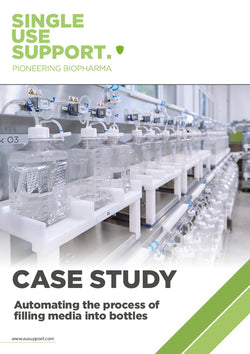
    Preview of Single Use Support's case study about automating the process of filling media into bottles

    Automating the process of filling media into bottles - Case Study

    A biopharmaceutical manufacturer based in Latin America used single-use bottles and 3D bags for aseptic media filling. The switch from manual to automated filling of media into single-use bottles of varying sizes and volumes has markedly improved operational efficiency. Read the case study to learn more about the potential savings and efficiencies.

    • Freezing bottles – 5 critical considerations

      Freezing drug substances to ultra-cold temperatures is a standard step in biopharmaceutical manufacturing. Yet, beyond simply cooling, it’s the critical quality attributes (CQA), like product safety, consistency, and process efficiency, that truly define success in biopharma. When preparing to freeze drug substances in sterile bottles, it’s essential to weigh several key factors. These considerations help ensure the freezing process not only preserves product integrity but also supports reliable and productive operations. 1. Secure product quality with controlled freezing Controlled and uniform freezing is essential to avoid cryoconcentration – a phenomenon where solutes concentrate unevenly due to ice formation from the outside in. This can lead to protein denaturation and pH shifts, which ultimately impact drug stability and efficacy. Studies show that the “volcano effect” in bottles, where solutes are pushed to the center and top, can cause significant concentration gradients. Manufacturers can minimize these risks by controlling the freezing rate and temperature profile throughout the freezing process including the solidification phase. Product integrity stems from a controlled freezing which can be adapted depending on the specifications of the drug substance, such as cell-based or mAbs. What we learnt about controlled bottle freezing   Figure 1: Visualization of the volcano effect in bottles occurring in uncontrolled freezing, compared to consistent distribution in controlled freezing.    2. Protect bottles to ensure container closure integrity When drug substances or other raw materials, such as buffer or media, are frozen in bottles, the single-use containers must maintain their integrity. Even though they’re called rigid containers, there are vulnerable spots, particularly when the single-use container and assemblies become more brittle under sub-zero conditions.  To prevent leakage or contamination, bottle integrity can remain secure when the assemblies are protected during cold chain handling. Bottle RoSS is the equivalent of the RoSS® shell, which is the protective shell for single-use bags. With Bottle RoSS the tubing on bottles is protected at glass-like sub-zero temperatures with the help of a soft 3D foam which hardens at frozen state. More about Bottle RoSS 3. Static or blast freezing? In general, the choice between static and blast freezing for cooling drug substances in bottles depends on the container format and the sensitivity of the drug substances. Static freezers are meant for storing drug substances at low temperatures, not for freezing them. Using them to freeze bottles can lead to issues like cryoconcentration and product degradation. Even if the freezing time is similar to other methods for small bottles, the lack of control during the critical phase transition still negatively impacts product quality. In contrast, blast freezers with high-speed air convection technology are more effective at rapidly and uniformly freezing drug substances. This technology is particularly effective for biologics stored in bulky containers, such as bottles, as it minimizes thermal gradients and preserves product quality. 4. Role of bottle types and sizes Not all bottles are created equal. Manufacturers can choose among bottles with different types, geometry and size of the bottle, which may impact on freezing efficiency and uniformity. HDPE and PETG bottles have different features affecting the following fluid and cold chain management processes. Same with the sizes that can range up to 20L bottles. Overall, rigid bottles allow for optimal airflow in blast freezers, supporting consistent freezing profiles. Larger containers may require customized airflow systems to ensure uniform temperature distribution.   5. Think end-to-end for closed system efficiency Look left and right before freezing bottles. An efficient and safe freezing process requires an aseptic closed system, beginning with the aseptic filling and filtration stages. This continues through cold chain storage and shipping with a controlled thawing process. Integrating closed systems minimizes contamination risks, streamlines workflows, and ensures that drug substances remain protected at every stage. This end-to-end strategy meets GMP-relevant quality standards, including Annex 1, and operational efficiency, making it the gold standard for working with bottles in biopharma.  Interview: Trends with Single-Use Bottles in Bioprocessing – Single Use Support Mastering filling & freezing of bottles with Single Use Support Uncontrolled bottle freezing processes often struggle to scale, leading to inefficiencies and risks for critical drug substances. With RoSS.BLST, Single Use Support addresses these pain points by enabling seamless transitions from clinical to commercial production – without compromise. Single Use Support’s end-to-end fluid management and cold chain solutions deliver scalable, aseptically closed processes for advanced fluid and cold chain management of bottles, ensuring product safety and regulatory compliance at every step. As the only provider offering fully integrated handling, filling and cooling critical liquids in bottles, Single Use Support empowers biopharma manufacturers to streamline fluid and cold chain management with bottles with compatibility, safety and efficiency. [[download-1-email-detailed]]

      READ MORE
    • How blast freezing affects the quality of bottled drug substance: Test results and insights

      For some time now, scientists have been discussing the challenges associated with freezing biopharmaceuticals in sterile bottles – especially the risk of cryoconcentration and how it might affect product quality. So, we decided to take a closer look and set out to conduct in-depth studies to gain a deeper understanding and address this critical challenge in bottle freezing. What did we find? Find out in this article. Understanding cryoconcentration in freezing bottled drug substances  What did we want to look at and why? To increase product stability and shelf life, biopharmaceutical substances are frozen to different ranges of sub-zero temperatures. This helps decrease microbial growth, and slow down undesirable chemical reactions like oxidation. However, this seemingly simple method to maintain product quality also carries risks: macromolecules can denature due to cold, or pH-shifts can occur, caused by what is known as freeze or cryoconcentration. Cryoconcentration mostly occurs as bulk-scale freezing concentration. It leads to the formation of an ice front that grows from the outside-in, thereby creating a concentration gradient. This macroscopic phenomenon can cause protein degradation and undesirable changes in the chemical milieu, with all the known side effects. In our study, we aimed to investigate precisely this bulk-scale cryoconcentration in bottles that are frozen in a conventional blast freezer. Our focus was on the substance Distribution – visually highlighted by dye intensity pH-value changes, and  Conductivity to obtain a comprehensive picture of this uneven distribution.   What were materials and methods used? To simulate the complex processes during freezing, we used a surrogate solution: a sucrose solution (5%), with 100 mM NaCl, as well as monosodium and disodium phosphate, dissolved in 80 liters of tap water. The pH was adjusted to 6.60. To make the concentration distribution visible, Naphthol Blue Black dye was added. The bottles were filled with 1.6 liters of this surrogate solution and equipped with thermocouples positioned in immersion sleeves located in the center of the bottle to monitor the initial freezing behavior. After a blast freeze run, ten bottles (from the top and bottom levels of the arrangement) were selected for further analysis. The bottles were cut into five 3cm long pieces. Samples were taken from the bottom, middle, and top slices (see Figure 1). These were collected in 50mL Falcon tubes for subsequent analytics. pH and conductivity measurements were performed, and dye intensity was measured at a wave length of 620 nm. Figure 1: Overview of methods and materials: Bottle preparation (left), drill hole position (middle) and exemplary drilled slice from sample C4, top, mid slice (right)   What were the results? Formation of ice in bottles Important for our understanding of cryoconcentration in bottles were the observations regarding ice formation: The freezing process starts from the bottom, followed by the formation of a freezing front on the sidewalls, with ice crystal growth progressing from the walls inwards and upwards. This led to a generally higher VIS-absorbance (visible light absorbance, i.e., dye concentration) and conductivity in the lower and middle sections of the bottles. Figure 2 clearly illustrate the relative change in dye concentration, with deviations of over 80% in some areas. Figure 2: Change in dye concentration for top and bottom level, concentration in % in relation to the initial concentration   Phase transition time The freezing performance showed a quite large span in the phase transition time: For water it varied between 3 hours 30 minutes and 5 hours 15 minutes  Surrogate solution required between 3 hours 12 minutes and 5 hours 0 minutes   What do the outcomes say about bottle freezing?  Cryoconcentration per container type The study confirms that cryoconcentration in bottles is more pronounced compared to bags in plate freezers. The main reason for this is the inhomogeneous heat transfer into and out of the container. This is mainly due to the geometry of the container. Bottles are more bulky than single-use bags that have smaller water columns to freeze. Figure 3: Top view on iceberg formation, sample C3 top level The “Volcano Effect” The phenomenon we observed – where the liquid core is pushed out of the bulk solution and forms an "iceberg" (see Figure 3) – is a clear sign of the so-called Volcano Effect. Imagine how the ice grows from the walls and bottom, pushing the remaining liquid solution towards the center and upwards. Since the solutes (like our dye and salts) remain in the liquid water and are not incorporated into the ice crystals, they concentrate in this remaining liquid core. When this core is further pushed upwards and eventually freezes, areas of extremely high concentrations are created on the surface or in the upper part of the bottle – similar to a volcanic eruption where material from the inside is brought to the surface. This significant concentration inequality can severely impact product quality and integrity. RoSS.BLST vs. conventional blast freezing: What makes the difference? Unlike conventional blast freezers, RoSS.BLST uses a controlled freezing protocol tailored to the container format and product type. By managing the freezing rate and airflow distribution, it minimizes the formation of uneven ice fronts and reduces the risk of cryoconcentration. In our tests, RoSS.BLST showed significantly more uniform dye distribution and conductivity values across bottle sections — indicating better solute preservation and product integrity. Figure 4: Visualization of the volcano effect in bottles occurring in uncontrolled freezing, compared to consistent distribution in controlled freezing. Why controlled blast freezing matters for manufacturers Controlling the freezing rate lets us tailor temperature profiles to each product, helping to smooth out the phase transition and cut down on unwanted concentration effects. All these insights have gone directly into the development of RoSS.BLST – Single Use Support’s controlled blast freezer. It’s especially well-suited for freezing drug substances in large formats and brings a range of benefits to manufacturers, including a modular, space-saving design. For biopharma companies working with high-value drug substances, RoSS.BLST offers a validated, scalable solution to freeze in bottles without compromising quality. It’s not just about freezing - it’s about preserving product integrity, batch consistency, and regulatory confidence. [[download-1-email-detailed]] Study performed in collaboration with Management Center Innsbruck and Single Use Support.

      READ MORE
    • Blast freezer in biopharma: What, when and why?

      Blast freezers have emerged as a reliable solution in the biopharmaceutical industry. However, pharmaceutical bulk freezing is not just about turning liquids into solids; it is also about preserving the integrity and quality of life-saving drug substances during manufacturing processes. Not all biopharmaceutical products can be frozen the same way, however. There are different types of bulk pharmaceutical freezers on the market for good reasons. When and why are blast freezers used? This article provides an overview of the types of bulk pharmaceutical freezers used in biopharma, the principles of blast freezing, and its suitability for different drug substances and container formats. 5 critical considerations when freezing bottles The blast freezing technology What is a blast freezer? Blast freezing relies on forced air convection inside a freezing chamber to rapidly reduce the temperature of drug substances. Cold air is circulated at high speed around the containers, ensuring uniform heat transfer and minimizing the risk of thermal gradients. Unlike static freezers, blast freezers are engineered for pharmaceutical applications to freeze drug substances by maintaining consistent airflow. Controlled rate freezing is essential for preserving the integrity and quality of sensitive biologics. This process helps prevent cryoconcentration and ice crystal formation, which can compromise product quality. What drug substances are frozen with air blast freezers? When to use blast freezers? They are particularly effective for freezing high-value drug substances that are stored in rigid containers. Common examples include: Live attenuated vaccines: These biologics require rapid and uniform freezing to maintain potency and prevent degradation. Bulk biologics: Enzymes, recombinant proteins, and other biologically active substances benefit from controlled freezing to preserve activity and stability. [[1]] Monoclonal antibodies (mAbs): When filled into bottles, mAbs are often frozen using blast freezers to ensure consistent product quality across batches. However, the suitability of blast freezing depends not only on the drug substance but more on the container format and the required freezing profile. What single-use containers work best with pharmaceutical blast freezers Why use blast freezers? Container compatibility plays a crucial role in the effectiveness of the freezing process. Plate freezing is the preferred way to freeze biopharmaceutical products in single-use bags, which is mainly due to their flexible structure. However, bags may experience uneven freezing in blast freezers, which can affect product quality. Therefore the following bulky container formats are preferred for blast freezers: Bottles: Rigid and uniform in shape, bottles allow for optimal airflow and consistent freezing. Bulky containers: Larger containers, such as 3D single-use bags, drums and CryoVault®, can be accommodated with customized airflow systems to ensure uniform temperature distribution. Key challenges in drug substance freezing Freezing drug substances is a crucial step in biopharmaceutical manufacturing, but it comes with several hurdles. One of the main issues is matching the freezing method to the container type – what works for single-use bags may not suit bottles or stainless-steel vessels. Inconsistent freezing profiles across batches can also affect product quality, making precise process control essential. As production scales up, freezing systems must keep pace while meeting GMP-relevant quality standards. And throughout the process, protecting the integrity of the biologic is critical. Ice crystal formation and thermal stress can compromise stability, so careful control of freezing conditions is a must to maintain product integrity. What we learnt from tests about cryoconcentration in bottle freezing   Choosing the right freezing technology for bottles Selecting the appropriate freezing method for drug substances in biopharma is not a one-size-fits-all decision. It depends on several factors, including the type of drug substance, container format, required freezing rate, and process scalability. Blast freezing, with its air convection technology, is well-suited for rigid containers such as sterile bottles. It offers uniform temperature distribution and controlled freezing profiles, which are essential for maintaining the stability of sensitive biologics. In contrast, plate freezing is preferred for flexible containers like single-use bags, where direct contact with cold surfaces ensures rapid and even freezing. Static freezing, often used in legacy systems, lacks the precision and consistency required for modern biopharmaceutical processes to cool liquids and is more appropriate for storage of already frozen drug substances. It cannot control temperature gradients and results in longer freezing times, increasing the risk of cryoconcentration and product degradation.[[2]] Freezing solutions from Single Use Support Single Use Support offers a comprehensive portfolio of freezing technologies tailored to the needs of biopharma, including plate-based freezers, cryogenic liquid-nitrogen freezers and blast freezers. The latter is best for controlled freezing of bulk-packaged drug substances, such as biopharma bottles. These integrated systems that support scalable workflows and are ready for GMP use. They are designed to ensure consistent product quality, operational efficiency, and flexibility across various container formats and drug substance types. Controlled blast freezing with RoSS.BLST References Singh S. et al.: Large-Scale Freezing of Biologics, 2009. Available at: Large-Scale Freezing of Biologics Brandmayr P.: Optimization of the freezing process with a liquid nitrogen freezer to increase cell viability of a mammalian cell line. 2023

      READ MORE
    • End-to-end solutions for biopharma bottles: increase efficiency and reduce risk

      The concept of end-to-end solutions is transforming industries with a focus on seamless and efficient processes. For biopharmaceuticals this includes the drug substance handling with filling, freezing/thawing and transporting sensitive drug substances by using a streamlined and compatible platform. With single-use bottles, it's been only siloed solutions that weren't working together as one process. Fluid management with rigid containers To cover the entire process from A to Z, the biopharma industry has so far been confronted with bottles from various suppliers. However, if the process involves different providers the risk of incompatibility, product loss or damage caused by human error increases. This is also a reason why biopharmaceutical bottles were not filled using an automated and aseptically closed system. Single Use Support has addressed this problem and accomplished the last missing link of end-to-end solutions for biopharma bottles. What is special about it? The end-to-end process applies independently from pharma bottle manufacturers. Meaning, you can use it no matter what bottle size or type you're using. Furthermore, it is modular and compatible to previous and following manufacturing process steps. This does not only mean a streamlined workflow with single-use technologies and consumables, but also with services such as qualification, documentation and validation and after-sales service. Challenges of manual bottle handling in biopharma Manual bottle handling in biomanufacturing leads to many risks. It is slow, prone to human error, and has a high risk of contamination. These factors can jeopardize product quality and safety, making it challenging to scale up production. This is also the main reason why Annex 1 has emphasized to aseptically close the fluid path. Due to the time required manual bottle filling has also shown to be ressource intensive: it takes more time for more operators to fill bottles. Why manual bottle filling puts biomanufacturers at risk Aseptic filling as the last missing link of end-to-end bottle solutions To maintain product integrity and increase efficiency, closed and automated systems are crucial. For optimal results and to minimize risks throughout the entire workflow, a comprehensive end-to-end solution is necessary. Single Use Support meets these challenges and revolutionizes not only end-to-end solutions for single-use bags but also for single-use bottles. The RoSS.FILL Bottle is an aseptic single-use bottle filling system that enables automated filling and filtration of your liquid drug and non-drug substances into bottles. The bottle filler can fill dozens of bottles of up to 10 L with highest filling accuracy. Bottle assemblies for aseptic filling Single Use Support has ISO7 cleanroom capabilities to produce single-use assemblies, including bottle assemblies for asepticaly closed filling of bottles. These can be customized in order to become off-the-shelf standardized sterile consumables. The major advantage of end-to-end solutions for bottles is that all process steps are carried out by only using a single platform. Companies in the biopharmaceutical industry are thus able to work flexibly and efficiently. Moreover, they benefit from independence from manufacturer, scale, size, and single-use components. Single Use Support can provide manufacturers and CDMOs with end-to-end process solutions for both primary packaging, single-use bags and single-use bottles. Its modular design enables scalability and process flexibility to cope with small or large volumes. This also facilitates a switch from single-use containers to single-use bags or working with both simultaneously. Thus, a positive effect on storage space and costs can be achieved. Optimizing your workflow with Single Use Support's integrated platform  Single Use Support offers an elaborate platform for single-use containers and bags that covers the entire process from filling and filtration to freezing/thawing and shipping. Unlike stand-alone silo platforms, this approach addresses specific manufacturer and laboratory requirements. Single Use Support provides the following end-to-end solutions for bottles: IRIS bottle assemblies: Connect your bottle with tubing, connectors, and more RoSS.FILL Bottle: Closed bottle filler for drug substances Bottle.RoSS: Protect tubing on your single-use bottle RoSS.BLST: Controlled blast freezer for pharma bottles to freeze & thaw RoSS.ULTF: Temperature-controlled storage to maintain cold chain RoSS.SHIP: Protect your bottles for transportation at sub-zero temperature It is high time to let go of said silo mentality that still dominantes many areas and industries. It is time to increase rationalization processes and to eliminate the risk of product loss. This will help biomanufacturers and CDMOs to increase efficiency and reduce risk in fluid and cold chain management significantly. [[download-1]]

      READ MORE
    • Interview: Trends with Single-Use Bottles in Bioprocessing

      One could read a lot about single-use bags in biopharmaceutical industry as a primary packaging in bioprocessing in the previous last years. The rise of bags has become more relevant, since they largely replaced single-use bottles. Nevertheless, sterile bottles still hold a significant share in the industry as primary packaging for biopharmaceutical manufacturing. Will they continue to do so?  Khalil Essani, Technical Product Owner of Sterile Consumables at Single Use Support, has discussed the role of sterile bottles and their bottled potential in an interview. Do you have any insights about the share of sterile bottles in the biopharmaceutical industry as primary packaging in manufacturing compared to single-use bags or others? Khalil Essani: Bottles still hold a significant share in the biopharmaceutical industry. Without having a reference by hand I’d say that there are currently more single-use bottles than single-use bags in use. The fact that there are still so many bottles being used in bioprocessing has different reasons. One is that it is historically influenced. Another one is that the ecosystem and processes involved for bottles are optimized for various applications. And for some areas of application, bottles can be and will remain a legit choice. So, despite the rise of bags, bottles continue to be a preferred choice for many processes.  What are these areas of application where bioprocessing bottles are used? Khalil Essani: Bottles are generally used for more robust products, such as media, buffer and DNA in small volumes. On the other hand single-use bags are to be preferred for more sensitive freezing applications, for example cell-based applications. So, bottles are largely used when adding buffer solutions or media to API. But there are also more robust biopharmaceutical products, such as monoclonal antibodies and ADCs, where it's conceivable that manufacturers still use bottles – even if single-use bags might be a better choice. As mentioned, the usage of primary packaging is often due to historical reasons. You don’t necessarily change a regulatory manifested process when the system still works satisfactory.    Do you think that bottles would remain a popular choice or even be revived, if bottle processes were closed systems during fluid and cold chain management? Khalil Essani: If the integrity of the closed system is ensured, I believe bottles could maintain their popularity and possibly even see a revival. EU regulations have addressed this pain point of manufacturers in Annex 1 to go towards aseptically closed systems. Therefore, the recommendation is to always prefer closed systems, and this could give bottles a boost, when they’re filled in automated closed process. However, there are several other factors to consider. For example, there have always been challenges with the sealing of bottles, which is a very critical point. Ensuring the integrity of the closure system is essential to prevent contamination and maintain product quality.   Why manual bottle filling puts biomanufacturers at risk  What are other trends and innovations you observe with regards to bottles? Khalil Essani: There is a lot happening in this area. Sustainable bottle materials are becoming more important. There is a lot of research and development on making single-use packaging more eco-friendly. At Single Use Support, we are committed to improving fluid and cold chain management with bottles, in order to enhance product quality and process efficiency. We provide manufacturers and CDMOs with high-precision, modular filling processes and control over the freezing process for bottles. These efforts have culminated in an end-to-end process for biopharmaceutical products in bottles, ranging from automated filling, freezing, storing, and shipping, where bottles are protected safely throughout fluid and cold chain management. Overall, it’s encouraging to see bottles regaining relevance in bioprocessing: With the right technologies in place, there’s great potential to create new value. Perhaps it’s time to let the genie back out of the bottle.  [[download-1-email-detailed]]  

      READ MORE
    • An operator’s burden: Why manual bottle filling puts biomanufacturers at risk

      The hidden risk in biomanufacturing Manual bottle filling in biopharmaceutical production is more than a routine task - it’s a high-stakes responsibility. From upstream cell culture to downstream purification, every step is tightly controlled - until the deceptively simple task: filling bottles. Often performed manually, this step of filling sterile bottles places enormous responsibility on the shoulders of a single operator. And when human hands are the last line of defense, what’s really at stake? Spoiler: it's not just about jeopardizing the product's safety or creating inefficiencies. It also endangers patient safety. An operator’s role in manual filling Operators in biomanufacturing are not only technicians, but also guardians of quality. Inaccurate dispensing of rigid containers can lead to underdosing, reducing efficacy, or overdosing, increasing toxicity. Therefore, the implications of an operator's work extend far beyond the cleanroom. Contaminated batches can delay treatment or even harm patients. Yet, even the most skilled operator is vulnerable to fatigue, distraction, or procedural error - especially in repetitive, high-volume environments. In short, the operator’s performance directly affects patient outcomes - a burden that is not fully on the radar within or outside the industry. Manual bottle filling: What pains biomanufacturers must go through? Despite the critical nature of the task, filling single-use bioprocess containers manually remains common in many facilities. But it comes with significant challenges: Accuracy and dosing variability A few milliliters too much or too little can affect a therapeutic success. Manual filling lacks the precision and consistency required for high-value biologics. Even minor deviations can trigger quality issues or necessitate additional work. Even when there are extensive operator trainings and SOPs in place, inconsistencies in fill volume can occur. And it is just natural considering long shifts or high throughput runs of a filling run. Sterility and contamination risk Cross contamination is the bioprocessing staff's worst nightmare. And every manual intervention increases the risk of microbial contamination. Despite ISO-classified cleanroom controls, human interaction and just physical presence in such sterile environments remains a major source of contamination. Efficiency and labor intensity Manual processes are mostly slower and more labor-intensive. When manual processes work well in a laboratory setting, this does not mean it works well in commercial production. Scaling the volumes efficiently is difficult and often require additional shifts or staff to meet production targets. Consequently, they limit throughput, necessitate more staff, and increase the likelihood of fatigue-related errors. GMP compliance and documentation Every action must be recorded in compliance with GMP standards. Manual data entry and paper-based batch records are vulnerable to omissions, transcription errors, and audit findings. When traceability suffers, so does regulatory confidence. Stories of relief: Why automation is the answer Automated bottle filling systems are becoming a necessity for modern biomanufacturers. Here are some manufacturers' requirements: "It is essential that we can trust our dosage" Automated systems use pumps with flow sensors or gravimetric systems to deliver consistent, accurate fills. The repeated precision of the fill runs reduces product loss and the risk of over- or underfilling bottles which can affect patient’s safety. “Closed systems are always to prefer for aseptic integrity” Closed, automated systems minimize human contact, reduce contamination risk and improve sterility assurance in liquid transfers. Not just since Annex 1. “Reallocating operators to higher-value tasks while increasing our fill rate.” Automation doesn’t replace operators, but empowers them. By removing repetitive, high-risk tasks, it allows operators to focus on oversight, quality control, and process optimization. This also improves EHS (environmental, health, and safety) related matters. Integrated software captures fill data in real time, ensuring full traceability, audit readiness, and compliance with 21 CFR Part 11 and EU Annex 11. Closed Bottle Filler The closed bottle filler RoSS.FILL is a cGMP compatible bottle filling and filtration machine that allows controlled and automated aliquoting of your buffer, media or API into sterile bottles – without limitations for your custom process. Suitable for any type and size up to 20L, multiple bottles can be dispensed in one run – even in parallel. From burden to breakthrough Manual bottle filling places a heavy burden on operators and as a consequence a hidden risk on manufacturers. In an industry where every drop counts and every dose matters, relying on manual processes is no longer sustainable. By investing in automation, biomanufacturers can improve product quality, enhance patient safety, reduce operational costs and reallocate their workforce. The future of biomanufacturing is not just about faster production - it’s about smarter, safer, and more flexible yet scalable end-to-end processes. And it starts by lifting the burden off the operator’s shoulders. Interview: Trends and Innovations with Bottles [[download-1-email-detailed]]

      READ MORE

    Tell us your needs. We are here to support.