

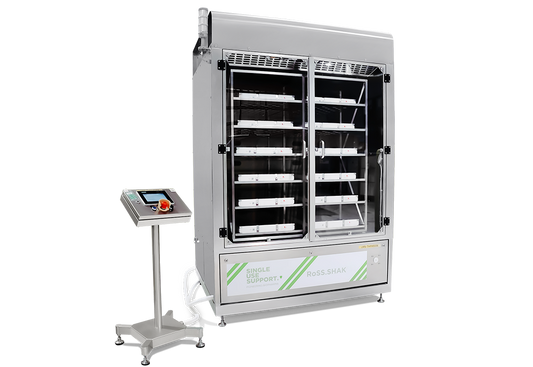
RoSS.pFTU Mid-Scale

Plate freeze & thaw

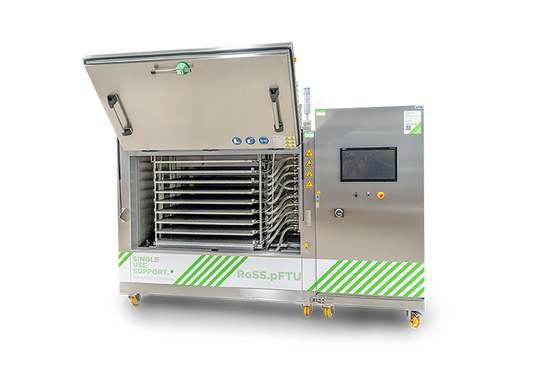
RoSS.pFTU Mid-Scale is a plate-based freeze-thaw system designed to protect your preferred single-use bag during cryogenic applications. 

Image of controlled rate freezer of drug substances RoSS.pFTU Mid-Scale, on transparent background.

Key Features

Controlled freezing down to -80 °C

Enabling highest possible speed and accuracy.

Up to 100 L per batch

Total load of up to 100L with different sizes of single-use bags

Single-use bag independent

Covering all available 2D bag vendors, types and sizes.

Best product stability results

Maintaining product integrity for mAb and other drug substances.

Automated and GMP-ready

Aligned with 21 CFR part 11.

Optimal protection

Safe handling of single-use bags during freezing in combination with RoSS® shells.

Short lead times

Safe handling of single-use bags during freezing in combination with RoSS® shells.

When is RoSS.pFTU Mid-Scale the right solution?

RoSS.pFTU Mid-Scale is ideal when you are searching for a solution in processes handling of multiple small-volume single-use bags (100 mL–20 L), such as viral vector scale-out, working cell banking in seed train intensification, or partial batch thawing. It enables flexible, parallel processing when large batch consolidation is not required.

Our customers trust in us:

Downloads

Preview of datasheet for RoSS.pFTU Mid Scale freeze-thaw unit by Single Use Support

Datasheet

RoSS.pFTU Mid Scale - Datasheet

RoSS.pFTU Mid Scale - Datasheet
 
Preview of Single Use Support's whitepaper about controlled freezing with RoSS.pFTU

Whitepaper

RoSS.pFTU - Controlled scalable freezing - Whitepaper

RoSS.pFTU - Controlled scalable freezing - Whitepaper
 
Preview of datasheet for RoSS.pFTU scale overview by Single Use Support

Guide

Scale overview RoSS.pFTU - Guide

Scale overview RoSS.pFTU - Guide
 

Send a request

  • Evaluating freeze-thaw processes in antibody production

    Monoclonal antibodies: Improved quality and better results thanks to controlled freezing and thawing In a field as sensitive as biopharmaceutical development and production, controlled processes and procedures have always played a vital role and will continue to do so. This is especially true for highly delicate substances such as monoclonal antibodies derived from white blood cells: The monoclonal antibody production process may involve critical steps like freezing and thawing processes. They require particular care and sensitivity – as well as the logistics process, in order not to be compromised in their efficacy. Speedy freezing and thawing rates can add to improved levels of quality and lead to better overall results. Freeze Thaw Platform - learn more! What makes monoclonal antibodies so special – and delicate to deal with?  Antibodies in general and monoclonal antibodies in particular have proven to be valuable tools in life sciences, thanks to some unique features. As they are able to bind to specific epitopes, they can be used for therapeutic but also for diagnostic purposes (e. g. ELISA assays). Their importance has increased significantly ever since they were first approved by the FDA in 1986. [[1]] As opposed to polyclonal antibodies, monoclonal antibodies have the added benefit of being derived from the same lineage. This means their results can be reproduced endlessly by always resorting to aliquots of the same original batch. This last fact notwithstanding, production and the general handling of any kind of antibody are complex processes and require an environment that is both sterile and controllable. After all, antibodies are protein-based and at high risk of deterioration in ex vivo environments. Temperature is therefore one of the most essential parameters to consider along the production process, from development all the way to the final administration, including centrifugation, freeze-thaw cycles, multiple handling steps such as dilution to final concentration at room temperature, storage, shipping as well as thawing after long-term storage conditions. All these procedures are equally important in order to guarantee the best possible result for the patient. [[1]]  The benefits of freezing antibodies at a fast rate With solutions and substances as delicate as blood cells and the antibodies derived thereof, the type of freezing process employed can have a major impact on their final quality, even if preservatives and cryoprotectants (e. g. sodium azide, glycerol) are added to antibody solutions contained in vials. The freezing speed affects both the frozen substance’s homogeneity and viscosity: With virtually any traditional freeze and thaw processes, parts of the substance will always show less activity based on the stress it is exposed to during freezing and thawing. An adequate freezing and thawing rate is thus a key parameter for achieving homogenous results without a major loss of active antibody concentration, hence quality. Various tests have confirmed that a consistently high freezing velocity - which can be achieved with progressive single-use platforms - leads to a significantly lower level of Cryoconcentration (the protein concentration in the solid or liquid parts of a partially frozen mixture), denaturation and formation of aggregates. As a logical consequence, the original characteristics of the substance to be frozen will be better preserved when processed at a speedy and consistent freezing/thawing rate. We implement this with our laboratory freezer, pharma freezer and cryogenic freezer. More about freezing and thawing drug substances: Freezing drug substance | Thawing drug substance | Regulations for Cryoprotectants in ATMP Cryopreservation Freeze & Thaw Platform - learn more The risks of slow freezing in monoclonal antibody production Slow freezing, on the other hand, is primarily characterized by differing freezing rates with a possibly adverse impact on the drug substance’s quality. A slower freezing process leads to the formation of longer ice crystals, which can negatively affect antibody storage. The formation of crystalline structures furthermore causes tension, which in turn can destroy up to 20 % of all contained proteins, without the presence of any protease enzymes! And as the cold temperatures penetrate the substance from the outside in, this can lead to an expansion of the core with the result of harming or destroying the surrounding material. Furthermore, the slow freezing rates offered by static freezers lead to increased levels of Cryoconcentration. In the worst case scenario, this can lead to the destruction of a high number of antibodies caused by friction and rupture. Highly concentrated substances such as mAb, however, require a homogeneous freezing process in order to maintain the original quality in the best way possible. Thawing in the monoclonal antibody production process Thawing monoclonal antibodies poses similar challenges and requirements that are to be mastered in order to preserve the structural and therapeutic integrity of these delicate biopharmaceuticals. As the frozen antibodies transition to a liquid state, the risk of stress-induced damage looms large. Controlled thawing becomes paramount: Too fast or too slow, uncontrolled freezing rates may cause damage to the antibody structure. Factors such as temperature fluctuations and extended thawing times can become silent adversaries, potentially destabilizing the molecules. Harnessing advanced thawing technologies and adhering to stringent protocols become not just best practices but indispensable safeguards. [[download-1]] What about mAb storage conditions? Antibody freezing and thawing can have an enormous impact on product quality. However, what happens in between is just as critical and demands adherence to strict guidelines: monoclonal antibody storage and transport. Central to – especially long-term – preservation of mAbs is storage temperature, demanding meticulous attention to prevent even minor deviations. Furthermore, repeated freeze/thaw cycles are to be avoided, which require thorough planning of which products are to be kept in refrigerators for short-term storage while others are subjected to ultra-low-temperatures. Many companies that manufacture monoclonal antibodies provide detailed data sheets on their respective products, including storage recommendations that one is usually best advised to follow. Proper storage conditions may vary; however, maintaining them is vital to ensure that the preserved antibodies are suited for diagnostics, in vivo studies, or therapeutic applications. Other possible damages due to freezing and thawing of antibodies When freezing and thawing monoclonal antibodies, insufficient processes pose severe risks due to the considerable physical stress that the proteins are subjected to. Freeze-thaw damage due to effects like cryoconcentration, which can alter the structure of monoclonal antibodies, are to be avoided. This requires precise control over freezing and thawing rates, which have to comply with the freezing profile of the drug substance in question. As already stated, repeated freeze-thaw cycles may prove detrimental to antibody quality and lead to loss of activity. One feasible approach is to choose small aliquots in order to flexibly access mAbs. Cryoprotective agents may be used to alter freezing point and behavior, especially for enzyme-conjugated antibodies like HRP-linked antibodies. Antimicrobial agents like BSA or sodium azide can be used as well, but are not suitable in every scenario. Sodium azide, for example, might affect the potential of conjugation and disturbs the cytochrome electron transport system in many organisms. Therefore, dialysis or gel filtration may be performed to remove it from the solution. [[2]] [[3]] Considering the varying kinds of antibodies and respective fields of application, customizable techniques and technologies are to be adopted in order to fully cater to unique process requirements in mAb production. [[2]] [[3]]  New opportunities and chances: Freezing and thawing mAb with next-level technology The implementation of single-use technology in the biopharmaceutical industry is growing rapidly, not least because of increased yields, the adaptability of disposable components, and the acceptance of personalized therapies and medical compounds. On top of that, single-use platforms facilitate a rapid production of clinical trial material, monoclonal antibody reagents for western blotting, and cell as well as gene therapies. Single-use technologies are highly flexible and scalable; thus, they offer the ideal solution for processing antibodies, cells and genes in a variety of volumes. Innovative approaches open up new formulation opportunities that would not be possible with traditional systems, tried-and-tested as they may be. Read more: Trends in monoclonal antibody production: Optimizing processes with single-use technology The growing range of therapies and compounds calls for plants and systems that are or can be adapted to the increased speed of development and production, as well as constantly changing requirements. In the case of monoclonal antibodies, special focus should be put on viscosity: As a result of protein-protein interactions, concentrated mAb solutions can exhibit high levels of viscosity that may pose challenges during the manufacturing process. However, viscosity tests conducted by Single Use Support have shown that the degree of viscosity does not impact the filling process. Nonetheless, with RoSS.FILL, the speed and force of liquid throughput can be regulated and adjusted to the respective product conditions. This allows for individually controlled filling processes before the highly sensitive substances can be sent on to the freezing process with RoSS.pFTU. RoSS.pFTU is an advanced plate freezing platform that can freeze and thaw monoclonal antibodies in several batch sizes. It allows extended control over the freezing rate, enabling researchers to carry out freeze-thaw processes that comply with the freezing profile of different drug substances. Along with the flexibility of this platform, its precision and efficiency contribute to an optimized production of top-notch antibody products. FREEZE & THAW PLATFORM BY SINGLE USE SUPPORT References A Single-use Strategy to Enable Manufacturing of Affordable Biologics, http://dx.doi.org/10.1016/j.csbj.2016.06.007, Published 2016-07-06 Antibody Shelf Life/How to Store Antibodies, http://dx.doi.org/10.13070/mm.en.2.120, Published 2013-10-31 Antibody Storage and Handling – GaoLab, https://drexel.edu/~/media/Files/medicine/drexel-pdfs/labs/gao/Drexel_Gao_Lab_Antibody_Storage_and_Handling.ashx?la=en, Published

    READ MORE
  • Advancements in Small Volumes Drug Freezing Techniques

    At the beginning of drug discovery you always deal with small volumes. Handling the cooling of drug substances in small quantities may seem straightforward, yet the intricacies involved are often more complex than anticipated. Traditionally, the use of a blast freezer or a liquid nitrogen tank has been a go-to solution. However, these methods are primarily designed for cryopreservation temperature maintenance and may compromise the viability of the product when employed for cooling down liquids from ambient to cryogenic temperatures. This is due to their inability to effectively balance the unique characteristics of the products during the freezing process. The significance of freezing small volumes extends beyond laboratory settings to include commercialized manufacturing processes for small batches. This is particularly relevant for applications like cell banking, gene therapies utilizing viral vectors, lipid nanoparticles, and fill & finish procedures. These processes lay the foundation for subsequent scaling, be it up or out, depending on market demands. Recognizing the nuanced requirements of different products and implementing tailored freezing methods is crucial for ensuring the integrity and effectiveness of drug substances, whether in the controlled environment of a lab or the dynamic realm of commercial production.   Freeze & Thaw Solutions Freezing methods for small volumes As already mentioned, there are three prevalent methods that are commonly employed for freezing small volumes of cells, biologics, and other active pharmaceuticals ingredients: Using a Blast freezer Using a Plate-based freezer Freezing in a LN2 tank In the context of blast freezers, achieving ultra-cold storage temperatures can be a time-intensive process. In some cases, the blast freezing method is deemed uncontrolled as operators cannot influence product related critical factors during freezing. However, there are controlled blast freezers that can control freezing rates overall and during phase transition to enable an ice growth based on the product's characteristics. On the other hand, liquid nitrogen emerges as a common choice for freezing small volumes of cells and other liquids in laboratory settings. Submerging liquids into a liquid nitrogen tank facilitates exceptionally rapid freezing for cryogenic storage below -150°C. Despite the time-saving advantages, this method carries a drawback concerning product quality for numerous drug substances. For instance, optimal cell viability post-thaw is achieved when cells are frozen at a rate of -1°C/min. The use of LN2 tanks for instant liquid freezing fails to align with the recommended freezing rate, potentially compromising the quality and effectiveness of the product. Careful consideration of the trade-offs between speed and quality is essential when selecting a freezing method. Each approach comes with its unique set of advantages and limitations, requiring a tailored choice based on the specific characteristics and requirements of the substances being frozen. Comparison of freezing techniques Blast Freezing Plate Freezing Liquid Nitrogen Freezer Liquid Nitrogen Tank (-80°C) (-80°C) (-170°C) (-190°C) Controlled freezing rates in bottles are adjustable for optimal product quality Controlled freezing rates in bags are adjustable for optimal product quality Controlled freezing rates in bags are adjustable for optimal product quality Uncontrolled exposure with too fast freezing Automated freezing with longer process duration Automated, controlled and fast freezing & thawing Automated, controlled and fast freezing & thawing Manual, not standardized process   Exploration of freezing in small volume applications Initiating the process of professional freezing and thawing for drugs cannot begin too early. Whether in the early stages of drug discovery or during the commercial production of small volumes, controlled freezing becomes an essential element in safeguarding the quality of drug products throughout the manufacturing journey. Several scenarios highlight the relevance of controlled freezing of small volumes: Working cell banks (WCB): Cell banks are required for many different areas of applications. Mammalian CHO cells are required for different cell-based therapies in biomanufacturing. This can be autologous cell therapies, such as CAR-T, or allogeneic cell therapies, emphasizing the need for meticulous control in the freezing process to ensure optimal cell viability. Cryopreserved HEK293 Cells for Viral Vectors: HEK293 cells are used as host cells for viral vectors – applied in gene therapies. The controlled freezing of these cells is vital to maintaining their integrity and functionality, ensuring the success of gene therapy applications. Non-viral vectors in vaccine production: Vaccine production involves the use of non-viral vectors such as Lipid Nanoparticles and plasmid DNA. Controlled freezing of these components is essential to preserve their efficacy, contributing to the overall success of vaccine manufacturing. Cell banking in seed train intensification: Employing controlled freezing in seed train intensification is a strategic approach to enhance bioprocess productivity and efficiency. The optimization of cell banking processes, especially focusing on achieving high cell density, is a decisive aspect for success in advancing upstream bioprocessing. [[download-1-email-detailed]] Transitioning to Precision with controlled rate freezing In pursuit of successful freezing across diverse applications, the key lies in attaining precise control. While liquid nitrogen tanks and most static freezers lack the flexibility to adjust freezing conditions according to the specific requirements of a product, the adoption of controlled-rate freezing and thawing methods emerges as a transformative approach in optimizing biopharmaceutical productions. One crucial concern in cold chain management, cryoconcentration, can be effectively mitigated through controlled-rate freezing. Cryoconcentration, characterized by the degradation of product quality due to protein aggregation, often results from the slow growth of the ice front in static freezers. This unwanted effect can be averted by implementing controlled-rate freezing techniques. The evolving interest in understanding a product's behavior during freezing has gained momentum, particularly in determining the cooling rate at which product viability is maximized. Controlled rate freezing addresses this need, offering tailored solutions such as plate-based freezing to -80°C or liquid-nitrogen-based controlled freezing platforms reaching temperatures as low as -170°C, catering to the specific demands of advanced therapies. For mammalian cells, optimal freezing rates typically range from -1°C per minute to -4°C per minute, reflecting their comfort zone during the freezing process. Recognizing and adhering to the preferred freezing rate is key in maintaining the viability and functionality of these cells. Do you know your preferred freezing rate? Advantages of plate-based freezing In addition to providing meticulous control over the freezing process to optimize product viability, plate-based freezing brings forth a host of further advantages, making it a preferred choice in the dynamic landscape of biopharmaceutical production. Flexibility amidst market dynamics: Volumes might change, size of single-use bags might change. Plate freezers offer a scalable platform that adapts seamlessly to the fluctuating demands of the market and varying volume requirements. Whether dealing with small milliliters or several liters, the scalability of plate freezers ensures adaptability to evolving market needs. Process control: The freezing platforms from Single Use Support are equipped with software that are suitable for GMP use. According to 21 CFR Part 11 it provides audit trails, reports and a full documentation of freezing history to grant for recipe-driven and standardized cold chain management. Product quality: The ability to control the freezing rate and ice front growth within the single-use bag translates to elevated product viability. This not only ensures higher product quality but also contributes to a more efficient production process and heightened patient safety. Independence from single-use bag vendors: Plate-based freezing excels in delivering scalable freezing performance, accommodating a broad spectrum of single-use bags and volumes, from as little as 10 mL to sizable 50L single-use bags, irrelevant of bag vendors and brands. Closed system: A robust and tamper-evident secondary packaging provides a sterile environment for all bags. This safeguards sterility throughout critical stages such as aliquoting, freezing, storing, and shipping, ensuring product integrity from production to delivery. Automation: The minimized manual intervention reduces the need for extensive documentation and validation, and shortens process cycles. This increased level of automation contributes to operational efficiency, making the overall production process more streamlined and responsive. Embracing the control over the freezing for small volumes The landscape of requirements for each novel therapy is in constant flux, particularly in the dynamic fields like commercial production for viral vectors and cell-based therapies. The freeze-thaw industry has undergone a transformation, and plate-based freezing emerges as the solution that empowers manufacturers to adapt freezing rates, processing volumes, and endpoint temperatures to align with the unique demands of their products. In the pursuit of new treatments, leveraging optimal outcomes is key to the success of Advanced Therapy Medicinal Products (ATMPs). While static freezers, and liquid nitrogen tanks persist due to historical usage, there exists a pathway to advance cold chain management towards efficiency and precision. Crucially, the controlled-rate freezing offered by plate-based systems holds the promise of not only efficiency but also a significant enhancement in product quality. The future of freezing and thawing small volumes unmistakably belongs to controlled-rate freezing. By embracing this innovative approach, we also embrace more efficient processes, improved product quality, and ultimately, the continued success of pioneering therapies. The time to advance the freezing and thawing for small volumes in biomanufacturing is now.   Discover our Freeze & Thaw Solutions

    Read more
  • Freezing & thawing viral vectors: Best practices

    Viral vectors and specifically Adeno-Associated Virus (AAV) vectors have gained significant prominence in gene therapy and biotechnology research due to their ability to efficiently deliver genetic material into target cells. Proper handling of viral vectors during storage, freezing, and thawing is crucial to maintaining their integrity and efficacy. In this article, we will explore best practices for preserving viral vectors, ensuring their stability, and maximizing their potential for various applications. Freezing Platform for viral vectors Why proper freezing & thawing matters AAVs and other viral vectors are sensitive to environmental conditions, and uncontrolled handling can lead to degradation, loss of infectivity, and reduced therapeutic efficacy. Using controlled-rate freezing & thawing solutions help ensure can help ensure the reliability and success of applications with viral vectors. Optimal temperature ranges for AAVs Maintaining precise temperature control is vital for the stability and functionality of viral vectors. Viral vectors are best stored at ultra-low temperatures, typically at or below -80°C. This recommended temperature applies to the long-term storage of all viral vectors, such as adeno-associated viral vectors (AAVs), adenoviral vectors (AVVs), lentiviral vectors (LVVs) or retroviral vectors (RVVs). Frequent freeze-thaw cycles should be avoided whenever possible. Each freeze-thaw cycle can lead to a reduction in AAV vector titer and infectivity, so it's essential to plan ahead and aliquot samples appropriately. Storage at -20°C to +4°C is only recommended for short-term use. During processing in the laboratory, it is important to keep temperatures at a constant level. This makes it clear that viral vectors must be frozen at ultra-low temperatures on their way to the next production site or final use. Best practices to do so, are presented in the following chapters.[[1]]  Best practices to freeze viral vectors Effective techniques for freezing viral vectors such as adeno-associated virus vectors can mean the difference between successful experiments and compromised results. In this chapter, we offer best practices for viral vector freezing, highlighting proper pre-freezing preparation, such as aliquotation of single-use bags or medical devices and actual freezing techniques using plate freezing. As industry experts in the field of freezing drug substances, we specialize in providing customized solutions based on single-use technology, that facilitate the seamless scaling of the freeze-thaw process seamlessly from clinical studies to large-scale production. Aliquotation in samples Aliquotation is a necessary practice for several reasons. Dividing a viral vector stock into smaller aliquots helps minimize the number of freeze-thaw cycles, a critical factor in maintaining vector stability and efficacy. A recommended approach is an automated closed filling process based on single-use systems. Closed systems like Single Use Support’s RoSS.FILL for small volumes eliminate the risk of external contamination, ensuring the integrity of the viral vectors throughout the aliquotation procedure. Read more about best-practices in filling viral vectors in the article about aliquotation and homogenization of viral vectors. Plate freezing Plate freezing proves to be a best practice to freeze viral vectors and specifically to freeze AAV, when they're filled into single-use bags. It relies on direct contact with cooled surfaces, typically metal plates. One of the most notable advantages of plate freezing is its precision in freezing. By adhering to specific setpoints for product-tailored freezing, plate freezers empower GMP facilities with standardization and reproducibility of freezing kinetics. This level of control is indispensable in maintaining the consistent quality of AAVs. Moreover, plate freezers enable rapid and controlled freezing, a critical factor in reducing the occurrence of cryoconcentration. Cryoconcentration results in the emergence of crystals and ingredient separation over time. Rapid plate freezing mitigates this issue by promoting high homogeneity in liquids. Cost-efficiency is another advantage of plate freezing technology, primarily due to its lower energy consumption. Rather than cooling the surrounding air, plate freezing systems ensure that items come into direct contact with cooled stainless steel surfaces. As highlighted in the interview with our expert Alexander Fuchs, advanced solutions are also prone to sustainability in freezing: Sustainable freezing in biopharma.  We furnish both our plate-based freeze and thaw platforms along with our ultra-low temperature storage freezers with natural gases.Alexander Fuchs Single Use Support acknowledges the benefits of plate freezing for biologics and offers a comprehensive range of freeze-thaw platforms, including various sizes of the RoSS.pFTU. For laboratory work and lower volume freezing of AAVs, the RoSS.pFTU Mid-Scale is the recommended variant, as it can be used to freeze small single-use bags in the small single-use shell (volumes less than 250mL) as well as several large single-use bags. Best product stability results are provided for viral vectors up to 100L.  RoSS.pFTU Mid-Scale Efficiency improvements with single-use technology Single-use bioprocessing is a best practice when it comes to freezing Adeno-Associated Virus vectors, with a focus on enhancing efficiency. Single-use technology offers advantages, including easy scalability, heightened efficiency, and reduced margin for errors. Single Use Support offers single-use bags designed to be frozen within their respective single-use shells, amplifying the benefits mentioned before. Scalability is streamlined as single-use systems can be effortlessly adjusted to accommodate varying batch sizes, spanning from laboratory-scale experiments to large-scale production. This adaptability not only enhances efficiency but also minimizes production downtime. Read more: Adeno-associated virus production and efficiency improvements with single-use technology [[download-1-email-detailed]] Best practices to thaw viral vectors Just as precise freezing, thawing viral vectors demands the same attention to detail. A best practice in this regard involves controlled and consistent thawing, performed with the plate-freezing platform. Thawing with Single Use Support’s plate-based freeze thaw platform facilitates gentle and uniform heat transfer between the frozen viral vectors and the surrounding environment, minimizing the risk of damage and ensuring the vectors' stability and efficacy. End-to-end solutions for safe handling of AAVs In preserving AVV vectors and other viral vectors, Single Use Support positions itself as experts in this field, providing end-to-end cold chain solutions that take advantage of single-use technology in the context of plate freezing and ultra-cold storage. These solutions are not only highly efficient but also fully compatible with current Good Manufacturing Practices (cGMP). With closed, automated processes, scalable platforms, and sophisticated monitoring, the best-in-class process solutions ensure the integrity and reliability of viral vectors throughout their lifecycle, from freezing and storage to thawing. Freeeze-Thaw Platform for Viral Vectors References UNC Vector Core: Safety & Handling, https://www.med.unc.edu/genetherapy/vectorcore/safety-handling/, Published 20.09.2023

    READ MORE