

RoSS.SHIP

Cold chain container for drug substances

RoSS.SHIP ensures secure cold chain storage and transport of bulk drug substances in RoSS® shells under controlled sub-zero conditions.

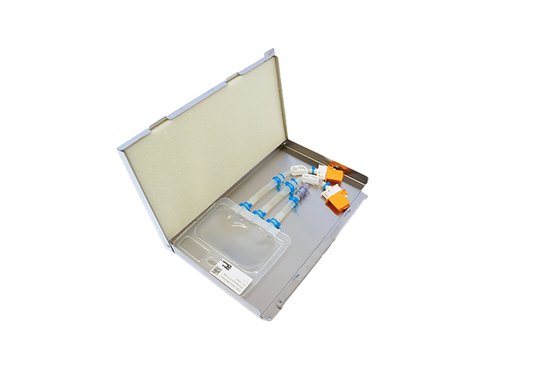
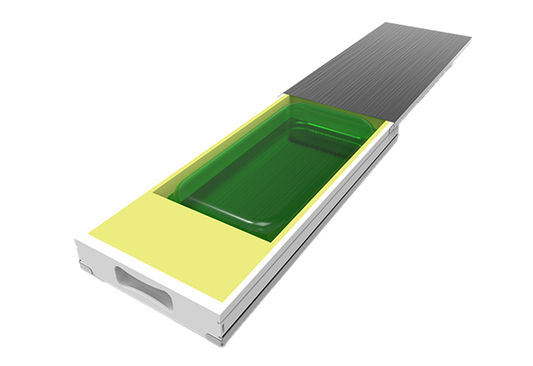
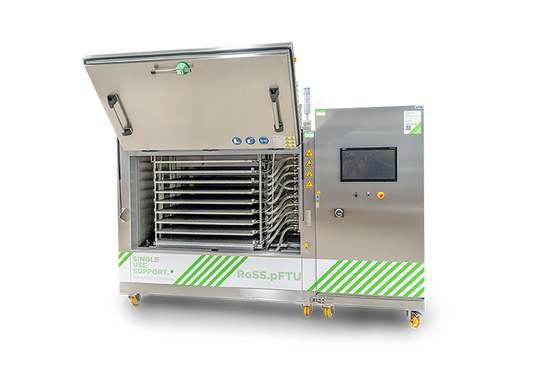
RoSS.SHIP cold chain container for drug substances on transparent background.

Key features

Holding sub-zero temperature

Secures below -60° C for at least 6 days

International logistics requirements

Qualification based on ISTA / ASTM D4169

Holding sub-zero temperature

Suitable for phase change materials and dry ice

Why should RoSS.SHIP be your shipping container in biopharma?

RoSS.SHIP enables stable and controlled shipment of frozen biopharmaceuticals, reducing risks across global logistics.

  • Maintains temperature stability during extended transport
  • Reduces risk of product loss in cold chain logistics
  • Enhances safety and reliability of global shipments
  • Supports compliant and standardized transport processes

Our customers trust in us:

Downloads

Preview of datasheet for RoSS.SHIP robust transporation by Single Use Support

Datasheet

RoSS.SHIP Single-Use - Datasheet

RoSS.SHIP Single-Use - Datasheet
 
Preview of Single Use Support's case study about the advantages of robust cold chain transport solutions

Case Study

RoSS.SHIP - Robust cold chain transport solution - Case Study

RoSS.SHIP - Robust cold chain transport solution - Case Study
 

Send a request

  • Shipping pharmaceutical liquids and its challenges

    The global distribution of pharmaceuticals is complex and demanding, requiring precise handling and storage of sensitive products. With the rise of personalized medicine and the increasing globalization of the industry, the need for safe and efficient shipping and supply chain has never been more important. In this article, we will discuss the specific challenges of shipping pharmaceutical liquids, including the importance of maintaining the cold chain, the associated risks and the regulations that must be followed. We will also explore the innovative solutions that single-use technology offers to address these challenges, and how they provide efficient and scalable options for safe shipping in the biopharmaceutical processing industry. Single-use bioprocessing - read more Pharmaceutical shipping: an introduction The shipping of drug products is a crucial aspect of the pharmaceutical supply, especially when it comes to the transportation of liquids, which require special handling and storage conditions to maintain their potency and effectiveness. With the globalization of the pharmaceutical industry and the production of bulk drug substances taking place in multiple countries, shipping is a major challenge for pharmaceutical companies. The importance of safe and efficient shipping processes cannot be overstated, as the timely and safe delivery of life-saving drugs and vaccines, directly impacts patient outcomes. To meet this challenge, it is important to have clear and effective processes in place, along with the right tools and technologies to support them. This applies to everything from packaging and labeling to documentation and controlling the temperature range of temperature-sensitive prescription drugs. Challenges in pharmaceutical shipping of liquidsShipment of liquid pharmaceuticals presents a number of challenges, including maintaining the cold chain and managing risks, such as product loss, contamination, and cargo theft. Cold chain in shipping Cold chain logistics is an important part of pharma logistics, as approximately 70% of drug products require proper temperature control. Maintaining the correct temperature during storage and transportation is crucial to preserve the quality and effectiveness of these products. Even small temperature fluctuations of two degrees (2 Kelvin) can render a pharmaceutical product useless, making the maintenance of the cold chain a top priority in pharmaceutical shipments. Proper management of the cold chain in pharmaceutical logistics involves the use of refrigerated warehouses, specialized biopharma packaging, and sometimes climate-controlled trucks. Equally necessary are regular vehicle inspections to protect the products from external elements and maintain their proper temperature until its final destination. This is particularly important for liquids, such as mRNA or monoclonal antibodies, which must be stored and transported at -80 degrees, and gene-modified cell therapies, which require cold storage and transportation at -150 degrees. Specialized packaging enables conventional transportation. RoSS.Ship from Single Use Support for example keeps the required temperature up to six days.[[1]] Pharmaceutical cold chain management – read more Risks in pharmaceutical shipping The transport of pharmaceutical liquids presents various risks that must be considered. Besides the previously mentioned risks of product degradation due to temperature control issues, there is also the risk of contamination or theft. If the protection is inadequate, breakages will occur, leading to contamination and loss of the entire product. High costs for the loss of the valuable substances are the consequence. Furthermore, high-value prescribed drugs, such as opioids, are particularly susceptible to theft during transit, which can have significant consequences for the pharmaceutical companies, pharmacies, and patients. Shipping personalized medicine, with its low-volume but high value, presents additional challenges as it requires specialized temperatures and handling. To address these risks, it is critical to choose a reliable carrier and (drug substance) logistics partner to plan ahead shipping specifications, including the proper temperature control requirements and handling instructions. Single Use Support has come up with a solution to this challenge by developing small single-use bags and a shell that is specifically designed for this purpose. These innovative products ensure the safety and effectiveness of personalized therapies, even when shipped in small volumes.[[2]] RoSS.KSET - shell for small single-use bags Obstacles of shipping personalized medicine One of the major challenges, shipping personalized medicine is the issue of cost and efficiency, especially when shipping small volumes. This is particularly the case for personalized therapies such as CAR-T cell therapy, which involves transporting of small blood bags containing genetically modified cells at extremely low temperatures of -150 degrees Celsius. To maintain the safety and efficacy of such therapies, it is necessary to use specialized packaging, warehousing and handling methods. Regulations in pharmaceutical shipping Shipping pharmaceuticals is a complex process that requires strict compliance to ensure that the final drug product meets quality standards. Regulatory agencies such as the Food and Drug Administration (FDA) and the European Medicines Agency (EMA) have established clear guidelines for the shipping industry to follow when transporting liquids through single-use systems. According to PDA’s TR66 technical report, transportation systems must be properly designed and tested in consultation with a packaging engineer to be considered qualified. To comply with these regulations, companies must conduct a risk assessment of potential impacts on the product during shipment, such as vibration, handling, delays, and seasonal variation. This requires conducting tests based on international standards like ASTM D4169 or ISTA 3 series. These standards provide standardized validation methods that simulate shipping hazards and evaluate the effectiveness of protective packaging and the product's ability to withstand these hazards. It is important to consider solutions that comply with these regulations.[[3]] Safe shipping of pharmaceutical liquids with single-use systems Single-use systems offer safe and efficient solutions for the shipping of frozen pharmaceutical liquids. The solutions include fully automated filling of drug substance into single-use bags, protected by shells from any shock during transport, automated freezing to the desired temperature on a freeze-thaw platform and efficient, space-saving storage in a shipper that maintains the desired temperature for six days. Single-use systems can provide scalable solutions, from a few mL for cell therapies to several 1000L using multiple large 50L single-use bags, and comply with ISTA and ASTM regulations. The use of single-use systems for storing, refrigeration and shipping frozen biopharmaceuticals offers advantages such as universal application, process flexibility and efficiency, reduced capital and labor costs, and no need for cleaning and sterilization. Storing and shipping biopharmaceuticals at frozen state ensures the biological integrity of the drugs and simplifies compliance with temperature check requirements. Advantages of single-use systems for shipping: Scalability High flexibility Safe (minimized product loss) Space-saving Sustainable Reduced operating costs ASTM & ISTA Shipping solutions Conclusion: Shipping of pharmaceutical fluids Shipping pharmaceutical liquids is a complex process with numerous challenges and risks, including the potential for high losses due to the expensive nature of biologics. It is not enough to blindly trust a logistics company and a third-party provider. End-users must take responsibility to mutually plan with providers to ensure the proper handling of their shipments. Solutions are available to help end-users navigate the complexities of shipping pharmaceutical drug substances. Single Use Support provides personalized support to help customers find the right solution for their specific needs. They understand that each shipment of liquids has its own unique requirements and offer customized solutions to ensure safe and efficient pharmaceutical transport. Cold Chain Shipping Container References How to overcome the challenges facing the pharmaceutical cold chain industry?, https://geodis.com/de-en/blog/vertical-logistics-expertise-and-special-events/how-overcome-challenges-facing-pharmaceutical, Published 28.02.2023 RISK ASSESSMENTTRANSPORTATION OF MEDICINAL PRODUCTS, https://helda.helsinki.fi/bitstream/handle/10138/304382/Viitanen%20Elina%20Risk%20assessment-%20transportation%20of%20medicinal%20products.pdf?sequence=1&isAllowed=y, Published 28.02.2023 An Integrated Approach to Shipping Liquid in Single-Use Systems, https://www.pharmtech.com/view/integrated-approach-shipping-liquid-single-use-systems, Published 28.02.2023

    READ MORE
  • Protecting single-use bags to foster their progress

    Twenty years ago there was only steel. Biopharmaceutical manufacturing has been conducted by fixed stainless-steel installations for a long time. Pharmaceutical products were produced in rigid, inflexible vessels and pipings by cell culturing and/or fermentation, purification, filtering, filling and freezing. Only until single-use systems, such as single-use bags, aseptic fluid management tubings made of plastic, have proven to provide manufacturers with way more advantages for bioprocessing.They are more flexible, scalable, faster and cost effective. And yet there is hesitation. How can single-use technologies continue to thrive? What are the advantages of single-use systems Single-use solutions outperform in multiple areas: Universal applicability: Be it large scale manufacturing of vaccines, antibody-drug conjugates or emerging regenerative medicine, such as cell and gene therapy, single-use bags have solutions for every pharmaceutical manufacturing facility and every batch size. Diverse drug products and areas of applications benefit from single-use technologies. Process Efficiency: Single-use systems facilitate cost-competitive production processes in the biopharma industry by massive reduction of ressources for cleaning. These are for example costs for cleaning media, time consuming cleaning cycles, operator time and analytics. Also there is reduced risk of cross-contamination given. Having end-to-end solutions in place for drug substance handling that are compatible throughout different bioprocessing steps, such as liquid transfer, freezing & thawing and transportation, prove to have even higher efficiencies. Scale-up process: Breaking up conventional batch sizes shifting to small volumes for the clinical phase and large volumes in commercial productions, single-use bags allow companies to work more flexibly. Especially for innovative approaches of regenerative and individualized medicine and tissue engineering, single-use solutions are the logic process solution: It is necessary to fill, freeze and ship medication within a short period of time. Single-use equipment offers a multipurpose production due to enhanced throughput and changeover times. Also, scalable manufacturing productions with modular setups have made single-use systems recognized among manufacturers. [[1]] Sustainability: Single-use technologies are more sustainable than stainless-steel equipment on a holistic view. It is not only plastic to be recycled: Stainless-steel reactors and pipings are less sustainable since enormous amounts of water, energy and chemicals are required to ensure sterility. [[2]]   More advantages of single-use technologies   What are concerns caused by single-use systems to get full acceptance? In short: There is still potential product loss with unprotected single-use bags and there are still human errors dampening the euphoria of single-use systems. Single-use bags containing highly valuable drugs consist of multi-layer plastics which are vulnerable even at ambient temperature. They become glass-like when frozen and without protection are prone to breakages when handled incorrectly. Or sometimes even when handling correctly. RoSS (abbreviated for “robust storage and shipping”) is a protective shell for all 2D single-use bags. Independent from any single-use bag manufacturer or from any size, RoSS shell protects the bag from external forces during freezing, handling storage and shipment, but also from the inside: A soft 3D foam – as counterpart complementing the protective robust stainless-steel – absorbs the products’ natural expansion during freezing, provides full immobilization and hence guarantees avoidance of product loss. For smaller single-use bags the CAR T therapy single-use bag protection system RoSS.KSET is the ideal solution.  Its protective measures help to reduce human errors by mishandling single-use containers. The single-use bags are tamper-evidently sealed as closed system which prevents susceptibility to misuse. "We have achieved a 0% failure rate out of several batches after implementing RoSS shells" Principal Engineer, Multinational Biotechnology Company The RoSS® Shell has been invented by Single Use Support. Since then it has been tested in real-world scenarios by operators and experts in biopharmaceutical manufacturing. The big interest in such advanced innovations reflected the desire to avoid product loss by breakages. Read more: How to avoid single-use bag leakages in bioprocessing Proven and tested protection One of Single Use Support's numerous customers, an innovative global biopharma company, which has evolved as partner for further development of different products started to use RoSS shells almost 3 years ago. They have now reported “0% failure rate out of several batches” in 2020. This real-world evidence has strengthened the company's plans to rely on RoSS for another product launch in 2021. [[4]] The concept of RoSS platform has been proven trustworthy and reliably over the last years and adds a new perspective for companies which are still suffering from product loss caused by inadequate protection of single-use bags to regain trust in single-use systems.   More about RoSS® shell   Shaping Biopharma future trends The rising trust in RoSS® ability to enhance security standards mirrors the willingness to further establish single-use systems. It supports common goals to increase patient safety but also corporate goals to gain efficiency, safety and flexibility by implementation of smart end-to-end single-use solutions in biopharmaceutical processes. RoSS is a composition of both, robust stainless-steel and novel soft 3D foam. The latter metaphorically absorbs the remaining weaknesses of single-use bags – being the temporary highlight of the journey from a stainless-steel prone industry to a more and more single-use defining Biopharma industry. References: Langer, E., Rader, R.: Single-use technologies in biopharmaceutical manufacturing: A 10-year review of trends and the future, May 2014. Engineering in Life Sciences 14(3). DOI:10.1002/elsc.201300090 Whitford W., Petrich M.: Concerning Single-Use Systems and the Environment. 2018. Available at: https://www.bioprocessintl.com/single-use/ebook-sustainability-concerning-single-use-systems-and-the-environment Single Use Support. 2021: data on file. Exenberger C.: Case Study: Reducing product loss | Cost-efficiency, Published 2022

    Read more
  • The Role of Single-Use Systems in Cell and Gene Therapies

    As cell and gene therapies (CGT) continue to advance, single-use systems have become essential for maintaining the safety and effectiveness of these intricate biological products. These systems not only improve sterility but also simplify manufacturing processes, playing a vital role in both the initial and final stages of production, and ensuring that these potentially life-saving therapies remain reliable and high-quality for patients. Read following considerations for manufacturers in the area of cell & gene therapies. Most suitable areas of single-use systems in CGT manufacturing processes Ensuring that cell and gene therapy products are shipped at cold temperatures with robust controls is, if anything, even more important for this class of products than it is for more traditional biopharmaceutical products because they are complex biological systems and you really don't want to take any risks of them being disrupted during storage and shipment. The use of single-use systems is particularly important for cell and gene products because maintaining sterility and the aseptic nature of processing is so critical. For a cell therapy product you can't do sterile filtration at the end of your manufacturing process, so integrating aseptic processing into every stage of manufacturing is far more critical compared to, for example, monoclonal antibodies where you have the benefit of being able to do a sterile filtration step at the end. Different applications of single-use systems in cell & gene therapies There are robust applications both upstream and downstream. For example, in an autologous CAR-T process, the initial leukapheresis product that you're taking from the patient and shipping to your manufacturing site is a critical starting material that's entering into your process at the very upstream part of your manufacturing process. There is high potential to improve the reliability, reproducibility, and robustness of that shipping process using secondary packagings, such as the RoSS shell. Because it is a patient-specific raw material it is incredibly precious (in fact, close to irreplaceable), so it is critical that it not be damaged or destroyed during shipping and that its quality is maintained at the highest level. Similarly, once the CAR-T product has been manufactured, it needs to be returned from the manufacturing site to the point of care for the patient, and arguably it is even more precious at this stage since a patient life hangs in the balance.  Therefore, ensuring the highest possible control of shipping conditions to maintain product quality during that return shipment is also critical. There are pretty robust use cases for single-use system products at both the most upstream and the furthest downstream steps of cell and gene therapy manufacturing processes. Why are single-use technologies established as a standard in gene therapy? First, since gene therapy processes are younger, they've had the benefit of being able to adopt these newer technologies during their development processes. Given that, and combined with the relative importance of aseptic processing as I described earlier, Therefore, developers tend to gravitate towards single-use systems in designing their processes. An additional factor is that cell and gene therapy processes are typically not operating at the very large scales of some more traditional processes. For example, typical monoclonal antibody facilities are operating at a scale of hundreds to thousands of liters, whereas many cell and gene therapy processes operate at a fraction of that scale, making those processes more amenable to single-use systems as opposed to, for example, the large stainless stirred tanks of older manufacturing processes. Chicken or egg: did cell & gene therapies boost the use of single-use technologies or vice versa? Newer, more modern biopharmaceutical processes that are being developed have already been migrating towards single-use systems. And cell and gene therapies are building on the back of that. There are a lot of things that are different about cell and gene therapy manufacturing, but there are also a lot of things that are the same. For example, to make a monoclonal antibody, you grow cells, harvest the cells, and purify the antibody. Thinking about cell therapy manufacturing, the process is very similar: you grow your cells using, in many cases very similar processes, and the only difference is that now the cells themselves are your product rather than the protein that they've been harnessed to produce. And for a viral process it's even more similar because you're just harnessing the cells to produce your virus instead of a protein. So the basics of cell cultures are the same across all types of processes and the difference is basically, what are you harvesting at the other end of that process and purifying and formulating and filling? Therefore, cell and gene therapy manufacturing processes very much benefit from the learnings of best practices around cell cultures that have already been developed in other areas of biopharmaceutical manufacturing. Considerations for manufacturers when implementating or ramping-up single-use systems Manufacturers should be sure that they understand what the ultimate goal is with respect to their manufacturing process. This can take different forms for different products, but let’s consider the case of an allogeneic cell therapy product.  For an allogeneic product in early clinical trials, you may only need to be manufacturing product for tens of patients in a year, but you want to make sure that the manufacturing processes that you have developed has a clear path to scalability to where you want to be at your commercial scale, which, depending on the indication that you’re going after, could be thousands or even tens of thousands of patients. It has a few different implications:  one is, at what scale does your manufacturing process ultimately need to be able to operate in order to make it manageable in terms of the number of manufacturing lots you need to make per year for that product? Typically you may be aiming for something in the low tens of manufacturing lots per year, so if you're aiming to make product for tens of thousands of patients, that can be a pretty large scale manufacturing process that you need to be able to achieve. You need to think about what that vessel looks like and is there an appropriate scale down model that you can be using today to enable you to get to that with minimal comparability risk and technical risk for scale up. And then the other thing that comes into play for cell therapy products in that calculation is making sure that your cells are able to undergo the number of cell divisions that is required to achieve that scale, without impacting the critical quality attributes of your product. So even when you're not manufacturing at that large scale in an early clinical stage, you need to be sure that you are still testing the robustness of your process with late passage cells so that you don't hit an unexpected roadblock later when you scale up.   More Solutions for Advanced Therapies  

    READ MORE

FAQ about cold chain shipping

What are some examples of cold chain transport?

+

An example for a product requiring ultra-cold transport in the pharma industry is mRNA vaccines; in order to maintain their quality, effectiveness and safety, they must leave the manufacturing site frozen down to temperatures around -80 °C, stored e.g. in ultra-cold storage freezers for long-range transport.

Other means used in the vaccine transport are various temperature-controlled containers like dedicated vaccine carriers, vaccine cold boxes or other kinds of transport boxes.

In addition to the achievable temperatures for products stored under temperature control, the vaccine storage capacity: The external dimensions of the single containers, e.g. need to be taken into consideration when optimizing storage density during cold chain shipping.

How long can products be kept in the cold chain shipping container RoSS.SHIP?

+

RoSS.SHIP is enabled to maintain temperatures below -60 °C for at least 6 days.