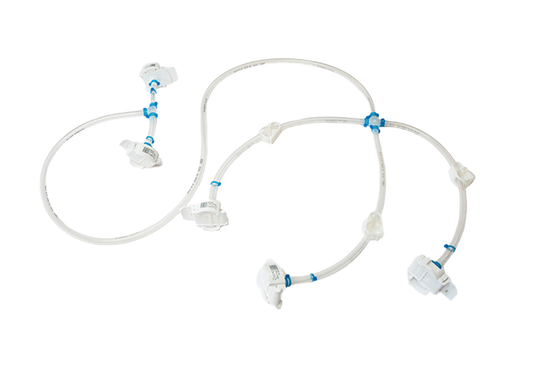
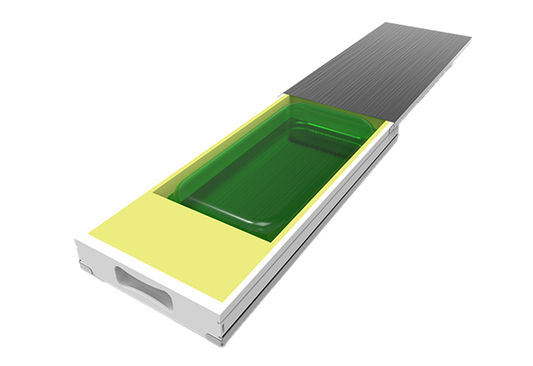
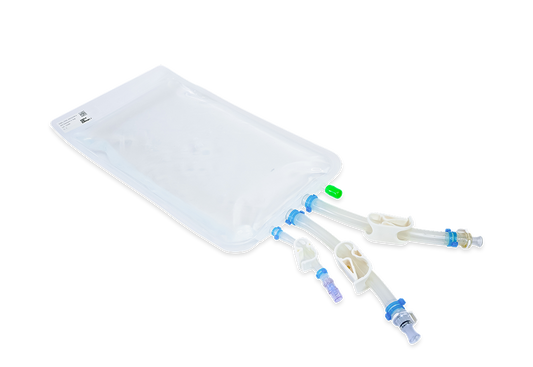
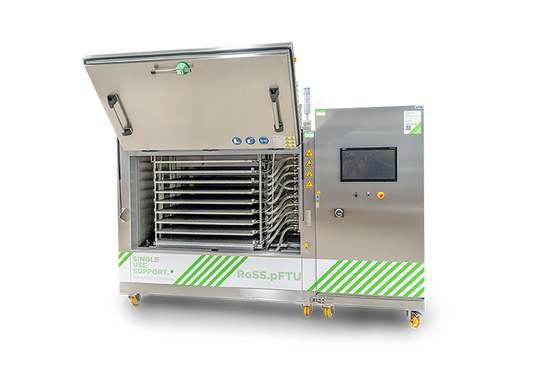
Filling of up to 20 bags per filling module each with a volume of up to 20 L.
Scalable
Option to attach multiple filling modules for higher batch volumes
High filling accuracy
Better than ±25 g
Bag & connector agnostic
Compatible with all available single-use bags and connectors
Modular system
With separate control unit and pumping station as well as filling module with RoSS® shells
Sampling
Option to take multiple samples
Optional MES integration
Compatible with Emerson DeltaV or other
Short lead times
Standard configurations are available to support accelerated project timelines.
Aseptic bag filling: Why to rely on RoSS.FILL Bag?
In terms of reliability, RoSS.FILL Bag is an aseptic bag filling system that stands out with several characteristics: Not only is the fluid path fully disposable, but it is ready to accomodate various sterile connection and disconnection options for single use aseptic filling.
In addition, the advanced sealing pinch valves, including an automated stepper, sealing and perforation function enable a fast and efficient filling process with an easy and dropless disconnection.
Why use aseptic filling at all?
The transfer of fluids is a common procedure in biopharmaceutical manufacturing, involving large volumes of drug substances, media, raw materials, and intermediates. However, manual handling is prone to error and contamination.
The FDA and Annex 1 of cGMP recommend automated equipment that supports a closed system for aseptic filling. With solutions such as RoSS.FILL Bag, aseptic filling and sterile filtration into primary packaging can be performed more efficiently and with reduced risk of contamination through effective sterilization methods
RoSS.FILL Bag outperforms other aseptic filling platforms with its filling accuracy, its ease-of use and high throughput. It can be scaled down to smaller volumes and bags and up to fill bulk drug substances with changing the attached filling modules.
Our customers trust in us:
Downloads
Datasheet
RoSS.FILL Bag - Datasheet
Please fill out the form below to download this file.
As an expert in single-use solutions, we have made it our goal to deliver vendor agnostic single-use assemblies manufactured at highest quality standards in ISO 7 cleanrooms and sterilized within shortest lead times. Prevent downtime and ensure an...
The safest transport solution for all available single-use bioprocess containers. Protect your single-use bag and reduce product loss. RoSS®: Robust Storage & Shipping
Innovative. Robust. Individual. Single-Use. Make sure your supply chain is uninterrupted. Get your IRIS 2D single-use bioprocess container from Single Use Support in any size with the fastest possible delivery times. Store and ship anything from c...
Single Use Support's large scale system is a plate-based freeze-thaw unit for any scale and batch size. The system is compatible with single-use bags of all sizes and manufacturers and enables a controlled process down to -80°C of up to 400L per b...
Advanced cell and gene therapies, such as autologous therapies, exhibit certain specific requirements. The scale of such therapies is very different from what we typically see in conventional biopharmaceutical manufacturing processes in commercial facilities.
The volumes are much smaller than usual. The pharmaceutical liquids require special handling and care as they must be shipped in a sterile and protective packaging. Both logistics and cGMP compliance are an important part of the manufacturing process of these therapies. However, fluid and cold chain management still pose certain challenges in this yet emerging field of novel medicines. One of the most overlooked aspects that cannot be handled with traditional methods is the aseptic filling process step.
According to experts, the process of filling autologous cell therapies presents several challenges[[1]] like producing a single batch for each patient, which redefines the term “small batch filling”. The filling process on such a level is comparable with clinical phase-1 studies or even pre-clinical trials. Small batch filling is applicable to many areas in bioprocessing as well, such as cell banking, viral vector production and more.
Although established processes can address some of these challenges. As autologous therapies are becoming more commercialized, it is important to develop best practices for automated filling.
[[ToC]]
Single-use technology to improve the filling process of autologous therapies
Sticking to the example of autologous therapies, in most cases cells are collected from the patient and filled into a primary packaging, such as single-use bags or vials for further processing.
Along with experts recommendations to use "a closed and pump-driven system that constantly checks the bags’ weight" during the filling process, manual processes often fail to maintain consistency and accuracy of performing a standardized aliquotation into single-use bags. Moreover, the open architecture of manual filling procedures bear increased risk of contamination, whereas a closed automated system prevents such occurences.
Single Use Support has established a fully automated and fully scalable filling and draining system for single-use bags of various sizes and of all established manufacturers. The system ensures highest filling accuracy thanks to different technologies, gravimetric and flowmeter. Depending on the filling volume this can be down to few mL.
Protecting ATMP in small single-use bags
The filled bags are advised to be protected in a robust secondary packaging to prevent leakages during freezing, storage and shipping processes, such as Single Use Support’s RoSS.KSET, the small version of the RoSS shell. [[1]]
The RoSS® shell and RoSS.KSET are protective shells for 2D single-use bags that minimize product loss through breakages significantly. The secondary packaging is vendor-agnostic which means that all types of bags from multiple vendors can be accommodated safely.
It is suitable for small volumes in clinical studies, clinical trials, but also for commercial production of viral vectors, plasmid DNA, autologous cell therapies and more.
The 3D foam inside the shell offers optimum bag protection against external forces. The frame is made of high-quality plastic and stainless-steel that withstands extremely cold temperatures. Its design even enables to advance the freezing process with plate-based freezers to ensure advanced methods to cool the valuable liquids to -80°C and less.
RoSS.KSET | Protecting small volumes
Patient safety thanks to bag protection and closed systems
RoSS.KSET boasts an innovative and intuitive locking mechanism, allowing for full tamper-evident single-use bag protection This is a non-negotiable requirement for autologous therapies such as the CAR-T cell therapy. If the liquids are not protected and are damaged in transit, the vital therapy is rendered useless.
Volumes for traditional therapies consist of several hundred bags, whereas autologous therapies may only require a handful of containers. But scale-up can be earlier than expected and the transfer from clinical to commercial production must be prepared. Planning automation and scalable technologies help immensely to ramp up production once it is needed. It also supports the process consistency throughout different scales. When handling of small volumes is already automated in an early stage, it is a way more straightforward path to commercialization of the drug product.
The benefit of a closed systems with automated solutions add value by offering a higher degree of sterility, safety, and process flexibility. Therefore, the risk of contamination is minimized which in turn enables efficiency and product viability during manufacturing.
[[download-1-email-detailed]]
References
Bozenhardt H.F., Bozenhardt, E.H., 2019: Overcoming The Unique Filling Challenges Of Autologous Therapies. Available at: bioprocessonline.com
Filling accuracy has become increasingly important for laboratories and biopharmaceutical manufacturers. Single Use Support has developed best-in-class filling precision for aliquoting small single-use bags with its RoSS.FILL aseptic filling platform.
Typically, the distribution of small volumes of advanced therapy medicinal products (ATMP) into small single-use bags was done manually. However, manual handling carries the risk of cross-contamination, overfilling, inconsistent cell counts, and, as a result, product loss.
RoSS.FILL Lab Scale is a fully automated cGMP-compatible aseptic filling technology for up to 12 small single-use bags of 20mL to 500mL. RoSS.FILL CGT, on the other hand, is specifically designed for cell and gene therapy manufacturing, able to fill from 36 up to 128 single-use bags with volumes between 5mL and 1000mL.
Single-use technology optimizes bag filling with fast, scalable, and accurate aliquoting. Single Use Support’s state-of-the-art small volume filling systems are specifically designed to support laboratories and pharma companies in accurately handling small fill volumes of biologics to advance fluid management processes through automation.
The role of aseptic filling of small volumes
Aseptic processing and filling of small volumes is an increasingly frequent task in the biopharmaceutical industry. One reason is a major shift in healthcare towards personalized medication, where therapeutics are customized for few individuals, if not for one single patient. This approach has led to huge progress in the fight against medical conditions like cancer or autoimmune disorders. However, accessibility and costs pose challenges for the pharmaceutical industry as well as for healthcare providers.
This is because – in contrast to large-volume production – low-volume drug manufacturing may require more resources due to the high degree of customization. Therefore, while there are large-scale vaccines that hardly cost more than the syringe used for their injection, minute vials of personalized injectables may come with considerably higher price tags.
But also before these innovations in the field of advanced therapies, the life sciences sector had been relying on precise fill-finish processes of biologics on a smaller level. In research, drug discovery and development, for instance, smaller units are dealt with. Nevertheless, trials, testing and case studies have to prove successful before an eventual aseptic manufacturing process, including respective GMP filling lines, is initiated. Nonetheless, cleanroom and regulatory requirements (e. g. issued by the FDA) need to be addressed even in early stages.
These two sectors – personalized medicine as well as research and development in biopharma – are consequently in need of bioprocess platforms that can cope with aseptic filling of minute volumes without compromising in precision or safety.
Read more: Aseptic filling of large volumes
High Precision Filling
Single Use Support offers best-in-class fluid management solutions for volumes as little as 5mL. With a filling accuracy of ±5% for volumes ranging from 20mL to 50mL and a filling accuracy of ±2% from 50mL upwards, the globally operating process solution provider enters new realms of automated filling accuracy for biopharmaceuticals. By complying with 21 CFR Part 11, the automated aliquoting system for single-use bags replaces manual documentation.
Advanced sealer pinch valves can be optionally integrated into any of the modular RoSS.FILL platforms. With variable fluid control to accelerate throughput and facilitate fast filling as well as simple aseptic decoupling of single-use bags, these valves significantly improve the fluid management process. Single Use Support’s modular and vendor-independent process solutions for sterile filling–draining, freezing–thawing in addition to their protective solutions that cover the entire storage and shipment process further optimize the fluid management of high-value liquid drug substances.
More about RoSS.FILL Lab Scale
Aseptic fill-finish platform for small volumes
Filling & Filtration for Small Volumes (5mL-1000mL)
Single Use Support’s small volume filling systems help laboratories and manufacturers aliquot volumes from 5mL to 1000mL and scale up to 72+ single-use bags.
More information
The growing demand for biosimilars and significant increases in the biosimilar market call for innovative solutions for their fluid management and freeze thaw processes. This relates to steps like filling and filtration, freezing and thawing, as well as cooling, storage and transport of biosimilars. While it is of utmost importance to produce high-quality products, manufacturers are also interested in finding ways to optimize production times and create a reliable process that is as cost-efficient as possible.
In this article, we will highlight different filling and freezing approaches in biosimilar production and introduce effective and innovative fluid management and freeze thaw solutions.
[[ToC]]
Challenges in biosimilar fluid management
Since biosimilar manufacturing is a costly and time intensive operation, it is important to design the whole process to be as efficient and safe as possible. This includes addressing biosimilar manufacturing challenges connected to fluid management like product loss, streamlining production to save time and navigating biosimilar regulatory requirements.
More about challenges in manufacturing biosimilars
Product loss in biosimilar production
There are different occurrences to lose a product – either when carrying out tedious and monotonous tasks in fluid management manually or when primary packagings are damaged. To maximize safety and guarantee continuous product quality, it is essential for manufacturers to minimize the risks for contamination and product loss due to damaged primary packaging.
This can be reached by minimizing the need for manual intervention and errors during production, integrating automated solutions for the entire process or different production steps. Further improvements are protective, durable cases that embed single-use bioprocess containers to prevent ruptures in the fragile when frozen container components. [[1]]
Efficient manufacturing for shorter production times
There are several factors to be considered when aiming to exploit the full potential of biosimilar manufacturing. These include upping vaccine production speed, as well as the ability to adjust to changing conditions and market demands. In terms of fluid management, this means relying on scalable fluid management solutions for biosimilars and biologics that are preferably automated to reduce downtime. Modular solutions are especially requested, as they can easily be scaled up without the need to replace every machine along the fluid pathway. [[2]]
Efficient strategies for manufacturing biosimilars
Navigating regulations in biosimilar manufacturing
There is an extensive regulatory framework involved in the production of biosimilars to ensure not only the similarity with its reference biologic, but also achieve continuous quality and safety of the product.
Concerning biosimilar fluid management, strategies have to be found to ensure clean room requirements and aseptic filling processes, product protection and regular testing.
Therefore, it is vital for manufacturers to find ways to integrate testing practices like pre-use post sterilization integrity testing (PUPSIT) for sterile filters in a way that consumes as little time and effort as possible, but with no compromise on safety.
Advantages of fluid management with single-use technology
Single-use technology has proven to be a successful approach for advanced fluid management in bioprocessing. Costs and production times can be significantly reduced by falling back on automated solutions, which is bound to change the biopharmaceutical industry by lowering expenses for innovative treatment options.
To ensure the safety of a biosimilar product, it is critical to provide protected and sterile manufacturing conditions. By integrating single-use technologies into the fluid management of biosimilars, it becomes possible to eliminate the process of cleaning and sterilization at the manufacturing site, which costs time and resources. Instead, single-use solutions rely on sterile tubing, connectors, and containers, along with other equipment to increase efficiency and safety that are easily disposable after usage. [[3]]
Another important advantage of single-use solutions is their scalability. This addresses the challenge of up-scaling during production. As the size of production batches may significantly vary along development stages and manufacturing, modular single-use platform systems with easy plug & play racks allow for more freedom and flexibility.
To summarize, the main advantages of fluid management with single-use technology are:
Scalability
Reducing production costs and time
Lowering contamination risks
Compliance with cGMP regulations
Single-use fluid management solutions for biosimilar production
There are many ways in which manufacturers can benefit from integrating single-use fluid management solutions into biosimilar production. These range from automated homogenizing units to aseptic filling and filtration systems, as well as robust protective secondary packaging for single-use bags.
[[featured-products:Our featured products]]
Homogenizing liquids with RoSS.PADL
Achieving a consistently homogeneous mixture in biosimilar solutions is essential to guarantee uniformity in high-quality products. Since process reproducibility is key, Single Use Support has developed RoSS.PADL, a homogenizing platform that gently kneads and cools single-use bags simultaneously.
The cooling process prevents product alterations during massaging by maintaining the appropriate temperature for the biosimilar product. This automated homogenizing solution removes the need for human intervention, for instance during draining, and operates in a standardized and reproducible way. It is also possible to combine several RoSS.PADL units with each other and control them with one single operating system.
Aseptic filling and filtration with RoSS.FILL
By integrating automation into aliquotation processes, it becomes possible to minimize the inherent risks for contamination and streamline the process simultaneously to stay economically competitive. With RoSS.FILL, Single Use Support takes on the challenge with a completely scalable design that is able to reach filling speeds up to 300 liters per hour.
Single-use bioprocess containers are filled in an aseptically closed system and in a fully automated manner. The process can be controlled via a computerized system. Not only can additional racks be added via plug & play to the aseptic filling and filtration unit, but it is also possible to attach it to other systems and devices, such as RoSS.PADL.
RoSS® Shell: Advanced protection for single-use bags
Protecting single-use containers during transport and storage is essential to prevent damage and product loss. With RoSS® Shell, Single Use Support has developed a robust protective case for single-use bags. The resilient shell protects 2D single-use bags of different sizes and all vendors and is not only optimized for transport situations but also for freezing biosimilars – another critical step for manufacturers. The durable and compact protective shell also offers enough space for tubing and sterile connectors and maximizes storage density. This leads to a reduction of required space in freezers once advanced plate freezing has been performed, which is also enabled by RoSS® Shell.
What makes freezing and thawing biosimilars so complex?
Freezing and thawing biosimilars pose unique challenges due to the inherent complexity of these molecules. Unlike small-molecule drugs, biosimilars are intricate biological molecules designed to mimic existing biologic drugs. This complexity arises from their large molecular size, three-dimensional structure, and post-translational modifications.
Maintaining the integrity and efficacy of biosimilars during freeze-thaw processes is critical for ensuring their therapeutic effectiveness. Any deviation from the optimal temperature range or handling procedure can lead to changes of protein stability. These changes can compromise the safety, efficacy, and quality of the final product.
Furthermore, biosimilars and biologics are often more sensitive to temperature fluctuations compared to small-molecule drugs. Even minor variations in temperature or storage conditions can result in protein denaturation, aggregation, or degradation. These alterations may impact the stability and bioactivity of the biosimilar, rendering it less effective or even potentially harmful to patients.
In order to master the complexities revolving around freezing and thawing biosimilars, several approaches have emerged – some of which will be discussed below.
Uncontrolled slow freezing
Uncontrolled slow freezing due to cooling with air (e.g. with conventional lab freezers, either upright or chest static freezers) may pose significant risks to the integrity and efficacy of biosimilars during the manufacturing process. Slow freezing refers to the gradual reduction of temperature over an extended period. This process can result in several detrimental effects, including cryoconcentration.
Static freezers are designed to hold low temperatures which is why it cannot fully control the impact of the cooling process on biosimilars. As a consequence, the slow uncontrolled freezing process may not adequately preserve the biological activity of the biosimilar, compromising its therapeutic effectiveness. This is due to a lack of control over freezing rates and the risk for cryoconcentration. [[4]]
Evolving Methods of Bulk Freezing
Lyophilization
Lyophilization, also known as freeze-drying, is a commonly used method for preserving the stability and extending the shelf life of biosimilars. This process involves freezing the biosimilar at low temperatures and then subjecting it to vacuum conditions to remove water by sublimation.
However, lyophilization can be an overall time-consuming and expensive process, requiring specialized equipment, larger footprint and higher risk of product loss. It may come with an elevated potential for microbial contamination and longer reconstitution times, leading to inconveniences in certain formulations. Additionally, it may not be eligible for all kinds of biosimilars, as it brings significant stress to protein structures. While, under certain circumstances, this approach may be eligible for some types of monoclonal antibodies. LNP-based mRNA vaccines and cell therapies using living cells, for instance, are usually not freeze-dried.
Despite its challenges, lyophilization remains a technique for ensuring the stability of biosimilar products. [[5]] [[6]]
Plate freezing in biosimilar production
Plate freezing is a method used in the freezing of biosimilars that offers precise temperature control and uniform freezing rates. In this process, biosimilar solutions, filled into bags or other bioprocess containers, are placed on metal plates that are cooled to the desired temperature using a refrigeration system. The plates provide a large surface area for efficient heat transfer, ensuring rapid and uniform freezing of the biosimilar solution.
Plate freezing prevents the formation of undesired ice crystals, minimizing damage to the biosimilar molecules and preserving their integrity and activity. Furthermore, it is a scalable and cost-effective alternative to conventional methods, offering improved product quality and consistency.
Cryogenic freezing
Cryogenic freezing is an advanced method used in the preservation of biosimilars that involves ultra-low temperatures below -150° celsius. This technique utilizes pressured gases, such as liquid nitrogen or liquid helium, that has the capability to rapidly freeze the biosimilar solution. The extremely low temperatures achieved during cryogenic freezing are necessary for the storage of biologics and biosimilars like certain cell therapies, including gene-modified cell therapies.
Cryogenic freezing is recommended when preserving the biological activity and stability of biosimilars over long periods. However, cryogenic freezing has often been “too effective”, meaning that the cooling process occurred too fast and with insufficient control over freezing rates, resulting in intracellular ice formation and hence higher occurrences of cell death. In recent years, though, novel cryogenic freezers have entered the market that address this issue and provide enhanced control during cryogenic freezing. [[7]]
Controlling cryogenic freezing
What about thawing biosimilars?
Thawing biosimilars means reverting them to their liquid state, which is just as important as freezing them in the first place. And just as intricate, since control over the thawing process is equally vital for the freezing outcome.
In order to meet the individual cold chain requirements of protein substances, it is necessary to provide greater control over thawing rates. Controlled thawing of drug substances ensures standardized processes, as opposed to uncontrolled thawing, where items are simply removed from the fridge and brought to a warmer environment, such as water baths.
Facing freeze-thaw challenges with single-use solutions
A great deal of the challenges in manufacturing biosimilars, especially revolving around freezing and thawing them, comes from the sensitivity of the proteins they are composed of. However, there are also technological limitations to stand in the way of maximum efficiency in biomanufacturing.
Conventional freezing technologies are often either not as scalable or as precise as necessary. Furthermore, widespread needs for human intervention may increase the risks of human error, ultimately leading to product loss.
Still, there are solutions based on single-use technology on the market that address these very problems.
Product loss in biomanufacturing – a bitter pill to swallow?
Product loss in biomanufacturing is a significant concern, impacting both the efficiency and profitability of the process. It can occur either due to loss of product quality, as mentioned before, and therefore limited vaccine production yield. But a loss can also occur due to various other factors, including breakage or leakage of single-use bioprocess containers during freezing, shipping, and storage. Excessive manual handling and a missing secondary packaging may be reasons for single-use bags to break. Such vulnerabilities can lead to a loss of valuable drug substances, causing financial setbacks and delaying production timelines.
To address this challenge, innovative solutions like the RoSS® Shell offer a robust secondary packaging option. By providing a protective shell around single-use bags, RoSS® Shell minimizes the risk of breakage or leakage significantly. This solution not only safeguards the integrity of the bioprocess containers but also ensures the preservation of valuable drug substances throughout the biomanufacturing process.
Freeze-thaw solutions for biosimilar production
Achieving precise control over freezing processes presents a significant challenge in biomanufacturing. The delicate nature of biological substances, such as monoclonal antibodies (mAbs) (mAbs) and other biopharmaceuticals, demands meticulous handling to maintain their efficacy and integrity. Traditional freezing methods often lack the necessary precision and consistency, leading to potential product loss and compromised quality.
To address this challenge, advanced freezing technologies like the plate freezing platform RoSS.pFTU and the cryogenic freezer RoSS.LN2F offer robust solutions. The RoSS.pFTU leverages plate-based freezing to ensure uniform and controlled freezing of drug substances, maintaining their original quality throughout the process.
Similarly, the RoSS.LN2F cryogenic freezer provides an innovative approach to achieve extremely low temperatures. By utilizing an enclosed LN2 system, this freezer ensures safe and efficient freezing down to temperatures as low as -180°C. With precise temperature control of exposure to liquid nitrogen, the RoSS.LN2F offers unmatched reliability and stability for freezing high-value biopharmaceuticals.Freezing pharmaceutical bulk: Preparing for scale-up
Scalability is another critical consideration for freezing processes in biosimilar production – but one that, at some point, is inevitable for many manufacturers. There are numerous reasons why these considerations are best made early on in process development, as the necessary equipment requires significant investments. Modular and scalable solutions have therefore entered the market, being able to smoothly transition from small to large scale.
Scaling pharmaceutical freezing, though, does not only refer to an increasing number of individual items to be processed, but also to their respective volumes. Freezing pharmaceutical bulk comes with its own set of challenges, such as achieving homogeneous freezing results.
Single Use Support has made these considerations while developing its freeze-thaw platform based on single-use technologies. Their modular platform design allows for flexible expansion, accommodating varying batch sizes and production volumes with ease, while transferring freezing protocols to larger units.
By using the plate freezing platform RoSS.pFTU, for instance, the direct contact between cooling plates and the packaging surface allows controlled and even freezing processes for various volumes – from 1 ml up to 500 L, depending on the chosen system. This scalability ensures that freezing processes can evolve in tandem with production demands, minimizing disruptions and maximizing productivity.
Scalability was not only a core idea at the conception of plate and cryogenic freezers, but rather for all process solutions developed by Single Use Support – such as fluid management solutions for biosimilar production, storage and transport systems. This enables manufacturers to establish highly automated biomanufacturing processes with minimal need for human intervention, enhanced safety and cost efficiency.
[[download-1-email-detailed]]
References
The process defines the product: what really matters in biosimilar design and production?, http://dx.doi.org/10.1093/rheumatology/kex278, Published 2017-07-03
A Single-use Strategy to Enable Manufacturing of Affordable Biologics, http://dx.doi.org/10.1016/j.csbj.2016.06.007, Published 2016-07-06
A Single-use Strategy to Enable Manufacturing of Affordable Biologics, http://dx.doi.org/10.1016/j.csbj.2016.06.007, Published 2016-07-06
Impact of Freeze/Thaw Process on Drug Substance Storage of Therapeutics, http://dx.doi.org/10.1016/j.xphs.2017.03.019, Published 2017-03-24
Strategies to Reduce Reconstitution Time of Lyophilized Biotherapeutics, http://dx.doi.org/10.1016/j.xphs.2020.02.019, Published 2020-03-02
Lyophilization considerations: Comparing freeze-drying to freezing for biopharmaceutical products, https://www.susupport.com/blogs/manufacturing-processes/lyophilization-considerations-comparing-freeze-drying-to-freezing-for-biopharmaceutical-products, Published 07/2023
Cryopreservation as a Key Element in the Successful Delivery of Cell-Based Therapies—A Review, http://dx.doi.org/10.3389/fmed.2020.592242, Published 2020-11-26
RoSS.FILL Bag is mostly used when bulk drug substance needs to be aseptically and accurately distributed into multiple single‑use bags or containers, especially for scalable, multi-batch or multi-format filling processes. But it is also used for the aliquotation of raw materials, for example when buffer or media which is filled into large 2D single-use bags as part of downstream bioprocessing.
Choosing a selection results in a full page refresh.