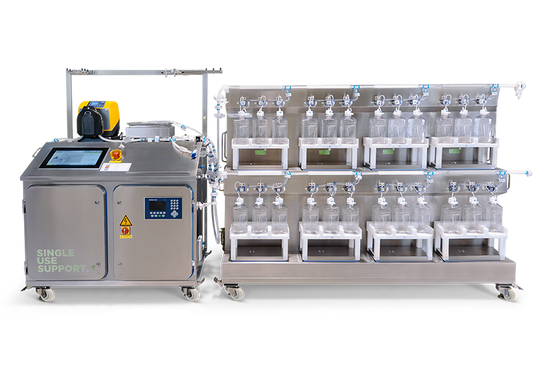
The fully automated RoSS.FILL aseptic single-use bottle filling system enables worry-free filling and filtration of your liquid drug and non-drug substances into bottles. With highest filling accuracy, the single use filling system provides closed...
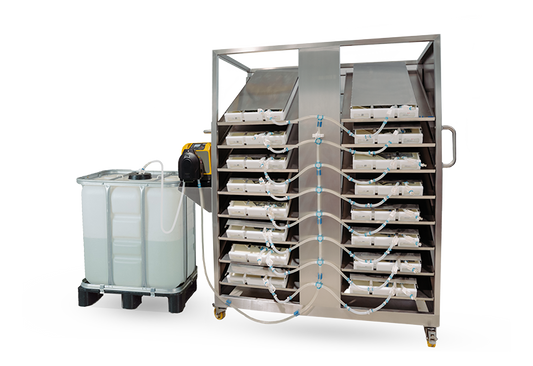
This standalone single-use bag draining system improves emptying single-use bags on site. Connected peristaltic pumps enable controlled fluid flow and the lowest possible retention volume. Multiple racks can be connected, allowing several single-u...
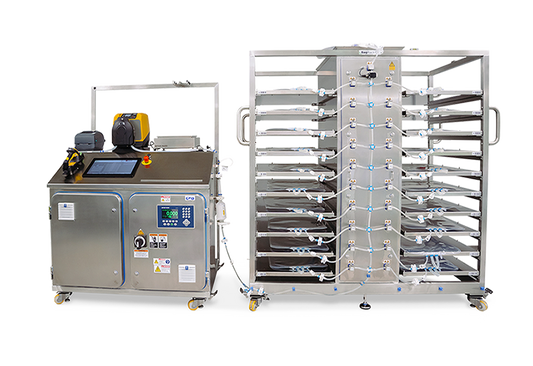
RoSS.FILL Bag is a flexible automated aseptic filling machine for the aliquotation and dispensing of bulk drug substance (BDS) into single-use bags. The system for aseptic filling and sterile filtration is highly precise, making RoSS.FILL Bag an e...
As an expert in single-use solutions, we have made it our goal to deliver vendor agnostic single-use assemblies manufactured at highest quality standards in ISO 7 cleanrooms and sterilized within shortest lead times. Prevent downtime and ensure an...
While one of the main goals of bulk drug substance management is to ensure quality control, safety during manufacturing, storage and transportation are of great importance. Nevertheless, the safe handling of bulk drug substances is a necessary measurement when dealing with sensitive and potentially hazardous drug substances.
Bulk drug substance management - read more
[[ToC]]
Reducing risks when dealing with toxic drugs
There are different risks associated with the handling of hazardous drugs that have to be taken into account. On the one hand, the quality of the product has to be guaranteed to protect patients from unwanted consequences. Furthermore, loss of drug substance has to be avoided, since this can be bound to considerable costs as well as delays in deliveries.
On the other hand, the staff’s safety has to be secured when handling drug substances. This is especially true considering toxic substances like Antibody-Drug Conjugates: Manufacturers need to avoid staff from being exposed to ADCs and other hazardous drugs, as this may be related to severe health consequences for employees.
To ensure that these risks are minimized, the Food and Drug Administration has to approve substances for safe use. However, compound drugs are often not FDA approved due to a lack of review and evaluation on their safety and effectiveness. The drug quality and security act was added as an amendment to the federal food drug and cosmetic act that allowed for more authority on the regulation and monitoring of compounded drugs by the Food and Drug Administration.[[1]]
Critical steps in the production of bulk drug substances
There are several critical steps in the production of bulk drug substances that can lead to a risk in patient safety through contamination and product loss. Through the optimization of filling, freezing and thawing methods as well as storage and transport conditions, the supply of highest product quality can be guaranteed.
Safe storage and transport of bulk drug substances
Considering their considerable value and often great diligence, bulk drug substance has to be protected during storing and shipping to prevent spoilage and product loss. Single-use bags, protected by robust and safe secondary packaging, do not take up much space and can be stored most efficiently. Further, smart secondary packagings allow for rapid and controlled freezing. Therefore, Single Use Support developed a protection system for single-use bags that absorbs external mechanical influences and reduces the tension on the single-use bag.[[2]]
Protected filling and freezing
Filling of substances into bio containers bears its complications and product loss through handling failures can occur. Nevertheless, the most frequent filling errors are related to equipment failure, human error or consumable failure. To prevent product loss through manual intervention, Single Use Support has developed a fully automated filling and filtration systems for single-use bags. Additionally, they reduce the risk of exposure, since the process is performed within an enclosed system.
Controlled freezing of drug substance helps to maintain product quality and to guarantee safe storage. As insufficient freezing can stress the protein and lead to damage of the product, Single Use Support uses freezing platform systems that prevent unwanted alterations in the product through plate freezing.
Filling of drug substance – read more
Minimizing risks during thawing and draining
As the process of thawing and draining drug substance is as sensitive as the process of freezing, Single Use Support has developed a fully automated freeze/thaw platform that can be used for any batch size. The devices are able to carry out both the freezing and thawing process, delivering high product stability via controlled freeze-thaw rates.
Nevertheless, even small process deviations can have big consequences in the handling of bulk drug substances. For staff members, this means to be on alert during every step of cold chain logistics, monitor the different steps and protect themselves from safety risks caused by exposure. For patients, on the other hand, product loss can result in supply chain delays.
[[download-1]]
[[download-2]]
End-to-end solutions for the safe handling of bulk drug substances – with Single Use Support
Single Use Support has developed an entire product line-up suitable for the safe and adequate handling of bulk drug substances, based on single-use technologies. With automated filling systems, loss of drug substances can be reduced significantly. This reduces the risk of contamination related to the exposure to potentially toxic substances. And with solutions for controlled freeze/thaw processes as well as dedicated draining methods, spoilage and unwanted alterations of biopharmaceutical products can be prevented.
Single Use Support’s solutions are fully customizable and adaptable to small-scale and large-scale requirements. Due to their flexibility and effectiveness, Single Use Support’s end-to-end solutions are the ideal choice for various processes within bulk drug substance management.
End-to-end solutions in drug substance management
References
Safety Risks Associated with Certain Bulk Drug Substances Nominated for Use in Compounding, https://www.fda.gov/drugs/human-drug-compounding/safety-risks-associated-certain-bulk-drug-substances-nominated-use-compounding, Published 2022
Time- and Temperature-Controlled Transport: Supply Chain Challenges and Solutions, Time- and Temperature-Controlled Transport: Supply Chain Challenges and Solutions - PMC, Published 2018
Advanced cell and gene therapies, such as autologous therapies, exhibit certain specific requirements. The scale of such therapies is very different from what we typically see in conventional biopharmaceutical manufacturing processes in commercial facilities.
The volumes are much smaller than usual. The pharmaceutical liquids require special handling and care as they must be shipped in a sterile and protective packaging. Both logistics and cGMP compliance are an important part of the manufacturing process of these therapies. However, fluid and cold chain management still pose certain challenges in this yet emerging field of novel medicines. One of the most overlooked aspects that cannot be handled with traditional methods is the aseptic filling process step.
According to experts, the process of filling autologous cell therapies presents several challenges[[1]] like producing a single batch for each patient, which redefines the term “small batch filling”. The filling process on such a level is comparable with clinical phase-1 studies or even pre-clinical trials. Small batch filling is applicable to many areas in bioprocessing as well, such as cell banking, viral vector production and more.
Although established processes can address some of these challenges. As autologous therapies are becoming more commercialized, it is important to develop best practices for automated filling.
[[ToC]]
Single-use technology to improve the filling process of autologous therapies
Sticking to the example of autologous therapies, in most cases cells are collected from the patient and filled into a primary packaging, such as single-use bags or vials for further processing.
Along with experts recommendations to use "a closed and pump-driven system that constantly checks the bags’ weight" during the filling process, manual processes often fail to maintain consistency and accuracy of performing a standardized aliquotation into single-use bags. Moreover, the open architecture of manual filling procedures bear increased risk of contamination, whereas a closed automated system prevents such occurences.
Single Use Support has established a fully automated and fully scalable filling and draining system for single-use bags of various sizes and of all established manufacturers. The system ensures highest filling accuracy thanks to different technologies, gravimetric and flowmeter. Depending on the filling volume this can be down to few mL.
Protecting ATMP in small single-use bags
The filled bags are advised to be protected in a robust secondary packaging to prevent leakages during freezing, storage and shipping processes, such as Single Use Support’s RoSS.KSET, the small version of the RoSS shell. [[1]]
The RoSS® shell and RoSS.KSET are protective shells for 2D single-use bags that minimize product loss through breakages significantly. The secondary packaging is vendor-agnostic which means that all types of bags from multiple vendors can be accommodated safely.
It is suitable for small volumes in clinical studies, clinical trials, but also for commercial production of viral vectors, plasmid DNA, autologous cell therapies and more.
The 3D foam inside the shell offers optimum bag protection against external forces. The frame is made of high-quality plastic and stainless-steel that withstands extremely cold temperatures. Its design even enables to advance the freezing process with plate-based freezers to ensure advanced methods to cool the valuable liquids to -80°C and less.
RoSS.KSET | Protecting small volumes
Patient safety thanks to bag protection and closed systems
RoSS.KSET boasts an innovative and intuitive locking mechanism, allowing for full tamper-evident single-use bag protection This is a non-negotiable requirement for autologous therapies such as the CAR-T cell therapy. If the liquids are not protected and are damaged in transit, the vital therapy is rendered useless.
Volumes for traditional therapies consist of several hundred bags, whereas autologous therapies may only require a handful of containers. But scale-up can be earlier than expected and the transfer from clinical to commercial production must be prepared. Planning automation and scalable technologies help immensely to ramp up production once it is needed. It also supports the process consistency throughout different scales. When handling of small volumes is already automated in an early stage, it is a way more straightforward path to commercialization of the drug product.
The benefit of a closed systems with automated solutions add value by offering a higher degree of sterility, safety, and process flexibility. Therefore, the risk of contamination is minimized which in turn enables efficiency and product viability during manufacturing.
[[download-1-email-detailed]]
References
Bozenhardt H.F., Bozenhardt, E.H., 2019: Overcoming The Unique Filling Challenges Of Autologous Therapies. Available at: bioprocessonline.com
Aseptic filling represents a fundamental process within pharmaceutical manufacturing, serving to preserve the potency and safety of biologics throughout the production process. With stringent standards issued by regulatory authorities like the FDA, the filling of drug substance demands for a highly controlled environment and execution, ensuring the utmost quality and efficacy of pharmaceutical products.
In this article, we will discuss the central role of aseptic filling in biopharmaceutical processing. We will provide a comprehensive definition of the term, compare it to similar concepts, and illustrate the aspects that shape the field of aseptic filling.
Fluid management with Single Use Support
[[ToC]]
Aseptic filling – a brief explanation
Aseptic filling serves as the foundation of drug product packaging, operating within stringent sterile conditions. This meticulous practice is performed to prevent microbial contamination, ensuring the safety, efficacy, and shelf life of pharmaceutical products.
Throughout aseptic filling, the primary focus remains on maintaining a germ-free environment. A stringent protocol safeguards drug products from contamination, guaranteeing their reliability and safety for consumers.
Difference between sterile and aseptic processing
Sterile processing and aseptic processing are two distinct methodologies, each with specific characteristics and applications.
Sterile processing involves ensuring the complete absence of viable microorganisms. This method is commonly used for pharmaceutical products that can withstand terminal sterilization processes using high temperatures, filtration, or chemical means. Sterilization is usually performed at the end of a manufacturing process – unlike aseptic filling, which requires a more holistic approach.
This is because aseptic processing aims to maintain a germ-free environment during the entire handling and packaging process of pharmaceuticals, but without necessarily achieving absolute sterility in the final product. It involves strict controls to prevent contamination, utilizing techniques such as isolators, laminar airflow, and sterile barriers to safeguard against microbial ingress during the filling process.
Benefits of aseptic filling
Aseptic filling presents several key advantages, as it allows manufacturing sterile products that are safe and effective for clinical use. Additionally, aseptic filling comes with some other key advantages:
Preservation of product integrity: The nature of aseptic filling contributes to maintaining the integrity of pharmaceutical products. By minimizing exposure to heat, chemicals, or physical stress bound to sterilization methods, the quality and efficacy of the products are preserved.
Adherence to regulatory compliance: Aseptic filling aligns with stringent regulatory standards, such as those set by the FDA. Compliance with these regulations is crucial for ensuring product safety and meeting industry standards.
Extended shelf life: Aseptic filling techniques contribute significantly to prolonging the shelf life of pharmaceutical products. By maintaining a sterile environment throughout the filling process, these products remain shelf-stable and thus viable for longer durations.
Aseptic filling – fields of application
Aseptic filling extends its significance across diverse industries, ensuring sterile packaging and product integrity:
Pharmaceuticals: Aseptic filling is paramount in pharmaceuticals (e.g. in vaccine production), maintaining sterility to uphold the potency, safety, and regulatory compliance of medicinal products.
Food products: In the food industry, aseptic filling safeguards various food items, preserving food safety, nutritional quality, and compliance with standards.
Cosmetics: Aseptic techniques are utilized in cosmetic industries, maintaining sterile conditions during the packaging of beauty and personal care products.
Healthcare products: Aseptic filling is essential in healthcare for packaging items such as medical devices and sterile solutions, ensuring safety and compliance.
Components of fluid management systems in biopharma
In biopharmaceutical manufacturing, fluid management systems involve several crucial components that collectively ensure the integrity, sterility, and precision of the final product. These components, meticulously designed and integrated into the fill-finish systems, may include:
Isolators and barrier systems: These specialized enclosures create a thoroughly controlled, sterile environment for aseptic processing. By isolating the filling area from the external environment, they effectively prevent any microbial ingress during critical filling operations.
Laminar airflow hoods: Operating by providing a continuous flow of filtered air, these hoods establish a clean and sterile workspace. They significantly reduce the risk of contamination by effectively controlling airborne particles, e.g. during the fill-finish process.
Tubing solutions: Sterile tubing assemblies make sure that neither final drug products nor their individual components are contaminated during the multiple fluid transfer processes.
Sterile bioprocess containers: Specialized containers undergo stringent sterilization processes to maintain their sterility. They ensure that the pharmaceutical product remains uncontaminated during the filling process into, as they are increasingly frequent, single-use bioprocess containers.Filtration units: Employed for the filtration of liquids or gases, these units eliminate particulates and microorganisms, ensuring that the substances entering the containers are free from contaminants before the filling stage. As their integrity is vital, PUPSIT (pre-use post sterilization integrity testing) is mandatory.
Closing and sealing systems: Automated systems play a crucial role in securely sealing containers. These systems are designed to ensure aseptic disconnection and the integrity of seals, preventing any contamination post-filling.
Sterilization equipment: X-Ray sterilization or gamma irradiation are examples of sterilization approaches that can be deployed before components enter the aseptic filling process. This ensures that all components are suitable for aseptic filling.
Process monitoring and control instruments: Incorporating sensors, tracking and monitoring devices (such as RFID sensors1), these instruments regulate and oversee various parameters during the filling process, maintaining optimal conditions and ensuring precision along with traceability.
Validation equipment: These tools and systems are pivotal for the validation processes, ensuring that the entire fill-finish system functions reliably and complies with stringent quality standards.
Fluid management does not always require all the aforementioned tools, but may also demand for several more to be implemented. Let’s highlight some components that are essential in a multitude of aseptic filling processes.[[1]]
Aseptic filling machines
Aseptic filling machines operate within highly controlled, sterile environments. Their primary function is to precisely fill drug products while upholding stringent sterility standards. These machines serve as the frontline defense against contamination, ensuring that the drugs remain uncontaminated throughout the fluid transfer process.
The precision engineering of solutions like the RoSS.FILL platform allows for accurate automated aliquotation, minimizing any margin of error and optimizing the use of pharmaceutical ingredients while reducing wastage. Integrated seamlessly into larger filling lines, aseptic filling machines work in tandem with components like fillers designed for specific drug formulations.
Tubing solutions for pharmaceutical liquids
Contamination prevention and precision in pharmaceutical compounding and filling processes heavily rely on the right bioprocess tubing solutions. These solutions act as the vital conduits for pharmaceutical liquids, ensuring their integrity from formulation to packaging.
During compounding, these tubing solutions facilitate the precise transfer and mixing of various pharmaceutical ingredients, ensuring uniformity and accuracy in the final product. In filling processes, their role is paramount in maintaining sterility, preventing contaminants from compromising the product's quality.
The choice of tubing solutions involves careful consideration of material compatibility, sterilization methods, and adherence to stringent regulatory standards. Additionally, manufacturers have to decide whether to opt for multi-use or single-use tubing solutions, the latter of which are often preferred due to their flexibility, safety, and ease of use. By selecting appropriate tubing solutions, pharmaceutical manufacturers uphold the highest quality and safety standards in their processes, guaranteeing that every pharmaceutical liquid meets rigorous criteria before reaching consumers.
Bioprocess containers
When speaking of filling, it is only logical to ask where a fluid is filled into. However, the answer to this question is far from trivial when it comes to pharmaceutical processing, as there are multiple options regarding the primary packaging of drug substances.
Single-use bags have become a frequently chosen primary packaging for liquid pharmaceuticals, able to protect their contents from contamination while being flexible and easy to use. Additionally, IRIS single-use bioprocess containers are able to withstand the expansion and mechanical influences that come with cryogenic or ULT freezing, which is, however, necessary to preserve a variety of complex drug products.
Homogenizers
Homogenizers stand as crucial components in pharmaceutical and aseptic manufacturing practices, ensuring product uniformity and quality. They are instrumental in the production of consistent and homogeneous mixtures by breaking down particle sizes and ensuring uniform distribution of components within pharmaceutical formulations.
In aseptic manufacturing practices, homogenizers play a dual role. They not only contribute to product uniformity but also have to align with stringent standards of sterility. Homogenizers like Single Use Support’s RoSS.PADL are designed to operate within controlled aseptic environments, ensuring that the homogenization process occurs without compromising the sterile conditions required for pharmaceutical production. It is therefore vital that homogenizers, if required within the fluid transfer process, can be seamlessly integrated into the surrounding technological environment.
Challenges in aseptic filling
Aseptic filling within pharmaceutical manufacturing poses a spectrum of challenges that demand close attention to detail. Contamination remains a lurking concern, capable of causing substantial product loss and compromising consumer safety. Additionally, scalability as well as sustainability and efficiency can be challenging.
Many of the challenges regarding process safety are sublimated in the stringent standards set by regulatory bodies, such as the FDA (Food and Drug Administration). Compliance entails meticulous validation of processes, stringent cleanroom protocols, and adherence to labeling requirements. The absence of terminal sterilization processes like irradiation necessitates all the more attention to detail, providing product safety and efficacy while ensuring regulatory compliance.
Pharmaceutical companies strive to meet these challenges by investing in advanced technologies, robust quality control measures, and comprehensive training programs to foster a culture of compliance and precision even in aseptic filling of large volumes. The aim is to curtail product loss, maintain product integrity, and, most importantly, ensure consumer safety.
In terms of process solutions, single-use technologies are being more and more implemented for several reasons. They reduce the need for cleaning and sterilization at the manufacturer’s site, as single-use components usually come pre-sterilized and ready for implementation. This saves water, energy, time and costs while ensuring flexibility and safety in aseptic filling processes.
[[download-1-email-detailed]]
Automated solutions for aseptic liquid handling with Single Use Support
Automated aseptic filling systems by Single Use Support transform aseptic liquid handling in pharmaceutical manufacturing. These systems epitomize advanced technology and precision, reshaping the way sterile liquids are managed in the industry.
Single Use Support's automated fluid management platform RoSS.FILL can seamlessly integrate into manufacturing processes. It ensures accuracy, sterility, and adaptability across various applications, from lab-scale manufacturing, CGT and other small-scale processes to bulk production of biopharmaceuticals like vaccines.
Engineered to comply with highest industry standards, RoSS.FILL guarantees regulatory compliance and adherence to cGMP regulations while being complemented by single-use bags, single-use tubing assemblies made of silicone and additional professionalized systems, such as the homogenizer RoSS.PADL, but even solutions that go beyond fluid management alone.
In order to create a seamless end-to-end process for pharmaceuticals, Single Use Support has designed a complete product line up that also covers various freezing processes of temperature-sensitive drug substances. Plate freezing solutions like RoSS.pFTU, ULT storage freezers and shipping containers – to name just a few – enable pharmaceutical manufacturers to create a closed and safe environment in drug production from start to finish.
Aseptic filling platform RoSS.FILL
More about aseptic filling
Automated aseptic filling systems by Single Use Support transform aseptic liquid handling in pharmaceutical manufacturing. These systems epitomize advanced technology and precision, reshaping the way sterile liquids are managed in the industry.
Single Use Support's automated fluid management platform RoSS.FILL can seamlessly integrate into manufacturing processes. It ensures accuracy, sterility, and adaptability across various applications, from lab-scale manufacturing, CGT and other small-scale processes to bulk production of biopharmaceuticals like vaccines.
Engineered to comply with highest industry standards, RoSS.FILL guarantees regulatory compliance and adherence to cGMP regulations while being complemented by single-use bags, single-use tubing assemblies made of silicone and additional professionalized systems, such as the homogenizer RoSS.PADL, but even solutions that go beyond fluid management alone.
In order to create a seamless end-to-end process for pharmaceuticals, Single Use Support has designed a complete product line up that also covers various freezing processes of temperature-sensitive drug substances. Plate freezing solutions like RoSS.pFTU, ULT storage freezers and shipping containers – to name just a few – enable pharmaceutical manufacturers to create a closed and safe environment in drug production from start to finish.
Fluid management with Single Use Support
References
RFID sensors as the common sensing platform for single-use biopharmaceutical manufacturing, http://dx.doi.org/10.1088/0957-0233/22/8/082001, Published 2011-07-16