
Integrity for viral vector production

Controlled fluid management and freeze-thaw processes, ensuring structural integrity of AAV and lentiviral vectors for drug delivery.

968-RoSS.FILL CGT_Product photo (26 von 26).webp__PID:3653b4c6-7f98-4519-a09e-f924bcd9260f

Why Single Use Support for viral vector production?

Challenges getting viable host cell densities?

Achieving and maintaining high viable cell densities can be challenging, particularly when scaling HEK293-based processes for viral vector production.

Green icon demonstrating fast throughput in biomanufacturing

Efficient handling during process intensification

Efficient handling during cell expansion and the aliquoting of small volumes at different cell densities is enabled by modular filling and controlled freezing systems to reduce costs and production times in viral vector manufacturing.

Bag-to-bag variabilities?

Manual filling processes and the occurence of viscosities may result in varying cell counts and filling volumes per single-use bag, causing process inconsistencies in aseptic aliquoting of batches.

Green icon of a checkmark symbol inside a target on a transparent background demonstrating highest accuracy

High filling accuracy

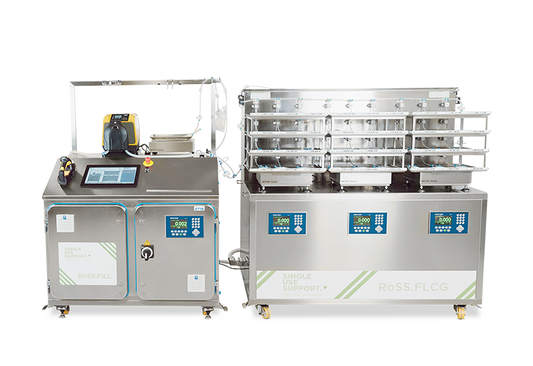
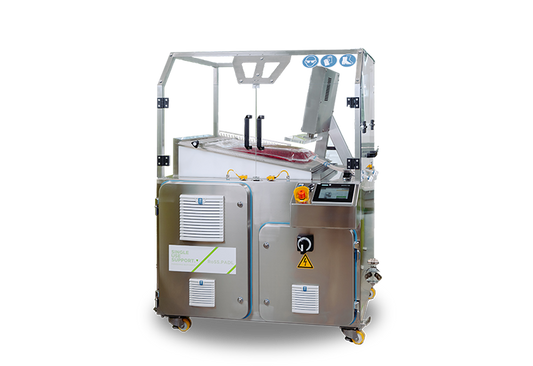
Automated homogenizing and filling systems enable consistent processes for the dispensing of viral vectors with the highest level of accuracy, down to a few mL, into 2D single-use bags.

Losing viral vectors during filling and freezing?

Open manual filling of HEK cells or viral vectors, non-complying GMP Annex 1, have a higher risk of contamination.

Freezing 2D single-use bags without proper protection are prone to bag breakages causing considerable losses at sub-zero temperatures.

Green icon of a checkmark symbol inside a shield demonstrating safe and efficient handling.

Reduced risks of product loss and contamination

Using automated aliquoting in closed systems minimizes the risk of contamination. Protecting single-use bioprocess containers from external influences is essential to safeguard staff and minimize product losses and costs.

Illustration of an aav on a blurred purple background

Fluid management of most common viral vectors

Automated and modular single-use technology solutions bring a variety of advantages viral vector manufacturing processes, such as a high level of safety and cost and resource efficiencies. This can be applied for all common viral vectors, including AVVs: adenoviral vectors, AAVs: adeno-associated viral vectors, LVVs: lentiviral vectors, RVVs: retroviral vectors.

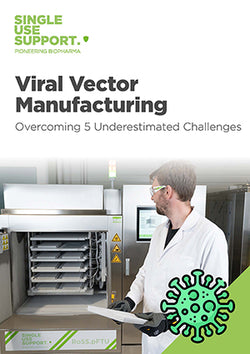
Preview of a guide about viral vector manufacturing

DOWNLOAD GUIDE

Challenges in viral vector manufacturing - Guide

Guide about viral vector manufacturing with regards to fluid management challenges. In detail:

  • Scalability in cell line development 
  • Accuracy in bag aliquoting
  • Viscosity and homogeneity in liquid transfer
  • Product viability after freezing & thawing
  • Bag breakages in viral vector storage and shipping

Learn more to navigate 5 these overlooked challenge in the Viral Vector Guide.

  • Freezing & thawing viral vectors: Best practices

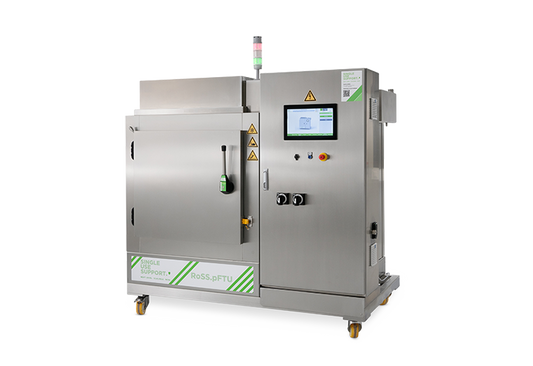
    Viral vectors and specifically Adeno-Associated Virus (AAV) vectors have gained significant prominence in gene therapy and biotechnology research due to their ability to efficiently deliver genetic material into target cells. Proper handling of viral vectors during storage, freezing, and thawing is crucial to maintaining their integrity and efficacy. In this article, we will explore best practices for preserving viral vectors, ensuring their stability, and maximizing their potential for various applications. Freezing Platform for viral vectors Why proper freezing & thawing matters AAVs and other viral vectors are sensitive to environmental conditions, and uncontrolled handling can lead to degradation, loss of infectivity, and reduced therapeutic efficacy. Using controlled-rate freezing & thawing solutions help ensure can help ensure the reliability and success of applications with viral vectors. Optimal temperature ranges for AAVs Maintaining precise temperature control is vital for the stability and functionality of viral vectors. Viral vectors are best stored at ultra-low temperatures, typically at or below -80°C. This recommended temperature applies to the long-term storage of all viral vectors, such as adeno-associated viral vectors (AAVs), adenoviral vectors (AVVs), lentiviral vectors (LVVs) or retroviral vectors (RVVs). Frequent freeze-thaw cycles should be avoided whenever possible. Each freeze-thaw cycle can lead to a reduction in AAV vector titer and infectivity, so it's essential to plan ahead and aliquot samples appropriately. Storage at -20°C to +4°C is only recommended for short-term use. During processing in the laboratory, it is important to keep temperatures at a constant level. This makes it clear that viral vectors must be frozen at ultra-low temperatures on their way to the next production site or final use. Best practices to do so, are presented in the following chapters.[[1]]  Best practices to freeze viral vectors Effective techniques for freezing viral vectors such as adeno-associated virus vectors can mean the difference between successful experiments and compromised results. In this chapter, we offer best practices for viral vector freezing, highlighting proper pre-freezing preparation, such as aliquotation of single-use bags or medical devices and actual freezing techniques using plate freezing. As industry experts in the field of freezing drug substances, we specialize in providing customized solutions based on single-use technology, that facilitate the seamless scaling of the freeze-thaw process seamlessly from clinical studies to large-scale production. Aliquotation in samples Aliquotation is a necessary practice for several reasons. Dividing a viral vector stock into smaller aliquots helps minimize the number of freeze-thaw cycles, a critical factor in maintaining vector stability and efficacy. A recommended approach is an automated closed filling process based on single-use systems. Closed systems like Single Use Support’s RoSS.FILL for small volumes eliminate the risk of external contamination, ensuring the integrity of the viral vectors throughout the aliquotation procedure. Read more about best-practices in filling viral vectors in the article about aliquotation and homogenization of viral vectors. Plate freezing Plate freezing proves to be a best practice to freeze viral vectors and specifically to freeze AAV, when they're filled into single-use bags. It relies on direct contact with cooled surfaces, typically metal plates. One of the most notable advantages of plate freezing is its precision in freezing. By adhering to specific setpoints for product-tailored freezing, plate freezers empower GMP facilities with standardization and reproducibility of freezing kinetics. This level of control is indispensable in maintaining the consistent quality of AAVs. Moreover, plate freezers enable rapid and controlled freezing, a critical factor in reducing the occurrence of cryoconcentration. Cryoconcentration results in the emergence of crystals and ingredient separation over time. Rapid plate freezing mitigates this issue by promoting high homogeneity in liquids. Cost-efficiency is another advantage of plate freezing technology, primarily due to its lower energy consumption. Rather than cooling the surrounding air, plate freezing systems ensure that items come into direct contact with cooled stainless steel surfaces. As highlighted in the interview with our expert Alexander Fuchs, advanced solutions are also prone to sustainability in freezing: Sustainable freezing in biopharma.  We furnish both our plate-based freeze and thaw platforms along with our ultra-low temperature storage freezers with natural gases.Alexander Fuchs Single Use Support acknowledges the benefits of plate freezing for biologics and offers a comprehensive range of freeze-thaw platforms, including various sizes of the RoSS.pFTU. For laboratory work and lower volume freezing of AAVs, the RoSS.pFTU Mid-Scale is the recommended variant, as it can be used to freeze small single-use bags in the small single-use shell (volumes less than 250mL) as well as several large single-use bags. Best product stability results are provided for viral vectors up to 100L.  RoSS.pFTU Mid-Scale Efficiency improvements with single-use technology Single-use bioprocessing is a best practice when it comes to freezing Adeno-Associated Virus vectors, with a focus on enhancing efficiency. Single-use technology offers advantages, including easy scalability, heightened efficiency, and reduced margin for errors. Single Use Support offers single-use bags designed to be frozen within their respective single-use shells, amplifying the benefits mentioned before. Scalability is streamlined as single-use systems can be effortlessly adjusted to accommodate varying batch sizes, spanning from laboratory-scale experiments to large-scale production. This adaptability not only enhances efficiency but also minimizes production downtime. Read more: Adeno-associated virus production and efficiency improvements with single-use technology [[download-1-email-detailed]] Best practices to thaw viral vectors Just as precise freezing, thawing viral vectors demands the same attention to detail. A best practice in this regard involves controlled and consistent thawing, performed with the plate-freezing platform. Thawing with Single Use Support’s plate-based freeze thaw platform facilitates gentle and uniform heat transfer between the frozen viral vectors and the surrounding environment, minimizing the risk of damage and ensuring the vectors' stability and efficacy. End-to-end solutions for safe handling of AAVs In preserving AVV vectors and other viral vectors, Single Use Support positions itself as experts in this field, providing end-to-end cold chain solutions that take advantage of single-use technology in the context of plate freezing and ultra-cold storage. These solutions are not only highly efficient but also fully compatible with current Good Manufacturing Practices (cGMP). With closed, automated processes, scalable platforms, and sophisticated monitoring, the best-in-class process solutions ensure the integrity and reliability of viral vectors throughout their lifecycle, from freezing and storage to thawing. Freeeze-Thaw Platform for Viral Vectors References UNC Vector Core: Safety & Handling, https://www.med.unc.edu/genetherapy/vectorcore/safety-handling/, Published 20.09.2023

    READ MORE
  • Lentiviral vector manufacturing: Old but gold gene therapy viruses?

    Despite the fact that lentiviral vectors have been around some decades, the demand for scalable and effective manufacturing methods now rises in tandem with the need for innovative medicines. Due to their special advantages, lentiviral vectors have emerged as crucial instruments in gene therapy, and their advancement and application are still being encouraged. Let's examine lentiviral vectors and how they are produced, highlighting current developments and difficulties in this ever-evolving field. A lentiviral vector: what is it? Human immunodeficiency virus (HIV)-derived gene delivery techniques are known as lentiviral vectors. In order to promote long-term gene expression, these altered viruses are designed to safely transfer genetic material into target cells. Lentivral vectors, in contrast to the original virus, are made to be incapable of replicating, which guarantees that they do not spread infection or illness. Types of Viral Vectors: Lentiviral Vector vs. AAV Both lentiviral vectors (LV) and adeno-associated viruses (AAVs)  are viral vectors that are widely used in gene therapy, but they possess distinct characteristics [1,2]:   Lentiviral Vector AAV Cargo Capacity Larger packaging capacity (up to 9 kilobases)  Limited packaging capacity (around 4.7 kilobases) Integration efficiency High integration efficiency Non-integrating, resulting in transient expression Transgene expression Long-term transgene expression Long-term transgene expression, if low cell turnover Profile range Effective for both dividing and non-dividing cells   Tissue-specific tropism   The selection between these vectors is influenced by the specific therapeutic application and target tissue.   All types of viral vectors   Lentiviral vectors in Gene Therapy Due in large part to issues that remained unresolved for late-stage therapeutics, lentiviral vectors in gene therapy were first employed as research instruments in molecular and cell biology. In recent years, nevertheless, they have seen a comeback, especially in the gene therapy sector. They are essential for treating a variety of genetic illnesses and tumors because of their capacity to efficiently transfer genes to different cell types, such as neurons and stem cells. There are a number of significant reasons for this increasing interest in lentiviral vectors: Better vector designs lead to improved safety profiles Effective clinical trials that show their efficacy Ex vivo patient cell modification for customized treatments The possibility of using in vivo gene editing applications These advancements have positioned LVs as essential elements in the progress of innovative cell and gene therapies. Manufacturing of Lentiviral Vectors Plasmids' function in lentiviral vector production The production of lentiviral vectors requires plasmids. They serve as the cornerstone for the therapeutic gene, regulatory elements, and viral structural proteins that make up the vector. To manufacture functional viral particles, multiple plasmids are often co-transfected into producer cells, such as HEK293T. Cell line growth & transfection Under strictly regulated circumstances, producer cells are grown in bioreactors. Transfection reagents are used to transfect the cells with a mixture of plasmids when the desired cell density has been reached. In order to produce high-titer vectors, this step is essential. [[download-1-email-detailed]] Harvest & purification After transfection, the viral particles are collected from the cell culture supernatant. The initial harvest goes through clarification and purification processes, including chromatography and filtration, to eliminate cellular debris and concentrate the vector product. Aseptic filling of viral vectors Maintaining an aseptically closed system is crucial in the manufacturing of lentiviral vectors. Automation is key to ensuring safety and efficiency while minimizing operator involvement in the aseptic filling processes. Modular systems, like the RoSS.FILL CGT platform, provide scalability and flexibility, enabling manufacturers to adjust to evolving production requirements. These systems can easily shift from clinical to commercial-scale production, effectively tackling the challenges associated with scale-up or scale-out strategies. Controlled freezing to prevent lentiviral vector aggregation The processes of freezing and thawing lentiviral vectors come with distinct challenges, with aggregation being a significant issue. Controlled freezing is vital for preserving the integrity and functionality of the vectors. Automated platform systems for controlled freezing & thawing, such as the RoSS.pFTU Mid Scale, are specifically engineered for viral vector production, offering precise control over cooling rates to enhance product quality post-freezing. These systems are fully scalable, capable of accommodating various batch sizes from clinical to commercial production and can freeze anywhere from a few to multiple of single-use bags. Lentiviral vectors remain amidst gene therapy advancements In summary, the manufacturing of lentiviral vectors is progressing, fueled by the increasing demand for gene therapies and other advanced treatments. As the field develops, innovations in production processes – from plasmid design to aseptic filling and controlled freezing – are addressing critical challenges and enhancing overall efficiency. With continuous research and development, lentiviral vectors are positioned at the leading edge of gene therapy, offering new opportunities for treating a wide array of diseases. Solutions for Viral Vector Manufacturing References Aldevron: Supporting AAV and Lentiviral Vector Development and Commercialization, 2020. Available at: https://www.aldevron.com/blog/supporting-aav-and-lentiviral-vector-development-and-commercialization Single Use Support: Adeno-associated viruses for gene therapy. 2023. Available at: Adeno-Associated Virus (AAV) for gene therapy (susupport.com)

    Read more
  • Aliquotation & homogenization of viral vectors

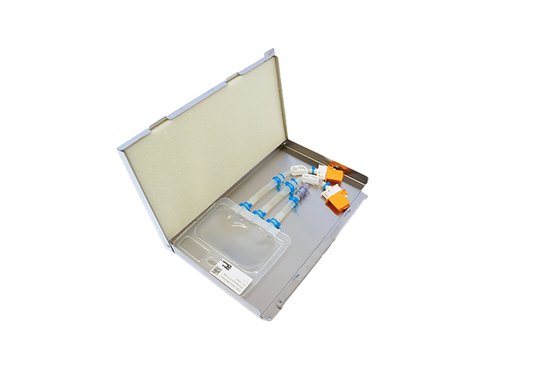
    In the manufacturing of viral vectors aseptic aliquotation is a critical process step. It is the practice of dividing one larger container of vectors into smaller samples. It is important to generate the same amount of smaller aliquots whilst maintaining the consistency of the mixture. In this article, we uncover the significance of a professional aliquotation process, the challenges entailed in filling AAV vectors, and the innovative solutions supporting to master those challenges. Filling Solution for Viral Vectors Importance of aliquotation of viral vectors The precise aliquotation of viral vectors carries importance in several key aspects: Sample Size Precision Process Consistency Safety and Contamination Control Splitting into small batches minimizes Freeze-Thaw Cycles Maintaining Product Viability Determining the initial sample size is a decision that affects the entire process. Accurate aliquoting ensures that researchers, operators or process engineers in viral vector manufacturing have precisely the amount of viral vectors needed for their further process. This not only minimizes waste and ensures that the samples are statistically representative, there are further benefits of accurate aseptic filling. It guarantees that each sample accurately reflects the entire viral vector solution, reducing the potential for variation in experimental results. Working with small aliquots enhances safety by minimizing the risk of contamination. It protects the purity and integrity of the viral vector solution. And is therefore a relief for researchers and operators. Additionally, aliquoting helps minimize freeze-thaw cycles, since the use of small batches means that the entire substance does not have to be thawed and refrozen. The single batch that is needed is used at a time, which ensures efficient use. Frequent freeze-thaw cycles can adversely affect the stability and potency of viral vectors. Aliquoting allows maintaining vector viability for longer periods of time, resulting in more reliable results. Challenges in filling AAVs or other vectors AAV vector solutions often exhibit high viscosity, making them difficult to manage during the filling process. The viscosity can lead to uneven aliquotation and homogenization, affecting the quality of the samples. Maintaining stringent aseptic conditions is paramount in gene therapy, so in handling with viral vectors like adeno-associated virus (AAV) vectors. Conventional manual filling processes can introduce contaminants, posing a risk to the vector's quality. Therefore, an automated aseptic aliquotation process in a fully closed system is crucial. As the demand for AAV vectors continues to rise, the need for efficient and scalable filling solutions becomes increasingly pressing. Solutions that can accommodate various volumes and optimize production efficiency are essential. [[1]] Aseptic filling of viral vectors To address the challenges in filling viral vectors, Single Use Support offers innovative solutions. The fill platform employs closed and automated filling systems based on single-use technology. This approach ensures aseptic, cGMP-compliant filling processes into single-use bags, reducing the risk of contamination. Fill systems from us are already being used worldwide to fill viral vectors. Our filling systems for small volumes are ideally designed for the specific requirements in the early stage research and development as well as for commercial serial production of AAVs or other viral vectors. The modular platforms enable scalable processes, accommodating volumes ranging from 1mL to 1000mL and scaling up to 128 single-use bags per run. This versatility proves invaluable for laboratories, clinical trials, and production in advanced therapies. [[download-1]] Homogeneous filling of viral vectors Achieving homogeneity in viral vector aliquots is crucial. Single Use Support’s cutting-edge solution for kneading and cooling prior to filling addresses this challenge. The goal is a homogeneous distribution of the substances into the individual bioprocess containers, reducing aliquot-to-aliquot deviations. This is particularly important for liquids that are viscous and cannot be filled homogeneously into individual batches without external intervention. RoSS.PADL is a scalable platform designed to gently knead single-use bags, ensuring a homogeneous mixture of the viral vector solution. This automation eliminates the need for human intervention, making the process reproducible and standardized. As a result, patient safety is greatly improved as it reduces aliquot-to-aliquot deviations in cell count, concentration level and active ingredient during aliquoting into smaller single-use bags or medical devices. The consistency in each filled bag results in more accurate and reproducible dosing of drug efficacy for the patient. The optional cooling mechanism guarantees that the viral vectors maintain the correct temperature throughout the process, preserving its integrity. Cell suspension, for example, needs to be homogenized during aliquotation, which is why it is vital to limit the process time for temperature control, homogenization and aseptic filling & freezing in order to prevent cellular degradation. Conclusion: Considerations in filling AAVs or other viral vectors In conclusion, the precise aliquotation and homogenization of AAV vectors are essential elements in bioprocessing. Our innovative systems offer effective solutions to tackle the challenges associated with filling and homogenizing viral vectors. Moreover, our comprehensive end-to-end processes provide further solutions for the downstream processing of viral vectors. Using our single-use assemblies, filling takes place in a closed system and completely automatically. Once the substances are filled into the single-use bag, protected in the RoSS shell, they are ready for further transport or safe storage in a frozen state. Plate freezing with our freeze-thaw platform allows controlled freezing of the AAV vectors all the way down to temperatures as low as -80°C. This capability ensures the safe and secure storage and transportation of these valuable substances over extended periods. By leveraging the right tools and technologies, we can guarantee the safe and efficient delivery of gene therapies, propelling the field of medicine towards groundbreaking advancements. Filling Platform for Viral Vectors References Manufacturing Challenges and Rational Formulation Development for AAV Viral Vectors, https://www.sciencedirect.com/science/article/pii/S0022354921001933, Published July 2021  

    READ MORE

Talk to an expert