

Bottle RoSS

Protecting bottles

Bottle RoSS protects rigid bottle containers and their tubing during freezing, storage, and transport of biopharmaceuticals.

A product image of the Bottle RoSS from Single Use Support on a transparent background.

Key features

Bottle independent

For all sizes and vendors of single-use bottle containers

Robust construction

Robust from the outside to protect bottle caps, tubing and connectors

Complete immobilization

Foam inlays immobilize tubing and connectors at sub-zero temperature

Simple handling

Easy to install for a safe protection

Close-up image of the Bottle RoSS, highlighting the protection of bottle caps, tubing, and connectors for biopharma bottles.

How can Bottle RoSS protect your bottle?

Bottle RoSS safeguards tubing and connections of rigid bottle containers, ensuring safer handling of frozen drug substances.

  • Reduces risk of damage to tubing and connections at sub-zero temperatures
  • Improves handling safety of rigid containers during freezing and transport
  • Supports reliable processing of small- to mid-volume applications
  • Enables greater flexibility across different container formats
  • Minimizes handling-related failures and product loss

Our customers trust in us:

Downloads

Preview of datasheet for Bottle RoSS robust protection for single-use bottles by Single Use Support

Datasheet

Bottle RoSS - Datasheet

Bottle RoSS - Datasheet
 

Send a request

  • End-to-end solutions for biopharma bottles: increase efficiency and reduce risk

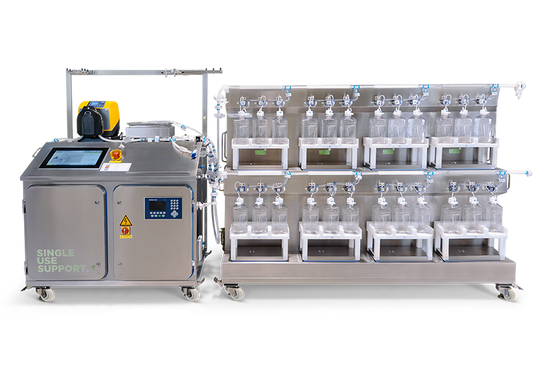
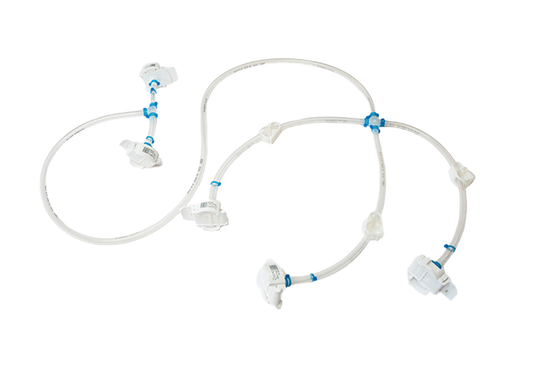
    The concept of end-to-end solutions is transforming industries with a focus on seamless and efficient processes. For biopharmaceuticals this includes the drug substance handling with filling, freezing/thawing and transporting sensitive drug substances by using a streamlined and compatible platform. With single-use bottles, it's been only siloed solutions that weren't working together as one process. [[ToC]] Fluid management with rigid containers To cover the entire process from A to Z, the biopharma industry has so far been confronted with bottles from various suppliers. However, if the process involves different providers the risk of incompatibility, product loss or damage caused by human error increases. This is also a reason why biopharmaceutical bottles were not filled using an automated and aseptically closed system. Single Use Support has addressed this problem and accomplished the last missing link of end-to-end solutions for biopharma bottles. What is special about it? The end-to-end process applies independently from pharma bottle manufacturers. Meaning, you can use it no matter what bottle size or type you're using. Furthermore, it is modular and compatible to previous and following manufacturing process steps. This does not only mean a streamlined workflow with single-use technologies and consumables, but also with services such as qualification, documentation and validation and after-sales service. Challenges of manual bottle handling in biopharma Manual bottle handling in biomanufacturing leads to many risks. It is slow, prone to human error, and has a high risk of contamination. These factors can jeopardize product quality and safety, making it challenging to scale up production. This is also the main reason why Annex 1 has emphasized to aseptically close the fluid path. Due to the time required manual bottle filling has also shown to be ressource intensive: it takes more time for more operators to fill bottles. Why manual bottle filling puts biomanufacturers at risk Aseptic filling as the last missing link of end-to-end bottle solutions To maintain product integrity and increase efficiency, closed and automated systems are crucial. For optimal results and to minimize risks throughout the entire workflow, a comprehensive end-to-end solution is necessary. Single Use Support meets these challenges and revolutionizes not only end-to-end solutions for single-use bags but also for single-use bottles. The RoSS.FILL Bottle is an aseptic single-use bottle filling system that enables automated filling and filtration of your liquid drug and non-drug substances into bottles. The bottle filler can fill dozens of bottles of up to 10 L with highest filling accuracy. Bottle assemblies for aseptic filling Single Use Support has ISO7 cleanroom capabilities to produce single-use assemblies, including bottle assemblies for asepticaly closed filling of bottles. These can be customized in order to become off-the-shelf standardized sterile consumables. The major advantage of end-to-end solutions for bottles is that all process steps are carried out by only using a single platform. Companies in the biopharmaceutical industry are thus able to work flexibly and efficiently. Moreover, they benefit from independence from manufacturer, scale, size, and single-use components. Single Use Support can provide manufacturers and CDMOs with end-to-end process solutions for both primary packaging, single-use bags and single-use bottles. Its modular design enables scalability and process flexibility to cope with small or large volumes. This also facilitates a switch from single-use containers to single-use bags or working with both simultaneously. Thus, a positive effect on storage space and costs can be achieved. Optimizing your workflow with Single Use Support's integrated platform  Single Use Support offers an elaborate platform for single-use containers and bags that covers the entire process from filling and filtration to freezing/thawing and shipping. Unlike stand-alone silo platforms, this approach addresses specific manufacturer and laboratory requirements. Single Use Support provides the following end-to-end solutions for bottles: IRIS bottle assemblies: Connect your bottle with tubing, connectors, and more RoSS.FILL Bottle: Closed bottle filler for drug substances Bottle.RoSS: Protect tubing on your single-use bottle RoSS.BLST: Controlled blast freezer for pharma bottles to freeze & thaw RoSS.ULTF: Temperature-controlled storage to maintain cold chain RoSS.SHIP: Protect your bottles for transportation at sub-zero temperature It is high time to let go of said silo mentality that still dominantes many areas and industries. It is time to increase rationalization processes and to eliminate the risk of product loss. This will help biomanufacturers and CDMOs to increase efficiency and reduce risk in fluid and cold chain management significantly. [[download-1]]

    READ MORE
  • Freezing bottles – 5 critical considerations

    Freezing drug substances to ultra-cold temperatures is a standard step in biopharmaceutical manufacturing. Yet, beyond simply cooling, it’s the critical quality attributes (CQA), like product safety, consistency, and process efficiency, that truly define success in biopharma. When preparing to freeze drug substances in sterile bottles, it’s essential to weigh several key factors. These considerations help ensure the freezing process not only preserves product integrity but also supports reliable and productive operations. [[ToC]] 1. Secure product quality with controlled freezing Controlled and uniform freezing is essential to avoid cryoconcentration – a phenomenon where solutes concentrate unevenly due to ice formation from the outside in. This can lead to protein denaturation and pH shifts, which ultimately impact drug stability and efficacy. Studies show that the “volcano effect” in bottles, where solutes are pushed to the center and top, can cause significant concentration gradients. Manufacturers can minimize these risks by controlling the freezing rate and temperature profile throughout the freezing process including the solidification phase. Product integrity stems from a controlled freezing which can be adapted depending on the specifications of the drug substance, such as cell-based or mAbs. What we learnt about controlled bottle freezing   Figure 1: Visualization of the volcano effect in bottles occurring in uncontrolled freezing, compared to consistent distribution in controlled freezing.    2. Protect bottles to ensure container closure integrity When drug substances or other raw materials, such as buffer or media, are frozen in bottles, the single-use containers must maintain their integrity. Even though they’re called rigid containers, there are vulnerable spots, particularly when the single-use container and assemblies become more brittle under sub-zero conditions.  To prevent leakage or contamination, bottle integrity can remain secure when the assemblies are protected during cold chain handling. Bottle RoSS is the equivalent of the RoSS® shell, which is the protective shell for single-use bags. With Bottle RoSS the tubing on bottles is protected at glass-like sub-zero temperatures with the help of a soft 3D foam which hardens at frozen state. More about Bottle RoSS 3. Static or blast freezing? In general, the choice between static and blast freezing for cooling drug substances in bottles depends on the container format and the sensitivity of the drug substances. Static freezers are meant for storing drug substances at low temperatures, not for freezing them. Using them to freeze bottles can lead to issues like cryoconcentration and product degradation. Even if the freezing time is similar to other methods for small bottles, the lack of control during the critical phase transition still negatively impacts product quality. In contrast, blast freezers with high-speed air convection technology are more effective at rapidly and uniformly freezing drug substances. This technology is particularly effective for biologics stored in bulky containers, such as bottles, as it minimizes thermal gradients and preserves product quality. 4. Role of bottle types and sizes Not all bottles are created equal. Manufacturers can choose among bottles with different types, geometry and size of the bottle, which may impact on freezing efficiency and uniformity. HDPE and PETG bottles have different features affecting the following fluid and cold chain management processes. Same with the sizes that can range up to 20L bottles. Overall, rigid bottles allow for optimal airflow in blast freezers, supporting consistent freezing profiles. Larger containers may require customized airflow systems to ensure uniform temperature distribution.   5. Think end-to-end for closed system efficiency Look left and right before freezing bottles. An efficient and safe freezing process requires an aseptic closed system, beginning with the aseptic filling and filtration stages. This continues through cold chain storage and shipping with a controlled thawing process. Integrating closed systems minimizes contamination risks, streamlines workflows, and ensures that drug substances remain protected at every stage. This end-to-end strategy meets GMP-relevant quality standards, including Annex 1, and operational efficiency, making it the gold standard for working with bottles in biopharma.  Interview: Trends with Single-Use Bottles in Bioprocessing – Single Use Support Mastering filling & freezing of bottles with Single Use Support Uncontrolled bottle freezing processes often struggle to scale, leading to inefficiencies and risks for critical drug substances. With RoSS.BLST, Single Use Support addresses these pain points by enabling seamless transitions from clinical to commercial production – without compromise. Single Use Support’s end-to-end fluid management and cold chain solutions deliver scalable, aseptically closed processes for advanced fluid and cold chain management of bottles, ensuring product safety and regulatory compliance at every step. As the only provider offering fully integrated handling, filling and cooling critical liquids in bottles, Single Use Support empowers biopharma manufacturers to streamline fluid and cold chain management with bottles with compatibility, safety and efficiency. [[download-1-email-detailed]]

    Read more
  • From carboys to rigid containers: what are the top single-use bottles in biopharma today?

    Despite the popularity of single-use bags for primary packaging, single-use bottles remain critical for storing, transferring, and sampling media, buffers, and drug substances throughout the biomanufacturing workflow. These sterile, reliable, and suitable for GMP use single-use containers are in high demand, whether they’re called carboys, rigid containers, or simply sterile bottles. The demand has grown with the rise of closed-system processing and flexible manufacturing, which is made possible by the automated dispensing of bottles with single-use technology. Why automating bottle filling? [[ToC]] PETG bottles vs. HDPE pharma bottles The choice between PETG (Polyethylene Terephthalate Glycol-modified) and HDPE (High-Density Polyethylene) bottles in biopharmaceutical applications depends on the specific needs of the process.While PETG bottles are best for media and buffer storage, sampling bottles or cryogenic/cold storage, HDPE bottles are best for bulk chemical storage, such as solvents, process chemicals, and buffer preparation and transfer. Table 1: Comparison of PETG vs. HDPE bottles features Feature PETG Bottle   HDPE Bottle Transparency High (clear)   Opaque (milky white) Chemical Resistance Moderate   Excellent Sterilization Gamma-compatible   Gamma-compatible (with limits) Extractables Low   Moderate Impact Resistance Moderate   High Cost Higher   Lower Common Use Media, buffers, APIs   Chemicals, transport fluids Top pharmaceutical bottles Among the many options available, five bottle brands stand out for their widespread adoption, material quality, and application-specific design: Biotainer™, Bio-Simplex®, Purillex®, PharmaTainer™, and PureTain®. Below is a concise overview of each, highlighting their manufacturers, materials, typical use cases, and key specifications. Nalgene Biotainer™  Thermo Fisher Scientific’s Biotainer™ bottles, part of the Nalgene™ product line, are made from PETG, HDPE, or PC (polycarbonate). Fisher Scientific bottles are widely used for media and buffer storage, sampling, and transport of pH-sensitive or chemically aggressive materials in GMP environments. Biotainer is favored due to suitability for freezing (PETG: –40 °C, PC: –100 °C) and availability in square and round formats. Sizes range from 5 mL to 20 L. Purillex®  Purillex® bottles by Savillex are PETG square media bottles with HDPE closures, engineered for secure packaging of media, buffers, and sera. The sterile bottles are ideal for both manual and automated fill lines in biomanufacturing. The sterile bottle is favored due to high clarity and molded graduations and its shatter-resistant properties. Sizes range from 125 mL to 2000 mL Bio-Simplex® Saint-Gobain’s Bio-Simplex® media bottle assemblies feature PETG bottles with C-Flex® TPE tubing and polyethylene caps. These are designed for closed-system fluid transfer, media storage, and bioreactor feeds with extremely low extractables risk. Sizes range from 60 mL to 2 L PharmaTainer™ PharmaTainer™ bottles from SaniSure are available in PET or PC, designed for liquid transfer, storage, and transport in biomanufacturing. Produced in ISO Class 5 cleanrooms, they meet stringent regulatory standards. In addition, the bottles have leakproof caps without gaskets and are triple packaged for cleanroom compatibility. Unique serial numbers make SaniSure Pharmatainer carboys traceable. Sizes range from 10 mL to 20 L. PureTain® Parker’s PureTain® bottles are available in PETG or polycarbonate, optimized for freezing, transport, and storage of drug substances and intermediates. Their overmolded closures minimize leakage risk. They feature a patented sealing system and are validated for ultra-low temperatures to -80°C. Sizes range from 30 mL to 20 L. Protecting bottles for ultra-low temperatures Bottle RoSS® is the equivalent of the RoSS® shell for bottles. It protects the most vulnerable single-use components during cold chain, which are sterile tubings, gaskets and caps. These become brittle when frozen and therefore vulnerable for a sterile bottle’s integrity. Bottle RoSS® makes sterile bottles robust from the outside to protect bottle caps, tubing and connectors. Bottle RoSS | Protecting bottles With Bottle RoSS the tubing on bottles is protected at glass-like sub-zero temperatures with the help of a soft 3D foam which hardens at frozen state. Any manufacturer of rigid containers from 500mL to 10L can be protected with Bottle RoSS.   Bottle-agnostic automated filling solutions RoSS.FILL Bottle by Single Use Support is a fully automated, scalable filling platform designed to work with any type of single-use bottle, regardless of brand, shape, or material. Unlike traditional systems that require bottle-specific setups, RoSS.FILL Bottle offers a bottle-agnostic solution that simplifies and standardizes the filling process across various container types. Key Features: Automated, high-throughput filling of up to 24 bottles per rack Modular setup for flexible and scalable dispensing of bottles and bags Integrated weighing and dosing for precise volume control Closed-system design for aseptic processing meeting quality standards for 21 CFR, cGMP and Annex 1  Scalable from lab-scale to commercial GMP manufacturing Reduces manual handling and risk of contamination This flexibility makes RoSS.FILL Bottle an ideal solution for biopharma manufacturers seeking to streamline their fluid management operations while maintaining compatibility with their preferred bottle suppliers. RoSS.FILL Bottle | Single-use bottle filling system The fully automated RoSS.FILL aseptic single-use bottle filling system enables worry-free filling and filtration of your liquid drug and non-drug substances into bottles. With highest filling accuracy, the single use filling system provides closed, parallel filling for bottles of up to 10L.    CDMOs and manufacturers can benefit from Single Use Support's full line of bottle filling equipment, including the RoSS.FILL pharma bottle filling machine and suitable single-use bottle assemblies. IRIS single-use assemblies are designed and configured based on your specifications and requirements. All components used for single-use bottle assembly comply with FDA, ISO, and other regulatory standards, guaranteeing aseptic handling of your materials. IRIS single-use assemblies | Biopharma Fluid Transfer Single-use manifold assemblies are assembled single-use components that provide a sterile fluid flow of pharmaceutical products. We deliver manufacturer-independent single-use assemblies built to the highest quality standards in ISO 7 cleanrooms and sterilized within the shortest lead times.   [[download-1-email-detailed]]

    READ MORE

FAQ about protection of single-use bottles

What can go wrong with unprotected single-use assemblies attached on single-use bottles?

+

Bottles are commonly used as the primary packaging for drug substance, buffer, media, or other liquids that get frozen to sub‑zero temperatures. The single‑use assemblies needed for aseptic filling and handling become brittle once frozen, making them easy to break. Even a light touch can cause damage to the assembly and with it to the container closure, leading to contamination and the loss of the entire bottle.

Can I attach Bottle RoSS on all sizes of biopharma bottles?

+

Bottle RoSS comes in various sizes and fits bottles from 500 mL up to 10 L. Any bottle - no matter if HDPE or PETG - within this range can be safely protected with Bottle RoSS. If you need other sizes, just get in touch with us.